How an Elevator Company Managed Engineering Dependencies Across Customized Lift Orders
Key Takeaways
- Customized lift orders create interconnected engineering dependencies across design, components, materials, and production.
- Changes in one specification can affect multiple engineering decisions and component requirements.
- Incomplete or outdated engineering data can lead to incorrect BOMs, material shortages, and rework.
- Engineering approvals and revision control help teams work with the correct specifications.
- Connected engineering and production workflows help manage customized orders with fewer disruptions.
What You’ll Learn
- How customized lift specifications affect engineering dependencies.
- Why design changes influence BOMs, materials, and production planning.
- How engineering validation and revision control reduce errors.
- Why engineering, procurement, and production need synchronized information.
- How ERPbyNet connects engineering data with material planning and production.
Real Insights
- A small specification change can trigger multiple downstream engineering updates.
- Incorrect engineering data can create material and production problems.
- Uncontrolled revisions can cause teams to work with outdated specifications.
- Early validation helps identify conflicts before production begins.
- Managing engineering dependencies helps protect project schedules, material accuracy, and production readiness.
Customized elevator manufacturing involves more than selecting a lift model and preparing it for production. Every order can bring different requirements for load capacity, cabin dimensions, floor configurations, door systems, control panels, finishes, and installation conditions. These specifications are interconnected, meaning a change in one engineering decision can affect several other activities.
For elevator manufacturers, the challenge is not simply designing a customized lift. It is ensuring that every department works with the correct technical information throughout the order lifecycle. Engineering must coordinate with sales, procurement, production, project management, and installation teams to ensure that the approved design can be manufactured and delivered according to the project requirements.
When these activities operate through disconnected spreadsheets, emails, and separate systems, even a small specification change can create additional engineering work, material mismatches, and production delays.
Engineering dependency management helps elevator companies identify relationships between technical requirements, design decisions, components, and downstream activities. With a structured process and connected ERP workflows, businesses can improve coordination, control revisions, and manage customized lift orders with greater operational consistency.
This article explores an illustrative elevator manufacturing scenario to explain how engineering dependencies can be managed and how ERPbyNet can support connected workflows across engineering, material planning, production, and project execution.
Why Engineering Dependencies Matter in Customized Lift Manufacturing
Unlike standardized products, customized elevators are designed around specific building requirements and customer expectations. An elevator manufacturer may receive orders for different building heights, shaft dimensions, load capacities, cabin finishes, and operating configurations.
Each requirement influences the engineering decisions that follow. For example, changing the cabin dimensions may affect the structural arrangement, component selection, and technical drawings. A change in the number of floors served may influence the equipment configuration and installation requirements.
These relationships create engineering dependencies.
An engineering dependency exists when one technical decision, component, drawing, or process relies on another being completed or validated first. If an upstream requirement changes, the engineering team must determine which related activities and deliverables need to be reviewed.
Common engineering dependencies in customized lift orders
- Customer requirements and product configuration: Customer specifications determine the technical parameters of the lift.
- Product configuration and component selection: Selected options must be compatible with the approved technical specifications.
- Engineering design and BOM generation: The product structure must reflect the final approved configuration.
- BOM and material planning: Component quantities and specifications influence purchasing and inventory requirements.
- Engineering drawings and production instructions: Manufacturing teams need the correct technical documents and revisions.
- Engineering approval and project execution: Production and installation schedules depend on approved technical information and project readiness.
When these dependencies are managed systematically, teams can identify the impact of changes before they create avoidable disruptions.
The Business Challenge: Managing Multiple Customized Orders at Once
Consider an illustrative elevator manufacturer handling several customized lift orders simultaneously. One project requires a passenger elevator with a specific cabin finish, another involves a higher load capacity, and a third requires adjustments to accommodate building shaft conditions.
Each order has its own engineering requirements, component specifications, production schedule, and installation timeline. Managing these interconnected activities becomes increasingly complex as the number of active orders grows.
At first, the engineering team may manage these requirements through individual drawings, spreadsheets, email approvals, and manually maintained BOM files. As the number of active orders increases, coordinating these records becomes more difficult.
What Happens When a Customer Changes the Requirements?
The problem becomes more complicated when customers request changes after engineering work has already started. A revised cabin dimension may require a drawing update. That drawing change may affect the BOM, which could influence material procurement and production planning.
If purchasing or production continues using an earlier revision, the company may encounter incorrect material orders, rework, or avoidable delays.
Where Disconnected Engineering Workflows Create Problems
When engineering information is spread across disconnected systems, even a small change can create challenges across multiple departments. The following table highlights common problems and their operational consequences.
| Business Challenge | Operational Consequence |
|---|---|
| Incomplete customer specifications | Repeated clarification and design revisions |
| Uncontrolled engineering changes | Conflicting drawings and outdated technical information |
| Incorrect BOM revisions | Material mismatches and procurement errors |
| Delayed engineering approvals | Production planning uncertainty |
| Poor coordination between departments | Repeated follow-ups and manual data entry |
| Limited project-level coordination | Difficulty aligning material availability with installation schedules |
The Real Issue: Disconnected Information
These problems are not always caused by poor engineering decisions. In many cases, the underlying issue is the lack of a structured process for managing technical dependencies, controlling revisions, and sharing accurate information across departments. A connected workflow can help elevator manufacturers identify these challenges earlier and coordinate changes more effectively.
How Engineering Dependencies Develop Across a Customized Lift Order
To understand the importance of dependency management, it helps to follow a customized elevator order from customer requirements to installation.
1. Customer Requirements Determine the Engineering Scope
The process begins with capturing the customer’s technical and commercial requirements. These may include the number of floors, travel height, load capacity, cabin dimensions, door configuration, operating conditions, and aesthetic preferences.
The engineering team uses this information to assess the feasibility of the proposed configuration.
If a specification is incomplete or changes after the initial review, the team must identify which technical decisions need to be revisited. A clear record of approved requirements helps reduce confusion between sales and engineering.
Key information to establish:
- Customer-approved technical specifications
- Building and shaft dimensions
- Product configuration requirements
- Technical constraints and applicable approvals
- Scope of supply and project-specific conditions
A structured requirement-capture process creates a reliable starting point for subsequent engineering activities.
2. Product Configuration Establishes Component Dependencies
Once the requirements are understood, engineering determines the appropriate product configuration.
A customized elevator may include several interdependent components. The selection of one component can influence the compatibility or specification of another. For example, a particular door arrangement may require corresponding adjustments to the cabin layout or related assemblies.
Without clear configuration rules, teams may need to repeatedly review component compatibility manually.
A structured product configuration process helps establish relationships between technical parameters and permissible component combinations. It can also support the generation of order-specific product information and engineering outputs.
The objective is to identify incompatible combinations and unresolved requirements before they move into downstream processes.
3. Engineering Drawings and BOM Must Reflect the Same Approved Design
After the product configuration is validated, engineering prepares the drawings, assembly details, and bill of materials required for the order.
The engineering BOM identifies the components and assemblies needed to build the configured product. Its accuracy depends on the approved design and the completeness of the underlying technical information.
If a design revision changes a component specification or assembly structure, the relevant engineering documents and BOM records must be reviewed.
For example, a change to a cabin arrangement may require an updated drawing and a revised component requirement. If the BOM is not aligned with the approved design, purchasing may order the wrong materials or production may prepare an incorrect assembly.
Maintaining a controlled relationship between configuration data, drawings, and BOM revisions helps reduce these risks.
4. Material Planning Depends on Engineering Accuracy
Engineering decisions directly influence material requirements.
Once the engineering BOM is approved, material planning teams can evaluate component quantities, stock availability, lead times, and purchasing requirements.
However, customized orders often involve components with different sourcing conditions. Some materials may already be available, while others may require procurement or specialized manufacturing.
When engineering changes occur after material planning has started, the team must assess the impact on existing requirements and commitments.
A structured process should help answer:
- Which component specifications or quantities have changed?
- Are the required materials already in stock?
- Have purchase orders been placed for the earlier revision?
- Are any materials reserved for another project?
- Does the change affect the planned production date?
This connection between engineering and material planning is essential for avoiding unnecessary purchases and identifying potential shortages before production begins.
5. Production Must Receive the Correct Engineering Release
Manufacturing teams depend on approved technical information to prepare work orders, allocate materials, and execute production activities.
If production starts using an outdated drawing or BOM, the company may face rework, component incompatibility, or quality issues.
A controlled engineering release process establishes which technical information is approved for manufacturing. It should also define how revised documents are communicated to the teams responsible for executing the order.
Before production begins, teams should confirm that the relevant engineering deliverables are complete and that material requirements are aligned with the approved configuration.
6. Installation Requirements Must Remain Connected to Engineering
Engineering dependencies do not end when manufacturing is completed.
Elevator installation is influenced by site-specific conditions, including shaft dimensions, access arrangements, building readiness, and installation requirements.
If site measurements reveal a discrepancy between the approved design and actual conditions, engineering may need to review the issue before installation proceeds.
The company must then assess whether the change affects drawings, materials, project schedules, or installation activities.
Connecting engineering information with project execution helps teams identify these dependencies earlier and coordinate the appropriate corrective actions.
Read More : How an Elevator Company Managed Financial Gaps Between Project Completion and Customer Billing
How the Elevator Company Can Structure Engineering Dependency Management

In the illustrative scenario, the company can improve coordination by establishing a consistent workflow for capturing requirements, validating designs, controlling revisions, and communicating changes.
The objective is not to eliminate every engineering change. Customized manufacturing naturally involves revisions and customer-specific requirements. The objective is to make sure that changes are assessed, approved, and communicated before they disrupt downstream work.
Step 1: Centralize Order-Specific Engineering Information
The company establishes a consistent record for each customized lift order.
This record connects the approved customer specifications with product configuration details, engineering documents, BOM information, and relevant project requirements.
A centralized approach reduces dependence on scattered files and makes it easier for authorized teams to locate the information needed for their work.
Step 2: Define Configuration Rules and Technical Validation
Engineering teams establish the relationships between product parameters, compatible components, and technical constraints.
Where supported by the product configuration system, rules can validate selected options and help generate the appropriate product structure.
This approach helps identify configuration issues earlier instead of relying entirely on manual checks after the quotation or order has progressed.
Step 3: Establish Controlled Engineering Revisions
Every significant engineering change should be recorded and reviewed.
A structured revision process identifies the original specification, the proposed change, the reason for the change, and the engineering deliverables affected.
The team then determines whether the revision requires updated drawings, BOM changes, material replanning, or production rescheduling.
Step 4: Assess Downstream Impact Before Releasing Changes
Engineering changes should be evaluated beyond the design department.
The company can establish an impact-review process involving engineering, procurement, production, and project management whenever a change affects their responsibilities.
This helps identify potential consequences before the revised information is released for execution.
Step 5: Connect Engineering Approval With Execution Readiness
Once a revision is approved, the relevant teams need access to the correct information.
Procurement must understand updated material requirements. Production must receive the approved engineering data. Project teams must assess whether the change affects installation commitments.
This creates a more coordinated transition from engineering completion to manufacturing and project execution.
Engineering Dependency Management: Before and After a Structured Workflow
The following table illustrates how a structured approach can change the way an elevator company manages customized orders.
| Activity | Disconnected workflow | Structured dependency management |
|---|---|---|
| Requirement capture | Specifications scattered across files | Centralized order-specific requirements |
| Product configuration | Repeated manual compatibility checks | Defined configuration rules and validation |
| Engineering documentation | Multiple drawing versions in circulation | Controlled revisions and approved documents |
| BOM management | Manual updates across separate files | BOM updates aligned with approved engineering data |
| Material planning | Shortages discovered during execution | Material impact assessed when requirements change |
| Production release | Teams may rely on different revisions | Approved engineering information shared with execution teams |
| Project coordination | Changes communicated through follow-ups | Relevant departments assess schedule and material impacts |
The effectiveness of this approach depends on how well the company defines its processes, maintains accurate data, and configures its systems.
How ERPbyNet Supports Connected Engineering and Project Workflows
For elevator manufacturers, managing engineering dependencies requires coordination between product configuration, material planning, manufacturing, and project execution.
ERPbyNet is an integrated ERP platform developed by XECOM Information Technologies for elevator companies, engineering businesses, manufacturing organizations, and project-based industries. Its modules connect sales, engineering-related workflows, material planning, production, installation, service, and finance operations.
Rather than treating engineering as an isolated activity, businesses can use connected ERP workflows to help carry order information into downstream operational processes.
Product Definition Studio and SalesPundit: Connecting Requirements With Configuration
Customized elevator orders begin with customer requirements and technical specifications.
ERPbyNet’s SalesPundit supports sales workflows, including quotations, pricing, and order-related activities. Product Definition Studio supports complex product definition through technical rules, product specifications, and configuration logic.
These capabilities can support a more structured process for translating customer requirements into configured product information.
For elevator manufacturers, the commercial value lies in connecting sales commitments with the technical requirements needed to fulfill the order.
DrawGenie: Supporting Engineering Documentation
Engineering documentation must reflect the approved product configuration.
ERPbyNet’s DrawGenie supports automated drawing generation for complex engineering products based on configured specifications and product definitions.
When used within an appropriately configured workflow, this capability can help connect product definition with engineering documentation and reduce repetitive drawing preparation.
The specific drawings and validation steps supported depend on the product configuration and implementation.
AceMRP: Connecting Engineering-Derived Requirements With Material Planning
Once the engineering BOM and component requirements are established, the next challenge is determining whether materials will be available when needed.
AceMRP supports material requirements planning, inventory management, procurement, warehouse operations, and manufacturing coordination.
For customized elevator manufacturing, this connection can help teams evaluate material requirements alongside stock availability and purchasing activities.
When an engineering revision changes material demand, the relevant planning process must account for the updated requirements and any existing procurement commitments.
eProduction: Coordinating Manufacturing Activities
Production execution depends on accurate engineering information, material readiness, and coordinated manufacturing activities.
ERPbyNet’s eProduction supports production workflows, scheduling, work-center operations, and manufacturing process visibility.
Connecting manufacturing activities with planning information helps teams coordinate production around approved requirements and available resources.
AceSiteManager: Connecting Project Execution With Engineering and Supply Chain
After manufacturing, elevator orders move into installation and commissioning.
AceSiteManager supports project schedules, installation activities, budget tracking, and coordination with supply chain requirements. It also supports project-level adjustments as requirements evolve.
Installation & Project Management Software
For elevator companies, this connection helps align project execution with material availability, installation activities, and changing contract schedules.
Read More: What Is Really Behind Cost Overruns in Elevator Projects-and How Can ERP Help Control Them?
Key Business Benefits of Managing Engineering Dependencies
A structured engineering dependency process can support several operational improvements. Actual results depend on the company’s order complexity, existing processes, data quality, and ERP implementation.
1. Better Control Over Engineering Changes
When revisions are documented and assessed systematically, teams can identify which technical deliverables and downstream activities require attention.
This reduces the risk of different departments acting on conflicting information.
2. More Reliable Material Planning
Connecting engineering requirements with material planning helps businesses assess whether component demand matches the approved product configuration.
It also helps identify when a revision may affect existing stock, purchasing requirements, or production readiness.
3. Improved Coordination Between Departments
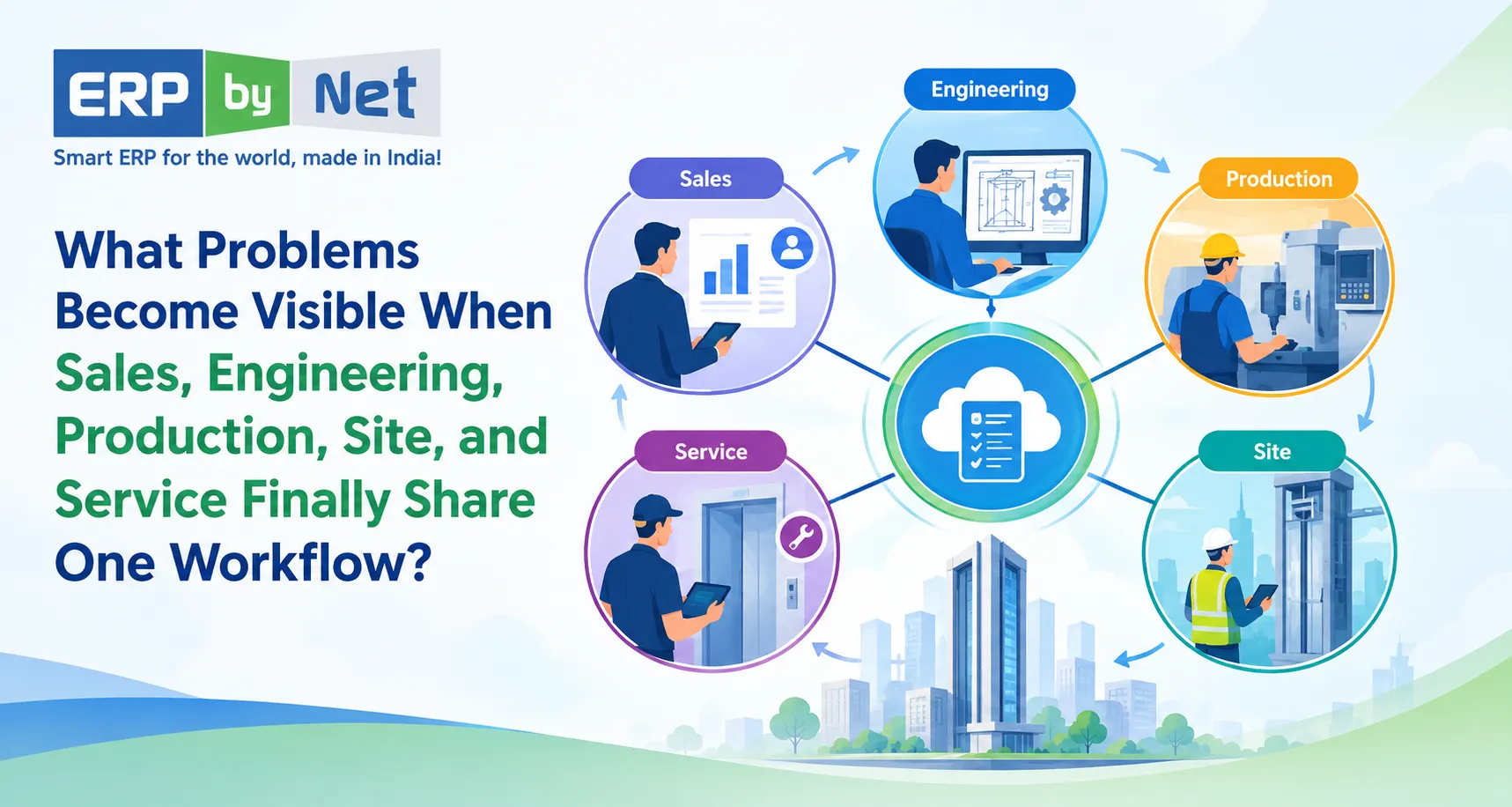
Sales, engineering, procurement, production, and project teams work with connected order information rather than repeatedly requesting updates from one another.
This can reduce manual coordination and help teams focus on resolving actual operational issues.
4. Better Production and Installation Planning
When engineering approvals and material requirements are considered alongside project schedules, teams can identify potential execution constraints earlier.
This supports more informed planning and helps reduce avoidable disruption caused by incomplete or outdated technical information.
5. Stronger Cost and Project Control
Engineering changes can influence material costs, procurement commitments, production effort, and installation schedules.
Connecting these activities with project and financial information helps management assess the commercial implications of changes and make more informed decisions.
Practical Checklist for Elevator Manufacturers
Are your engineering processes ready to handle customized lift orders without unnecessary delays, material mismatches, or revision errors? Use this checklist to assess how well your teams manage engineering dependencies.
✓ Review These 8 Critical Areas
Turn Engineering Challenges Into Better Control
If several of these areas require manual follow-ups or disconnected records, your engineering workflow may be exposed to avoidable operational risks. A connected ERP system can help align product configuration, engineering data, material planning, production, and project execution.
Connect engineering, planning, production, and project execution with ERPbyNet.
Conclusion: Connect Engineering Decisions With Every Stage of the Lift Order
Managing customized elevator orders requires more than accurate technical drawings. It requires a structured way to understand how customer requirements, engineering decisions, component specifications, material planning, production, and installation depend on one another.
When these relationships are not managed systematically, a change in one area can create additional work across several departments. Uncontrolled revisions, mismatched BOMs, procurement uncertainty, and production delays can affect both operational efficiency and project profitability.
A structured dependency management process helps elevator manufacturers validate configurations, control engineering changes, coordinate material requirements, and communicate approved information across the business.
ERPbyNet helps elevator companies connect sales, product configuration, material planning, manufacturing, and project execution through an integrated ERP platform. With capabilities such as Product Definition Studio, DrawGenie, AceMRP, eProduction, and AceSiteManager, businesses can build a more coordinated workflow for managing customized lift orders.
For manufacturers handling complex product configurations and project-specific requirements, connecting engineering decisions with downstream execution is an important step toward improving operational control and managing customized orders more consistently.
Frequently Asked Questions
1. What are engineering dependencies in elevator manufacturing?
Engineering dependencies are relationships between technical requirements, product configurations, components, drawings, BOMs, and manufacturing activities. A change in one area may require updates or validation in other related areas.
2. Why are engineering dependencies important for customized lift orders?
Customized lift orders involve different technical specifications and component combinations. Managing dependencies helps ensure that changes to one requirement are assessed for their impact on drawings, materials, production, and installation.
3. How can elevator manufacturers manage engineering changes?
Manufacturers can establish controlled revision processes, document change requests, validate technical requirements, assess downstream impacts, and communicate approved updates to procurement, production, and project teams.
4. How does a BOM help manage customized elevator orders?
A bill of materials identifies the components and assemblies required for a configured product. An accurate, approved BOM helps connect engineering requirements with material planning, procurement, and production.
5. How can ERP software support engineering dependency management?
An integrated ERP system can connect product configuration, engineering-related information, material planning, manufacturing, and project execution. The specific level of dependency tracking and change control depends on the software’s capabilities and implementation.
6. How does ERPbyNet support customized elevator manufacturing?
ERPbyNet provides capabilities for sales management, product definition, drawing generation, material planning, manufacturing coordination, and project execution through modules such as SalesPundit, Product Definition Studio, DrawGenie, AceMRP, eProduction, and AceSiteManager.
7. Can engineering changes affect elevator production schedules?
Yes. A change to product specifications or component requirements may affect engineering approvals, material availability, manufacturing instructions, and production schedules. The actual impact depends on the nature and timing of the change.
8. How can elevator companies improve coordination between engineering and installation teams?
Companies can connect approved engineering information with material planning, project schedules, site surveys, and installation activities. This helps teams identify technical or site-related issues before they disrupt execution.

COO & Founder Member, XECOM | ERP & Technology Expert
Ganesh Limaye is a technology and business leader with 30+ years of experience in ERP, service management, project-based operations, and business process automation. He specializes in helping elevator, engineering, and service-driven businesses improve operational visibility, productivity, customer service, and business growth.