CategoriesERP (Enterprise Resource Planning) ERP Solutions

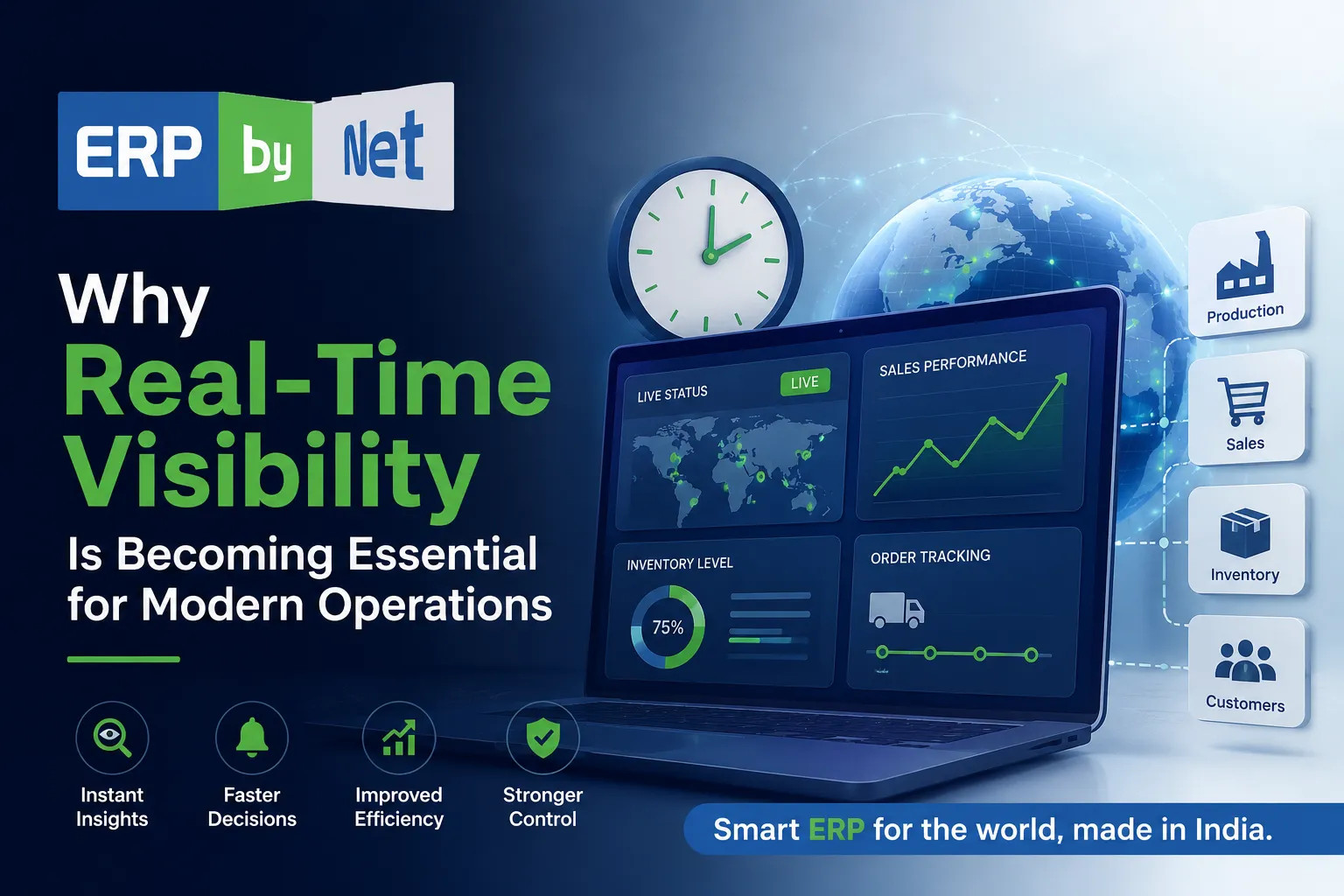
Why Real-Time Visibility Is Becoming Essential for Modern Operations

Key Takeaways

  • Real-time visibility helps businesses monitor operations instantly instead of relying on delayed reports and disconnected systems.
  • Modern ERP systems connect departments, warehouses, field teams, and management into one centralized operational ecosystem.
  • Live dashboards, alerts, and tracking systems help organizations detect delays, bottlenecks, and operational risks early.
  • Cloud-based ERP platforms improve coordination and decision-making across inventory, projects, maintenance, logistics, and service operations.
  • Businesses with real-time operational visibility respond faster, reduce inefficiencies, and scale with greater control and confidence.

What You’ll Learn

  • Why real-time visibility has become essential for modern business operations and execution management.
  • How ERP systems centralize operational data across departments, sites, warehouses, and service teams.
  • How live dashboards, alerts, and automated workflows improve operational efficiency and response time.
  • Why fragmented systems and manual reporting create delays, errors, and poor decision-making.
  • How ERPbyNet enables operational transparency through cloud-based monitoring, workflow automation, and real-time tracking.

Real Insights

  • Most operational problems begin with poor visibility — teams cannot fix issues they cannot see in real time.
  • Disconnected spreadsheets and isolated systems slow execution and create communication gaps between departments.
  • Real-time ERP systems replace reactive management with proactive control by providing instant operational insights.
  • Cloud-based visibility improves accountability and coordination across inventory, service, projects, and field operations.
  • The future of modern operations depends on live operational intelligence, automation, and centralized decision-making systems.

Modern businesses are operating in an environment where speed, coordination, and instant access to information directly impact customer satisfaction and business performance. Whether it is managing service complaints, coordinating field technicians, monitoring inventory, handling maintenance schedules, or tracking operational performance, businesses are expected to respond faster than ever before.

However, many organizations still rely on disconnected operational methods such as spreadsheets, WhatsApp groups, phone calls, manual reporting, and scattered software systems. As operations grow, these outdated processes create communication gaps, delayed responses, inventory confusion, missed service updates, and poor coordination between teams.

Today’s customers expect real-time service updates, faster issue resolution, and complete transparency. They no longer want to wait hours—or even days—for operational updates. Businesses that cannot provide instant visibility into their operations often struggle with delayed complaint handling, technician tracking issues, poor inventory management, and operational inefficiencies.

This is why real-time visibility is becoming one of the most important operational requirements for modern businesses. Real-time visibility helps organizations monitor complaints, technicians, inventory, maintenance schedules, service activities, and operational workflows instantly through a centralized ERP platform.

With advanced operational management solutions like ERPbyNet, businesses can gain complete operational visibility, improve response times, automate workflows, and manage operations more efficiently from a single centralized dashboard.

What Is Real-Time Visibility in Modern Operations?

Real-time visibility refers to the ability to access, monitor, and manage live operational data instantly across different business processes and departments. Instead of waiting for end-of-day reports or manually collecting updates from teams, businesses can view operational activities as they happen in real time.

In modern operations, real-time visibility enables businesses to track:

  • customer complaints
  • technician assignments
  • service request progress
  • inventory movement
  • spare part availability
  • maintenance schedules
  • AMC renewals
  • operational performance
  • field staff activity
  • pending service tasks

This level of operational transparency allows businesses to respond faster, make better decisions, and improve coordination between teams.

For example, a service manager using a real-time operations management system can instantly check:

  • which technician is assigned to a complaint
  • whether the complaint is pending or resolved
  • spare part availability
  • technician attendance
  • expected service completion time
  • service history of a customer

Without calling multiple people or checking multiple spreadsheets.

Real-time visibility eliminates operational blind spots and creates a centralized environment where businesses can manage operations more efficiently.

As modern businesses continue to grow and customer expectations continue to rise, real-time operational visibility is becoming essential for maintaining speed, accuracy, and operational control.

Read More: How ERP-Driven Asset Management Improves Efficiency, Accuracy, and ROI

Why Traditional Operational Methods Are No Longer Sustainable

Many businesses still operate using manual workflows and disconnected systems that were designed for slower operational environments. While these methods may have worked in the past, they are no longer sustainable for modern businesses managing large-scale operations, field teams, inventory, and customer service activities.

Traditional operational methods often rely on:

  • spreadsheets
  • manual reporting
  • WhatsApp communication
  • phone call coordination
  • paper-based service records
  • disconnected software systems

These systems create major operational challenges as businesses scale.

Delayed Communication Creates Operational Bottlenecks

One of the biggest problems with traditional operations is delayed communication. When teams rely on manual updates, important operational information often gets delayed, overlooked, or miscommunicated.

For example:

  • technicians may not receive complaint updates on time
  • inventory teams may not know spare stock availability
  • managers may struggle to monitor pending service tasks
  • complaints may remain unresolved for extended periods

These communication gaps create operational bottlenecks that slow down the entire workflow.

Without real-time operational visibility, businesses spend more time following up manually instead of focusing on operational efficiency and customer service.

Lack of Visibility Reduces Operational Control

Businesses that lack centralized operational visibility often struggle to maintain control over day-to-day operations.

Managers may face challenges such as:

  • inability to track technician activity
  • difficulty monitoring complaint status
  • no visibility into field operations
  • delayed maintenance updates
  • lack of inventory transparency
  • difficulty identifying operational delays

As operations become larger and more complex, these visibility problems increase significantly.

Without real-time operational dashboards, businesses operate reactively instead of proactively.

Instead of preventing operational issues early, teams only react after problems become critical.

Customer Expectations Have Changed Completely

Modern customers expect businesses to operate faster and more transparently than ever before.

Customers now expect:

  • instant service updates
  • faster complaint resolution
  • live communication
  • accurate operational information
  • better accountability

For service businesses, delayed responses and poor communication can damage customer trust very quickly.

Common customer frustrations include:

  • technicians arriving late
  • repeated breakdown complaints
  • lack of service updates
  • unresolved complaints
  • difficulty contacting service teams

Businesses that fail to provide operational transparency often lose customer confidence and long-term loyalty.

This is why modern businesses are shifting toward centralized real-time operations management systems.

How Real-Time Visibility Improves Modern Operations

How Real-Time Visibility Improves Modern Operations

Real-time visibility transforms the way businesses manage operations by improving communication, coordination, speed, and decision-making across the organization.

Businesses that implement real-time operational visibility systems gain significant operational advantages over competitors relying on traditional processes.

Faster Complaint Management & Service Resolution

Complaint handling becomes significantly more efficient when businesses can monitor complaints in real time.

With a centralized complaint management software system:

  • complaints are recorded instantly
  • technicians receive immediate task notifications
  • managers can track complaint progress live
  • pending complaints become visible instantly
  • service updates can be monitored centrally

This reduces:

  • complaint delays
  • repeated customer follow-ups
  • communication gaps
  • unresolved service requests

Real-time complaint visibility allows businesses to respond faster and improve customer satisfaction significantly.

For modern service businesses, faster complaint resolution directly impacts operational reputation and customer retention.

Live Technician Tracking Improves Field Operations

Managing field technicians without visibility often creates coordination problems and service delays.

Businesses commonly struggle with:

  • technicians becoming unreachable
  • delayed task assignments
  • lack of attendance monitoring
  • poor field coordination
  • limited visibility into job progress

With technician tracking software integrated into a real-time ERP system, businesses can:

  • assign technicians instantly
  • monitor technician activity live
  • track attendance
  • check job completion status
  • improve workforce accountability

Live technician visibility helps managers coordinate field operations more efficiently while reducing response delays.

For elevator service businesses, maintenance companies, and field service operations, technician tracking has become essential for operational efficiency.

Real-Time Inventory Visibility Reduces Operational Delays

Inventory visibility plays a critical role in modern operations, especially for businesses handling maintenance, repairs, and field services.

Without proper inventory tracking, businesses often experience:

  • spare part shortages
  • stock mismatches
  • delayed procurement
  • unnecessary inventory accumulation
  • delayed service completion

Real-time inventory management software helps businesses:

  • track inventory movement instantly
  • monitor stock levels live
  • identify low stock quickly
  • manage spare part availability
  • reduce inventory-related delays

This improves operational planning while helping businesses avoid unnecessary service interruptions.

For service-oriented industries, inventory visibility directly impacts operational speed and service quality.

Better AMC & Maintenance Management

Managing AMC contracts and maintenance schedules manually often leads to operational inefficiencies and missed service commitments.

Common problems include:

  • missed AMC renewals
  • delayed maintenance visits
  • forgotten preventive maintenance schedules
  • lack of maintenance history visibility

With real-time AMC management software, businesses can automate and centralize maintenance operations.

ERP-based maintenance management systems help businesses:

  • schedule preventive maintenance automatically
  • track maintenance history
  • monitor AMC expiry dates
  • generate automated service reminders
  • reduce equipment downtime

For elevator management companies and maintenance service providers, real-time maintenance visibility is essential for maintaining service quality and customer trust.

Centralized Operational Dashboards Improve Decision-Making

One of the biggest advantages of ERP-based real-time visibility is centralized operational monitoring.

A centralized operational dashboard allows businesses to monitor:

  • complaints
  • technician performance
  • field operations
  • inventory movement
  • AMC schedules
  • maintenance activities
  • operational KPIs
  • pending service requests

from one unified system.

This centralized visibility helps managers:

  • identify operational bottlenecks quickly
  • improve team coordination
  • reduce manual follow-ups
  • make faster operational decisions
  • monitor performance in real time

Businesses that rely on centralized operational dashboards operate more efficiently because decision-makers always have access to accurate live operational data.

Read More : Why Multi-Purpose ERP Software Is Becoming Essential for Modern Businesses

Before vs After Implementing Real-Time Visibility

Without Real-Time VisibilityWith ERPbyNet
Complaints handled manuallyCentralized complaint management
Technicians difficult to trackLive technician visibility
Inventory confusionReal-time inventory tracking
Missed AMC renewalsAutomated AMC reminders
Multiple spreadsheetsUnified operational dashboard
Delayed operational decisionsInstant operational insights
Poor communication between teamsConnected real-time operations
Repeated customer follow-upsFaster customer response

Industries That Need Real-Time Visibility the Most

Real-time operational visibility is becoming essential across multiple industries that depend on fast coordination, field operations, maintenance management, and inventory control.

Industries benefiting significantly include:

  • elevator service companies
  • field service businesses
  • maintenance management companies
  • manufacturing industries
  • logistics operations
  • facility management providers
  • inventory-driven businesses
  • multi-location service organizations

For elevator businesses specifically, real-time visibility helps manage:

  • breakdown complaints
  • technician coordination
  • spare part tracking
  • preventive maintenance
  • AMC renewals
  • service response times

This improves operational efficiency while delivering better customer experiences.

Signs Your Business Needs Real-Time Operational Visibility

Many businesses already experience operational inefficiencies caused by poor visibility without realizing the root cause.

Common warning signs include:

  • customers repeatedly calling for updates
  • delayed complaint resolution
  • technicians becoming difficult to track
  • inventory mismatches
  • missed maintenance schedules
  • lack of centralized operational control
  • excessive spreadsheet dependency
  • poor coordination between departments
  • delayed reporting
  • difficulty monitoring field operations

If your business faces these challenges regularly, implementing a real-time operational management system can significantly improve efficiency and control.

Read More: How ERP Reduces Fuel and Time Costs in Vending Machine Routes

How ERPbyNet Helps Businesses Achieve Real-Time Visibility

Modern businesses cannot afford delays, miscommunication, or lack of operational clarity. That’s exactly where ERPbyNet transforms the way organizations work. It brings every critical operation—complaints, technicians, inventory, AMC, and maintenance—into one unified, real-time ERP platform. Instead of switching between multiple tools or depending on manual updates, businesses get a single source of truth where every activity is visible as it happens. This creates faster decisions, smoother coordination, and complete operational control across the organization.

ERPbyNet is built with powerful, real-world operational modules that eliminate chaos and bring structure to daily workflows. It offers:

  • Complaint Management Software to track and resolve issues without delays
  • Technician Tracking Software to monitor field teams in real time
  • Field Service Management Tools for seamless on-site execution
  • Inventory Management Systems for accurate, live stock visibility
  • AMC Management Software to manage contracts and renewals efficiently
  • Maintenance Scheduling Tools for timely preventive maintenance
  • Centralized Operational Dashboards for complete business overview
  • Live Operational Monitoring for instant updates across all activities
  • Mobile Workforce Visibility for real-time field coordination
  • Automated Operational Workflows to reduce manual dependency

Each feature is designed to remove operational bottlenecks and improve speed at every level.

With ERPbyNet, businesses don’t just manage operations—they take full control of them. It helps reduce delays, improve team coordination, track service activities live, increase accountability, and deliver faster, more reliable customer service. In a competitive environment where every second matters, ERPbyNet ensures your business stays efficient, responsive, and always one step ahead.

The Future of Modern Operations Is Real-Time

Modern operations are evolving rapidly. Businesses that continue relying on delayed reporting and disconnected workflows will struggle to meet growing customer expectations.

The future of operational management is centered around:

  • live operational monitoring
  • workflow automation
  • centralized dashboards
  • real-time service coordination
  • data-driven decision-making

Businesses adopting real-time visibility systems gain a competitive advantage because they can respond faster, coordinate better, and operate more efficiently.

Real-time operational visibility is no longer just a technology upgrade. It is becoming a business necessity.

Organizations that invest in centralized ERP visibility systems today will be better prepared for the operational demands of the future.

Conclusion

If you are looking to improve efficiency, speed, and control across your business operations, ERPbyNet is the right partner to help you achieve true real-time visibility. In today’s fast-moving business environment, relying on manual processes, spreadsheets, and disconnected communication often leads to delays, confusion, and poor coordination between teams. ERPbyNet brings everything together in one centralized platform, allowing you to manage complaints, technicians, inventory, AMC schedules, maintenance activities, and field operations in real time. This helps your business eliminate operational gaps, improve decision-making, and ensure faster response to customer needs.

With ERPbyNet, you can track every activity as it happens, from complaint registration to technician assignment and job completion. Real-time dashboards and automated workflows ensure that your team stays aligned, informed, and productive at all times. This not only reduces operational inefficiencies but also enhances customer satisfaction by providing faster service, better transparency, and improved accountability across all operations.

For more information or to see how ERPbyNet can transform your operations, feel free to contact us today. Our team will help you understand the right solution for your business and guide you in implementing real-time operational visibility for better performance and growth.

FAQs

What is real-time visibility in operations?

Real-time visibility refers to the ability to monitor live operational data instantly across complaints, technicians, inventory, maintenance schedules, field operations, and business workflows through a centralized system.

Why is real-time visibility important for service businesses?

Real-time visibility helps service businesses improve response times, track technicians, monitor complaints, manage inventory efficiently, and provide faster customer service updates.

How does ERP software improve operational visibility?

ERP software centralizes operational data into one platform, allowing businesses to monitor workflows, complaints, technicians, maintenance schedules, inventory, and operational activities in real time.

Which industries benefit most from real-time operational visibility?

Industries such as elevator services, maintenance businesses, manufacturing, logistics, facility management, and field service operations benefit significantly from real-time visibility.

How does ERPbyNet help businesses manage operations?

ERPbyNet helps businesses manage complaints, technicians, inventory, AMC operations, maintenance schedules, field services, and operational workflows through centralized ERP-based operational visibility tools.

Can ERPbyNet track technicians in real time?

Yes, ERPbyNet provides real-time technician tracking, attendance monitoring, task management, and live field service coordination features.

How does real-time visibility improve customer service?

Real-time visibility helps businesses provide faster updates, resolve complaints more quickly, improve operational transparency, and reduce customer response delays.

Why are centralized operational dashboards important?

Centralized dashboards provide live operational insights, improve coordination between teams, reduce manual follow-ups, and help managers make faster and more accurate operational decisions.
CategoriesUncategorized

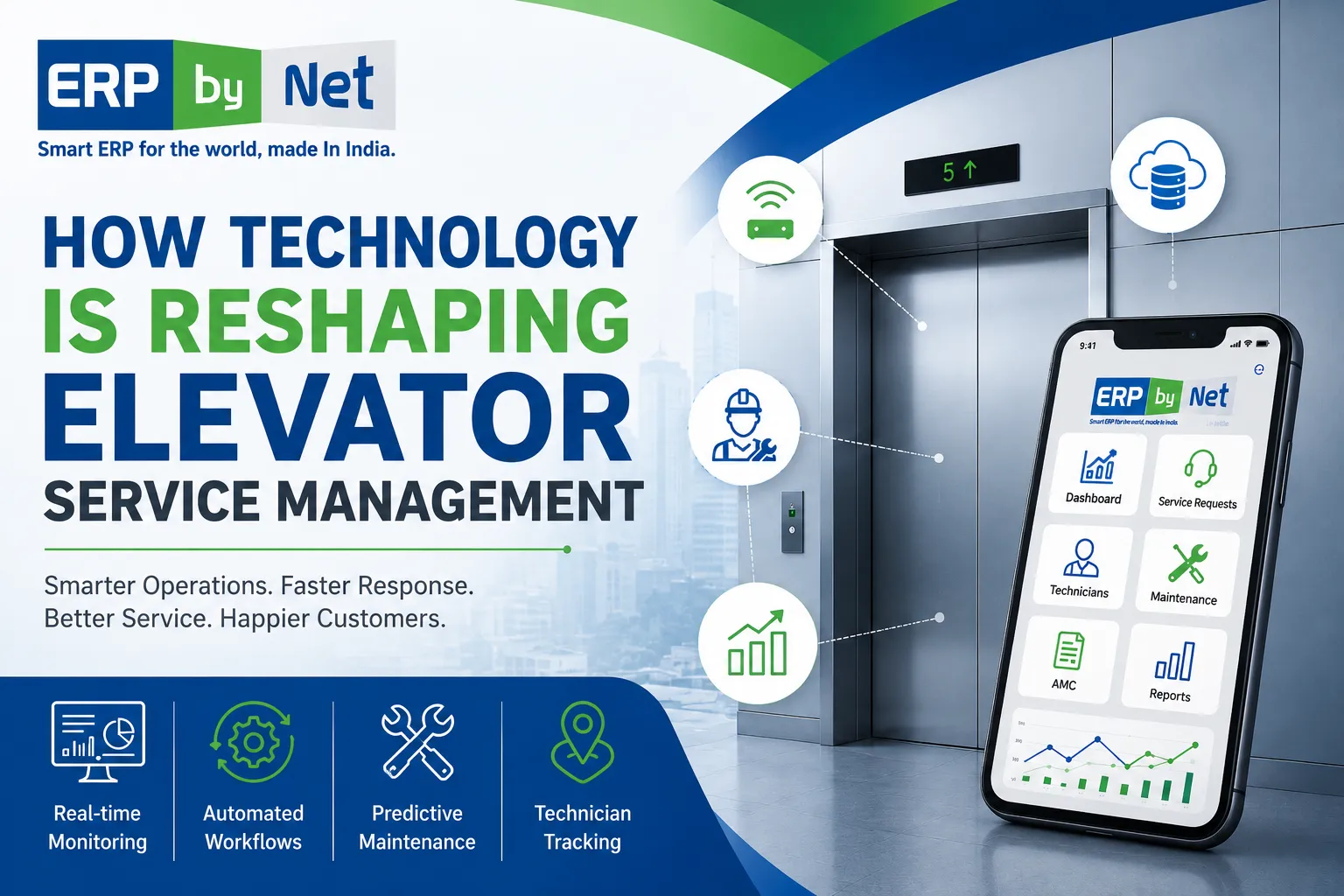
How Technology Is Reshaping Elevator Service Management

Key Takeaways

  • Technology is transforming elevator service management through automation, real-time tracking, and cloud-based ERP systems.
  • Manual coordination creates delays and revenue leakage as elevator operations become more complex.
  • Real-time technician tracking and smart scheduling improve response times and operational visibility.
  • Preventive maintenance automation helps reduce unexpected breakdowns and improve customer satisfaction.
  • ERP platforms like ERPbyNet centralize AMC management, service workflows, inventory, billing, and reporting into one system.

What You’ll Learn

  • How digital transformation is changing elevator maintenance operations.
  • Why traditional spreadsheets and manual scheduling no longer support growing elevator businesses.
  • How cloud ERP systems improve technician coordination, complaint handling, and maintenance tracking.
  • The role of IoT, predictive maintenance, and automation in reducing downtime.
  • How ERPbyNet helps elevator companies streamline operations, improve service quality, and scale efficiently.

Real Industry Insights

  • Elevator companies are moving away from reactive maintenance toward predictive and automated service models.
  • Disconnected systems create operational silos that reduce efficiency and increase service delays.
  • Digital workflows improve transparency for technicians, managers, and customers.
  • Cloud-based ERP platforms provide centralized visibility across technicians, inventory, complaints, and AMC contracts.
  • The future of elevator service management depends on automation, real-time data, predictive insights, and scalable ERP infrastructure.

The elevator industry is undergoing a major transformation. As buildings become smarter and customer expectations continue to rise, elevator service companies are facing increasing pressure to deliver faster response times, reduce downtime, improve technician coordination, and manage operations more efficiently than ever before.

Traditional service management methods that once worked for elevator businesses are now creating operational bottlenecks. Manual scheduling, paper-based service reports, delayed technician communication, and disconnected workflows often lead to slower service, missed follow-ups, and customer dissatisfaction.

At the same time, advancements in technology are changing how elevator service businesses operate. Automation, real-time tracking, cloud-based systems, predictive maintenance, and digital workflows are helping companies streamline operations and improve service performance.

Modern Elevator Service Management is no longer just about fixing elevators when problems occur. It is now about creating connected, data-driven, and proactive service operations that improve efficiency across every stage of the workflow.

In this article, we explore how technology is reshaping elevator service management and why digital transformation is becoming essential for modern elevator companies.

The Challenges of Traditional Elevator Service Management

Challenges of manual elevator service management including paper job cards, delayed complaint handling, poor communication, and missed AMC renewals.

For many elevator service companies, daily operations still depend heavily on manual processes. While these traditional systems may have worked in the past, they often create inefficiencies that slow down business growth and impact service quality.

Common operational challenges include:

  • manual technician scheduling
  • paper-based job cards
  • delayed complaint handling
  • poor communication between teams
  • scattered customer records
  • lack of service visibility
  • missed AMC renewals
  • reactive maintenance approaches
  • delayed response times

When operations are managed manually, even small delays can create larger business problems. A technician may receive incomplete service information, customer complaints may not be tracked properly, or service requests may get delayed due to communication gaps.

These inefficiencies directly affect:

  • customer satisfaction
  • technician productivity
  • operational control
  • revenue opportunities
  • long-term client retention

As elevator systems become more advanced and service expectations increase, relying on outdated management methods becomes increasingly difficult.

Modern elevator businesses need systems that provide real-time visibility, centralized operations, and faster coordination across field teams.

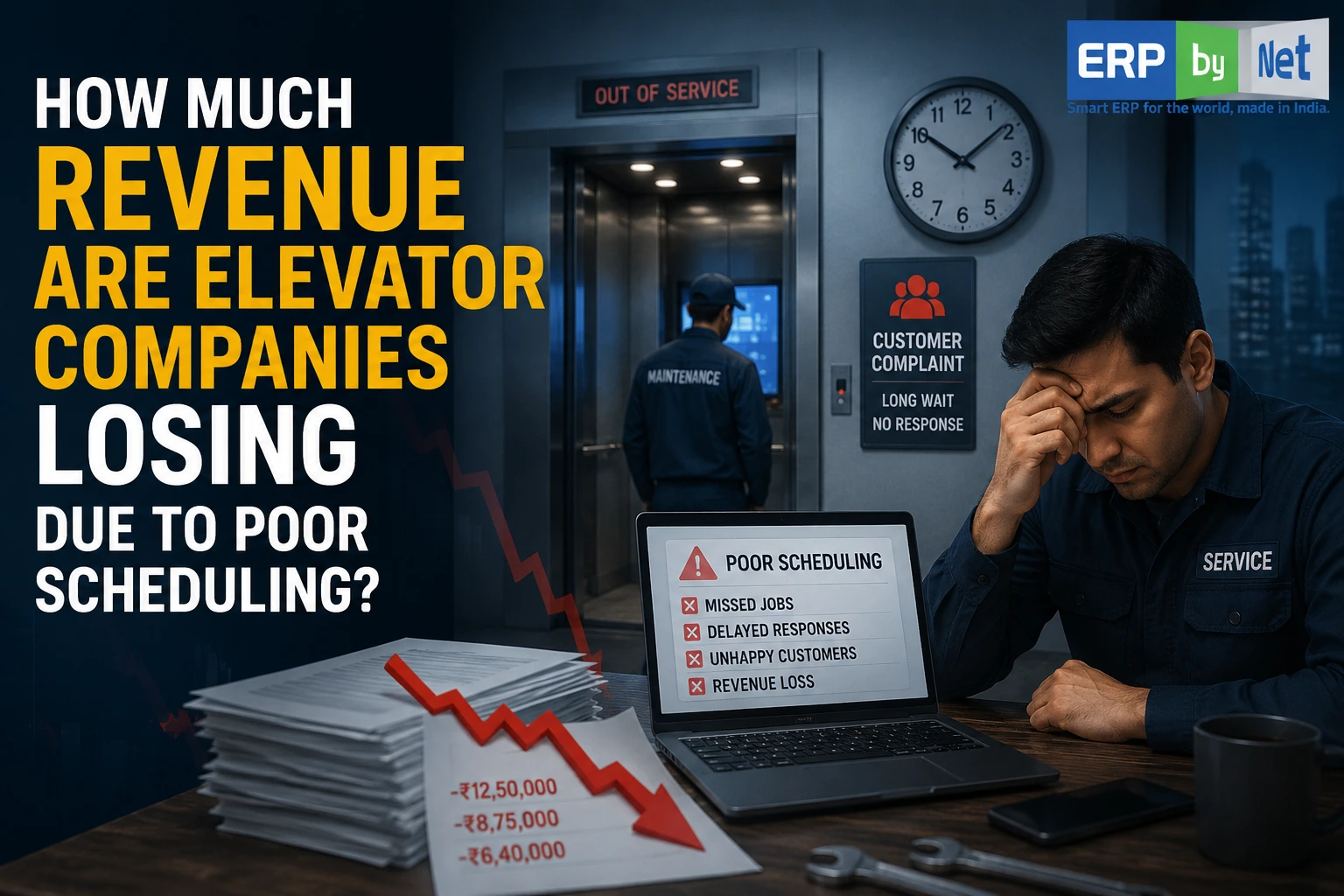
Read More : How Much Revenue Are Elevator Companies Losing Due to Poor Scheduling?

The Shift Toward Digital Elevator Service Operations

Technology is changing the way elevator service businesses manage their daily operations. Instead of relying on disconnected manual processes, companies are moving toward centralized digital systems that help improve efficiency and operational control.

Digital transformation in elevator service management includes:

  • cloud-based ERP systems
  • automated scheduling
  • mobile workforce management
  • real-time technician tracking
  • centralized dashboards
  • digital complaint management
  • automated reporting systems

These technologies help elevator companies operate more proactively instead of reactively.

Rather than waiting for operational issues to create delays, digital systems help businesses:

  • identify problems faster
  • streamline communication
  • automate repetitive tasks
  • improve technician coordination
  • reduce service delays

This shift is helping elevator businesses create more structured, scalable, and efficient service operations.

Real-Time Technician Tracking Is Improving Service Response

One of the biggest operational challenges in elevator servicing is coordinating field technicians efficiently. Delays in technician allocation often increase elevator downtime and negatively impact customer satisfaction.

Modern technology is solving this problem through real-time technician tracking systems.

With GPS-enabled tracking and mobile field service applications, elevator companies can now:

  • monitor technician locations in real time
  • assign jobs faster
  • optimize technician routes
  • track service status updates
  • improve communication between teams

This level of visibility helps businesses respond more quickly to breakdowns and emergency service requests.

Real-time tracking also improves workforce productivity by ensuring:

  • better technician utilization
  • fewer scheduling conflicts
  • faster task completion
  • reduced travel inefficiencies

For customers, this creates a better service experience because they receive quicker responses and improved service transparency.

As customer expectations continue to grow, faster response times are becoming a key competitive advantage for elevator service companies.

Predictive Maintenance Is Replacing Reactive Servicing

Traditional elevator maintenance models are largely reactive. Businesses wait until a breakdown occurs before responding to the issue.

However, modern technology is shifting the industry toward predictive maintenance.

Using IoT-enabled monitoring systems, sensors, and connected devices, elevator companies can now collect real-time performance data from elevator systems. This data helps identify potential issues before they become major failures.

Predictive maintenance allows businesses to:

  • detect abnormal system behavior early
  • schedule preventive servicing
  • reduce unexpected breakdowns
  • minimize downtime
  • lower emergency repair costs

Instead of reacting to failures after they occur, companies can proactively address maintenance needs and improve elevator reliability.

This approach not only improves operational efficiency but also enhances customer trust because elevators remain operational more consistently.

Predictive maintenance is becoming one of the most important technological advancements in modern elevator servicing because it helps businesses move from reactive operations to intelligent maintenance planning.

Automation Is Streamlining Elevator Service Workflows

Manual administrative tasks often consume a large amount of time in elevator service businesses. Scheduling follow-ups, updating records, tracking complaints, managing service history, and handling AMC renewals manually can create operational delays and increase the risk of errors.

Automation is helping companies simplify these workflows.

Modern elevator service management systems can automate:

  • complaint ticket generation
  • service scheduling
  • maintenance reminders
  • technician job allocation
  • AMC renewal notifications
  • customer follow-ups
  • service report generation

This significantly reduces manual workload while improving operational consistency.

For example:

Traditional OperationsAutomated ERP-Based Operations
Manual complaint loggingAutomated ticket management
Paper service reportsDigital mobile reports
Phone-based technician assignmentReal-time dispatch systems
Excel-based AMC trackingAutomated renewal alerts
Manual follow-upsAutomated notifications

Automation allows service teams to focus more on actual service delivery instead of repetitive administrative work.

As elevator businesses scale, automation becomes essential for maintaining operational efficiency without increasing management complexity.

Data and Analytics Are Improving Business Decisions

Modern elevator service management is becoming increasingly data-driven.

Digital systems now allow businesses to collect and analyze operational data in real time. This gives managers greater visibility into service performance and helps improve decision-making.

Analytics can provide insights into:

  • technician productivity
  • service response times
  • elevator downtime trends
  • complaint frequency
  • maintenance history
  • customer service performance

This information helps businesses identify operational inefficiencies and improve resource planning.

For example, service managers can analyze:

  • which technicians handle the most service requests efficiently
  • which elevators experience repeated issues
  • which customers require frequent maintenance support
  • where operational delays commonly occur

This level of business intelligence helps elevator companies optimize workflows, improve accountability, and deliver more consistent service experiences.

Technology is no longer only supporting operations — it is now helping businesses make smarter strategic decisions.

Read More : Why Multi-Purpose ERP Software Is Becoming Essential for Modern Businesses

Customer Expectations Are Changing Elevator Service Standards

Today’s customers expect faster, more transparent, and more reliable service experiences.

Building managers, property owners, hospitals, hotels, and commercial facilities increasingly demand:

  • quick complaint resolution
  • faster technician response
  • service transparency
  • preventive maintenance
  • real-time communication
  • minimal elevator downtime

Companies that fail to meet these expectations may struggle to retain long-term clients.

Technology is helping elevator service businesses improve customer satisfaction by creating:

  • faster communication channels
  • real-time service updates
  • better complaint tracking
  • improved maintenance planning
  • centralized customer management systems

Digital platforms also help businesses maintain accurate service history records, making customer support more organized and efficient.

As competition in the elevator industry increases, customer experience is becoming one of the most important differentiators.

Why Elevator Companies Are Moving Toward ERP-Based Management Systems

As operational complexity increases, many elevator businesses are adopting ERP-based systems to centralize and streamline their service management processes.

ERP systems bring multiple operational functions into a single platform, including:

  • technician management
  • complaint handling
  • maintenance scheduling
  • customer management
  • AMC tracking
  • reporting and analytics
  • service history management

This creates better operational visibility and allows businesses to manage workflows more efficiently.

ERP systems also help eliminate data silos by ensuring that service teams, managers, and administrators work from the same centralized information system.

The benefits include:

  • improved operational coordination
  • faster response times
  • reduced paperwork
  • better reporting accuracy
  • increased workforce productivity
  • stronger service consistency

As the elevator industry continues evolving, ERP-based operations are becoming a critical part of modern service management strategies.

How ERPbyNet Helps Modernize Elevator Service Management

ERPbyNet is designed to help elevator service companies streamline operations through centralized digital management.

The platform helps businesses manage:

  • service requests
  • technician scheduling
  • complaint tracking
  • AMC management
  • field workforce coordination
  • service reporting
  • operational analytics

With real-time visibility and automated workflows, elevator companies can improve service efficiency while reducing operational delays.

ERPbyNet supports modern elevator operations through:

  • real-time technician tracking
  • centralized dashboards
  • automated service workflows
  • digital field service management
  • customer complaint management
  • maintenance scheduling systems
  • reporting and analytics tools

By digitizing service operations, elevator companies can improve:

  • technician productivity
  • response speed
  • customer satisfaction
  • operational control
  • long-term business scalability

As the industry becomes more technology-driven, centralized ERP systems are playing a major role in helping elevator companies remain competitive.

The Future of Elevator Service Management

Technology will continue reshaping the elevator service industry in the coming years.

Emerging innovations such as:

  • AI-powered maintenance systems
  • IoT-enabled elevator monitoring
  • predictive analytics
  • cloud-based operations
  • smart dispatch systems
  • connected service ecosystems

will further improve operational efficiency and service quality.

The future of elevator servicing will depend heavily on:

  • automation
  • real-time visibility
  • intelligent maintenance planning
  • data-driven decision-making
  • digital workforce management

Companies that embrace these technologies early will be better positioned to improve service performance, reduce downtime, and meet growing customer expectations.

Businesses that continue relying on outdated operational methods may struggle to remain competitive in an increasingly digital industry.

Conclusion

Technology is transforming every aspect of elevator service management.

From real-time technician tracking and predictive maintenance to workflow automation and data-driven decision-making, digital systems are helping elevator companies improve efficiency, reduce downtime, and deliver better customer experiences.

The elevator industry is moving toward smarter, faster, and more connected operations. As service demands continue to increase, businesses need modern systems that provide operational visibility, automation, and centralized management.

Companies that invest in digital transformation today will be better prepared for the future of elevator servicing.

ERPbyNet helps elevator service businesses modernize operations through intelligent service management, automated workflows, real-time tracking, and centralized operational control — helping companies build more efficient and future-ready elevator service operations.

FAQs

1. How is technology improving elevator service management?

Technology is helping elevator companies improve operations through real-time technician tracking, automated scheduling, predictive maintenance, digital reporting, and centralized management systems. These tools help reduce downtime, improve response times, and streamline daily workflows.

2. What is predictive maintenance in elevator servicing?

Predictive maintenance uses connected sensors and real-time data to identify potential elevator issues before breakdowns occur. This helps elevator companies reduce unexpected failures, lower repair costs, and improve elevator reliability.

3. Why is automation important for elevator service businesses?

Automation reduces manual tasks such as complaint tracking, service scheduling, AMC reminders, and technician coordination. This improves operational efficiency, minimizes errors, and allows service teams to respond faster to customer requests.

4. How does real-time technician tracking help elevator companies?

Real-time technician tracking helps businesses monitor field teams, assign jobs faster, optimize technician routes, and improve communication. This leads to quicker response times, better workforce productivity, and improved customer satisfaction.

5. How does ERPbyNet help modernize elevator service operations?

ERPbyNet helps elevator companies streamline operations through real-time technician tracking, complaint management, automated workflows, AMC tracking, digital reporting, and centralized service management — helping businesses improve efficiency, reduce downtime, and manage elevator operations more effectively.

CategoriesERP (Enterprise Resource Planning)

How Much Revenue Are Elevator Companies Losing Due to Poor Scheduling?

In the elevator maintenance industry, scheduling plays a direct role in business profitability. Every missed maintenance visit, delayed technician assignment, untracked complaint, or coordination gap slowly adds up to hidden revenue loss that many elevator companies fail to notice until it becomes significant.

Despite growing service demands, many elevator businesses still rely on spreadsheets, phone calls, WhatsApp messages, manual technician allocation, and paper-based records to manage operations. While these methods may work for small teams, they quickly become inefficient as the number of elevators, AMC contracts, and technicians increases.

Poor scheduling impacts more than daily operations—it directly affects recurring revenue, AMC renewals, technician productivity, emergency response speed, service quality, and long-term scalability.

As the industry shifts toward digital and predictive maintenance models, outdated systems create a competitive disadvantage. This is why many elevator companies are now moving toward intelligent platforms like ERPbyNet to automate scheduling, improve coordination, and streamline elevator service operations.

Why Scheduling Is the Core of Elevator Service Operations

In elevator service businesses, scheduling is not just an administrative task — it is the central system that keeps all operations connected and running smoothly. Every activity in the field depends on how well scheduling is planned, assigned, and monitored.

Whether it is routine maintenance or emergency breakdown handling, everything starts with proper scheduling.

What Scheduling Controls in Daily Operations

An elevator service company depends on scheduling to manage multiple critical functions at the same time:

  • preventive maintenance visits to ensure elevator safety and performance
  • emergency breakdown calls that require immediate response
  • technician allocation based on availability and location
  • AMC service timelines that must be followed strictly
  • customer service commitments and response expectations
  • spare part coordination for repair and replacement work
  • field service tracking for ongoing job visibility

When all these activities are properly scheduled, operations run in a structured and predictable manner.

What Happens When Scheduling Fails

If scheduling is not accurate or well-coordinated, the entire service system starts breaking down. Small delays or miscommunication in assignments can quickly escalate into bigger operational issues.

Common outcomes include:

  • increased customer dissatisfaction due to delayed service
  • longer elevator downtime affecting building operations
  • missed SLA targets and contractual penalties
  • reduced technician productivity and inefficient routing
  • growing backlog of unresolved service requests
  • difficulty in managing AMC renewals and customer retention

Even a single scheduling error can create multiple downstream issues across the service chain.

How Small Delays Turn Into Revenue Loss

In the elevator industry, service delays are not just operational problems — they directly affect revenue.

When maintenance visits are missed or delayed:

  • AMC customers lose confidence in service quality
  • breakdown frequency increases due to poor preventive care
  • emergency repair costs rise
  • contract renewals become uncertain
  • competitors gain opportunity to replace service contracts

Over time, these issues slowly reduce profitability and weaken long-term business stability.

Why Scheduling Defines Service Stability

A well-structured scheduling system ensures that every part of the service operation works in sync — technicians, dispatch teams, customers, and maintenance workflows.

Without it, companies face:

  • confusion in field operations
  • inconsistent service delivery
  • poor coordination between teams
  • reduced visibility of ongoing work

This is why scheduling is often considered the backbone of elevator service operations. When it is managed effectively, the entire service ecosystem becomes more reliable, efficient, and profitable.

The Real Cost of Poor Scheduling in Elevator Companies

Most elevator businesses track visible operational costs such as:

  • fuel
  • labor
  • technician salaries
  • spare parts
  • transportation

But the biggest financial damage often comes from invisible inefficiencies caused by poor scheduling systems.

1. Missed Preventive Maintenance Visits

Preventive maintenance is one of the most critical responsibilities in elevator servicing.

When PM visits are delayed or forgotten due to manual scheduling:

  • equipment reliability decreases
  • breakdown frequency increases
  • customers lose confidence
  • AMC contracts become difficult to renew

Missed PM schedules also increase long-term repair costs because minor technical issues are not detected early.

Common Causes of Missed PM Visits

  • Manual tracking errors
  • Unorganized Excel sheets
  • No automated reminders
  • Poor technician allocation
  • Lack of centralized visibility

Financial Impact

A company managing hundreds of elevators can lose substantial recurring revenue if AMC clients decide not to renew contracts due to inconsistent maintenance.

2. Delayed Technician Dispatch Reduces Customer Trust

In emergency situations, response speed matters.

When dispatch teams rely on manual coordination:

  • technicians are assigned slowly
  • nearby engineers are overlooked
  • duplicate assignments occur
  • complaints remain open longer

This directly increases elevator downtime.

For commercial buildings, hospitals, malls, and residential towers, extended downtime creates serious customer frustration.

Operational Consequences

  • Increased complaint escalations
  • Higher service pressure
  • Poor customer experience
  • Negative brand reputation
  • Contract termination risk

Revenue Impact

Slow response times often lead customers to shift toward competitors with faster service management systems.

3. Technician Productivity Drops Significantly

Poor scheduling affects technician efficiency more than most companies realize.

Without intelligent scheduling systems:

  • routes become inefficient
  • technicians travel unnecessarily
  • idle time increases
  • service capacity decreases

As a result, technicians complete fewer jobs daily.

Example of Productivity Loss

Manual Scheduling Environment

  • Technician completes 4 jobs/day
  • Significant travel gaps
  • Delayed coordination
  • Frequent scheduling confusion

Optimized Scheduling Environment

  • Technician completes 7–8 jobs/day
  • Route-based dispatching
  • Real-time updates
  • Faster coordination

That productivity difference directly impacts profitability.

4. Revenue Leakage Through Missed AMC Renewals

Annual Maintenance Contracts (AMCs) are the backbone of recurring revenue in the elevator industry.

Poor scheduling weakens AMC retention because customers expect:

  • timely maintenance
  • predictable servicing
  • quick issue resolution
  • consistent communication

When service quality becomes inconsistent, renewal rates decline.

Why Customers Avoid Renewing Contracts

Common Customer Complaints
  • “Technicians arrive late.”
  • “Preventive maintenance is irregular.”
  • “Breakdowns take too long to resolve.”
  • “Nobody updates us on complaint status.”
  • “Service reports are unclear.”

These problems are often caused by operational scheduling inefficiencies rather than technician capability.

5. Emergency Repairs Become More Frequent

Poor scheduling often pushes companies into reactive maintenance cycles.

Instead of preventing failures early through planned servicing, businesses end up handling:

  • emergency shutdowns
  • repeated breakdown complaints
  • urgent repair calls
  • overtime technician dispatch

Reactive repairs cost significantly more than preventive maintenance.

Reactive Maintenance Creates Additional Costs

Direct Costs
  • overtime labor
  • urgent spare parts procurement
  • emergency transportation
  • additional technician visits
Indirect Costs
  • customer dissatisfaction
  • building management complaints
  • service delays
  • contract reputation damage

6. Manual Scheduling Creates Administrative Chaos

As elevator businesses grow, service coordination becomes increasingly complex.

Managing:

  • hundreds of elevators
  • multiple field technicians
  • breakdown complaints
  • preventive maintenance schedules
  • spare inventory
  • customer records

through spreadsheets and calls becomes highly inefficient.

Administrative teams spend excessive time:

  • following up manually
  • updating paperwork
  • coordinating technicians
  • tracking complaints
  • handling service confusion

This increases operational overhead without improving productivity.

Warning Signs Your Elevator Business Has Scheduling Problems

In many elevator service companies, scheduling problems don’t appear suddenly. They build slowly over time through missed coordination, delayed updates, and manual handling of service operations. Most businesses only realize the impact when revenue starts dropping or customers begin complaining more frequently.

Scheduling inefficiency usually shows up first in daily operations, not in financial reports. That’s why it often goes unnoticed until it becomes a serious issue.

Common Indicators of Poor Scheduling

If your business is experiencing multiple issues from the list below, it is a strong sign that your scheduling system is not working efficiently:

  • frequent missed preventive maintenance visits
  • technicians arriving late to service locations
  • growing backlog of unresolved complaints
  • repeated customer escalations for the same issues
  • lack of real-time field visibility
  • heavy dependence on manual coordination (calls, messages, spreadsheets)
  • unclear or unavailable technician status during dispatch
  • declining AMC renewals or customer retention
  • delays in service reporting and updates
  • excessive paperwork and manual record handling

These issues may seem operational, but together they directly impact customer satisfaction, technician productivity, and long-term profitability.

When these problems become regular, it usually means the scheduling system is not able to support the growing service load.

Why Traditional Scheduling Methods No Longer Work

The elevator service industry is becoming more complex every year. Companies are no longer handling just a few maintenance contracts—they are managing large service networks with continuous operational demands.

Modern elevator companies typically deal with:

  • large AMC portfolios across multiple locations
  • strict service level agreements (SLAs)
  • high customer expectations for response time
  • frequent emergency breakdown requests
  • multiple technician teams working simultaneously
  • expanding maintenance and service databases

In this environment, traditional methods like spreadsheets, phone calls, and WhatsApp coordination are no longer efficient.

These manual systems create delays because:

  • information is not updated in real time
  • technicians cannot be tracked properly
  • dispatch decisions are slow
  • service history is fragmented
  • coordination depends on individuals, not systems

As a result, companies struggle to maintain consistent service quality as they scale.

This is where structured digital systems become necessary to manage operations more reliably.

Read More : Why Multi-Purpose ERP Software Is Becoming Essential for Modern Businesses

The Industry Shift Toward Smart Service Management

The global elevator maintenance industry is undergoing a major shift from manual operations to digital and automated service management systems.

Companies are increasingly adopting modern technologies such as:

  • predictive maintenance systems to reduce unexpected breakdowns
  • real-time technician tracking for better field visibility
  • cloud-based field service platforms for centralized access
  • IoT-based monitoring for early issue detection
  • automated dispatching to speed up response time
  • ERP platforms to integrate all service operations

This shift is not just about technology—it is about improving efficiency, reducing downtime, and ensuring better customer service.

Industry research consistently shows that companies using digital maintenance management systems experience:

  • lower breakdown frequency
  • faster response times
  • improved service consistency
  • better operational control
  • higher customer retention

On the other hand, companies that continue relying on fragmented manual systems often face increasing operational pressure as service demand grows.

Digital service management is quickly becoming a standard requirement, not an optional upgrade, for elevator companies aiming to scale efficiently and maintain competitive performance.

How ERPbyNet Helps Elevator Companies Reduce Revenue Leakage

As elevator service businesses grow, managing technicians, AMC contracts, preventive maintenance schedules, breakdown complaints, and customer communication manually becomes increasingly difficult.

Many elevator companies still rely on:

  • spreadsheets
  • phone calls
  • WhatsApp coordination
  • paper-based job cards
  • disconnected tracking systems

While these methods may work initially, they eventually create operational inefficiencies that quietly reduce profitability.

Common issues include:

  • delayed technician dispatch
  • missed preventive maintenance visits
  • poor complaint tracking
  • technician idle time
  • inconsistent service reporting
  • customer dissatisfaction
  • AMC renewal losses

ERPbyNet helps elevator companies centralize and automate service operations through a unified elevator management ERP platform designed specifically for the elevator maintenance industry.

The platform improves:

  • scheduling efficiency
  • technician coordination
  • maintenance tracking
  • complaint management
  • operational visibility
  • service workflow automation

Smart Technician Scheduling & Dispatch Management

Efficient technician coordination is one of the biggest challenges in elevator service operations.

Manual scheduling often leads to:

  • delayed assignments
  • overlapping schedules
  • inefficient route planning
  • excessive technician travel
  • unbalanced workloads
  • slower response times

ERPbyNet helps businesses streamline technician scheduling through intelligent dispatch management.

How ERPbyNet Improves Technician Scheduling

FeatureHow It Helps
Intelligent technician assignmentAssign nearby and available technicians faster
Workload balancingPrevent technician overload and improve productivity
Emergency prioritizationHandle urgent breakdown complaints immediately
Daily job planningOrganize scheduled visits and service tasks efficiently
Real-time visibilityTrack technician availability and active jobs

Key Benefits

Faster Technician Allocation

Dispatch teams can quickly identify:

  • available technicians
  • nearby engineers
  • pending service calls
  • emergency complaints

This reduces manual coordination delays.

Better Workforce Utilization

ERPbyNet helps businesses distribute service requests more efficiently across field teams, improving:

  • daily job completion rates
  • technician productivity
  • operational efficiency

Improved Service Coordination

Managers gain visibility into:

  • ongoing jobs
  • completed visits
  • pending complaints
  • emergency requests

from one centralized dashboard.

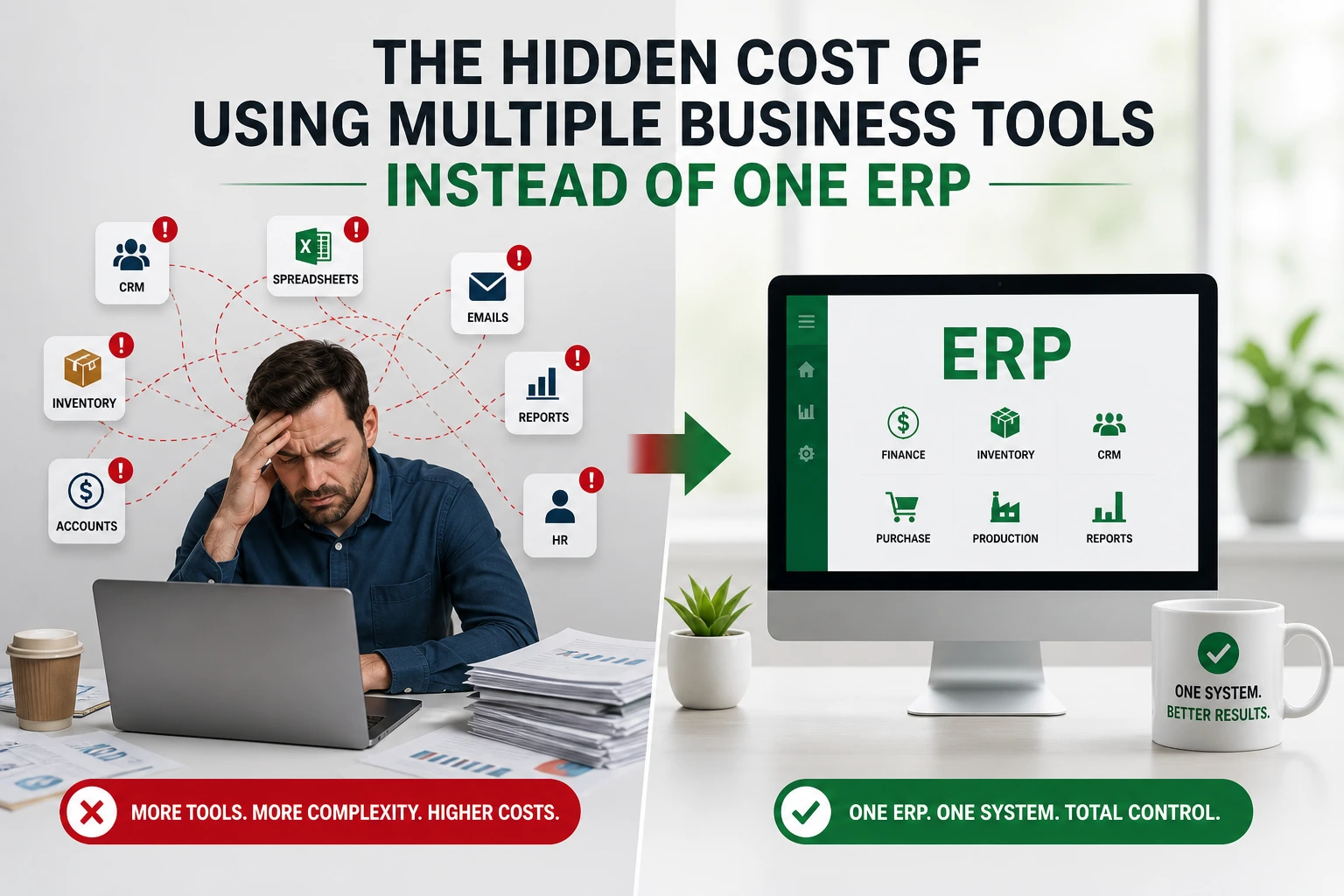
Read More : The Hidden Cost of Using Multiple Business Tools Instead of One ERP

Preventive Maintenance Automation

Preventive maintenance is critical for reducing elevator breakdowns and maintaining AMC customer satisfaction.

However, manual maintenance tracking often causes:

  • missed PM visits
  • delayed servicing
  • inconsistent maintenance schedules
  • poor service follow-ups

ERPbyNet automates preventive maintenance workflows to improve maintenance consistency and operational control.

Preventive Maintenance Features

FeatureBusiness Impact
Automated PM schedulingReduce missed maintenance visits
Recurring maintenance remindersImprove schedule consistency
Visit trackingMonitor pending and completed maintenance
Digital maintenance updatesImprove operational transparency
Centralized PM managementOrganize maintenance operations efficiently

How ERPbyNet Helps

Automated Maintenance Scheduling

Recurring preventive maintenance visits can be scheduled automatically based on:

  • AMC contracts
  • maintenance frequency
  • elevator type
  • customer requirements

Maintenance Tracking & Visibility

Managers can monitor:

  • assigned PM visits
  • delayed schedules
  • completed maintenance
  • technician updates

in real time.

Reduced Breakdown Frequency

Consistent preventive maintenance helps businesses:

  • identify issues early
  • reduce emergency failures
  • improve elevator uptime
  • lower repair costs

Real-Time Complaint & Breakdown Management

Handling complaints manually often creates communication gaps and delayed responses.

Without centralized complaint tracking, businesses struggle to manage:

  • complaint status
  • technician progress
  • escalation handling
  • response timelines
  • pending breakdown requests

ERPbyNet centralizes complaint management into one structured system.

Complaint Management Capabilities

CapabilityBenefit
Centralized complaint dashboardTrack all complaints from one platform
Real-time technician trackingImprove dispatch coordination
Service progress monitoringReduce operational delays
Escalation managementPrioritize urgent issues efficiently
Breakdown trackingImprove response speed

Operational Advantages

Faster Complaint Resolution

Service managers can monitor complaint progress in real time and coordinate technicians more effectively.

Improved Communication

ERPbyNet improves coordination between:

  • dispatch teams
  • field technicians
  • service managers
  • customers

This reduces communication delays and confusion.

Better Operational Visibility

Track:

  • open complaints
  • completed requests
  • technician assignments
  • service timelines

through one centralized dashboard.

Faster Breakdown Response & Reduced Downtime

In the elevator industry, response speed directly affects customer trust and service quality.

Delayed emergency response can lead to:

  • customer dissatisfaction
  • contract risk
  • elevator downtime
  • service escalations
  • negative brand reputation

ERPbyNet improves emergency response coordination through centralized dispatch management.

Breakdown Response Features

FeatureOperational Benefit
Quick technician assignmentFaster emergency response
Real-time dispatch coordinationReduce service delays
Complaint prioritizationHandle critical issues first
Escalation monitoringImprove SLA management
Centralized breakdown trackingImprove operational control

Business Impact

With faster breakdown coordination, elevator companies can:

  • reduce downtime
  • improve customer satisfaction
  • strengthen AMC relationships
  • increase service reliability
  • improve response efficiency

Digital Service Documentation & Paperless Workflows

Paper-based workflows often create:

  • documentation errors
  • delayed reporting
  • misplaced records
  • inconsistent maintenance history
  • administrative inefficiencies

ERPbyNet digitizes service documentation to improve workflow accuracy and transparency.

Digital Documentation Features

FeatureBenefit
Digital job cardsReduce paperwork dependency
Centralized service historyMaintain accurate elevator records
Automated maintenance reportsImprove reporting speed
Customer communication logsTrack service interactions
Digital workflow managementImprove operational organization

Advantages of Digital Documentation

Faster Reporting

Technicians can update service information directly from the field without relying on manual paperwork.

Better Service Transparency

Businesses can maintain complete service history for:

  • maintenance visits
  • breakdown repairs
  • complaint handling
  • customer communication

Improved Operational Accuracy

Digital workflows help reduce:

  • reporting mistakes
  • data duplication
  • missing records
  • administrative confusion

Centralized Elevator Operations Management

Many elevator companies use separate systems for:

  • AMC tracking
  • technician scheduling
  • complaint management
  • maintenance planning
  • service reporting
  • billing workflows

Disconnected systems often create operational silos and communication gaps.

ERPbyNet centralizes all major elevator service operations into one unified platform.

What ERPbyNet Centralizes

Operational AreaERPbyNet Solution
AMC contract managementTrack renewals and maintenance obligations
Technician coordinationImprove dispatch and field visibility
Complaint managementMonitor breakdown resolution efficiently
Preventive maintenanceAutomate recurring service schedules
Service reportingCentralize maintenance documentation
Workflow managementStreamline daily operations

Why Centralization Matters

Centralized operations help elevator companies:

  • improve workflow efficiency
  • reduce manual coordination
  • improve decision-making
  • increase operational visibility
  • scale service operations effectively

Why Modern Elevator Companies Need ERP Automation

The elevator maintenance industry is becoming increasingly competitive and service-driven.

Customers now expect:

  • faster service response
  • transparent communication
  • reduced downtime
  • professional reporting
  • consistent maintenance quality

Companies relying on manual systems often struggle to meet these expectations consistently.

ERPbyNet helps elevator companies modernize operations through:

  • smart technician scheduling
  • preventive maintenance automation
  • centralized complaint handling
  • digital service workflows
  • real-time operational visibility

By reducing operational inefficiencies and improving service coordination, ERPbyNet helps elevator companies minimize revenue leakage, improve AMC retention, and build a more scalable elevator service operation.

Business Benefits of Better Scheduling

Companies implementing structured elevator service scheduling systems often achieve:

Operational AreaImprovement
Technician productivityMore jobs completed daily
Breakdown responseFaster complaint resolution
PM completion ratesReduced missed maintenance
Customer satisfactionBetter service experience
AMC renewalsImproved retention rates
Administrative workloadReduced manual coordination
Operational visibilityReal-time service tracking

Why Elevator Companies Need Digital Scheduling Systems Now

The elevator maintenance industry is becoming more demanding every year. Customers now expect faster service, better communication, and more reliable maintenance. In this situation, scheduling is not just an internal task—it directly affects service quality and revenue.

Customer expectations are rising

Today’s customers want a smooth and predictable service experience. They expect:

  • fast response during breakdowns
  • on-time technician visits
  • clear updates on service progress
  • minimal elevator downtime
  • proper maintenance reports

When these expectations are not met, customer trust drops quickly, and AMC renewals become harder to retain.

Problems with manual scheduling

Many elevator companies still manage scheduling using spreadsheets, phone calls, and messaging apps. While this may work for small operations, it becomes inefficient as the business grows.

Common issues include:

  • delayed technician assignment
  • missed preventive maintenance visits
  • poor visibility of ongoing jobs
  • confusion in complaint handling
  • uneven workload among technicians
  • slow emergency response

These gaps directly affect productivity and increase operational stress.

Why digital scheduling is important

Digital scheduling systems help organize all service operations in one place. Instead of managing multiple disconnected tools, everything becomes structured and trackable.

With a system like ERPbyNet, companies can improve daily operations by:

  • assigning technicians instantly based on availability and location
  • tracking all service jobs in real time
  • automating preventive maintenance schedules
  • prioritizing emergency breakdown requests
  • managing complaints from a single dashboard
  • improving coordination between office staff and field teams

This reduces delays and improves overall service control.

Business impact of digital scheduling

Moving to digital scheduling creates direct operational improvements:

  • faster response to breakdowns
  • higher technician efficiency
  • fewer missed maintenance visits
  • better AMC service consistency
  • improved customer satisfaction
  • smoother daily operations

It also helps companies scale without increasing confusion or manual workload.

Conclusion

Poor scheduling is one of the biggest hidden reasons elevator companies lose revenue without even realizing it. When preventive maintenance visits are missed, technician dispatch is delayed, complaints stay unassigned, and workflows depend on manual coordination, the result is slow operations, unhappy customers, and reduced profitability. Over time, these small inefficiencies directly impact AMC renewals, service quality, and long-term customer relationships.

As elevator service operations become more complex, relying on manual methods is no longer enough. Companies need a centralized system that improves visibility, reduces delays, and automates day-to-day coordination across field teams.

This is where ERPbyNet helps transform operations by enabling smart technician scheduling, preventive maintenance automation, complaint management, real-time service tracking, and fully integrated ERP workflows.

Take control of your service operations today—optimize scheduling, reduce revenue leakage, and scale your elevator business with more efficiency, reliability, and profitability.

Frequently Asked Questions

Why does poor scheduling impact elevator company revenue?

Poor scheduling leads to missed maintenance visits, delayed breakdown response, lower technician productivity, customer dissatisfaction, and AMC contract losses.

What are the biggest problems caused by manual elevator scheduling?

Manual scheduling often creates technician conflicts, delayed dispatch, missed PM visits, paperwork confusion, poor visibility, and operational inefficiencies.

How does preventive maintenance improve profitability?

Preventive maintenance reduces breakdown frequency, improves elevator reliability, lowers emergency repair costs, and increases AMC customer retention.

What is elevator service management software?

Elevator service management software helps companies automate scheduling, complaint handling, technician tracking, preventive maintenance, and service reporting.

How does ERPbyNet help elevator businesses?

ERPbyNet helps elevator companies streamline operations through automated scheduling, centralized complaint management, AMC tracking, technician coordination, and real-time service visibility.

CategoriesERP (Enterprise Resource Planning)

The Hidden Cost of Using Multiple Business Tools Instead of One ERP

Modern businesses rely heavily on software to manage daily operations, improve productivity, and support growth. Over time, however, many companies unknowingly create a complex digital ecosystem by adopting different tools for finance, inventory, sales, HR, customer management, procurement, and reporting. At first, these separate applications may seem affordable, convenient, and easy to implement. Each department chooses software that solves its immediate challenges without considering long-term operational impact.

As businesses grow, this disconnected approach begins creating hidden operational inefficiencies. Employees constantly switch between applications, manually transfer data, and spend valuable time coordinating across departments. Reporting becomes slow, information gets duplicated, and leadership teams struggle to gain real-time visibility into operations. What initially appeared to be a flexible software strategy slowly turns into operational chaos.

In addition to productivity loss, businesses also face rising subscription costs, integration expenses, inconsistent workflows, and decision-making delays. The more fragmented the systems become, the harder it becomes to scale operations efficiently.

What looks affordable and manageable initially often becomes expensive and inefficient as businesses grow. This is why many organizations are now replacing disconnected business systems with integrated ERP software solutions like ERPbyNet.

Why Businesses End Up Using Too Many Software Tools

Business departments using disconnected software tools for finance, CRM, inventory, HR, and reporting creating operational complexity and data silos.
Image Source : Napkin ai

The Rise of Department-Wise Software Adoption

Most businesses do not intentionally create fragmented systems. It usually starts with departments independently selecting software that addresses their immediate operational requirements.

The finance department may use accounting software, while the sales team adopts a separate CRM platform. Inventory management may operate on another system, HR teams use dedicated HR software, and service departments continue relying on spreadsheets or manual tracking methods.

Over time, each department becomes dependent on its preferred tools. While these systems may work individually, they often fail to communicate effectively with one another.

This creates disconnected business systems where critical operational data becomes scattered across multiple platforms.

Short-Term Convenience vs Long-Term Complexity

One major reason for software tool sprawl is the simplicity of modern SaaS adoption. Businesses can quickly subscribe to cloud-based tools with minimal upfront investment.

These solutions often appear attractive because they:

  • Solve immediate operational problems
  • Require limited implementation time
  • Offer low monthly subscription pricing
  • Provide department-specific functionality
  • Reduce short-term IT involvement

However, businesses rarely evaluate how these tools will integrate into long-term operational workflows.

As the organization expands, managing multiple systems becomes increasingly complicated.

How Tool Sprawl Happens Gradually

Software fragmentation rarely happens overnight.

A company may initially adopt one accounting platform. Later, it adds CRM software for sales, warehouse software for inventory, another application for procurement, and separate tools for customer support and reporting.

Eventually, businesses end up managing a large software stack with disconnected workflows, inconsistent data, and operational inefficiencies.

Without centralized business operations, every new tool adds another layer of complexity.

Read More : The Impact of Disconnected Finance Systems on Business Decisions

The Hidden Operational Costs of Multiple Business Tools

Employees Spend Time Switching Between Systems

One of the biggest hidden costs of using multiple business tools is reduced employee productivity.

Employees constantly move between applications to complete a single workflow. For example, a sales executive may need to check the CRM system for customer information, switch to inventory software for stock availability, and then contact finance for payment status.

This constant context switching creates:

  • Productivity loss
  • Increased manual coordination
  • Delayed workflows
  • Employee frustration
  • Reduced operational efficiency

Even small delays accumulate into major operational inefficiencies over time.

Duplicate Data Entry Creates Errors

Disconnected systems often require employees to enter the same information multiple times.

Customer records may be entered separately into CRM, invoicing, inventory, and service management systems.

This duplicate data entry increases the risk of:

  • Human errors
  • Inventory mismatches
  • Incorrect customer information
  • Invoice inconsistencies
  • Data duplication

When different systems contain conflicting information, operational confusion becomes unavoidable.

Lack of Real-Time Visibility Across Departments

Businesses using multiple software tools often struggle with operational visibility.

Since departments operate independently, management teams cannot access a unified view of business performance.

This leads to:

  • Delayed decision-making
  • Communication gaps
  • Management blind spots
  • Poor operational coordination
  • Slow response to business issues

Without centralized visibility, leadership teams often make decisions based on outdated or incomplete data.

Reporting Becomes Slow and Inaccurate

Generating reports across disconnected systems is time-consuming and inefficient.

Many businesses still rely on manual Excel reporting to combine data from different applications.

This process creates several challenges:

  • Time-consuming data consolidation
  • Inconsistent reporting formats
  • Different departments showing different numbers
  • Increased reporting delays
  • Limited data accuracy

When reporting is delayed or unreliable, business planning becomes significantly harder.

Operational Workflows Become Disconnected

Disconnected systems often break operational workflows between departments.

For example:

  • Sales teams may confirm orders without accurate inventory visibility
  • Procurement teams may experience delays due to missing approvals
  • Service teams may lack access to customer history
  • Finance departments may struggle to reconcile operational data

These workflow gaps reduce operational efficiency and increase internal coordination problems.

The Financial Cost Businesses Often Ignore

Multiple Subscription Fees Add Up Quickly

Many businesses underestimate how expensive multiple SaaS tools become over time.

While individual subscriptions may appear affordable initially, costs increase significantly as businesses scale.

Businesses often pay for:

  • Per-user licenses
  • Premium feature upgrades
  • Additional storage
  • Multiple vendor subscriptions
  • Annual renewals

Software tool sprawl can quickly create uncontrollable recurring operational expenses.

Integration and Middleware Expenses

Disconnected business systems often require third-party integrations to share information.

Businesses may invest heavily in:

  • API integrations
  • Middleware software
  • Custom connectors
  • Data synchronization tools
  • Integration maintenance

These hidden costs increase long-term IT dependency while still failing to provide seamless operational connectivity.

Higher IT and Support Dependency

Managing multiple business tools requires more technical support and administrative effort.

Businesses must coordinate with multiple software vendors, manage separate support teams, and train employees on different systems.

This increases:

  • Technical troubleshooting complexity
  • Employee training requirements
  • Vendor management challenges
  • System maintenance workload
  • IT operational overhead

The larger the software ecosystem becomes, the harder it becomes to manage efficiently.

Productivity Loss Is a Real Business Cost

Operational inefficiency directly impacts profitability.

When employees spend hours manually updating systems, correcting errors, searching for information, or waiting for approvals, businesses lose valuable productive time.

This productivity loss affects:

  • Employee efficiency
  • Operational speed
  • Customer responsiveness
  • Order processing
  • Revenue generation

The financial impact of inefficiency is often much larger than software subscription costs themselves.

Hidden Cost of Software Customization

Businesses using disconnected systems frequently create workarounds to compensate for missing integrations.

These workarounds may include:

  • Manual processes
  • Custom spreadsheets
  • Internal scripts
  • Department-specific adjustments
  • Tool-specific customizations

Over time, these temporary fixes create technical debt and operational complexity.

How Multiple Tools Impact Customer Experience

Delayed Response Times

Customer experience suffers when teams cannot quickly access information.

Employees often spend time searching across different systems to locate:

  • Customer history
  • Order details
  • Payment status
  • Inventory availability
  • Service records

This slows response times and affects customer satisfaction.

Inconsistent Customer Communication

Disconnected systems prevent departments from accessing consistent customer information.

As a result:

  • Sales teams may provide inaccurate updates
  • Service teams may lack complete customer context
  • Finance teams may not have current order information
  • Customers may receive conflicting communication

Poor coordination damages customer trust and business credibility.

Billing and Service Errors Damage Trust

When systems fail to communicate properly, operational mistakes become more common.

Businesses may experience:

  • Incorrect invoicing
  • Delivery confusion
  • Missed service schedules
  • Duplicate billing
  • Order fulfillment delays

Even minor operational errors can negatively impact customer relationships.

The Management and Leadership Challenge

Business Leaders Lose Operational Visibility

Leadership teams require accurate operational visibility to make strategic decisions.

However, disconnected software environments make it difficult to access centralized business insights.

Without unified dashboards, management teams face:

  • Fragmented analytics
  • Incomplete reporting
  • Delayed operational updates
  • Limited business visibility
  • Reduced forecasting accuracy

This weakens overall business control.

Strategic Decision-Making Becomes Difficult

Reliable decision-making depends on accurate and timely data.

When departments operate on disconnected systems, leadership teams often struggle with:

  • Data inconsistency
  • Delayed reporting
  • Forecasting inaccuracies
  • Limited operational transparency
  • Slow business analysis

Strategic planning becomes far more difficult when information is fragmented.

Scaling Operations Becomes More Complicated

As businesses grow, operational complexity increases.

Instead of simplifying operations, many businesses continue adding more tools to solve emerging challenges.

This creates:

  • Additional operational chaos
  • More disconnected workflows
  • Increased coordination issues
  • Higher software dependency
  • Growth bottlenecks

Without integrated systems, scaling becomes increasingly inefficient.

The Hidden Cost of ERP Delays

Why Businesses Wait Too Long to Adopt ERP

Many businesses delay ERP implementation because they believe their current systems are “good enough.”

Common concerns include:

  • Fear of implementation costs
  • Resistance to operational change
  • Concerns about migration complexity
  • Employee adaptation challenges
  • Short-term budget limitations

While these concerns are understandable, delaying ERP adoption often creates much larger long-term operational costs.

The Cost of Delayed ERP Adoption

The longer businesses rely on disconnected systems, the more operational inefficiencies accumulate.

Over time:

  • Data becomes harder to consolidate
  • Migration complexity increases
  • Operational chaos grows
  • Manual processes become deeply embedded
  • Reporting becomes increasingly difficult

Businesses that postpone ERP adoption often face higher implementation complexity later.

Why an Integrated ERP System Solves These Problems

Centralized Business Operations

An integrated ERP system provides a single source of truth across the organization.

Instead of managing disconnected systems, businesses can centralize:

  • Finance
  • Inventory
  • Procurement
  • CRM
  • HR
  • Service management
  • Reporting

This creates unified workflows and better operational coordination.

Real-Time Department Connectivity

ERP systems connect departments through a shared operational platform.

This enables real-time collaboration between:

  • Sales teams
  • Inventory departments
  • Procurement operations
  • Finance teams
  • Customer service departments
  • Production management

With connected workflows, businesses can operate more efficiently and respond faster to operational changes.

Better Automation and Workflow Efficiency

ERP software improves business process automation by reducing manual work.

Automated workflows help businesses:

  • Reduce repetitive tasks
  • Improve approval processes
  • Enable real-time reporting
  • Minimize data duplication
  • Increase operational speed

Automation improves productivity while reducing human error.

Improved Business Visibility and Decision-Making

Integrated ERP systems provide real-time dashboards and centralized reporting.

This helps leadership teams:

  • Monitor operations live
  • Access accurate business insights
  • Improve forecasting
  • Make faster decisions
  • Identify operational bottlenecks

Better visibility leads to more informed business management.

Reduced Long-Term Operational Costs

Although ERP implementation requires investment, it often reduces long-term operational costs significantly.

ERP systems help businesses lower:

  • Software subscription dependency
  • Manual operational work
  • Duplicate processes
  • Reporting inefficiencies
  • Integration costs

ERP also supports better scalability as businesses expand.

Key Signs Your Business Needs an ERP System

As businesses grow, operational complexity increases. If your organization is facing multiple workflow challenges, disconnected systems, or reporting inefficiencies, it may be the right time to move toward an integrated ERP solution.

Here are some common signs that your business may have outgrown disconnected software tools and manual processes:

Warning SignBusiness Impact
Teams constantly switching between multiple software toolsReduced productivity and workflow delays
Heavy dependency on Excel spreadsheetsIncreased manual work and higher risk of errors
Frequent reporting delaysSlow decision-making and limited business visibility
Inventory mismatches across systemsStock inaccuracies and operational confusion
Duplicate customer recordsInconsistent customer information and poor coordination
Lack of operational visibilityDifficulty monitoring real-time business performance
Departments working in silosPoor communication and disconnected workflows
Rising software subscription costsIncreasing operational expenses over time
Manual approval bottlenecksDelayed operational processes and reduced efficiency
Inconsistent business dataReporting inaccuracies and management confusion
Difficulty scaling operationsOperational chaos as the business grows
Delayed customer response timesReduced customer satisfaction and slower service delivery

If your business is experiencing several of these challenges, implementing an integrated ERP system like ERPbyNet can help centralize operations, automate workflows, and improve overall business efficiency.

Read More : Why Multi-Purpose ERP Software Is Becoming Essential for Modern Businesses

How ERPbyNet Helps Businesses Replace Operational Chaos

ERPbyNet centralized ERP dashboard connecting inventory, CRM, finance, procurement, HR, production, and service management for streamlined business operations.
Image Source : Napkin AI

Managing business operations through multiple disconnected software tools often creates workflow confusion, reporting delays, duplicate data entry, and poor coordination between departments. ERPbyNet helps businesses eliminate this operational chaos by replacing scattered systems with one centralized ERP platform designed for complete business management.

Instead of using separate applications for inventory, CRM, finance, procurement, HR, production, and service management, ERPbyNet connects all business functions into one integrated system. This unified approach improves operational visibility, streamlines workflows, reduces manual work, and enables faster decision-making across the organization.

One Unified ERP Platform for Complete Business Control

ERPbyNet centralizes core business operations into a single platform, helping organizations improve efficiency, coordination, and scalability.

Business FunctionHow ERPbyNet Helps
Inventory ManagementReal-time stock tracking, warehouse visibility, and inventory accuracy
CRM & Customer ManagementCentralized customer data, lead tracking, and sales management
Procurement ManagementAutomated purchase workflows and vendor coordination
Finance & AccountingBilling, invoicing, expense tracking, and financial reporting
Production ManagementProduction planning, material tracking, and workflow monitoring
Service ManagementService scheduling, complaint tracking, and maintenance management
HRMSPayroll, attendance, employee records, and leave management
Reporting & DashboardsLive reports, operational insights, and real-time analytics
Workflow AutomationAutomated approvals, reduced manual work, and faster processes

By integrating all departments into one ERP ecosystem, ERPbyNet removes operational silos and creates smoother business workflows.

Key Benefits of ERPbyNet

ERPbyNet helps businesses move from disconnected operations to a more streamlined and scalable operational environment.

Centralized Business Operations

Manage inventory, finance, procurement, CRM, production, HR, and service operations from one unified ERP platform.

Better Department Coordination

Enable seamless communication and real-time data sharing between teams for faster operational workflows.

Real-Time Operational Visibility

Access live dashboards, operational reports, financial insights, and workflow tracking from one centralized system.

Reduced Manual Work

Minimize repetitive data entry, spreadsheet dependency, and manual reporting through workflow automation.

Faster Reporting & Better Decision-Making

Generate accurate reports instantly and make faster business decisions using centralized real-time data.

Improved Workflow Automation

Automate approvals, procurement cycles, operational processes, and routine tasks to improve efficiency.

Better Scalability Support

ERPbyNet grows with your business, helping organizations scale operations without increasing software complexity.

Reduced Operational Inefficiencies

Eliminate disconnected workflows, duplicate records, reporting delays, and communication gaps across departments.

ERPbyNet is built for growing businesses that need centralized control, operational visibility, and long-term business scalability.

Industries That Benefit From ERPbyNet

ERPbyNet supports businesses across industries that require workflow automation, operational visibility, and centralized management.

  • Manufacturing — Improve production planning, inventory control, and manufacturing workflows.
  • Distribution & Supply Chain — Manage warehousing, logistics, procurement, and order tracking efficiently.
  • Engineering & Industrial Operations — Streamline complex workflows, project coordination, and material management.
  • Service Businesses — Simplify customer management, service scheduling, and operational tracking.
  • Trading Businesses — Improve inventory visibility, sales coordination, and financial management.
  • Supply Chain Management — Enhance coordination across procurement, warehousing, logistics, and distribution.

ERPbyNet helps businesses streamline operations, reduce software fragmentation, improve productivity, and support long-term business growth.

ERP vs Multiple Software Tools

AreaMultiple ToolsERPbyNet ERP
Data ManagementScatteredCentralized
ReportingManualAutomated
VisibilityLimitedReal-time
CoordinationComplexUnified
ScalingDifficultEasier
CostsIncreasing subscriptionsControlled long-term
Workflow AutomationLimitedIntegrated
Customer ExperienceInconsistentStreamlined

Best Practices Before Switching to ERP

Audit Existing Software Stack

Businesses should first evaluate all currently used applications and identify overlapping functionality.

This helps uncover unnecessary software costs and operational inefficiencies.

Identify Operational Bottlenecks

Understanding workflow gaps and inefficiencies helps businesses prioritize ERP implementation requirements.

Focus areas may include:

  • Reporting delays
  • Inventory inaccuracies
  • Approval bottlenecks
  • Data duplication
  • Communication gaps

Standardize Core Workflows

Before implementing ERP, businesses should standardize operational processes wherever possible.

Clear workflows improve ERP adoption and reduce implementation complexity.

Prioritize Scalable ERP Architecture

Businesses should choose ERP solutions capable of supporting future operational growth.

A scalable ERP system prevents the need for additional disconnected tools later.

Choose ERP Based on Business Processes, Not Just Features

The best ERP solution is one that aligns with actual operational workflows.

Businesses should prioritize:

  • Process compatibility
  • Industry relevance
  • Operational flexibility
  • Reporting capabilities
  • Long-term scalability

Tired of Managing Too Many Business Tools? Switch to One Smart ERP System

Managing business operations through multiple disconnected software tools may seem manageable at first, but as businesses grow, it often creates operational confusion and inefficiencies. Teams spend valuable time switching between applications, manually updating records, coordinating across departments, and preparing reports from scattered systems. This not only slows productivity but also increases the risk of reporting errors, workflow delays, and inconsistent business data.

Many businesses struggle with limited operational visibility because finance, inventory, CRM, procurement, HR, and service operations work separately. As software stacks grow, operational costs, subscription expenses, and internal coordination challenges also increase. Instead of improving efficiency, disconnected systems often create bottlenecks that make scaling operations more difficult and expensive over time.

ERPbyNet helps businesses replace software chaos with one integrated ERP platform that centralizes operations, automates workflows, and improves real-time visibility across departments. By connecting critical business functions into a single system, ERPbyNet helps organizations reduce manual work, improve decision-making, streamline workflows, and support long-term business growth. Whether you operate in manufacturing, distribution, engineering, or service industries, ERPbyNet provides a smarter and more scalable way to manage business operations. Ready to simplify operations and improve efficiency? Request a free ERP consultation, schedule a live demo, or explore how ERPbyNet can transform your business operations today.

Frequently Asked Questions (FAQs)

What are the hidden costs of using multiple business software tools?

Using multiple disconnected business tools often creates hidden costs such as duplicate data entry, productivity loss, reporting delays, integration expenses, employee inefficiency, and rising software subscription fees. Over time, these operational inefficiencies can significantly impact business growth and profitability.

Why do disconnected systems reduce business efficiency?

Disconnected systems prevent departments from sharing real-time information efficiently. This creates communication gaps, manual coordination, delayed workflows, inconsistent reporting, and operational confusion, ultimately reducing overall business efficiency.

How does ERP software improve operational visibility?

ERP software centralizes business data into one integrated platform. This allows businesses to access real-time dashboards, automated reports, and unified operational insights across finance, inventory, sales, procurement, CRM, and other departments.

Is ERP more cost-effective than using multiple SaaS tools?

In many cases, yes. While ERP implementation may require an upfront investment, it often reduces long-term operational costs by eliminating multiple software subscriptions, reducing manual work, minimizing integration expenses, and improving workflow efficiency.

How does ERPbyNet help businesses centralize operations?

ERPbyNet integrates critical business functions such as inventory management, CRM, finance, procurement, production, HRMS, and service management into one unified ERP platform. This helps businesses improve coordination, visibility, and operational control.

Name
Verified by MonsterInsights