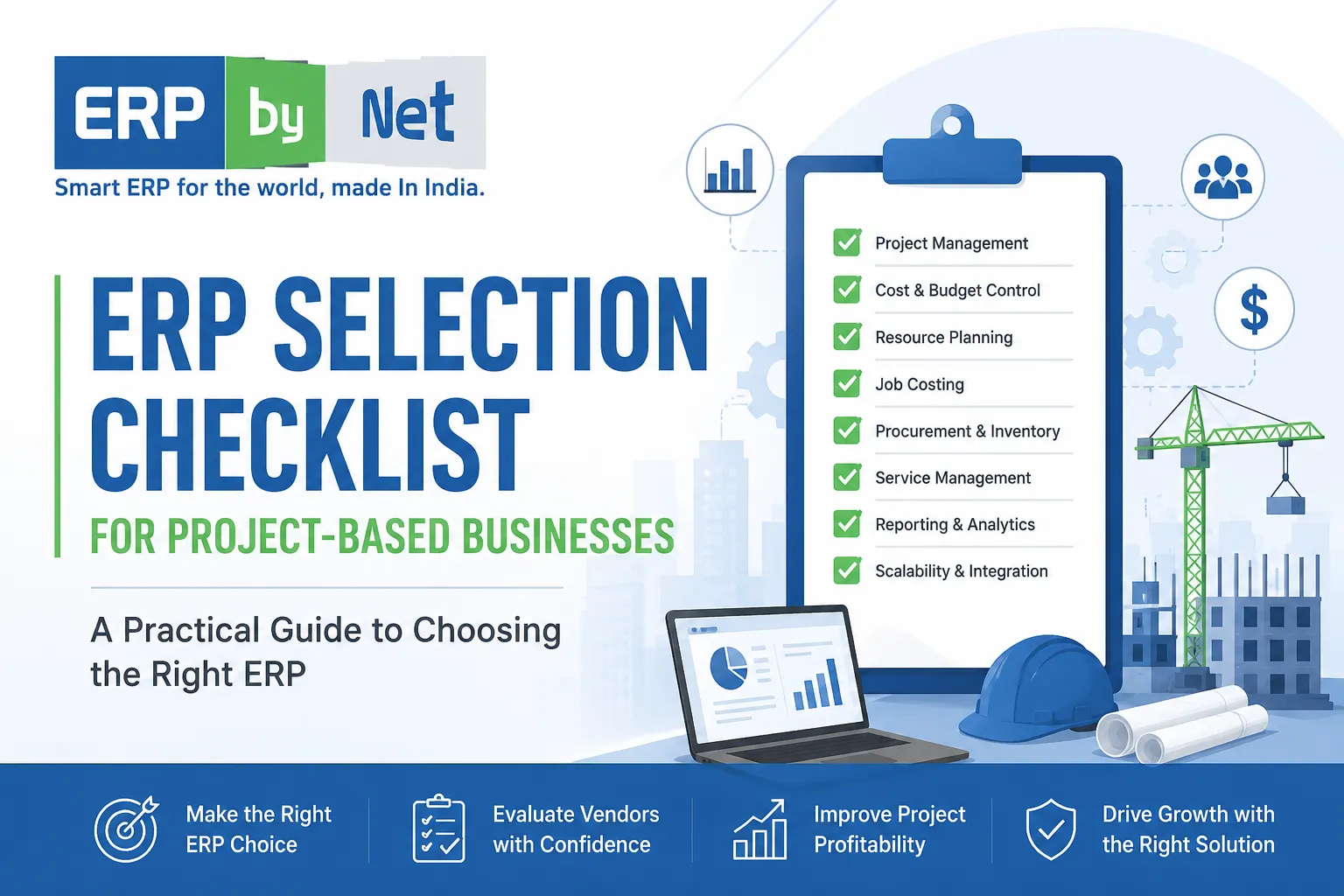
ERP Selection Checklist for Project-Based Businesses: A Practical Guide to Choosing the Right ERP
Managing projects successfully requires more than just meeting deadlines. Project-based businesses must control costs, allocate resources effectively, manage procurement, track profitability, and maintain visibility across multiple projects. As organizations grow, relying on spreadsheets and disconnected software tools often leads to inefficiencies, data silos, and reduced operational control.
This is where Enterprise Resource Planning (ERP) software becomes essential. However, selecting the right ERP system can be challenging. With countless vendors and features available, businesses often struggle to identify the solution that best fits their unique requirements.
This ERP selection checklist is designed specifically for project-based businesses to help decision-makers evaluate ERP solutions strategically and choose a platform that supports long-term growth and operational efficiency.
Why Project-Based Businesses Need a Specialized ERP Selection Strategy

Project-based businesses operate differently from traditional manufacturing, retail, or distribution companies. Every project has its own budget, timeline, resource requirements, procurement needs, and profitability goals. As a result, selecting an ERP system requires a different approach than choosing software for a standard operational business.
Organizations involved in engineering, EPC contracting, construction, industrial services, elevator maintenance, and custom manufacturing must manage multiple moving parts simultaneously. Without the right ERP solution, tracking project performance, controlling costs, and maintaining operational visibility become increasingly difficult as the business grows.
Key Challenges Faced by Project-Based Businesses
Project-driven organizations typically need to manage:
- Multiple projects at various stages of execution
- Project budgeting and cost control
- Resource scheduling and workforce utilization
- Procurement linked to project requirements
- Progress billing and milestone invoicing
- Service and maintenance operations
- Project profitability and performance reporting
Because of these complexities, businesses require an ERP system that provides real-time visibility across projects while integrating financials, procurement, inventory, and service management.
Risks of Choosing a Generic ERP System
Many organizations select ERP software based on general functionality without evaluating whether it supports project-centric workflows.
This often leads to:
- Limited project visibility
- Inaccurate job costing
- Resource allocation conflicts
- Delayed reporting
- Manual data entry across departments
- Difficulty scaling operations
A project-based ERP should provide end-to-end control over the entire project lifecycle, from planning and procurement to execution, billing, and post-project analysis.
How to Prepare Before Evaluating ERP Vendors
ERP selection should begin long before vendor demonstrations and pricing discussions. Proper preparation helps businesses identify the right solution while reducing implementation risks.
Define Your ERP Implementation Goals
Before comparing ERP systems, identify the business outcomes you want to achieve.
Consider questions such as:
- What operational challenges are slowing growth?
- Which manual processes create inefficiencies?
- What information is difficult to access today?
- Which departments require greater visibility?
- What are the company’s long-term growth objectives?
Clearly defined goals create a framework for evaluating ERP solutions effectively.
Identify Stakeholders Across Departments
ERP software impacts nearly every department within a business. Involving stakeholders early helps ensure all requirements are captured.
Key stakeholders may include:
- Business owners
- Finance teams
- Project managers
- Procurement departments
- Service managers
- Operations leaders
- IT administrators
Their input provides valuable insights into process bottlenecks and improvement opportunities.
Map Your Existing Business Processes
Document how your organization currently handles:
- Project planning
- Resource allocation
- Procurement workflows
- Inventory management
- Financial processes
- Service management
Understanding existing workflows helps identify gaps that the ERP system should address.
Read More : How to Choose the Right ERP for Project-Based Businesses
ERP Selection Checklist for Project-Based Businesses

Selecting the right ERP system requires a thorough evaluation of business processes, project requirements, financial controls, resource management capabilities, and future growth needs. Project-based organizations should assess every ERP solution against key operational areas to ensure it can support the complete project lifecycle while improving visibility, efficiency, and profitability.
Project Management and Project Control Features
Project management functionality is one of the most important factors when evaluating ERP software for project-based businesses. The ERP should provide comprehensive tools to plan, monitor, and control projects from initiation through completion.
Project Planning and Scheduling
Effective project planning lays the foundation for successful project execution. An ERP system should enable organizations to create detailed project schedules, define milestones, assign responsibilities, and monitor progress throughout the project lifecycle.
Key capabilities include:
- Project schedule creation and management
- Milestone and deliverable planning
- Task assignment and responsibility tracking
- Real-time project progress monitoring
- Deadline tracking and automated alerts
- Project status visibility across teams
Strong planning and scheduling functionality improves collaboration, accountability, and project delivery performance.
Project Budgeting and Cost Management
Maintaining control over project costs is essential for protecting profitability and ensuring projects remain financially viable.
An ERP system should support:
- Budget creation and approval workflows
- Project-wise budget allocation
- Real-time expense monitoring
- Budget versus actual cost analysis
- Cost forecasting and variance tracking
- Financial alerts for budget overruns
These capabilities help organizations monitor spending, reduce financial risks, and maintain control throughout project execution.
Project Profitability Tracking
Project profitability should be visible at every stage of execution. An ERP solution should provide accurate financial insights that help management evaluate project performance and business growth opportunities.
Essential profitability metrics include:
- Project revenue tracking
- Direct project costs
- Indirect project expenses
- Gross profit margin analysis
- Profitability trends across projects
- Customer and project-level profitability reports
Access to real-time profitability data supports better project selection, pricing decisions, and resource allocation.
Resource Planning and Workforce Management
Efficient resource utilization directly impacts project success, operational efficiency, and profitability. A project-based ERP should help organizations maximize workforce productivity while preventing resource shortages and scheduling conflicts.
Resource Scheduling and Allocation
The ERP should provide tools for managing workforce assignments and ensuring resources are allocated effectively across multiple projects.
Important capabilities include:
- Employee assignment management
- Skill-based resource allocation
- Workforce scheduling
- Resource availability tracking
- Multi-project resource planning
- Workload balancing
These features help organizations optimize workforce utilization while reducing project delays caused by resource constraints.
Capacity Planning and Utilization Tracking
Long-term resource planning is essential for supporting business growth and improving project delivery.
The ERP should help organizations:
- Forecast future resource requirements
- Identify capacity shortages
- Monitor workforce utilization rates
- Analyze productivity trends
- Plan future staffing requirements
- Improve resource forecasting accuracy
Effective capacity planning minimizes operational bottlenecks and supports better project execution.
Financial Management and Job Costing
Financial visibility is critical for managing project performance and maintaining profitability. A project-focused ERP should provide comprehensive financial management and cost tracking capabilities.
Job Costing and Cost Allocation
Accurate job costing enables businesses to understand the true cost of project execution and improve pricing strategies.
The ERP should track:
- Labor expenses
- Material costs
- Equipment expenses
- Contractor and subcontractor costs
- Operational expenses
- Indirect overhead allocation
Comprehensive cost tracking helps organizations improve profitability analysis and financial decision-making.
Billing and Revenue Management
Project-based businesses often require flexible billing structures to accommodate different customer agreements and project requirements.
The ERP should support:
- Progress billing
- Milestone invoicing
- Contract billing
- Time-and-material billing
- Recurring billing arrangements
- Revenue recognition management
Flexible billing processes improve cash flow management and customer satisfaction.
Financial Reporting and Performance Analysis
Business leaders require accurate financial information to evaluate project performance and organizational health.
The ERP should provide:
- Project financial summaries
- Cost analysis reports
- Revenue performance reports
- Budget tracking reports
- Cash flow dashboards
- Profitability analysis reports
Real-time financial insights enable faster and more informed business decisions.
Procurement and Inventory Management Capabilities
Project success often depends on having the right materials available at the right time. Procurement and inventory management functionality should provide visibility and control over purchasing and material usage.
Procurement Management
An ERP system should streamline procurement activities while improving supplier management and purchasing efficiency.
Key capabilities include:
- Purchase requisition management
- Purchase order processing
- Vendor evaluation and selection
- Approval workflow automation
- Supplier performance monitoring
- Procurement reporting and analytics
These features help reduce procurement delays and improve purchasing control.
Inventory Visibility and Material Tracking
Inventory management functionality should provide complete visibility into stock levels, material consumption, and inventory movement.
The ERP should support:
- Real-time inventory visibility
- Inventory valuation
- Project-wise material tracking
- Multi-location inventory management
- Warehouse management
- Stock replenishment planning
Effective inventory control reduces waste, prevents shortages, and improves project efficiency.
Service Management and Maintenance Operations
Many project-based organizations provide ongoing maintenance and after-sales services. The ERP should support service operations alongside project management activities.
Service Ticket Management
Efficient service management helps improve customer satisfaction and operational responsiveness.
The ERP should provide:
- Service request creation
- Technician assignment
- Complaint management
- Resolution tracking
- Service scheduling
- Performance monitoring
These capabilities improve service quality and response times.
AMC and Contract Management
For organizations offering maintenance services, contract management functionality is essential.
The ERP should manage:
- Annual Maintenance Contracts (AMCs)
- Preventive maintenance schedules
- Contract renewals
- Warranty tracking
- SLA monitoring
- Service history management
These features support consistent service delivery and customer retention.
Reporting, Dashboards, and Business Intelligence
Data-driven decision-making is essential for improving operational performance and supporting business growth.
Real-Time Business Dashboards
Modern ERP systems should provide interactive dashboards that offer immediate visibility into business performance.
Key dashboard metrics include:
- Project status
- Resource utilization
- Budget consumption
- Revenue performance
- Service metrics
- Procurement activities
Real-time dashboards enable management teams to identify issues and respond proactively.
Advanced Reporting and Analytics
Advanced reporting tools help organizations analyze performance trends and improve strategic planning.
The ERP should support:
- Project profitability reports
- Resource utilization reports
- Procurement analytics
- Financial performance reports
- Service management reports
- Executive management dashboards
Comprehensive reporting improves visibility and supports better decision-making.
ERP Integration and Scalability Requirements
An ERP investment should support both current operational needs and future business growth.
Third-Party Software Integrations
Seamless integrations improve data accuracy and eliminate manual processes.
Evaluate whether the ERP can integrate with:
- CRM software
- Accounting applications
- Payroll systems
- HR platforms
- Business intelligence tools
- Banking systems
Integrated systems create a unified business environment and improve operational efficiency.
Long-Term Scalability
As businesses grow, ERP requirements evolve. The selected ERP solution should be capable of supporting increasing operational complexity.
The ERP should accommodate:
- Business expansion
- Multiple branches and locations
- Higher project volumes
- Additional users
- New departments
- Evolving business processes
A scalable ERP platform helps protect technology investments while supporting long-term growth and operational excellence.
Read More: Why Multi-Purpose ERP Software Is Becoming Essential for Modern Businesses
Conclusion
Selecting an ERP system is one of the most important decisions a project-based business can make. The right ERP improves visibility, enhances collaboration, streamlines operations, and helps organizations manage projects more profitably.
By following a structured ERP selection checklist, businesses can avoid common mistakes, evaluate vendors effectively, and choose a solution that aligns with their operational requirements and growth objectives.
For organizations seeking a unified platform to manage projects, finances, resources, procurement, inventory, and service operations, ERPbyNet provides the capabilities needed to drive efficiency and support sustainable business growth.
Frequently Asked Questions
What is an ERP selection checklist?
An ERP selection checklist is a structured framework used to evaluate ERP software based on business requirements, functionality, scalability, support, and implementation considerations.
Why do project-based businesses need specialized ERP software?
Project-based businesses require features such as project management, job costing, resource planning, project profitability tracking, and service management that generic ERP systems may not provide effectively.
What features should a project-based ERP include?
Key features include project planning, budgeting, resource management, job costing, procurement, inventory management, billing, reporting, and service management.
How long does ERP implementation typically take?
Implementation timelines vary depending on business size, complexity, customization requirements, and user training needs. Most ERP projects take several months to complete.
How can ERPbyNet help project-based organizations improve project profitability?
ERPbyNet provides real-time visibility into project costs, budgets, resources, procurement, and financial performance, enabling businesses to make data-driven decisions and improve project profitability.