How ERP Systems Support Supply Chain Management
Global supply chains are becoming increasingly complex and unpredictable. Disruptions—from geopolitical tensions and raw material shortages to shipping delays and sudden spikes in demand—can halt operations and create costly inefficiencies. Many businesses struggle because traditional management systems lack real-time visibility, seamless collaboration, and automation capabilities. In today’s fast-paced environment, implementing a robust ERP System is no longer optional; it is essential for unifying data, streamlining processes, and building a resilient, agile supply chain that can adapt to any challenge.
This is where an ERP System becomes essential. By centralizing data, automating workflows, and providing real-time insights, an ERP System transforms a fragmented supply chain into a connected, agile, and proactive ecosystem. It enables businesses to anticipate disruptions, make informed decisions, and maintain efficiency under pressure.
In this comprehensive guide, we explore how an ERP System supports supply chain management, the tangible benefits it delivers, and actionable steps to implement it successfully. With ERPbyNet, companies gain a tailored solution that strengthens every link of their supply chain.
Understanding the Role of ERP in Supply Chain Management
What ERP Brings to the Supply Chain
An ERP system is not just a software tool—it is an enterprise‑wide platform that connects every department, from procurement and manufacturing to finance and customer service. In the context of supply chain management, ERP provides:
- Centralized Data Access: A single source of truth for inventory, production, procurement, logistics, and financials.
- End‑to‑End Visibility: Real‑time updates across the supply chain help decision‑makers respond quickly to disruptions.
- Process Automation: Routine tasks like order approvals, invoice matching, and inventory adjustments are automated, reducing delays and errors.
- Collaboration Across Stakeholders: Suppliers, manufacturers, logistics partners, and customers interact through connected workflows.
ERP vs. Standalone SCM Systems
While standalone SCM software specializes in supply chain tasks, ERP integrates SCM within the broader enterprise. This means supply chain data doesn’t exist in isolation but connects directly with finance, sales, HR, and service management. For example:
- An SCM tool might track raw material availability, but an ERP platform connects that data with financial planning to forecast cash flow impact.
- ERP ensures that changes in demand planning immediately reflect in procurement, production schedules, and customer order commitments.
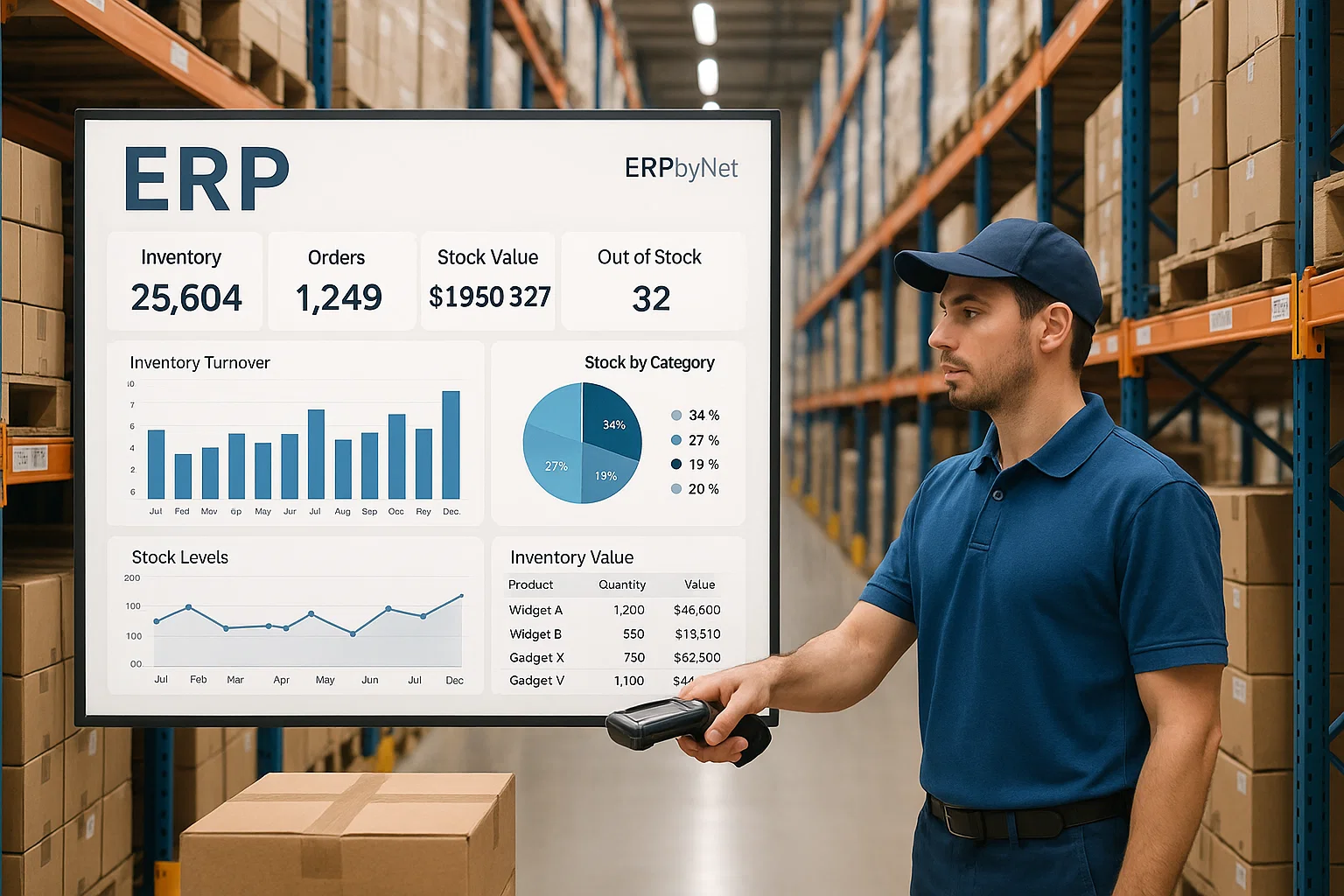
Read More : Role of ERP in Warehouse Inventory Management: Best Practices & Example
Core Functions of ERP in Supply Chain Management

ERP strengthens supply chain performance in multiple dimensions. Let’s break down the key roles.
1. Supply Chain Planning
Accurate planning is the backbone of SCM. ERP systems enable businesses to:
- Forecast demand using historical and real‑time data.
- Balance supply with projected sales to minimize stockouts and overstocking.
- Align procurement, production, and logistics with customer needs.
2. Procurement Management
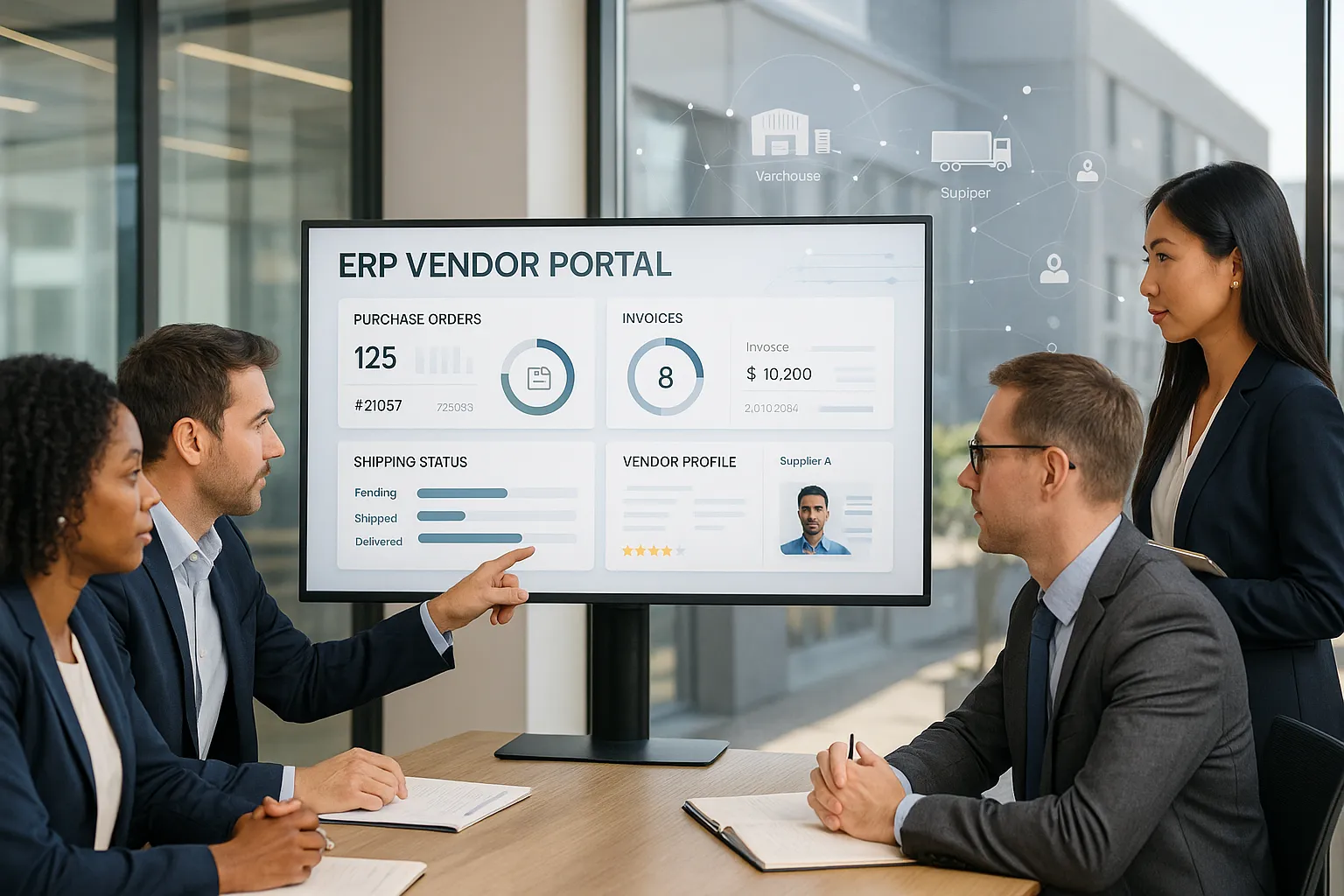
ERP automates procurement cycles and supplier management:
- Streamlines vendor evaluation and contract management.
- Tracks supplier performance, costs, and delivery times.
- Ensures compliance with policies while reducing purchasing delays.
3. Manufacturing and Production
ERP enhances shop floor efficiency:
- Automates production scheduling and material requirements planning (MRP).
- Tracks work orders and monitors capacity utilization.
- Reduces downtime with preventive maintenance scheduling.
4. Product Development
By connecting R&D with supply chain data:
- ERP shortens time‑to‑market for new products.
- Ensures designs account for material availability and cost structures.
- Supports regulatory compliance and quality management.
5. Logistics and Distribution
Logistics is often the most visible supply chain touchpoint for customers. ERP helps by:
- Optimizing warehouse management (inventory, picking, packing, and shipping).
- Improving route planning and freight cost tracking.
- Integrating real‑time shipment tracking for customers.
6. Financial Management
ERP ensures that supply chain operations align with financial health:
- Automates invoicing, payment, and reconciliation processes.
- Tracks costs across procurement, production, and logistics.
- Provides profit margin analysis for supply chain activities.
7. Customer Service Management
Customer satisfaction depends on supply chain efficiency:
- ERP systems give sales teams real‑time visibility into order status.
- Customer service can resolve queries faster with accurate delivery data.
- Improved accuracy in promises builds stronger customer trust.
8. Sustainability Management
Modern supply chains are judged not only on speed and cost but also on sustainability:
- ERP tracks emissions, waste, and resource usage.
- Provides sustainability reporting aligned with regulations.
- Supports ethical sourcing and green logistics initiatives.
Read More : ERP Audits Made Simple: Safeguarding Quality and Safety Every Day
Key Benefits of ERP in Supply Chain Management
A modern supply chain is a complex, dynamic network where speed, accuracy, and visibility determine success. When implemented effectively, ERPbyNet transforms this complexity into a streamlined, intelligent system that drives measurable business results. Here’s how:
1. Unified Collaboration
- Break down silos and connect all stakeholders—internal teams, suppliers, and logistics partners.
- Real-time data access ensures everyone is working with the same information, enabling faster, synchronized decision-making across procurement, manufacturing, and distribution.
2. End-to-End Visibility
- Gain complete transparency into inventory levels, order status, and demand forecasts.
- Spot bottlenecks, inefficiencies, or delays before they escalate into costly disruptions.
- ERPbyNet equips leaders with the insights to optimize every step of the supply chain.
3. Improved Efficiency
- Automate routine tasks such as approvals, invoicing, and shipment documentation.
- Reduce manual errors and accelerate workflows across departments.
- Every efficiency gain translates into tangible cost savings and improved service delivery.
4. Data-Driven Insights
- Advanced analytics and reporting allow proactive decision-making.
- Predict trends, identify risks, and adjust strategies in real-time.
- Move from reactive problem-solving to predictive, strategic management.
5. Enhanced Resilience
- Scenario planning and risk analysis help prepare for disruptions—from supplier delays to transportation issues.
- ERPbyNet enables businesses to adapt quickly, minimizing downtime and maintaining continuity.
6. Cost Reduction
- Optimize inventory levels to reduce excess stock and storage costs.
- Minimize waste and streamline operations across procurement, production, and logistics.
- Lower operational costs while maintaining or improving service quality.
7. Scalability for Growth
- As your business expands into new markets, launches new products, or increases transaction volumes, ERPbyNet scales with you.
- Maintain operational efficiency and visibility without needing costly system overhauls.
In essence, ERPbyNet doesn’t just manage your supply chain—it transforms it into a connected, efficient, and resilient engine for growth, giving your business the agility to stay ahead in a competitive market.
Emerging Trends: How ERP is Evolving for Supply Chain Excellence

Technology innovations are reshaping how ERP supports supply chains:
AI‑Enabled Forecasting
Artificial intelligence embedded in ERP platforms refines demand forecasting, inventory planning, and anomaly detection.
Real‑Time Data Integration
IoT sensors, telematics, and blockchain provide real‑time data that ERP consolidates into actionable insights.
Cloud ERP Advantages
Cloud‑based ERP platforms ensure accessibility, scalability, and lower infrastructure costs, enabling global supply chains to collaborate seamlessly.
Mobile ERP Applications
Mobile apps bring supply chain management to the field, empowering warehouse staff, delivery drivers, and managers with instant access to ERP data.
Blockchain for Transparency
ERP systems integrated with blockchain enhance trust in transactions, ensuring authenticity and traceability across the supply chain.
Read More : From Paper Records to Digital Accuracy: Managing Staff with ERPbyNet
Choosing the Right ERP for Supply Chain Management
Selecting an ERP is one of the most critical decisions a business can make for its supply chain. The right system can transform operations, improve visibility, and unlock growth. The wrong choice, however, often leads to costly inefficiencies, frustrated teams, and limited scalability. That’s why businesses need more than just software—they need a solution designed for their industry, their processes, and their future.
At ERPbyNet, we understand that no two supply chains are the same. Our ERP platform is built to adapt, integrate, and scale with your business, ensuring that you get long-term value, not short-term fixes.
Key considerations when choosing your ERP:
- Ease of Use : A system is only as effective as its adoption rate. Look for intuitive interfaces and role-based dashboards that make it easy for teams to learn, use, and embrace daily. ERPbyNet is designed with usability at its core, reducing resistance to change and driving faster adoption across departments.
- Scalability for Growth : Your ERP should grow with you—whether you’re entering new markets, expanding product lines, or handling higher transaction volumes. Our modular structure ensures you can add capabilities as your business evolves without disruptive overhauls.
- Integration Capabilities : Supply chains rely on interconnected systems: CRM, IoT devices, analytics tools, third-party logistics platforms, and more. We offer robust integration capabilities that ensure seamless data flow across the ecosystem, eliminating silos and enabling smarter, faster decision-making.
- Cloud Deployment : Modern supply chains require flexibility and global access. With ERPbyNet’s cloud deployment, businesses enjoy reduced IT overheads, faster implementations, and anywhere-anytime access, empowering global teams to collaborate effortlessly.
- Common Data Model : Disconnected systems often create conflicting reports and operational blind spots. We provide a unified data model, ensuring a single source of truth for inventory, orders, suppliers, and customers. This clarity improves trust in data and speeds up decision cycles.
- Cost and ROI : The value of ERP isn’t just about licensing fees—it’s about the long-term impact on efficiency, accuracy, and customer satisfaction. We deliver measurable ROI by helping companies reduce waste, streamline workflows, and optimize resource utilization.
- Security and Compliance : Protecting sensitive financial and supply chain data is non-negotiable. We embed enterprise-grade security, encryption, and compliance tools to help businesses meet global standards like GDPR, ISO, and industry-specific regulations.
Steps to Successfully Integrate ERP with Supply Chains
Implementing ERP in supply chain management requires careful planning. Key steps include:
- Develop a Clear Integration Plan: Define objectives, timelines, and responsibilities.
- Prepare and Clean Data: Ensure data accuracy before migration to avoid disruptions.
- Configure and Customize: Tailor ERP features to industry‑specific requirements.
- Pilot Test: Run controlled pilots to identify issues early.
- Train Employees: Provide ongoing training to ensure adoption across functions.
- Monitor and Improve: Continuously track KPIs and fine‑tune processes for better outcomes.
Case for Cloud ERP: Why Modern Supply Chains Prefer It
In today’s hyper-connected markets, speed, agility, and adaptability define success. Traditional on-premises ERP systems, while once the backbone of enterprise operations, now struggle to keep up with the demands of global supply chains. They often come with long deployment timelines, heavy IT overheads, and limited flexibility.
This is where Cloud ERP from ERPbyNet reshapes the game. It’s not just a shift in technology—it’s a shift in how supply chains operate and compete.
Why businesses are moving to the cloud:
- Faster Deployments
Cloud ERP cuts down months of implementation into weeks. Businesses can configure, launch, and scale quickly without waiting for complex infrastructure setups. - Lower Total Cost of Ownership
Forget expensive hardware, server maintenance, and IT staffing overheads. With Cloud ERP, companies pay for what they use, while reaping long-term savings from streamlined operations. - Real-Time Collaboration
Whether it’s suppliers in Asia, warehouses in Europe, or customers in North America, everyone works off the same live data. This ensures transparency, faster decision-making, and fewer miscommunications. - Continuous Innovation
Cloud ERP ensures that you’re always on the latest version, with new features like AI-driven demand forecasting, IoT integration, and advanced analytics rolled out regularly—without disruptive upgrades.
In short, Cloud ERP gives modern supply chains the speed, cost efficiency, and intelligence they need to thrive in uncertain markets. With ERPbyNet, businesses aren’t just managing supply chains—they’re building resilient, future-ready ecosystems.
How ERP Strengthens Risk Management in Supply Chains
Risk is an inevitable part of supply chain management. ERP systems turn risk into an opportunity for resilience by enabling proactive responses and smarter planning.
- Predictive Analytics: Anticipate bottlenecks, demand spikes, or shortages before they happen.
- Alternate Supplier and Logistics Planning: Maintain visibility across multiple suppliers and transport options for quick pivots.
- Real-Time Monitoring: Get instant alerts for disruptions such as shipment delays or inventory shortages.
- Compliance Management: Simplify global compliance with automated reporting, audit trails, and regulatory adherence.
By carefully selecting the right ERP, integrating it strategically, leveraging cloud capabilities, and building strong risk management processes, businesses can create supply chains that are agile, reliable, and future-ready. With ERPbyNet, companies gain more than software—they gain a trusted partner in driving supply chain excellence.
Take Your Supply Chain to the Next Level
In today’s fast-paced business world, a robust ERP System is essential for creating an agile, efficient, and resilient supply chain. By unifying data, automating workflows, and providing real-time visibility, an ERP System helps businesses anticipate disruptions, optimize operations, and deliver superior customer experiences. With ERPbyNet, you gain a solution designed to scale with your growth, ensuring every aspect of your supply chain runs smoothly and efficiently.
Don’t let inefficiencies hold your business back. Take control of your operations and unlock the full potential of your supply chain with Us . Contact us directly today to explore how our ERP System can transform your supply chain into a connected, future-ready ecosystem.
Frequently Asked Questions (FAQs)
What is an ERP System and how does it support supply chain management?
An ERP System centralizes data, automates workflows, and provides real-time visibility across procurement, production, inventory, and logistics, enabling a connected and efficient supply chain.
How can an ERP System improve supply chain efficiency?
By reducing manual tasks, automating approvals, optimizing inventory, and providing data-driven insights, an ERP System streamlines processes, reduces errors, and accelerates decision-making.
Is a cloud-based ERP System better for modern supply chains?
Yes. Cloud ERP offers real-time collaboration, faster deployment, lower infrastructure costs, and scalability, making it ideal for dynamic, global supply chains.
How long does it take to implement an ERP System in a supply chain?
Implementation timelines vary based on business size and complexity. With ERPbyNet, deployment can be achieved in weeks with careful planning, pilot testing, and training.
How does ERPbyNet ensure data security and compliance?
ERPbyNet uses enterprise-grade security, encryption, and compliance frameworks to protect sensitive supply chain and financial data, meeting global standards like GDPR and ISO.