CategoriesERP (Enterprise Resource Planning)

Top Mistakes to Avoid When Choosing Inventory Management Software

In today’s fast-moving and highly competitive business environment, inventory management is no longer limited to simply tracking stock levels. It has become a critical function that directly impacts cost control, operational efficiency, and overall customer satisfaction. Whether a business operates in manufacturing, warehousing, distribution, or service-based industries, the inventory system plays a central role in ensuring smooth day-to-day operations. However, many organizations underestimate the complexity involved in selecting the right inventory management software and often make quick decisions based on surface-level features, pricing, or short-term needs, without considering long-term alignment with their business processes.

Such decisions can lead to serious operational challenges, including poor inventory visibility, frequent stock mismatches, delayed order fulfillment, increased manual workload, and declining customer satisfaction. Over time, these inefficiencies can restrict business growth and reduce profitability. This is why it is essential not only to understand what features to look for but also to recognize the common mistakes to avoid.

 In this detailed guide, we highlight the key pitfalls businesses face when choosing inventory management software and explain how a powerful, integrated solution like ERPbyNet can help build a more efficient, scalable, and future-ready system.

1. Ignoring Business-Specific Requirements

Business professionals analyzing inventory management software dashboard with warehouse boxes highlighting mismatch in business-specific requirements

One of the most critical and expensive mistakes businesses make when selecting inventory management software is failing to clearly define their own operational requirements before evaluating solutions. This mistake often sets the foundation for long-term inefficiencies and system failure.

Why This Happens

Many organizations rush into the selection process by exploring demos, comparing features, or following market trends without first understanding their internal workflows. There is a common assumption that a widely used or popular software solution will automatically fit their operations. However, this “one-size-fits-all” mindset rarely works in reality.

In most cases, decision-makers prioritize external factors like brand reputation or pricing over internal alignment. As a result, they overlook the most important question:
“Does this software truly match how our business operates?”

The Real Problem

Every business operates differently, and inventory processes vary significantly across industries and business models:

  • Manufacturing companies require detailed production planning, raw material tracking, and Bill of Materials (BOM) management to ensure smooth production cycles.
  • Service-based businesses need specialized features such as AMC (Annual Maintenance Contract) tracking, spare parts management, and service lifecycle visibility.
  • Distributors and wholesalers depend on multi-warehouse management, logistics tracking, and real-time stock movement visibility across locations.

When businesses select generic software without aligning it to these specific needs, several operational gaps begin to appear.

What This Leads To

  • Workflow mismatches: Employees are forced to adjust their processes to fit the software instead of the software supporting their processes.
  • Manual workarounds: Teams start using spreadsheets or external tools to fill functionality gaps, increasing dependency on disconnected systems.
  • Reduced efficiency: Tasks take longer to complete, errors increase, and productivity declines due to system limitations.

Deep Impact on Business

Over time, the situation becomes more serious. Employees lose trust in the system because it does not reflect real-world operations. As a result:

  • They stop using the software consistently
  • Data becomes incomplete or inaccurate
  • Decision-making is affected due to unreliable information

Ultimately, the software becomes a burden instead of a solution, leading to system failure and wasted investment.

How to Avoid This Mistake

To make the right choice, businesses must take a structured and strategic approach:

  • Conduct a detailed requirement analysis involving all key departments
  • Map existing workflows and identify inefficiencies
  • Clearly define operational challenges and goals
  • Separate must-have features from optional or future requirements
  • Ensure the selected software aligns with both current needs and future growth plans

ERPbyNet Advantage

ERPbyNet is built with flexibility and customization at its core, allowing businesses to configure workflows based on their exact requirements. Instead of forcing operational changes, it adapts to your processes—ensuring higher efficiency, better adoption, and long-term success.

2. Focusing Only on Price Instead of Long-Term Value

While cost is an important factor in any business decision, making it the primary criterion when selecting inventory management software can lead to significant long-term consequences.

The Hidden Reality

Low-cost solutions often appear attractive initially, but they usually come with serious limitations such as:

  • Restricted or basic features that do not support advanced operations
  • Poor scalability, making it difficult to grow with the business
  • Limited integration capabilities, leading to disconnected systems
  • Weak customer support, resulting in unresolved issues and downtime

These limitations may not be obvious during the initial evaluation but become evident as the business starts using the system.

What Businesses Overlook

Most companies focus only on the upfront investment, ignoring the hidden and long-term costs associated with a poor system:

  • Cost of inefficiency: Employees spend more time completing tasks due to lack of automation
  • Cost of manual errors: Incorrect data leads to financial losses and operational issues
  • Cost of system replacement: Eventually, the business may need to invest in a new system

Long-Term Consequences

What seems like a cost-saving decision initially often turns into a financial burden. Businesses may experience:

  • Increased operational expenses
  • Reduced productivity
  • Frequent system changes and disruptions

In reality, a cheap system can become far more expensive over time.

Smarter Approach

Instead of focusing only on price, businesses should evaluate the Total Cost of Ownership (TCO), which includes:

  • Implementation and setup costs
  • Training and onboarding expenses
  • Ongoing maintenance and upgrade costs
  • Impact on employee productivity and efficiency

This approach provides a more accurate picture of the software’s true value.

ERPbyNet Advantage

ERPbyNet delivers long-term value and high ROI by integrating multiple business functions into a single platform. This eliminates the need for multiple tools, reduces operational complexity, and ensures cost efficiency over time.

3. Overlooking Integration Capabilities

Inventory management is not an isolated function—it is deeply interconnected with multiple business operations.

The Problem

Many businesses choose software that operates independently and cannot integrate with critical systems such as:

  • Accounting and finance platforms
  • Sales and order management systems
  • CRM tools
  • Procurement and supply chain systems

What This Leads To

Lack of integration creates serious operational challenges:

  • Duplicate data entry: Employees must enter the same data in multiple systems
  • Data inconsistencies: Different departments may have conflicting information
  • Delayed reporting: Reports are generated based on outdated or incomplete data
  • Lack of coordination: Departments operate in silos without real-time communication

Real Business Impact

These issues significantly affect decision-making. When leaders rely on inaccurate or delayed data:

  • Financial planning becomes unreliable
  • Inventory planning becomes inefficient
  • Customer service quality declines

Ultimately, this results in both financial losses and operational inefficiencies.

Best Practice

To avoid these issues, businesses should select software that offers:

  • Seamless system integration
  • API connectivity for flexibility
  • Unified data flow across all departments

ERPbyNet Advantage

ERPbyNet provides a fully integrated ecosystem, ensuring that inventory, finance, sales, and operations are connected in real time. This eliminates data silos and enables accurate, fast decision-making.

4. Ignoring Scalability and Future Growth

Selecting software based only on current requirements is a short-sighted approach that can limit future growth.

The Reality of Business Growth

As businesses expand:

  • Order volumes increase
  • Product catalogs grow
  • Warehouses and locations multiply
  • Data complexity increases significantly

What Happens with Non-Scalable Systems

A system that cannot scale becomes:

  • Slow and inefficient
  • Difficult to manage
  • Unable to support increasing operational demands

Long-Term Risk

Eventually, businesses are forced to replace the system entirely. This involves:

  • Complex data migration
  • High costs
  • Operational disruptions
  • Employee retraining

Smart Approach

Businesses should choose software that:

  • Supports multi-location operations
  • Handles large volumes of data efficiently
  • Adapts to changing business models and growth

ERPbyNet Advantage

ERPbyNet is built with a scalable architecture, allowing businesses to grow seamlessly without worrying about system limitations or performance issues.

5. Lack of Real-Time Inventory Visibility

In today’s fast-paced business environment, real-time data is essential for effective decision-making.

The Problem

Some inventory systems rely on delayed or batch updates instead of real-time tracking.

Why This Is Dangerous

Without real-time visibility:

  • Stock levels may not reflect actual availability
  • Orders may be accepted without sufficient inventory
  • Overstocking or stockouts become common

Business Impact

This leads to:

  • Lost sales opportunities
  • Increased inventory holding costs
  • Poor customer experience and dissatisfaction

Best Practice

Businesses should ensure their system provides:

  • Live inventory tracking
  • Real-time dashboards
  • Instant alerts for stock changes

ERPbyNet Advantage

ERPbyNet offers complete real-time visibility across all inventory operations, enabling businesses to respond quickly, reduce errors, and improve decision-making accuracy.

6. Neglecting User Experience and Ease of Use

Even the most feature-rich and powerful inventory management software can fail if it is not designed with the end user in mind. Ignoring usability is a critical mistake that directly impacts adoption and efficiency.

The Problem

Many inventory systems are built with complex interfaces, technical jargon, and non-intuitive navigation. While they may offer advanced features, they often overwhelm users, especially those who are not technically inclined.

What This Leads To

When software is difficult to use:

  • Employees struggle to perform daily tasks efficiently
  • Errors increase due to confusion or incorrect usage
  • Training time becomes longer and more expensive
  • Productivity drops as users spend more time figuring out the system

Hidden Risk

Over time, employees may start avoiding the system altogether and revert to manual methods such as spreadsheets or informal tracking. This creates:

  • Data gaps
  • Inconsistent records
  • Loss of control over inventory

Ultimately, the software fails to deliver its intended value.

Best Practice

Businesses should prioritize:

  • Clean and intuitive interface design
  • Easy navigation and minimal complexity
  • Role-based dashboards for different users
  • Proper onboarding and training support

ERPbyNet Advantage

ERPbyNet is designed with a user-first approach, offering a simple and intuitive interface that ensures quick adoption. Employees can easily learn and use the system, resulting in higher productivity and fewer errors.

Read More : How ERP Can Help Navigate the Manufacturing Materials Shortage

7. Ignoring Advanced Reporting and Analytics

In the modern business landscape, data is not just information—it is a strategic asset that drives growth and efficiency.

The Problem

Many businesses choose software that provides only basic reporting features such as:

  • Current stock levels
  • Transaction history
  • Simple inventory summaries

While these reports are useful, they are not sufficient for strategic decision-making.

What’s Missing

Without advanced analytics, businesses lack:

  • Demand forecasting capabilities
  • Performance tracking across products and locations
  • Trend analysis for better planning
  • Insights into slow-moving or dead stock

Why It Matters

Operating without insights forces businesses into a reactive mode, where decisions are made only after problems occur. This leads to:

  • Inefficient inventory planning
  • Missed opportunities
  • Increased operational costs

Best Practice

Choose software that provides:

  • Customizable dashboards
  • Predictive analytics and forecasting
  • Real-time KPI tracking
  • Detailed performance reports

ERPbyNet Advantage

ERPbyNet delivers advanced analytics and intelligent reporting, enabling businesses to move from reactive to proactive decision-making. With clear insights, companies can optimize inventory levels, reduce waste, and improve profitability.

8. Overlooking Automation Capabilities

Automation is no longer a luxury—it is a necessity for efficient and scalable operations.

The Problem

Many businesses continue to rely on manual processes for critical inventory tasks such as:

  • Updating stock levels
  • Processing orders
  • Managing reorders

What This Leads To

Manual processes create several challenges:

  • Increased chances of human error
  • Delays in updating inventory data
  • Inconsistent workflows across teams
  • Higher dependency on individual employees

Business Impact

Lack of automation results in:

  • Increased operational workload
  • Higher labor costs
  • Reduced accuracy in inventory tracking
  • Slower response to market demand

Best Practice

Businesses should look for systems that automate:

  • Inventory updates in real time
  • Order processing workflows
  • Reorder alerts and stock replenishment
  • Notifications and reporting

ERPbyNet Advantage

ERPbyNet automates critical inventory operations, reducing manual effort and ensuring consistency. This leads to faster processes, improved accuracy, and significant cost savings.

9. Ignoring Vendor Support and Training

Selecting the right software is only the first step—ongoing support and training are equally important for long-term success.

The Problem

Many businesses overlook the importance of vendor support during the selection process. They focus on features but ignore how issues will be handled after implementation.

What This Leads To

Without reliable support:

  • Technical issues remain unresolved
  • System downtime increases
  • Employees become frustrated
  • Productivity is affected

Training Challenges

Lack of proper training prevents employees from fully utilizing the system, resulting in:

  • Underutilization of features
  • Continued reliance on manual processes
  • Reduced return on investment

Best Practice

Evaluate the vendor’s:

  • Support availability (24/7 or limited hours)
  • Response time and issue resolution process
  • Training programs and documentation
  • Onboarding assistance

ERPbyNet Advantage

ERPbyNet provides dedicated customer support and comprehensive training, ensuring that businesses can smoothly operate the system and maximize its potential.

10. Weak Data Security Considerations

In today’s digital environment, data security is a critical concern that cannot be ignored.

The Risk

Inventory systems store sensitive business data such as:

  • Stock levels and movement
  • Supplier and vendor information
  • Financial and transactional data

If this data is not properly secured, it becomes vulnerable to:

  • Cyberattacks
  • Unauthorized access
  • Data leaks

Business Impact

Security breaches can result in:

  • Financial losses
  • Operational disruptions
  • Damage to brand reputation
  • Loss of customer trust

Best Practice

Businesses must ensure that their software includes:

  • Secure cloud infrastructure
  • Role-based access control
  • Data encryption
  • Regular backups and recovery systems

ERPbyNet Advantage

ERPbyNet ensures robust data security with advanced protection mechanisms, safeguarding critical business information and ensuring compliance with modern security standards.

Read More : Why Should Project Scheduling Be Fully Integrated with ERP?

11. Skipping Testing and Demo Phase

Making a software decision without proper testing is a high-risk approach.

The Problem

Many businesses rely solely on sales presentations or feature lists without actually testing the software in real-world scenarios.

What This Leads To

After implementation, businesses may discover:

  • Features do not work as expected
  • The interface is difficult to use
  • The system does not align with workflows

Consequences

This results in:

  • Wasted investment
  • Operational disruptions
  • Need for replacement or customization

Best Practice

Before making a final decision:

  • Request a live demo tailored to your business
  • Conduct pilot testing with real data
  • Involve actual users from different departments
  • Evaluate usability and performance

ERPbyNet Advantage

ERPbyNet offers demo and trial options, allowing businesses to thoroughly evaluate the system and ensure it meets their requirements before committing.

12. Poor Implementation Planning

Even the best inventory management software can fail if implementation is not handled properly.

The Problem

Many businesses underestimate the complexity of implementation and fail to plan adequately.

What This Leads To

Poor implementation results in:

  • Data migration errors
  • Misconfigured workflows
  • System inefficiencies
  • Employee resistance to change

Organizational Impact

Without proper planning:

  • Teams struggle to adapt to the new system
  • Operations may be disrupted during transition
  • Productivity may temporarily decline

Best Practice

A successful implementation requires:

  • A clear implementation roadmap
  • Step-by-step deployment strategy
  • Employee training and involvement
  • Continuous monitoring and feedback

ERPbyNet Advantage

ERPbyNet provides structured onboarding and implementation support, ensuring a smooth transition with minimal disruption and maximum efficiency.

Transform Your Inventory Operations with ERPbyNet

Choosing the right inventory management software goes far beyond simply avoiding common mistakes—it is about making a forward-thinking investment that directly influences your operational efficiency, cost control, and long-term business growth. A well-chosen system becomes the backbone of your daily operations, enabling better coordination, faster decision-making, and improved customer satisfaction. This is where ERPbyNet delivers real value.

ERPbyNet is not just another inventory tool; it is a comprehensive, integrated solution designed to streamline complex workflows, enhance data accuracy, and eliminate inefficiencies caused by manual processes or disconnected systems. By bringing together inventory, operations, and business intelligence in one platform, it empowers organizations to make informed, data-driven decisions with confidence. At the same time, it helps reduce operational costs by automating routine tasks and minimizing errors that often lead to losses.

If your current system is slowing you down or limiting your growth, it is time to take a smarter approach. ERPbyNet provides the flexibility, scalability, and performance required to support your business at every stage. Explore ERPbyNet today and take the first step toward building a more efficient, future-ready inventory management system.

Frequently Asked Questions (FAQs)

What is inventory management software and why is it important?

Inventory management software is a digital solution that helps businesses track, manage, and control their stock levels in real time. It is important because it ensures accurate inventory data, reduces manual errors, improves order fulfillment, and helps businesses make better decisions based on real-time insights. Without it, businesses often face stock mismatches, delays, and increased operational costs.

What are the most common mistakes when choosing inventory management software?

Some of the most common mistakes include ignoring business-specific requirements, focusing only on price, overlooking integration capabilities, not considering scalability, and failing to evaluate real-time tracking features. These mistakes can lead to inefficiencies, poor system adoption, and long-term financial losses.

How do I choose the right inventory management software for my business?

To choose the right software, you should first analyze your business needs, identify key features required, evaluate integration capabilities, and consider scalability. It is also important to test the software through demos and trials, check vendor support, and ensure it aligns with your long-term business goals.

Why is real-time inventory tracking important?

Real-time tracking allows businesses to monitor stock levels instantly, helping them avoid overstocking or stockouts. It improves decision-making, enhances customer satisfaction by ensuring product availability, and reduces the risk of errors caused by outdated data.

How does ERPbyNet help avoid common inventory management mistakes?

ERPbyNet provides a comprehensive solution by offering real-time visibility, seamless integration with other business functions, automation of processes, and advanced analytics. It also supports customization and scalability, ensuring that businesses can adapt the system according to their needs and growth plans.

What features should I look for in inventory management software?

Key features to look for include real-time tracking, automation, reporting and analytics, integration capabilities, scalability, user-friendly interface, and strong data security. These features ensure efficient operations and long-term reliability.

Is cloud-based inventory management software better than traditional systems?

Yes, cloud-based systems offer greater flexibility, accessibility, and scalability compared to traditional systems. They allow users to access data from anywhere, provide automatic updates, and reduce infrastructure costs, making them ideal for modern businesses.

How does automation improve inventory management?

Automation reduces manual tasks such as stock updates, order processing, and reordering. This improves accuracy, saves time, and increases efficiency by minimizing human errors and ensuring consistent processes.

Why is integration important in inventory management software?

Integration ensures that inventory data is connected with other systems like accounting, sales, and procurement. This eliminates data duplication, improves accuracy, and enables better coordination across departments.

What is the role of analytics in inventory management?

Analytics helps businesses understand inventory trends, forecast demand, and optimize stock levels. It enables data-driven decision-making, improves planning, and helps identify inefficiencies in operations.

How can poor inventory software affect business performance?

Poor software can lead to inaccurate data, delayed operations, increased costs, and poor customer satisfaction. It may also limit business growth due to lack of scalability and integration.

How important is vendor support when choosing inventory software?

Vendor support is critical because it ensures quick resolution of issues, proper system maintenance, and continuous improvement. Good support also helps in training employees and maximizing the value of the software.

What is the ROI of investing in inventory management software like ERPbyNet?

The ROI includes reduced operational costs, improved efficiency, better inventory accuracy, faster decision-making, and increased customer satisfaction. Over time, these benefits significantly outweigh the initial investment.

How do I ensure successful implementation of inventory software?

Successful implementation requires proper planning, employee training, data migration management, and ongoing monitoring. Choosing a solution with strong support, like ERPbyNet, also ensures a smoother transition.
 

CategoriesERP (Enterprise Resource Planning)

How ERP Can Help Navigate the Manufacturing Materials Shortage

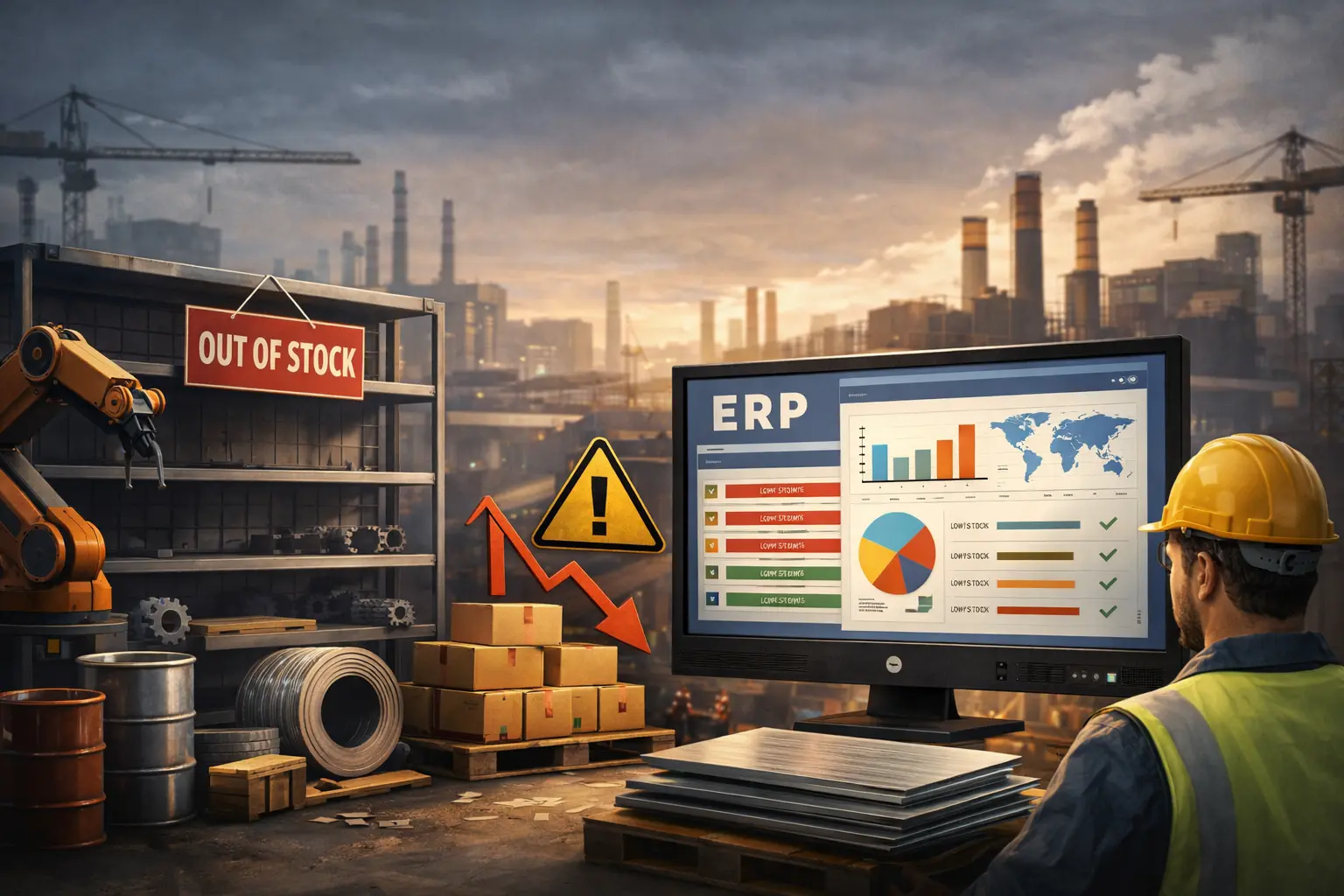
Manufacturing industries today are operating in one of the most unpredictable environments in recent history. Raw material shortages, supply chain disruptions, and price volatility are no longer occasional challenges—they have become ongoing operational realities. Businesses that once relied on stable supply chains now face constant uncertainty, forcing them to rethink how they plan, procure, and produce.

In this scenario, adopting a robust ERP system is no longer optional. It has become a strategic necessity. Solutions like ERPbyNet are helping manufacturers transform how they manage materials, reduce risks, and maintain continuity even during severe shortages.

The Growing Complexity of Material Shortages

Material shortages are not caused by a single issue. They are the result of interconnected global and local factors that create ripple effects across the entire manufacturing ecosystem.

Some of the major contributors include:

  • Disruptions in global supply chains due to geopolitical instability
  • Sudden spikes in demand across industries
  • Limited availability of critical raw materials
  • Transportation delays and rising logistics costs
  • Fluctuating commodity prices

These challenges create a highly volatile environment where traditional planning methods fail. Manufacturers are often left reacting to problems instead of anticipating them.

The consequences are serious:

  • Production delays and missed deadlines
  • Increased procurement costs
  • Inefficient inventory management
  • Loss of customer trust and revenue

Without a centralized system, managing these variables becomes chaotic and error-prone.

Why Traditional Approaches No Longer Work

Many manufacturing businesses still rely on fragmented systems such as spreadsheets, manual records, and disconnected software. While these methods may have worked in stable conditions, they struggle to keep up with today’s unpredictable supply chain environment.

The biggest issue is the lack of integration. Data is scattered across departments, making it difficult to get a clear and accurate view of inventory, procurement, and production. Since updates are often manual, there is always a delay between what is happening on the ground and what is reflected in the system. This delay leads to poor decision-making, especially when quick action is required during material shortages.

Forecasting is another weak point. Traditional tools do not use real-time data or advanced analytics, so demand predictions are often inaccurate. This results in either excess inventory or critical shortages, both of which increase costs and disrupt operations.

Coordination between teams also suffers. Procurement may order materials without knowing actual production needs, while production teams may remain unaware of supplier delays until it is too late. For example, a business might overstock certain materials while facing shortages of others, simply because departments are not aligned.

These gaps create inefficiencies that worsen the impact of material shortages. Instead of preventing disruptions, traditional approaches often amplify them, making it harder for manufacturers to maintain smooth and cost-effective operations.

Read More : How ERP Improves Coordination Between Construction Team

How ERP Transforms Material Shortage Management

ERP dashboard showing real-time inventory visibility and material shortage management in manufacturing

An ERP system acts as the backbone of manufacturing operations by integrating all critical functions into a single platform. ERPbyNet enables businesses to shift from reactive firefighting to proactive, data-driven decision-making.

Real-Time Inventory Visibility and Control

One of the most immediate benefits of ERP is complete visibility into inventory across all locations.

With ERPbyNet, manufacturers can:

  • Track raw materials, work-in-progress, and finished goods in real time
  • Monitor stock levels across warehouses and production units
  • Identify critical shortages before they impact production

This level of visibility eliminates guesswork. Decision-makers can quickly assess the situation and take corrective action, ensuring smoother operations even when supply is constrained.

Advanced Demand Forecasting for Better Planning

Accurate forecasting is crucial during material shortages. ERP systems use historical data, sales trends, and market patterns to generate reliable demand forecasts.

ERPbyNet enhances this capability by:

  • Continuously updating forecasts based on real-time data
  • Aligning procurement plans with actual demand
  • Reducing dependency on emergency purchases

This allows manufacturers to plan ahead, secure materials in advance, and avoid last-minute disruptions that often come at a higher cost.

Intelligent Material Requirement Planning (MRP)

Material Requirement Planning is at the core of managing shortages effectively. ERP systems automate MRP processes, ensuring precise calculation of material needs.

With ERPbyNet, businesses can:

  • Determine exact quantities required for production
  • Schedule procurement based on production timelines
  • Avoid excess inventory while ensuring availability

This balance is critical. Too much inventory increases holding costs, while too little halts production. ERP ensures optimal inventory levels at all times.

Supplier Management and Strategic Sourcing

Supplier dependency is one of the biggest risks during material shortages. ERP systems help manufacturers build a more resilient supplier network.

ERPbyNet enables:

  • Centralized management of supplier data
  • Performance tracking based on delivery timelines and quality
  • Quick identification of alternative suppliers

This allows businesses to diversify their sourcing strategy and reduce reliance on a single vendor. In times of disruption, this flexibility becomes a major competitive advantage.

Managing Price Volatility with Data-Driven Insights

Fluctuating raw material prices can severely impact profitability. Without proper tracking, businesses may end up overpaying or missing cost-saving opportunities.

ERP systems provide:

  • Real-time cost analysis
  • Historical pricing trends
  • Budget monitoring tools

ERPbyNet helps manufacturers:

  • Identify the best time to procure materials
  • Negotiate better deals with suppliers
  • Maintain control over procurement budgets

This ensures that even in volatile markets, businesses can protect their margins.

Production Planning and Scheduling Optimization

Material shortages directly affect production schedules. ERP systems allow manufacturers to adapt quickly by aligning production plans with material availability.

With ERPbyNet, companies can:

  • Prioritize high-value or urgent orders
  • Reschedule production dynamically
  • Minimize downtime and resource wastage

This flexibility ensures that production continues efficiently, even when certain materials are delayed or unavailable.

Automation and Proactive Alerts

One of the most powerful features of ERP is automation. Instead of manually tracking every aspect, the system continuously monitors operations and alerts users when action is needed.

ERPbyNet provides alerts for:

  • Low inventory levels
  • Delayed supplier deliveries
  • Production bottlenecks

These proactive notifications enable teams to act early, preventing minor issues from becoming major disruptions.

Enhancing Collaboration Across Departments

Material shortage management is not just a procurement issue. It involves coordination between multiple departments, including inventory, production, finance, and sales.

ERP systems break down silos by providing a unified platform where all teams access the same data.

ERPbyNet improves collaboration by:

  • Ensuring transparency across departments
  • Aligning goals and workflows
  • Reducing miscommunication

This leads to faster decision-making and more efficient operations.

Read More :ERP Security Best Practices for Sensitive Data

Real-World Impact of ERP Implementation

Manufacturers that implement ERP systems experience tangible improvements across their operations.

Common outcomes include:

  • Significant reduction in material wastage
  • Improved inventory turnover
  • Lower procurement costs
  • Enhanced production efficiency
  • Better on-time delivery performance

More importantly, businesses gain the ability to respond quickly to market changes, which is essential in today’s dynamic environment.

Building a Resilient Manufacturing Operation

Material shortages are likely to remain a part of the manufacturing landscape for the foreseeable future. Instead of viewing them as temporary disruptions, businesses need to develop strategies that enable long-term resilience.

ERP systems play a crucial role in this transformation. By providing visibility, improving planning, and enabling data-driven decisions, they help manufacturers build operations that can withstand uncertainty.

ERPbyNet is designed with this objective in mind. It offers the tools and capabilities needed to not only manage current challenges but also prepare for future ones.

Don’t Let Material Shortages Slow You Down—Take Action Now

Material shortages are no longer temporary disruptions—they are ongoing challenges that demand a smarter and faster response. Businesses that continue to rely on outdated systems risk falling behind as supply chains become more complex and unpredictable. The need of the hour is a shift toward proactive planning and real-time decision-making.

An ERP system brings that capability to your operations. By connecting every critical function and providing complete visibility, it helps you stay ahead of shortages, control costs, and keep production on track. Instead of reacting to problems, you gain the power to anticipate and manage them effectively.

ERPbyNet is built to support manufacturers in exactly these situations—helping you streamline processes, improve efficiency, and build a stronger, more resilient business.

Take the next step toward smarter manufacturing. Get in Touch with Us Today

Frequently Asked Questions (FAQs)

What is a manufacturing material shortage?

A manufacturing material shortage occurs when essential raw materials required for production are unavailable or insufficient. This can happen due to supply chain disruptions, increased demand, limited supplier capacity, or logistics delays. Such shortages directly impact production schedules, cost efficiency, and delivery timelines.

How do material shortages affect manufacturing businesses?

Material shortages create multiple operational challenges. They can delay production, increase procurement costs, reduce efficiency, and lead to missed customer deadlines. Over time, this can impact profitability and damage business reputation if not managed effectively.

What is ERP and how does it help in manufacturing?

ERP (Enterprise Resource Planning) is an integrated software system that connects all core business processes such as inventory, procurement, production, and finance. In manufacturing, ERP helps streamline operations, improve visibility, and enable better decision-making, especially during disruptions like material shortages.

How does ERP improve inventory management during shortages?

ERP systems provide real-time visibility into inventory levels across all locations. This allows manufacturers to monitor stock accurately, avoid overstocking or stockouts, and make timely procurement decisions. ERPbyNet ensures that inventory data is always updated and accessible for better control.

Can ERP help in forecasting raw material demand?

Yes, ERP systems use historical data, consumption patterns, and market trends to forecast demand more accurately. This helps businesses plan procurement in advance and reduce dependency on emergency sourcing.

What role does Material Requirement Planning (MRP) play in ERP?

MRP is a core feature of ERP that calculates the exact quantity of materials required for production. It ensures that materials are available when needed while avoiding excess inventory, which is critical during shortages.

How does ERP help manage supplier-related risks?

ERP systems maintain detailed records of suppliers, including delivery performance and quality. This helps businesses evaluate vendors, identify reliable partners, and quickly switch to alternatives when disruptions occur. ERPbyNet strengthens supplier management and reduces dependency risks.

Can ERP help control raw material costs and price fluctuations?

Yes, ERP systems provide insights into pricing trends, purchase history, and cost analysis. This enables manufacturers to make better purchasing decisions, negotiate effectively, and manage budgets even in volatile markets.

How does ERP support production planning during material shortages?

ERP systems allow manufacturers to adjust production schedules based on material availability. They help prioritize orders, reschedule operations, and minimize downtime, ensuring smoother production flow despite shortages.

Why should manufacturers choose ERPbyNet?

ERPbyNet is built specifically for manufacturing businesses, offering features like real-time inventory tracking, advanced MRP, supplier management, and flexible production planning. It helps companies handle material shortages efficiently while supporting long-term operational growth.


CategoriesERP (Enterprise Resource Planning)

How ERP Reduces Fuel and Time Costs in Vending Machine Routes

In the vending machine industry, operational efficiency is essential for maintaining profitability and long-term sustainability. Unlike traditional retail, vending businesses rely heavily on field operations, where technicians travel across multiple locations to restock machines, perform maintenance, and ensure uninterrupted service. These activities directly impact two major cost drivers—fuel consumption and time utilization. Even small inefficiencies in route planning, scheduling, or coordination can quickly lead to significant operational losses, especially when scaled across multiple routes and service points.

Despite these challenges, many businesses still depend on manual processes, fixed route plans, and disconnected systems, which limit visibility and reduce overall efficiency. This often results in unnecessary travel, higher fuel usage, and wasted technician hours. An integrated ERP solution like ERPbyNet addresses these issues by enabling intelligent route optimization, real-time tracking, and data-driven decision-making. By streamlining operations and improving planning accuracy, ERP helps vending businesses reduce costs, enhance productivity, and achieve more efficient route management.

Understanding Cost Drivers in Vending Route Operations

In the vending machine industry, operational efficiency is essential for maintaining profitability and long-term sustainability. Unlike traditional retail, vending businesses rely heavily on field operations, where technicians travel across multiple locations to restock machines, perform maintenance, and ensure uninterrupted service. These activities directly impact two major cost drivers—fuel consumption and time utilization. Even small inefficiencies in route planning, scheduling, or coordination can quickly lead to significant operational losses, especially when scaled across multiple routes and service points.
Despite these challenges, many businesses still depend on manual processes, fixed route plans, and disconnected systems, which limit visibility and reduce overall efficiency. This often results in unnecessary travel, higher fuel usage, and wasted technician hours. An integrated ERP solution like ERPbyNet addresses these issues by enabling intelligent route optimization, real-time tracking, and data-driven decision-making. By streamlining operations and improving planning accuracy, ERP helps vending businesses reduce costs, enhance productivity, and achieve more efficient route management.
Understanding Cost Drivers in Vending Route Operations
To fully appreciate the impact of ERP, it is important to break down the primary factors that contribute to high operational costs.
Inefficient Route Design
Routes that are not optimized based on geography and demand result in:
Longer travel distances

Increased fuel usage

Reduced number of service points covered per day

In many cases, technicians travel back and forth between locations due to poor clustering, leading to unnecessary fuel consumption.

Over-Servicing and Under-Servicing
Without accurate consumption data:
Machines may be serviced before they actually need refilling

High-demand machines may run out of stock before the next scheduled visit

This imbalance leads to:
Wasted trips

Emergency visits

Lost sales opportunities

Idle Time and Traffic Delays
A lack of real-time route optimization means technicians often:
Spend time stuck in traffic

Follow outdated routes

Experience delays without alternative planning

Idle engines and delays contribute significantly to fuel wastage.

Disconnected Systems
When route planning, inventory management, and service tracking operate in silos:
Decisions are made without complete data

Communication gaps arise

Duplicate or missed visits occur

This fragmentation increases both time and operational costs.

Reactive Maintenance Model
Breakdowns and urgent service calls disrupt planned routes. These unplanned trips are often longer, less efficient, and more expensive, further increasing fuel consumption and technician workload.
Read More : How ERP Improves Coordination Between Construction Teams
How ERPbyNet Reduces Fuel Costs in Detail
ERPbyNet introduces a structured and data-driven approach to route management. Its capabilities go beyond basic automation, focusing on continuous optimization and performance improvement.

Advanced Route Optimization Algorithms
ERPbyNet uses intelligent algorithms that analyze multiple variables simultaneously, including:
Machine locations

Service priorities

Historical demand patterns

Traffic data

Technician availability

Based on this analysis, the system generates optimized routes that minimize travel distance while maximizing service efficiency.
This ensures that:
Nearby machines are serviced in a single trip

Redundant travel is eliminated

Total kilometers traveled are reduced

Over time, this directly lowers fuel consumption and vehicle wear and tear.

Fuel Usage Monitoring and Control
ERPbyNet provides detailed visibility into fuel consumption patterns by tracking:
Fuel usage per vehicle

Fuel cost per route

Idle time and engine usage

This level of insight allows businesses to identify inefficiencies such as:
Vehicles consuming more fuel than expected

Routes that are consistently underperforming

Drivers with inefficient driving patterns

With this data, corrective actions can be taken to improve fuel efficiency across the fleet.

Route Consolidation and Trip Optimization
Instead of sending technicians on multiple small trips, ERPbyNet enables route consolidation by combining multiple service tasks into a single optimized trip.
This approach:
Reduces the number of trips required

Minimizes fuel consumption

Improves technician productivity

By ensuring that each trip is fully optimized, businesses can significantly reduce operational costs.

How ERPbyNet Reduces Time Costs in Detail
Time optimization is equally important, as inefficient time usage directly affects labor costs and service capacity.

Demand-Driven Service Scheduling
ERPbyNet replaces static schedules with dynamic, demand-based scheduling. The system analyzes:
Real-time stock levels

Sales velocity of each machine

Historical consumption trends

This allows the system to prioritize machines that require immediate attention while delaying unnecessary visits.
As a result:
Technicians spend time only where it is needed

Service frequency is optimized

Unnecessary travel is eliminated

Real-Time Field Visibility
ERPbyNet provides live tracking of technicians and vehicles, enabling managers to monitor:
Current location

Route progress

Task completion status

This visibility allows for immediate intervention in case of delays or disruptions. Managers can reroute technicians dynamically to avoid traffic or respond to urgent service needs.
This reduces downtime and ensures better time utilization.

Automated Route Assignment
Manual route planning often leads to inefficiencies and delays. ERPbyNet automates route assignment based on:
Technician availability

Skill requirements

Location proximity

This ensures that the right technician is assigned to the right task at the right time, reducing travel time and improving overall efficiency.

Reduction of Administrative Time
ERPbyNet automates various back-office processes such as:
Service reporting

Inventory updates

Documentation

Technicians no longer need to spend time on manual reporting, allowing them to focus more on field operations. This improves overall productivity and reduces time wastage.
Read More: ERP Security Best Practices for Sensitive Data
Integration of Inventory and Route Planning
One of the most powerful capabilities of ERPbyNet lies in its ability to seamlessly integrate inventory management with route planning. In traditional systems, these two functions operate separately, often leading to inefficiencies such as incomplete servicing, excess travel, or stock mismatches. ERPbyNet eliminates this disconnect by ensuring that inventory data directly informs route decisions.
With this integration, technicians are equipped with accurate, real-time information before and during their service routes, including:
Required stock levels for each machine, based on current consumption and refill thresholds

Inventory availability across warehouses or vehicles, ensuring proper stock allocation

Product demand patterns, derived from historical and real-time sales data

This level of synchronization ensures that every service visit is fully optimized and purposeful. As a result:
Machines are restocked efficiently in a single visit, reducing unnecessary follow-ups

Repeat trips caused by insufficient or incorrect stock are eliminated

Inventory movement becomes more structured and demand-driven, reducing both overstocking and stockouts

By aligning inventory decisions with route execution, ERPbyNet significantly reduces wasted travel time and fuel consumption while improving overall service efficiency.

Preventive Maintenance and Route Stability
Unplanned breakdowns are one of the biggest disruptions in route-based operations. They not only increase operational costs but also force technicians to deviate from planned routes, leading to delays and inefficiencies. ERPbyNet addresses this challenge through predictive and preventive maintenance capabilities.
By continuously analyzing machine performance, usage patterns, and service history, ERPbyNet enables businesses to schedule maintenance activities proactively rather than reactively.
This approach delivers several operational advantages:
Reduction in unexpected machine breakdowns, minimizing service disruptions

Elimination of emergency service trips, which are often unplanned and inefficient

Better allocation of technician time, as maintenance is scheduled in advance

As a result, route planning becomes more stable and predictable. A well-structured and disruption-free route system allows businesses to maintain consistent efficiency, reduce last-minute changes, and improve overall operational control.

Long-Term Business Impact
The implementation of ERPbyNet delivers not just short-term cost savings but also long-term operational and strategic benefits. By optimizing routes, integrating inventory, and stabilizing service operations, businesses experience measurable improvements across multiple areas.
Key long-term impacts include:
Reduced total travel distance, leading to lower fuel expenses and vehicle wear

Lower fuel consumption, driven by optimized routing and fewer unnecessary trips

Faster route completion times, enabling more service points to be covered in less time

Improved technician productivity, as time is spent on high-value tasks rather than inefficiencies

Reduction in operational inefficiencies, through automation and data-driven planning

Enhanced service reliability, ensuring machines are consistently stocked and functional

These improvements collectively strengthen the overall efficiency of the business. Beyond cost reduction, ERPbyNet enables organizations to scale operations more effectively, maintain service quality, and improve profitability in a sustainable manner.
Why ERPbyNet is a Strategic Investment for Route-Based Businesses
ERPbyNet is not just a tool for automation; it is a comprehensive, enterprise-level solution built to transform and optimize route-based operations. In vending machine businesses, where efficiency depends on the coordination of routes, inventory, and field teams, relying on disconnected systems often leads to delays, higher costs, and limited visibility.
ERPbyNet eliminates these challenges by integrating all core operational functions into a single, unified platform. This centralized approach ensures that every part of the business works in sync, reducing manual effort and enabling faster, data-driven decision-making.
At its core, ERPbyNet combines multiple critical capabilities that work together to improve efficiency and control:
Route Optimization:
 Automatically plans the most efficient routes based on location, demand, and real-time conditions, helping reduce travel distance and fuel consumption.

Inventory Management:
 Aligns stock levels with actual machine demand, ensuring technicians carry the right products and avoid unnecessary repeat visits.

Field Service Tracking:
 Provides real-time visibility into technician activities, route progress, and service completion, enabling better coordination and faster response to changes.

Data Analytics and Insights:
 Transforms operational data into actionable insights, helping businesses identify inefficiencies, monitor performance, and continuously improve processes.

By bringing these functions together, ERPbyNet removes operational silos and creates a seamless workflow across the entire business. Managers gain full visibility, technicians operate more efficiently, and decisions are backed by accurate, real-time data.
As a result, businesses are not only able to reduce operational costs but also improve service quality, enhance productivity, and scale operations with confidence. ERPbyNet enables organizations to move beyond basic automation and adopt a more strategic, efficient, and future-ready approach to managing their route-based operations.
Transform Your Vending Operations into Profit with Smarter Route Management
Rising fuel costs and increasing operational complexity are no longer challenges that can be managed with manual processes or disconnected systems. If your vending machine operations are still relying on outdated methods, you are likely absorbing unnecessary expenses, losing valuable time, and missing opportunities to improve profitability. This is the moment to move from reactive operations to a smarter, data-driven approach.
With ERPbyNet, route management is no longer a cost burden—it becomes a strategic advantage. By intelligently optimizing routes, streamlining scheduling, and providing real-time visibility into your field operations, ERPbyNet enables you to reduce fuel consumption, eliminate wasted technician hours, and make faster, more informed decisions. The result is a measurable improvement in both operational efficiency and overall business performance.
If you are experiencing high fuel expenses, inefficient routing, or underutilized field teams, now is the time to take control. ERPbyNet is designed to help you simplify complex operations, improve productivity, and drive sustainable cost savings across your vending network.
Take the next step toward operational excellence. Fill out the form below to schedule your personalized demo and see how ERPbyNet can help you streamline your routes, reduce costs, and turn everyday operations into measurable profit.
Frequently Asked Questions (FAQs)
How does ERP help reduce fuel costs in vending machine operations?
ERP systems like ERPbyNet reduce fuel costs by optimizing route planning and eliminating unnecessary travel. The system analyzes machine locations, demand patterns, and service priorities to create the most efficient routes. It also tracks fuel usage and identifies inefficient routes or driving patterns, allowing businesses to take corrective action. Over time, this leads to reduced travel distance, lower fuel consumption, and better fleet utilization.

Can ERP really improve route efficiency for vending machines?
Yes, ERP significantly improves route efficiency by replacing manual planning with data-driven optimization. ERPbyNet dynamically generates routes based on real-time and historical data, ensuring that technicians visit machines in the most logical sequence. This reduces travel time, minimizes backtracking, and increases the number of machines serviced per route.

What is demand-based servicing in vending machine management?
Demand-based servicing is an approach where machines are serviced based on actual usage data rather than fixed schedules. ERPbyNet tracks stock levels and consumption patterns to determine when a machine truly needs refilling. This prevents unnecessary visits to low-demand machines and ensures high-demand machines are serviced on time, reducing both fuel usage and wasted effort.

How does ERP reduce time wastage for field technicians?
ERP reduces time wastage by automating route planning, scheduling, and task assignments. ERPbyNet ensures that technicians receive optimized routes, clear instructions, and real-time updates. It also eliminates manual reporting and administrative tasks, allowing technicians to focus more on servicing machines rather than paperwork.

Does ERP help in real-time tracking of vending machine routes?
Yes, ERPbyNet provides real-time tracking of technicians and vehicles through GPS integration. Managers can monitor route progress, track delays, and make immediate adjustments if needed. This improves coordination, reduces downtime, and ensures better time management across field operations.

How does ERP improve inventory management in vending routes?
ERP integrates inventory data with route planning, ensuring that technicians carry the right products for each machine. ERPbyNet provides insights into stock levels, demand trends, and replenishment needs. This reduces the chances of understocking or overstocking and eliminates repeat visits caused by inventory shortages.

Can ERP reduce emergency service visits?
Yes, ERP reduces emergency visits through predictive and preventive maintenance. ERPbyNet monitors machine performance and service history to schedule maintenance before breakdowns occur. This minimizes unplanned trips, stabilizes routes, and reduces both fuel and time costs.

What kind of cost savings can businesses expect from ERP implementation?
While results may vary, businesses typically experience measurable improvements such as reduced fuel consumption, fewer unnecessary trips, improved technician productivity, and better route efficiency. ERPbyNet enables continuous optimization, which leads to long-term cost savings and improved operational performance.

Is ERP suitable for small and mid-sized vending machine businesses?
Yes, ERP solutions like ERPbyNet are scalable and suitable for businesses of all sizes. Small and mid-sized vending companies can benefit from improved route efficiency, better inventory control, and reduced operational costs without needing complex infrastructure.

How long does it take to see results after implementing ERPbyNet?
Businesses can start seeing improvements in route efficiency and operational visibility within a short period after implementation. As more data is collected and analyzed, ERPbyNet continues to optimize routes and processes, leading to greater cost savings over time.

Does ERP require major changes in existing vending operations?
ERP implementation does require process alignment, but ERPbyNet is designed to integrate smoothly with existing workflows. It enhances current operations by automating tasks and improving visibility rather than completely disrupting established processes.

How does ERP improve overall profitability in vending machine businesses?
ERP improves profitability by reducing operational costs such as fuel and labor, while also increasing efficiency and service quality. With ERPbyNet, businesses can optimize routes, reduce downtime, improve inventory management, and make better decisions based on real-time data, leading to higher margins and sustainable growth.

To fully appreciate the impact of ERP, it is important to break down the primary factors that contribute to high operational costs.

Inefficient Route Design

Routes that are not optimized based on geography and demand result in:

  • Longer travel distances
  • Increased fuel usage
  • Reduced number of service points covered per day

In many cases, technicians travel back and forth between locations due to poor clustering, leading to unnecessary fuel consumption.

Over-Servicing and Under-Servicing

Without accurate consumption data:

  • Machines may be serviced before they actually need refilling
  • High-demand machines may run out of stock before the next scheduled visit

This imbalance leads to:

  • Wasted trips
  • Emergency visits
  • Lost sales opportunities

Idle Time and Traffic Delays

A lack of real-time route optimization means technicians often:

  • Spend time stuck in traffic
  • Follow outdated routes
  • Experience delays without alternative planning

Idle engines and delays contribute significantly to fuel wastage.

Disconnected Systems

When route planning, inventory management, and service tracking operate in silos:

  • Decisions are made without complete data
  • Communication gaps arise
  • Duplicate or missed visits occur

This fragmentation increases both time and operational costs.

Reactive Maintenance Model

Breakdowns and urgent service calls disrupt planned routes. These unplanned trips are often longer, less efficient, and more expensive, further increasing fuel consumption and technician workload.

Read More : How ERP Improves Coordination Between Construction Teams

How ERPbyNet Reduces Fuel Costs in Detail

ERPbyNet introduces a structured and data-driven approach to route management. Its capabilities go beyond basic automation, focusing on continuous optimization and performance improvement.

Advanced Route Optimization Algorithms

ERPbyNet uses intelligent algorithms that analyze multiple variables simultaneously, including:

  • Machine locations
  • Service priorities
  • Historical demand patterns
  • Traffic data
  • Technician availability

Based on this analysis, the system generates optimized routes that minimize travel distance while maximizing service efficiency.

This ensures that:

  • Nearby machines are serviced in a single trip
  • Redundant travel is eliminated
  • Total kilometers traveled are reduced

Over time, this directly lowers fuel consumption and vehicle wear and tear.

Fuel Usage Monitoring and Control

ERPbyNet provides detailed visibility into fuel consumption patterns by tracking:

  • Fuel usage per vehicle
  • Fuel cost per route
  • Idle time and engine usage

This level of insight allows businesses to identify inefficiencies such as:

  • Vehicles consuming more fuel than expected
  • Routes that are consistently underperforming
  • Drivers with inefficient driving patterns

With this data, corrective actions can be taken to improve fuel efficiency across the fleet.

Route Consolidation and Trip Optimization

Instead of sending technicians on multiple small trips, ERPbyNet enables route consolidation by combining multiple service tasks into a single optimized trip.

This approach:

  • Reduces the number of trips required
  • Minimizes fuel consumption
  • Improves technician productivity

By ensuring that each trip is fully optimized, businesses can significantly reduce operational costs.

How ERPbyNet Reduces Time Costs in Detail

Time optimization is equally important, as inefficient time usage directly affects labor costs and service capacity.

Demand-Driven Service Scheduling

ERPbyNet replaces static schedules with dynamic, demand-based scheduling. The system analyzes:

  • Real-time stock levels
  • Sales velocity of each machine
  • Historical consumption trends

This allows the system to prioritize machines that require immediate attention while delaying unnecessary visits.

As a result:

  • Technicians spend time only where it is needed
  • Service frequency is optimized
  • Unnecessary travel is eliminated

Real-Time Field Visibility

ERPbyNet provides live tracking of technicians and vehicles, enabling managers to monitor:

  • Current location
  • Route progress
  • Task completion status

This visibility allows for immediate intervention in case of delays or disruptions. Managers can reroute technicians dynamically to avoid traffic or respond to urgent service needs.

This reduces downtime and ensures better time utilization.

Automated Route Assignment

Manual route planning often leads to inefficiencies and delays. ERPbyNet automates route assignment based on:

  • Technician availability
  • Skill requirements
  • Location proximity

This ensures that the right technician is assigned to the right task at the right time, reducing travel time and improving overall efficiency.

Reduction of Administrative Time

ERPbyNet automates various back-office processes such as:

  • Service reporting
  • Inventory updates
  • Documentation

Technicians no longer need to spend time on manual reporting, allowing them to focus more on field operations. This improves overall productivity and reduces time wastage.

Read More: ERP Security Best Practices for Sensitive Data

Integration of Inventory and Route Planning

One of the most powerful capabilities of ERPbyNet lies in its ability to seamlessly integrate inventory management with route planning. In traditional systems, these two functions operate separately, often leading to inefficiencies such as incomplete servicing, excess travel, or stock mismatches. ERPbyNet eliminates this disconnect by ensuring that inventory data directly informs route decisions.

With this integration, technicians are equipped with accurate, real-time information before and during their service routes, including:

  • Required stock levels for each machine, based on current consumption and refill thresholds
  • Inventory availability across warehouses or vehicles, ensuring proper stock allocation
  • Product demand patterns, derived from historical and real-time sales data

This level of synchronization ensures that every service visit is fully optimized and purposeful. As a result:

  • Machines are restocked efficiently in a single visit, reducing unnecessary follow-ups
  • Repeat trips caused by insufficient or incorrect stock are eliminated
  • Inventory movement becomes more structured and demand-driven, reducing both overstocking and stockouts

By aligning inventory decisions with route execution, ERPbyNet significantly reduces wasted travel time and fuel consumption while improving overall service efficiency.

Preventive Maintenance and Route Stability

Unplanned breakdowns are one of the biggest disruptions in route-based operations. They not only increase operational costs but also force technicians to deviate from planned routes, leading to delays and inefficiencies. ERPbyNet addresses this challenge through predictive and preventive maintenance capabilities.

By continuously analyzing machine performance, usage patterns, and service history, ERPbyNet enables businesses to schedule maintenance activities proactively rather than reactively.

This approach delivers several operational advantages:

  • Reduction in unexpected machine breakdowns, minimizing service disruptions

  • Elimination of emergency service trips, which are often unplanned and inefficient

  • Better allocation of technician time, as maintenance is scheduled in advance

As a result, route planning becomes more stable and predictable. A well-structured and disruption-free route system allows businesses to maintain consistent efficiency, reduce last-minute changes, and improve overall operational control.

Long-Term Business Impact

The implementation of ERPbyNet delivers not just short-term cost savings but also long-term operational and strategic benefits. By optimizing routes, integrating inventory, and stabilizing service operations, businesses experience measurable improvements across multiple areas.

Key long-term impacts include:

  • Reduced total travel distance, leading to lower fuel expenses and vehicle wear

  • Lower fuel consumption, driven by optimized routing and fewer unnecessary trips

  • Faster route completion times, enabling more service points to be covered in less time

  • Improved technician productivity, as time is spent on high-value tasks rather than inefficiencies

  • Reduction in operational inefficiencies, through automation and data-driven planning

  • Enhanced service reliability, ensuring machines are consistently stocked and functional

These improvements collectively strengthen the overall efficiency of the business. Beyond cost reduction, ERPbyNet enables organizations to scale operations more effectively, maintain service quality, and improve profitability in a sustainable manner.

Why ERPbyNet is a Strategic Investment for Route-Based Businesses

ERPbyNet is not just a tool for automation; it is a comprehensive, enterprise-level solution built to transform and optimize route-based operations. In vending machine businesses, where efficiency depends on the coordination of routes, inventory, and field teams, relying on disconnected systems often leads to delays, higher costs, and limited visibility.

ERPbyNet eliminates these challenges by integrating all core operational functions into a single, unified platform. This centralized approach ensures that every part of the business works in sync, reducing manual effort and enabling faster, data-driven decision-making.

At its core, ERPbyNet combines multiple critical capabilities that work together to improve efficiency and control:

  • Route Optimization:
    Automatically plans the most efficient routes based on location, demand, and real-time conditions, helping reduce travel distance and fuel consumption.

  • Inventory Management:
    Aligns stock levels with actual machine demand, ensuring technicians carry the right products and avoid unnecessary repeat visits.

  • Field Service Tracking:
    Provides real-time visibility into technician activities, route progress, and service completion, enabling better coordination and faster response to changes.

  • Data Analytics and Insights:
    Transforms operational data into actionable insights, helping businesses identify inefficiencies, monitor performance, and continuously improve processes.

By bringing these functions together, ERPbyNet removes operational silos and creates a seamless workflow across the entire business. Managers gain full visibility, technicians operate more efficiently, and decisions are backed by accurate, real-time data.

As a result, businesses are not only able to reduce operational costs but also improve service quality, enhance productivity, and scale operations with confidence. ERPbyNet enables organizations to move beyond basic automation and adopt a more strategic, efficient, and future-ready approach to managing their route-based operations.

Transform Your Vending Operations into Profit with Smarter Route Management

Rising fuel costs and increasing operational complexity are no longer challenges that can be managed with manual processes or disconnected systems. If your vending machine operations are still relying on outdated methods, you are likely absorbing unnecessary expenses, losing valuable time, and missing opportunities to improve profitability. This is the moment to move from reactive operations to a smarter, data-driven approach.

With ERPbyNet, route management is no longer a cost burden—it becomes a strategic advantage. By intelligently optimizing routes, streamlining scheduling, and providing real-time visibility into your field operations, ERPbyNet enables you to reduce fuel consumption, eliminate wasted technician hours, and make faster, more informed decisions. The result is a measurable improvement in both operational efficiency and overall business performance.

If you are experiencing high fuel expenses, inefficient routing, or underutilized field teams, now is the time to take control. ERPbyNet is designed to help you simplify complex operations, improve productivity, and drive sustainable cost savings across your vending network.

Take the next step toward operational excellence. Fill out the form below to schedule your personalized demo and see how ERPbyNet can help you streamline your routes, reduce costs, and turn everyday operations into measurable profit.

Frequently Asked Questions (FAQs)

How does ERP help reduce fuel costs in vending machine operations?

ERP systems like ERPbyNet reduce fuel costs by optimizing route planning and eliminating unnecessary travel. The system analyzes machine locations, demand patterns, and service priorities to create the most efficient routes. It also tracks fuel usage and identifies inefficient routes or driving patterns, allowing businesses to take corrective action. Over time, this leads to reduced travel distance, lower fuel consumption, and better fleet utilization.

Can ERP really improve route efficiency for vending machines?

Yes, ERP significantly improves route efficiency by replacing manual planning with data-driven optimization. ERPbyNet dynamically generates routes based on real-time and historical data, ensuring that technicians visit machines in the most logical sequence. This reduces travel time, minimizes backtracking, and increases the number of machines serviced per route.

What is demand-based servicing in vending machine management?

Demand-based servicing is an approach where machines are serviced based on actual usage data rather than fixed schedules. ERPbyNet tracks stock levels and consumption patterns to determine when a machine truly needs refilling. This prevents unnecessary visits to low-demand machines and ensures high-demand machines are serviced on time, reducing both fuel usage and wasted effort.

How does ERP reduce time wastage for field technicians?

ERP reduces time wastage by automating route planning, scheduling, and task assignments. ERPbyNet ensures that technicians receive optimized routes, clear instructions, and real-time updates. It also eliminates manual reporting and administrative tasks, allowing technicians to focus more on servicing machines rather than paperwork.

Does ERP help in real-time tracking of vending machine routes?

Yes, ERPbyNet provides real-time tracking of technicians and vehicles through GPS integration. Managers can monitor route progress, track delays, and make immediate adjustments if needed. This improves coordination, reduces downtime, and ensures better time management across field operations.

How does ERP improve inventory management in vending routes?

ERP integrates inventory data with route planning, ensuring that technicians carry the right products for each machine. ERPbyNet provides insights into stock levels, demand trends, and replenishment needs. This reduces the chances of understocking or overstocking and eliminates repeat visits caused by inventory shortages.

Can ERP reduce emergency service visits?

Yes, ERP reduces emergency visits through predictive and preventive maintenance. ERPbyNet monitors machine performance and service history to schedule maintenance before breakdowns occur. This minimizes unplanned trips, stabilizes routes, and reduces both fuel and time costs.

What kind of cost savings can businesses expect from ERP implementation?

While results may vary, businesses typically experience measurable improvements such as reduced fuel consumption, fewer unnecessary trips, improved technician productivity, and better route efficiency. ERPbyNet enables continuous optimization, which leads to long-term cost savings and improved operational performance.

Is ERP suitable for small and mid-sized vending machine businesses?

Yes, ERP solutions like ERPbyNet are scalable and suitable for businesses of all sizes. Small and mid-sized vending companies can benefit from improved route efficiency, better inventory control, and reduced operational costs without needing complex infrastructure.

How long does it take to see results after implementing ERPbyNet?

Businesses can start seeing improvements in route efficiency and operational visibility within a short period after implementation. As more data is collected and analyzed, ERPbyNet continues to optimize routes and processes, leading to greater cost savings over time.

Does ERP require major changes in existing vending operations?

ERP implementation does require process alignment, but ERPbyNet is designed to integrate smoothly with existing workflows. It enhances current operations by automating tasks and improving visibility rather than completely disrupting established processes.

How does ERP improve overall profitability in vending machine businesses?

ERP improves profitability by reducing operational costs such as fuel and labor, while also increasing efficiency and service quality. With ERPbyNet, businesses can optimize routes, reduce downtime, improve inventory management, and make better decisions based on real-time data, leading to higher margins and sustainable growth.

CategoriesERP (Enterprise Resource Planning)

How ERP Improves Coordination Between Construction Teams

Construction projects depend heavily on coordination. From architects and engineers to procurement teams, site supervisors, contractors, and finance departments, multiple teams must work together throughout the entire project lifecycle. Each team contributes specialized expertise, but without proper coordination, even the most well-planned projects can face delays, cost overruns, and operational inefficiencies.

In many construction companies, communication still relies on spreadsheets, emails, phone calls, and disconnected software tools. While these methods may work for smaller projects, they often create serious challenges in larger or multi-site construction environments.

An integrated Enterprise Resource Planning (ERP) system addresses these issues by bringing all teams, processes, and project data together in one centralized platform. Solutions like ERPbyNet enable construction companies to streamline communication, improve collaboration, and maintain full visibility across projects.

This article explores how ERP systems improve coordination between construction teams and why platforms like ERPbyNet are becoming essential for efficient construction project management.

The Coordination Challenges Construction Teams Face

construction teams facing coordination challenges due to fragmented communication disconnected systems and lack of real time project visibility

Construction projects involve many moving parts. Multiple teams must coordinate tasks such as project planning, procurement, site execution, quality inspections, subcontractor management, and financial tracking.

Without an integrated system, several challenges can arise:

1. Fragmented Communication

Teams often rely on emails, messaging apps, and manual updates to share information. This leads to situations where critical updates may not reach the right people on time.

2. Limited Project Visibility

Project managers may not have real-time insights into site progress, material availability, or workforce productivity, making it difficult to respond quickly to issues.

3. Disconnected Systems

Many construction companies use different tools for accounting, inventory management, and project planning. These disconnected systems create data silos that hinder coordination.

4. Delayed Approvals and Decisions

When information must pass through multiple channels before reaching decision-makers, project timelines can be affected.

5. Document Version Confusion

Drawings, contracts, and technical documents are often stored in different locations, increasing the risk of teams using outdated versions.

These coordination challenges can significantly affect project efficiency, cost control, and delivery timelines.

Read More : How Barcode Systems Improve Accuracy in Manufacturing Warehouses

How ERP Strengthens Coordination in Construction Projects

ERP systems are designed to integrate business operations into a unified system. In construction, ERP acts as a digital backbone that connects teams across departments and project sites.

With ERPbyNet, construction companies can manage project planning, procurement, inventory, financial operations, and site activities within a single platform. This integration allows teams to access the same information, collaborate effectively, and maintain alignment across project stages.

Centralized Project Information

One of the most important ways ERP improves coordination is by centralizing project data.

Instead of storing project information across multiple files and software tools, ERPbyNet maintains a unified system that contains all project-related details.

Key information available in one place includes:

  • Project schedules and timelines
  • Budget estimates and cost tracking
  • Procurement orders and supplier details
  • Site progress updates
  • Workforce and equipment allocation
  • Financial transactions and billing records

Because all teams access the same centralized data, there is less confusion and fewer inconsistencies. Engineers, site supervisors, and management teams can easily review the latest project updates without waiting for manual reports.

This shared information environment strengthens collaboration and ensures everyone is working with accurate data.

Real-Time Communication Across Teams

Construction projects require constant updates between site teams and office departments. ERP systems enable real-time communication by instantly sharing updates across departments.

For example:

  • When procurement confirms material delivery, site teams can immediately schedule usage.
  • When site managers update work progress, project managers can review performance instantly.
  • When finance teams approve payments, contractors can be informed without delay.

ERPbyNet ensures that updates made by one team become visible to all relevant stakeholders. This real-time communication reduces delays, improves transparency, and helps teams stay aligned with project objectives.

Better Coordination Between Site and Office Operations

In many construction organizations, the head office and site teams operate with different systems and reporting methods. This separation often creates coordination gaps.

ERPbyNet bridges this gap by connecting site activities with office operations.

Site teams can directly record information such as:

  • Daily work progress
  • Material consumption
  • Equipment usage
  • Labor deployment

Once recorded, this information becomes instantly available to procurement teams, finance departments, and project managers. This seamless flow of information allows office teams to respond quickly to site requirements and maintain better operational control.

Integrated Procurement and Material Management

Material management is a critical aspect of construction coordination. Delays in procurement or material shortages can disrupt project schedules and create unnecessary costs.

ERPbyNet integrates procurement processes with project planning and inventory management, enabling better coordination between planning teams and purchasing departments.

This integration helps organizations:

  • Track material requirements based on project schedules
  • Generate purchase requests automatically
  • Monitor supplier deliveries
  • Track inventory across warehouses and project sites

With better visibility into procurement activities, teams can ensure that materials are available when needed, reducing disruptions and improving overall project efficiency.

Streamlined Document Management

Construction projects generate a large volume of documentation, including design drawings, contracts, inspection reports, and regulatory approvals.

Without proper document management, teams may struggle to locate the latest documents or accidentally use outdated information.

ERPbyNet provides centralized document management features that allow teams to securely store, organize, and access project documents from a single system.

Key advantages include:

  • Version control to ensure teams use the latest documents
  • Easy access for authorized team members
  • Reduced risk of documentation errors
  • Improved compliance tracking

This centralized document management system helps teams collaborate more effectively and ensures consistent project execution.

Improved Resource Planning and Allocation

Construction projects require careful coordination of labor, equipment, and materials. Without proper resource planning, projects may experience productivity losses or operational bottlenecks.

ERPbyNet provides real-time insights into resource availability and project requirements. Project managers can allocate labor and equipment based on project priorities, ensuring optimal utilization across sites.

Benefits of ERP-driven resource planning include:

  • Better workforce scheduling
  • Efficient equipment allocation
  • Reduced idle resources
  • Improved productivity

This visibility helps organizations coordinate resources efficiently and maintain smooth project operations.

Financial Coordination Across Departments

Construction companies must maintain close coordination between operational teams and finance departments. Project budgets, procurement expenses, contractor payments, and billing activities must be carefully managed to maintain profitability.

ERPbyNet integrates financial management with project operations, allowing teams to track costs and budgets in real time.

This integration helps organizations:

  • Monitor project cost performance
  • Track contractor payments and billing cycles
  • Maintain budget control
  • Generate financial reports aligned with project progress

When operational and financial data are connected, companies can quickly identify cost variances and take corrective action.

Faster and More Informed Decision Making

Effective coordination requires timely decisions. ERP systems provide management teams with dashboards, analytics, and performance reports that present a clear overview of project activities.

ERPbyNet enables decision-makers to monitor key indicators such as:

  • Project progress and milestones
  • Resource utilization
  • Procurement status
  • Financial performance

Access to accurate, real-time data allows project managers and executives to make informed decisions quickly, helping teams address challenges before they escalate.

Improved Accountability and Workflow Transparency

Clear accountability is essential for maintaining coordination between construction teams. ERP systems create transparent workflows where tasks, approvals, and project updates are tracked within the system.

ERPbyNet records every transaction and operational update, providing a clear audit trail for project activities.

This transparency helps organizations:

  • Assign responsibilities clearly
  • Track task completion
  • Monitor approval workflows
  • Improve overall project governance

When teams understand their roles and have visibility into project workflows, coordination becomes much more efficient.

Read More : Why Should Project Scheduling Be Fully Integrated with ERP?

Why ERPbyNet Is an Ideal Solution for Construction Coordination

Construction companies require ERP solutions that understand the complexity of project-based operations. ERPbyNet is designed to integrate essential construction processes within a single platform.

The system connects key operational areas such as:

  • Project management
  • Procurement and inventory management
  • Manufacturing and production planning
  • Finance and accounting
  • Field service management

By integrating these functions, ERPbyNet eliminates data silos and ensures that all teams operate within a unified system. This connectivity improves communication, enhances transparency, and supports better decision-making across the organization.

Read More : Why Does ERP Break After Go-Live Instead of Before It?

Take Control of Construction Coordination with ERPbyNet

Managing coordination across multiple construction teams becomes difficult when projects rely on manual processes and disconnected systems. Communication gaps, delayed updates, and limited visibility can quickly slow down project progress and increase operational costs.

Now is the time to move beyond fragmented workflows and adopt a smarter, integrated approach. By implementing a modern ERP platform, construction companies can centralize project information, streamline communication, and enable real-time collaboration across teams.

With ERPbyNet, you can connect site teams with office operations, track project activities in real time, and ensure every department works with the same accurate data. This allows project managers to make faster decisions, procurement teams to respond quickly to site requirements, and leadership teams to maintain full control over project performance.

As construction projects become more complex, companies must act proactively to improve coordination, reduce delays, and maintain operational efficiency. By adopting ERPbyNet, you can transform how your teams collaborate, optimize project workflows, and drive successful project delivery.

Start strengthening coordination across your construction teams today with ERPbyNet and build a more connected, efficient, and scalable project management environment.

Frequently Asked Questions (FAQs)

What is ERP in the construction industry?

ERP in construction is a software system that integrates processes such as project management, procurement, finance, and inventory into one platform. Solutions like ERPbyNet help construction companies manage operations and improve collaboration across teams.

How does ERP improve coordination between construction teams?

ERP centralizes project data and enables real-time updates. This allows site teams, project managers, and office departments to access the same information and stay aligned throughout the project.

Can ERP connect site teams with office operations?

Yes. ERP systems like ERPbyNet allow site teams to update progress, material usage, and labor details directly in the system, making the information instantly available to office teams.

How does ERP help manage construction materials?

ERP integrates procurement and inventory management, allowing teams to track material requirements, supplier deliveries, and stock levels in real time.

Does ERP help with construction document management?

Yes. ERP systems store project documents such as drawings, contracts, and reports in one centralized location, ensuring teams always access the latest versions.

How does ERP support resource planning?

ERP provides visibility into workforce, equipment, and project requirements, helping managers allocate resources efficiently and avoid delays.

Can ERP help control project costs?

Yes. ERP connects financial data with project activities, enabling companies to track budgets, expenses, and contractor payments more effectively.

Is ERP useful for small construction companies?

Yes. ERP solutions like ERPbyNet help both small and large construction companies streamline operations and improve project coordination.


CategoriesERP (Enterprise Resource Planning)

How Barcode Systems Improve Accuracy in Manufacturing Warehouses

Accuracy in manufacturing warehouses directly impacts production efficiency, customer satisfaction, compliance, and financial performance. Unlike distribution warehouses, manufacturing facilities manage raw materials, work-in-progress (WIP), finished goods, batch-controlled items, and serial-tracked components simultaneously, making inventory control more complex.

Even small inventory errors can lead to production delays, incorrect material usage, excess purchasing, shipment mistakes, and financial discrepancies. Over time, these issues affect operational stability and profitability.

Barcode systems help eliminate these risks by introducing structured, automated data capture. When integrated with an ERP platform such as ERPbyNet, barcode scanning ensures real-time validation of inventory movements, improved traceability, and accurate system updates. This article explains how barcode systems enhance warehouse accuracy and why ERP integration is essential for long-term operational control.

Understanding the Root Causes of Warehouse Inaccuracy

Manufacturing warehouse inventory errors caused by manual data entry mistakes, delayed stock updates, and poor batch traceability control.

Before exploring the solution, it is important to understand why inaccuracies occur in manufacturing warehouses.

1. Manual Data Entry Errors

  • Typing mistakes when entering item codes
  • Transposed digits in part numbers
  • Wrong SKU selection from dropdown lists
  • Misreading handwritten notes

Manual processes introduce variability and human error, especially in high-volume operations.

2. Delayed Data Recording

  • Goods received but not immediately recorded
  • Materials issued to production without system entry
  • Transfers recorded at end of shift

Delayed updates cause mismatches between physical and system stock.

3. Poor Traceability Control

  • Missing batch numbers
  • Incorrect serial number tracking
  • Incomplete production linkage

This creates compliance risks and recall challenges.

Barcode systems address these root causes directly.

What Is a Barcode System in a Manufacturing Warehouse?

A barcode system includes:

  • Unique barcode labels attached to items, bins, pallets, or equipment
  • Handheld or mobile scanning devices
  • ERP or warehouse management software
  • Real-time database synchronization

When an item is scanned:

  • The ERP system validates the item code
  • Captures transaction details automatically
  • Updates inventory instantly
  • Records user and timestamp
  • Maintains a digital audit trail

This structured process removes ambiguity and standardizes warehouse transactions.

Read More : How Connecting CPQ and ERP Boosts Your Sales Process

How Barcode Systems Improve Accuracy in Manufacturing Warehouses

Below are the key accuracy improvements explained in detail.

1. Eliminating Manual Entry Errors at Source

Manual entry is one of the largest contributors to warehouse inaccuracies.

With barcode scanning:

  • Operators scan instead of typing long item codes
  • The system automatically identifies the correct product
  • Quantity can be validated against order requirement
  • Incorrect items trigger system warnings

Detailed Impact:

  • Prevents wrong component usage in production
  • Reduces picking errors during order fulfillment
  • Minimizes stock mismatches between system and physical inventory
  • Creates consistent data entry standards across all shifts

When integrated with ERPbyNet, each scan is validated against master data, ensuring accuracy before transaction confirmation.

2. Real-Time Inventory Updates Across All Movements

In manufacturing, inventory moves frequently between:

  • Receiving areas
  • Inspection zones
  • Raw material storage
  • Production lines
  • WIP storage
  • Finished goods warehouse

Barcode systems ensure that each movement is scanned and recorded immediately.

Detailed Benefits:

  • Eliminates phantom inventory
  • Prevents double allocation of stock
  • Improves production planning accuracy
  • Enhances procurement forecasting

ERP systems rely on real-time data to calculate Material Requirements Planning (MRP). Without barcode integration, MRP results may be inaccurate due to outdated inventory data.

3. Improved Batch and Serial Number Control

Many manufacturing industries require precise traceability.

Barcode systems allow:

  • Capturing batch number during goods receipt
  • Linking raw materials to specific production orders
  • Recording serial numbers during assembly
  • Tracking finished goods back to original material lots

Detailed Advantages:

  • Enables rapid product recall management
  • Supports regulatory compliance requirements
  • Provides complete production history records
  • Enhances quality control traceability

In ERPbyNet, batch and serial tracking can be configured to enforce mandatory scanning before material issuance or shipment confirmation.

4. Accurate Material Issuance Against Bill of Materials (BOM)

Manufacturing depends on correct BOM consumption.

Barcode validation ensures:

  • Only approved materials are issued to production
  • Quantity matches production order requirement
  • Correct batch or lot is selected
  • Unauthorized substitutions are prevented

Detailed Impact:

  • Reduces rework and scrap
  • Maintains product quality standards
  • Prevents costly production mistakes
  • Ensures accurate cost tracking

Without barcode validation, issuing incorrect materials can disrupt entire production cycles.

5. Precise Location and Bin Management

Manufacturing warehouses often use complex storage layouts.

Barcode systems assign codes to:

  • Warehouses
  • Zones
  • Racks
  • Bins
  • Pallet locations

Each transaction requires location scanning.

Detailed Benefits:

  • Prevents misplaced inventory
  • Reduces time spent searching for materials
  • Improves picking efficiency
  • Increases location-level inventory accuracy

ERPbyNet can provide bin-level visibility, allowing managers to track exact stock placement.

6. Improved Picking and Shipping Accuracy

Customer satisfaction depends on correct deliveries.

Barcode scanning during dispatch:

  • Validates item against sales order
  • Confirms correct quantity
  • Verifies batch or serial number
  • Ensures complete order fulfillment

Detailed Results:

  • Reduces return rates
  • Minimizes customer complaints
  • Improves on-time delivery performance
  • Strengthens brand reliability

System validation prevents shipment confirmation if discrepancies are detected.

7. Stronger Cycle Counting and Audit Accuracy

Stock audits reveal inconsistencies in manual systems.

Barcode-based cycle counting:

  • Allows quick scanning during physical verification
  • Automatically compares scanned quantity to ERP records
  • Flags discrepancies immediately
  • Records adjustment approvals digitally

Detailed Improvements:

  • Faster audit completion
  • Reduced operational disruption
  • Better financial accuracy
  • Transparent audit trails

Accurate inventory supports precise financial reporting and working capital management.

8. Integration with ERP for Financial Accuracy

Inventory accuracy impacts financial statements directly.

Barcode integration ensures:

  • Correct inventory valuation
  • Accurate material consumption recording
  • Reliable WIP calculations
  • Proper cost allocation

When connected to ERPbyNet:

  • Inventory transactions trigger automatic accounting entries
  • Production confirmations update costing modules
  • Reports reflect real-time operational data

This alignment ensures operational accuracy translates into financial accuracy.

9. Standardization Across Multiple Plants

For manufacturers operating multiple facilities, standardization is critical.

Barcode systems provide:

  • Uniform labeling formats
  • Consistent scanning workflows
  • Centralized ERP data visibility
  • Cross-location inventory tracking

Detailed Benefits:

  • Simplifies inter-plant transfers
  • Enhances corporate governance
  • Supports centralized reporting
  • Maintains consistent data integrity

ERPbyNet enables consolidated reporting across plants using standardized barcode transactions.

10. Workforce Efficiency and Reduced Dependency on Expertise

Manual systems require experienced staff familiar with product codes.

Barcode scanning simplifies workflows:

  • Scan item
  • Enter quantity
  • Confirm transaction

Detailed Advantages:

  • Faster onboarding of new employees
  • Reduced dependency on memory-based processes
  • Consistent execution across shifts
  • Lower training costs

This improves operational resilience and scalability.

Read More : Why Should Project Scheduling Be Fully Integrated with ERP?

Key Components of an Effective Barcode System for Manufacturing

Diagram showing key components of an ERP-integrated barcode system for manufacturing warehouses including real-time sync, batch tracking, mobile scanning, and audit controls.

For a barcode system to truly improve accuracy in a manufacturing warehouse, it must go beyond basic scanning capability. The system should be designed as an integrated, enterprise-grade solution that supports operational control, traceability, compliance, and financial accuracy. Below are the critical components explained in detail.

1. ERP Integration Capability

A barcode system must integrate directly with the core ERP platform rather than operate as a standalone tool.

Why it matters:

  • Prevents duplicate data entry between systems
  • Eliminates reconciliation errors between warehouse and ERP records
  • Ensures transactions are validated against master data (items, BOM, suppliers, customers)
  • Maintains consistency across inventory, production, procurement, and finance

When integrated with ERPbyNet, barcode scans instantly reflect in production orders, material requirements, stock valuation, and accounting entries. This ensures warehouse operations are fully aligned with enterprise processes.

2. Real-Time Synchronization

Accuracy depends heavily on timing. A delay between physical movement and system update creates discrepancies.

An effective system should:

  • Update inventory levels immediately after scanning
  • Reflect stock movements across all locations in real time
  • Synchronize production material consumption instantly
  • Provide live dashboards for warehouse managers

Real-time synchronization ensures planners, procurement teams, and production supervisors make decisions based on current data, not outdated reports.

3. Batch and Serial Tracking Support

In many manufacturing industries, traceability is mandatory rather than optional.

A robust barcode system should support:

  • Lot and batch number capture during goods receipt
  • Serial number assignment during assembly
  • Linking raw materials to finished goods
  • Expiry date tracking
  • Recall-ready reporting

Detailed traceability strengthens quality control processes and ensures compliance with industry regulations. It also allows manufacturers to isolate issues quickly without disrupting entire product lines.

4. Mobile Device Compatibility

Manufacturing warehouses are dynamic environments. Fixed desktop systems limit efficiency.

The barcode system should support:

  • Handheld rugged scanners
  • Mobile tablets
  • Industrial smartphones
  • Wireless connectivity

Mobile compatibility allows operators to perform transactions directly at the point of activity—receiving dock, production line, rack location, or dispatch zone—reducing process delays and transcription errors.

5. Offline Scanning with Sync Capability

Manufacturing facilities may experience connectivity gaps, especially in large plants or remote areas.

An advanced barcode solution should:

  • Allow scanning even without active internet connectivity
  • Store transactions securely in local memory
  • Automatically synchronize with ERP once connection is restored
  • Prevent data duplication during sync

This ensures uninterrupted operations while maintaining data integrity.

6. Robust Reporting and Audit Logs

Warehouse accuracy must be measurable and auditable.

A comprehensive system should provide:

  • Detailed transaction history
  • User-based activity tracking
  • Timestamped logs for every movement
  • Exception reports for discrepancies
  • Cycle count variance reports
  • Batch traceability reports

Audit logs support compliance audits, internal controls, and performance evaluations. They also create accountability within warehouse operations.

7. Secure User Authentication and Role Control

Data integrity depends on secure access control.

An effective system must include:

  • Role-based user permissions
  • Secure login authentication
  • Transaction-level approval controls
  • Digital audit trails
  • Prevention of unauthorized adjustments

When connected with ERPbyNet, user roles can align with enterprise access policies, ensuring sensitive transactions such as inventory adjustments or batch overrides require appropriate authorization.

Read More : Why Does ERP Break After Go-Live Instead of Before It?

Why ERP-Integrated Barcode Systems Matter

A barcode system operating independently can capture data, but without ERP integration, that data remains isolated.

An ERP-integrated barcode solution ensures:

  • Warehouse operations feed directly into production planning
  • Inventory movements automatically affect financial records
  • Procurement decisions are based on real consumption data
  • Management reports reflect accurate operational performance

This creates a connected digital ecosystem where warehouse accuracy supports enterprise-wide decision-making.

Implementation Best Practices for Manufacturing Barcode Systems

Successful barcode deployment requires strategic planning rather than simple hardware installation. Below are best practices explained in detail.

1. Define Labeling Standards Clearly

Before implementation, manufacturers must standardize:

  • Item coding structures
  • Barcode formats (1D or 2D)
  • Batch labeling methods
  • Bin and location identifiers
  • Print quality and label durability standards

Consistent labeling prevents confusion and ensures scanning reliability across departments and facilities.

2. Clean and Validate Master Data Before Rollout

Barcode systems rely heavily on accurate master data.

Prior to deployment:

  • Remove duplicate item codes
  • Correct incorrect descriptions
  • Standardize units of measurement
  • Validate BOM structures
  • Confirm supplier and warehouse mappings

Poor master data will simply automate existing errors. A clean ERP database is essential for success.

3. Integrate Directly with ERP Workflows

Barcode transactions must align with standard ERP processes, such as:

  • Purchase order receipts
  • Production order material issue
  • Finished goods confirmation
  • Sales order dispatch
  • Inter-warehouse transfers

With ERPbyNet, barcode scanning can be configured to enforce workflow validations, ensuring every transaction follows defined business rules.

4. Train Warehouse and Production Teams

Technology adoption requires proper training.

Training should cover:

  • Scanning procedures
  • Exception handling
  • Batch and serial tracking processes
  • System validation messages
  • Escalation protocols

Clear process documentation reduces resistance and ensures consistent system usage.

5. Conduct Pilot Testing Before Full Deployment

A phased rollout minimizes risk.

Pilot testing should include:

  • Selected warehouse zones
  • Limited production lines
  • Specific product categories
  • Real-world transaction simulations

This allows identification of process gaps and technical issues before enterprise-wide implementation.

6. Monitor Key Performance Indicators (KPIs)

Post-implementation monitoring is critical.

Key KPIs to track include:

  • Inventory accuracy rate
  • Picking error percentage
  • Stock variance percentage
  • Production material variance
  • Order fulfillment accuracy
  • Cycle count adjustment frequency

Continuous KPI monitoring ensures sustained performance improvement.

Measurable Impact of ERP-Integrated Barcode Systems

Manufacturers implementing integrated barcode solutions often observe measurable improvements across operations.

1. Reduction in Data Entry Errors

Scanning eliminates manual typing mistakes, significantly lowering transaction-level errors.

2. Improved Inventory Accuracy Rates

Real-time updates and location control increase system-to-physical stock alignment.

3. Faster Order Fulfillment

Validated picking and shipping processes reduce delays and rework.

4. Reduced Production Downtime

Accurate material visibility prevents unexpected shortages and line stoppages.

5. Improved Audit Readiness

Complete digital audit trails simplify compliance verification and internal audits.

6. Better Working Capital Control

Accurate inventory data prevents overstocking and reduces excess carrying costs.

While outcomes vary by industry and operational scale, ERP-integrated barcode systems consistently outperform manual processes in terms of accuracy and efficiency.

The Strategic Role of ERP Integration

Barcode systems enhance data capture, but their full value emerges only when integrated with a centralized ERP platform.

With ERPbyNet, barcode transactions automatically:

  • Update inventory records in real time
  • Trigger production order confirmations
  • Adjust material requirements planning calculations
  • Reflect inventory valuation and financial postings
  • Generate live operational and management reports

This unified architecture ensures that warehouse accuracy directly supports:

  • Strategic procurement planning
  • Accurate cost accounting
  • Reliable production scheduling
  • Executive decision-making

In modern manufacturing, barcode technology is not merely an operational enhancement. When integrated with ERP systems like ERPbyNet, it becomes a strategic driver of accuracy, governance, scalability, and enterprise-wide performance improvement.

Transform Warehouse Accuracy into Business Growth — Contact Us Today

Manufacturing warehouse accuracy drives production efficiency, cost control, and customer satisfaction. Manual processes create hidden errors, delays, and operational risks that impact the entire enterprise. Barcode systems eliminate data entry mistakes, deliver real-time inventory visibility, enforce BOM validation, enhance batch traceability, and standardize location control for consistent accuracy.

When integrated with ERPbyNet, barcode scanning becomes a powerful enterprise solution—connecting warehouse operations with production, procurement, and finance in real time.

If you are ready to improve accuracy, strengthen control, and scale with confidence, contact us today to integrate barcode systems with ERPbyNet and build a smarter, data-driven manufacturing operation.

Frequently Asked Questions (FAQs)

How do barcode systems improve accuracy in manufacturing warehouses?

Barcode systems improve accuracy by replacing manual data entry with automated scanning. Each scan captures correct item, quantity, and location data instantly, reducing human errors and ensuring ERP records reflect real-time inventory movements.

Can barcode systems integrate with ERP software like ERPbyNet?

Yes, barcode systems can integrate directly with ERP platforms such as ERPbyNet. This integration ensures that warehouse transactions automatically update inventory, production orders, and financial records without manual intervention.

Do barcode systems support batch and serial number tracking?

Barcode systems fully support batch and serial tracking. They help manufacturers maintain complete traceability from raw materials to finished goods, which is essential for quality control and regulatory compliance.

Are barcode systems suitable for small and mid-sized manufacturers?

Yes, barcode systems are scalable and can be implemented by small, mid-sized, or large manufacturers. They help growing businesses establish structured warehouse processes and improve data accuracy within their ERP environment.

How do barcode systems help during inventory audits?

Barcode systems simplify audits by enabling quick physical verification through scanning. The scanned data is immediately compared with ERP records, helping identify discrepancies faster and improving reconciliation accuracy.

What hardware is required to implement a barcode system?

A barcode system typically requires barcode labels, handheld or mobile scanners, and ERP-integrated software. In manufacturing environments, rugged devices are often preferred for durability and long operational life.

Can barcode systems reduce production delays?

Yes, barcode systems reduce delays by ensuring accurate material issuance, validating components against the BOM, and providing real-time stock visibility, which prevents production stoppages due to missing or incorrect materials.

How do barcode systems improve order fulfillment accuracy?

Barcode scanning validates items and quantities during picking and dispatch. The ERP system cross-checks scanned data against sales orders, reducing shipping errors and improving customer satisfaction.

Is barcode implementation disruptive to existing warehouse operations?

With proper planning and phased deployment, barcode implementation can be managed smoothly. Training and pilot testing help minimize disruption while improving long-term operational efficiency.

What is the return on investment for barcode systems in manufacturing?

The return on investment typically comes from reduced errors, improved inventory accuracy, faster processes, better traceability, and stronger ERP data integrity, all of which contribute to cost savings and operational stability.


Name
Verified by MonsterInsights