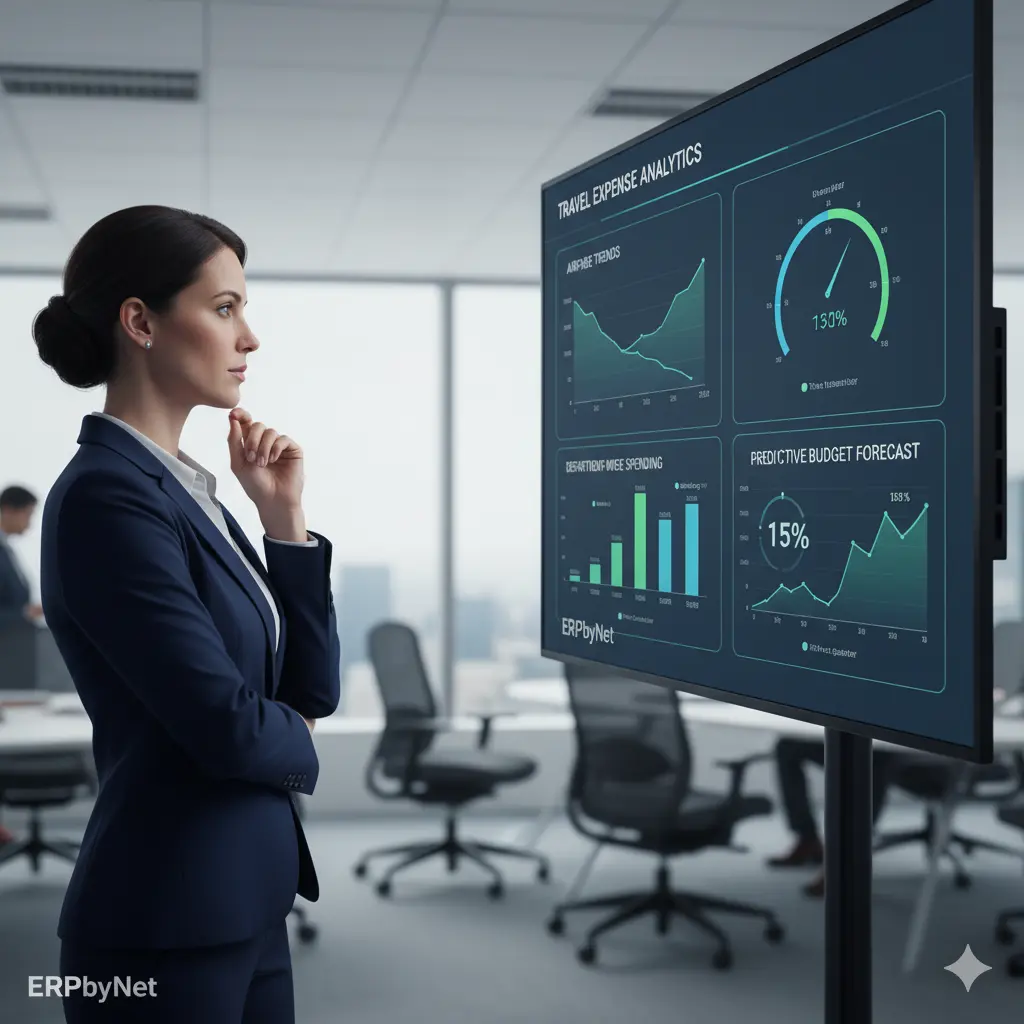
How Can ERP Help Companies Control Unpredictable Travel Budgets?
Corporate travel once symbolized growth; now it represents one of the biggest budgeting uncertainties. As companies expand operations, client meetings, audits, and site visits demand frequent travel — yet the costs tied to these movements fluctuate beyond control.
Airfare surges overnight, hotel prices shift by the hour, and unexpected cancellations throw entire budgets off balance. Even well-managed organizations find themselves facing the same recurring issue — planned travel budgets rarely match actual expenses.
These variances aren’t caused by poor planning alone. The real problem lies in fragmented systems and delayed visibility. Finance teams often see the full picture only after the money has been spent. And by then, corrective action is too late.
In a fast-changing economy, controlling travel costs requires more than tracking receipts. It demands a connected ecosystem where finance, HR, and operations work in real time. That’s exactly where ERP systems like ERPbyNet redefine the game — transforming unpredictable travel spending into predictable financial intelligence.
The Hidden Traps Behind Uncontrolled Travel Costs

Unpredictable travel budgets don’t emerge overnight; they are the result of layered inefficiencies buried deep within daily operations.
Ever-Changing Market Rates
Travel pricing is dynamic. Airfare and hotel rates fluctuate based on seasonality, availability, and global trends. Without live integration between booking data and budget forecasts, finance teams rely on outdated estimates. By the time expense reports are consolidated, actual costs have already overshot approved budgets.
Uncoordinated Booking Channels
Employees often book trips through multiple platforms — corporate agencies, online portals, or even personal apps. When booking data is dispersed, it becomes nearly impossible to reconcile expenses quickly or accurately. The lack of a unified view delays reporting and hides overspending until it’s too late.
Policy Violations That Slip Through
Most companies have travel policies on paper — but enforcement in practice is inconsistent. Managers may approve exceptions for convenience, and employees may select premium options outside guidelines. Each isolated decision may seem minor, but collectively, they create significant cost leakage.
Manual Expense Handling
Spreadsheets and paper receipts still dominate in many organizations. This manual processing creates delays, duplicates, and errors. Finance teams are forced into a reactive stance — identifying issues weeks after they’ve already impacted cash flow.
Limited Predictive Insight
Traditional travel tools only tell companies what they spent, not what they’re about to spend. Without predictive analysis, forecasting future travel costs becomes guesswork. This blind spot prevents proactive financial management and locks organizations into a cycle of retrospective adjustments.
Read More : Why ERP Is Essential for Managing Annual Equipment Surveys Efficiently
Why Conventional Travel Tools Can’t Solve the Problem
Over the past decade, Travel & Expense (T&E) software has helped automate basic processes like claim submissions and approvals. But these tools operate in isolation. The data they collect rarely syncs directly with accounting, HR, or project systems.
That means even with automation, companies still lack end-to-end financial visibility.
A T&E tool may record an employee’s travel cost, but it doesn’t connect that expense to the specific cost center, project, or client account. The result is fragmented data, inconsistent reporting, and countless hours spent on manual reconciliation.
This disconnection causes:
- Budget overruns that appear only after reporting cycles.
- Difficulty identifying where travel costs are rising.
- Inaccurate financial forecasting due to delayed data flow.
In today’s environment — where every rupee and every decision counts — this lag is unacceptable. Finance leaders don’t just need visibility; they need control in real time.
That’s where ERP systems like ERPbyNet come in — bridging data silos, enforcing policy compliance, and turning travel spending into an intelligent, trackable process from the moment it’s initiated.
Read More : Elevator Compliance ERP to Manage Surveys & Testing Certificates
ERPbyNet: Turning Fragmented Data into Financial Clarity

ERPbyNet eliminates the scattered nature of travel management by bringing every process — from request to reimbursement — into one integrated system. Instead of juggling multiple platforms, companies manage travel through a single, unified ERP environment connected directly to finance and HR.
Every booking, approval, and reimbursement automatically syncs with the organization’s budgetary framework. This ensures real-time accuracy, consistency, and transparency at every step.
Through ERPbyNet, organizations can:
- Set and monitor department-wise or project-wise travel budgets.
- Track expenses live, not retrospectively.
- Automate compliance checks before approvals.
- Generate dynamic reports that reflect up-to-the-minute financial data.
This isn’t just automation — it’s accountability built into the workflow.
From Visibility to True Control
Recording expenses is only half the challenge; the real goal is to prevent unnecessary costs before they occur. ERPbyNet empowers finance teams to achieve that by delivering continuous visibility across the travel lifecycle.
As travel requests are raised, the system automatically checks available budgets and alerts managers if proposed costs exceed limits. Once a trip is approved and booked, expenses flow into a centralized ledger instantly.
This gives decision-makers a real-time view of cumulative spending, enabling them to take corrective actions long before the month-end reports arrive.
With ERP-driven alerts, overspending becomes preventable rather than discoverable. This proactive model is what separates financial control from mere expense tracking.
Automating Compliance for Seamless Policy Enforcement
Human oversight can never match the speed and accuracy of automated enforcement. ERPbyNet embeds company travel policies directly into its system architecture, ensuring compliance happens by design.
When an employee books a flight, requests a hotel, or submits a claim, ERPbyNet automatically cross-checks each detail against approved rules.
For example:
- Travel class limits are validated before booking.
- Daily allowance caps are pre-applied to claims.
- Non-compliant expenses are flagged instantly for review.
This not only accelerates approvals but also ensures fairness and consistency across the organization. Managers don’t have to micromanage every request — the system itself enforces financial discipline.
Read More : How ERP Travel Tracking Improves Productivity and Cuts Costs
The Power of Centralized Booking and Approval Workflows
In many organizations, travel approvals are spread across emails and spreadsheets, making accountability hard to track. ERPbyNet replaces this chaos with structured, transparent workflows.
Employees raise travel requests through the ERP system itself, specifying details such as destination, purpose, and estimated cost. The system validates available budget limits automatically before routing the request to the appropriate manager.
Once approved, the booking happens through integrated vendor channels, ensuring negotiated corporate rates apply every time.
This single pipeline eliminates duplicate approvals, prevents untracked bookings, and ensures every rupee spent aligns with policy and budget before any transaction is made.
Real-Time Budget Tracking That Changes the Game
Traditional finance teams operate with lagging information — reconciling after-the-fact data that’s weeks old. ERPbyNet transforms this experience with live dashboards and automated alerts.
Managers and finance heads can monitor:
- Current vs. approved budgets for every department or project.
- Category-level spending on airfare, lodging, and local travel.
- Alerts when spending nears or exceeds defined thresholds.
Instead of waiting for reports, decision-makers act in the moment. This agility turns financial governance into a proactive, continuous process — ensuring no expense goes unnoticed or unchecked.
Automated Expense Reconciliation for Effortless Accuracy
Reconciliation is one of the most tedious and error-prone stages in travel management. ERPbyNet simplifies it completely.
Receipts can be uploaded directly via web or mobile interface. The system then automatically matches each expense to its corresponding trip request and approved limit. Any mismatch is highlighted instantly for verification.
Reimbursements, once approved, flow directly into integrated payroll or accounts payable modules — ensuring consistency across all financial records.
The result: faster settlements, fewer disputes, and complete audit readiness.
Automation here isn’t just about speed — it’s about creating a reliable financial audit trail that withstands scrutiny at any scale.
Strengthening Vendor and Rate Management
Another hidden driver of overspending is inconsistent vendor pricing. When employees book individually without centralized oversight, negotiated discounts go unused. ERPbyNet prevents that.
It consolidates all vendor relationships — airlines, hotels, cab services — within the ERP ecosystem. During booking, the system prioritizes preferred vendors and applies negotiated rates automatically.
Finance teams gain full visibility into vendor performance and rate utilization, allowing them to:
- Track which suppliers deliver the best value.
- Identify pricing discrepancies early.
- Use consolidated data for future negotiations.
This integration not only saves money but also strengthens an organization’s leverage in vendor management — turning travel spend into a strategic advantage.
Read More : What Problems Vanish When Companies Adopt ERP Vendor Portal?
Where Efficiency Meets Empowerment
ERPbyNet doesn’t just make processes faster — it empowers every stakeholder.
Employees benefit from simplified requests and quicker reimbursements. Managers approve with full visibility and confidence. Finance teams shift from reactive accounting to strategic forecasting.
Efficiency, in this context, isn’t about cutting corners. It’s about creating a culture of control, transparency, and trust — where every trip aligns with both business goals and financial prudence.
From Visibility to Predictability — The Next Step in Financial Control
Gaining visibility into travel expenses is an important milestone, but true control begins when visibility turns into predictability. For modern organizations, the question isn’t just “Where did the money go?” — it’s “Where is it likely to go next?”
ERPbyNet elevates financial planning from historical review to proactive foresight. By using integrated data, analytics, and automation, the platform doesn’t simply record what has happened; it forecasts what’s about to happen.
Through trend analysis and predictive modeling, ERPbyNet helps organizations identify when and where travel spending will surge, which departments are at risk of overshooting budgets, and how to allocate funds intelligently. This predictive approach transforms financial management from a reactive cycle to a continuous, data-driven strategy.
The Shift from Reactive Budgeting to Predictive Intelligence
Most companies still rely on backward-looking reports when planning budgets. These reports, while accurate, only reflect what’s already occurred. Market conditions, however, are constantly changing — rendering static budgets obsolete within weeks.
ERPbyNet’s predictive analytics layer bridges that gap. By combining historical data, real-time booking trends, and seasonal price behavior, the system anticipates future fluctuations in travel costs.
For example:
- If airfare typically spikes during the last quarter due to global events or conferences, ERPbyNet alerts managers in advance.
- If a particular region or client project historically exceeds travel budgets, the system adjusts future projections accordingly.
- If seasonal travel demand is expected to rise, ERPbyNet recommends securing bulk vendor contracts early to lock in lower rates.
This predictive insight allows finance teams to plan dynamically — adjusting allocations before budget overruns occur, not after. The result is a travel management process that learns, adapts, and improves continuously.
Connecting the Dots: HR, Finance, and Procurement in Sync
In most organizations, travel costs intersect with multiple functions — HR (for approvals and entitlements), Finance (for accounting and compliance), and Procurement (for vendor management). When these departments operate independently, financial blind spots emerge.
ERPbyNet unites these critical touchpoints under one cohesive framework.
HR Integration:
Employee roles, seniority, and travel entitlements are mapped directly into the ERP system. Only authorized employees can raise certain types of travel requests, ensuring that all bookings align with corporate policies.
Finance Integration:
Every approved expense automatically flows into the general ledger, categorized by department, cost center, or project. This ensures seamless reconciliation and immediate impact analysis on the company’s overall financial position.
Procurement Integration:
Vendor contracts, negotiated rates, and service-level agreements are built directly into the ERP. This ensures every booking adheres to approved supplier relationships and pricing structures.
This cross-departmental synchronization eliminates data silos and gives leadership a 360-degree view of travel-related financial activity. Each trip, booking, and claim connects directly to its broader business purpose.
Turning Data into Strategy
ERPbyNet goes beyond operational automation to deliver strategic intelligence. The system’s analytics dashboards transform raw travel data into actionable insights that drive better decisions across the organization.
Finance leaders can instantly identify:
- Which departments consistently exceed their travel limits.
- Which destinations or vendors generate the highest costs.
- How much of total travel expenditure directly supports billable client work.
These insights empower decision-makers to refine travel policies, negotiate smarter contracts, and allocate budgets more effectively. Over time, patterns emerge that reveal where organizations can optimize travel — not just to reduce costs, but to improve overall business performance.
For instance, data may show that certain client visits yield minimal ROI compared to virtual meetings, or that mid-tier hotels deliver the same quality as premium options at lower rates. These discoveries enable companies to make decisions based on evidence, not assumptions.
Continuous Monitoring and Real-Time Adjustments
Traditional budgeting models rely on quarterly or monthly reviews — by which point overspending has already occurred. ERPbyNet replaces static monitoring with a real-time feedback loop that keeps budgets aligned every day.
When a department’s travel spend exceeds a defined percentage of its limit, managers are notified instantly. If travel frequency spikes unexpectedly in a particular region, finance can investigate and take immediate corrective measures.
This continuous monitoring ensures that financial discipline isn’t a one-time audit task — it becomes a daily habit embedded into the organization’s workflow.
ERPbyNet gives teams the confidence to make adjustments in real time, ensuring every trip and every transaction aligns with the company’s evolving financial goals.
Building Accountability Across Every Level
Budget control isn’t solely a finance function; it’s an organizational mindset. ERPbyNet fosters that culture by making every stakeholder accountable.
Employees see their approved travel entitlements before making bookings, reducing the risk of non-compliant claims. Managers can approve or reject requests based on live budget visibility rather than static assumptions. Finance teams, in turn, spend less time chasing receipts and more time analyzing financial health.
This visibility creates a sense of shared responsibility. When everyone understands how their travel decisions impact overall company performance, financial governance becomes a collective effort rather than a top-down enforcement.
Smarter Forecasting with Machine Learning
As organizations scale, travel data becomes complex — spanning thousands of trips, vendors, and fluctuating markets. ERPbyNet uses machine learning algorithms to interpret this growing volume of data with precision.
Over time, the system identifies recurring trends, behavioral patterns, and anomalies that humans might overlook. For example:
- If certain employees frequently cancel trips, ERPbyNet adjusts future projections to account for cancellation costs.
- If specific vendors routinely modify rates, the system recalibrates cost assumptions accordingly.
- If the company expands into new territories, ERPbyNet uses regional price patterns to estimate realistic travel budgets.
This evolving intelligence ensures that financial forecasts become sharper and more reliable each quarter — turning experience into insight, and insight into measurable savings.
Sustainability and Smarter Spending
Beyond profitability, today’s organizations are increasingly conscious of sustainability. Reducing unnecessary travel not only lowers costs but also minimizes environmental impact.
ERPbyNet supports sustainable business goals by analyzing travel data to identify where physical meetings can be replaced with virtual alternatives.
Companies can track their carbon footprint alongside financial metrics, enabling decisions that balance economic efficiency with ecological responsibility.
For instance, reducing short domestic flights by 15% could save up to 10–12% in annual travel expenses — while simultaneously contributing to the organization’s sustainability objectives. ERPbyNet gives leaders the clarity to make these balanced, forward-thinking choices.
Real-World Transformation: From Overspending to Optimization
Consider a technology services company operating across multiple cities. Despite having strict travel policies, their quarterly audits revealed up to 20% deviation between planned and actual travel budgets. The reason? Disconnected booking systems, delayed approvals, and inconsistent vendor rates.
After deploying ERPbyNet:
- All travel requests were routed through a centralized system with built-in budget validation.
- Real-time alerts informed department heads of spending thresholds.
- Expense reconciliation time was reduced by over 60%.
- Vendor contracts were consolidated and optimized based on ERPbyNet’s cost analysis.
Within six months, the company reduced travel expenditure by 18% and achieved near-perfect forecasting accuracy. The finance team reported not just savings, but predictability — a shift from chasing costs to controlling them with confidence.
The ERP Advantage Over Standalone Travel Tools
Standalone T&E tools handle expense automation — but ERPbyNet provides financial intelligence. Here’s how the difference plays out in practice:
| Aspect | Traditional Travel Tool | ERPbyNet |
| Data Management | Scattered across multiple systems | Unified under one ERP ecosystem |
| Budget Visibility | Post-expense reporting | Real-time monitoring and alerts |
| Policy Enforcement | Manual or partial | Fully automated and rule-based |
| Reporting | Static and descriptive | Dynamic, analytical, and predictive |
| Vendor Management | External or separate | Integrated with finance and procurement |
| Forecasting | Limited to history | Driven by AI and trend modeling |
ERPbyNet doesn’t just make data visible — it makes it actionable. Every transaction contributes to a smarter, more connected financial strategy.
Empowering the Future of Financial Governance
As organizations adapt to a data-driven economy, finance teams need more than compliance — they need confidence. ERPbyNet offers that confidence by aligning operational efficiency with strategic oversight.
It transforms travel management from a fragmented administrative process into a unified, insight-rich ecosystem that anticipates challenges before they occur.
By bringing automation, analytics, and accountability under one roof, ERPbyNet helps finance leaders reclaim control — not only over travel budgets but over the financial health of the entire organization.
Future-Ready, Scalable, and Strategic
In an unpredictable business world, flexibility is power. ERPbyNet’s scalable architecture ensures that as companies grow — whether they manage five trips a month or five thousand — control, compliance, and clarity remain constant.
Its predictive budgeting tools continue learning and adapting with every transaction, providing an evolving understanding of cost trends, market volatility, and performance efficiency.
This scalability allows companies to plan with agility — adjusting budgets, policies, and strategies dynamically as business realities shift.
The result is a finance function that doesn’t just react to change but anticipates it.
Take Control of Your Travel Budgets — Starting Today
Unpredictable travel expenses shouldn’t dictate your financial decisions. They signal a gap in visibility, control, and trust — gaps that ERPbyNet is built to close.
By integrating every stage of travel management — from planning and booking to budgeting and predictive analytics — ERPbyNet transforms uncertainty into actionable clarity. No more guessing where costs will arise; with ERPbyNet, you anticipate them, plan around them, and stay firmly in control.
It’s time to move beyond expense tracking and step into expense mastery.
Let ERPbyNet give your organization the precision, insight, and confidence to manage every journey strategically — on budget, on policy, and on point.
Reclaim control. Redefine efficiency. Discover how ERPbyNet can make every travel decision a smarter financial move.
FAQs
How does an ERP system help in controlling unpredictable travel budgets?
An ERP system centralizes travel bookings, approvals, and expenses in one platform, offering real-time visibility and control. It tracks spending against budgets, enforces policies automatically, and alerts teams about overspending. This proactive monitoring helps organizations manage costs efficiently and prevent budget overruns.
Why are traditional travel and expense tools not enough for modern businesses?
Traditional tools work in isolation, offering limited visibility and delayed reporting. They show expenses only after spending occurs. ERP systems like ERPbyNet integrate travel, finance, and procurement data, giving companies a complete and timely view of costs to make quicker, informed decisions.
How can ERPbyNet improve forecasting and travel cost predictability?
ERPbyNet uses analytics and machine learning to study travel patterns, vendor rates, and seasonal trends. It predicts future costs and spending surges, helping finance teams adjust budgets in advance. This data-driven approach turns unpredictable travel expenses into accurate financial forecasts.
What role does policy automation play in managing travel budgets effectively?
Policy automation in ERPbyNet ensures every booking and expense follows company rules. The system automatically flags policy breaches, prevents unauthorized spending, and ensures approvals stay within set limits. This consistency keeps travel budgets disciplined and compliant.
Can ERP systems like ERPbyNet reduce administrative workload for finance teams?
Yes, ERPbyNet automates manual tasks like receipt tracking, expense verification, and reconciliation. With integrated workflows and instant reporting, finance teams save time, reduce errors, and focus more on analysis and strategy instead of routine paperwork.