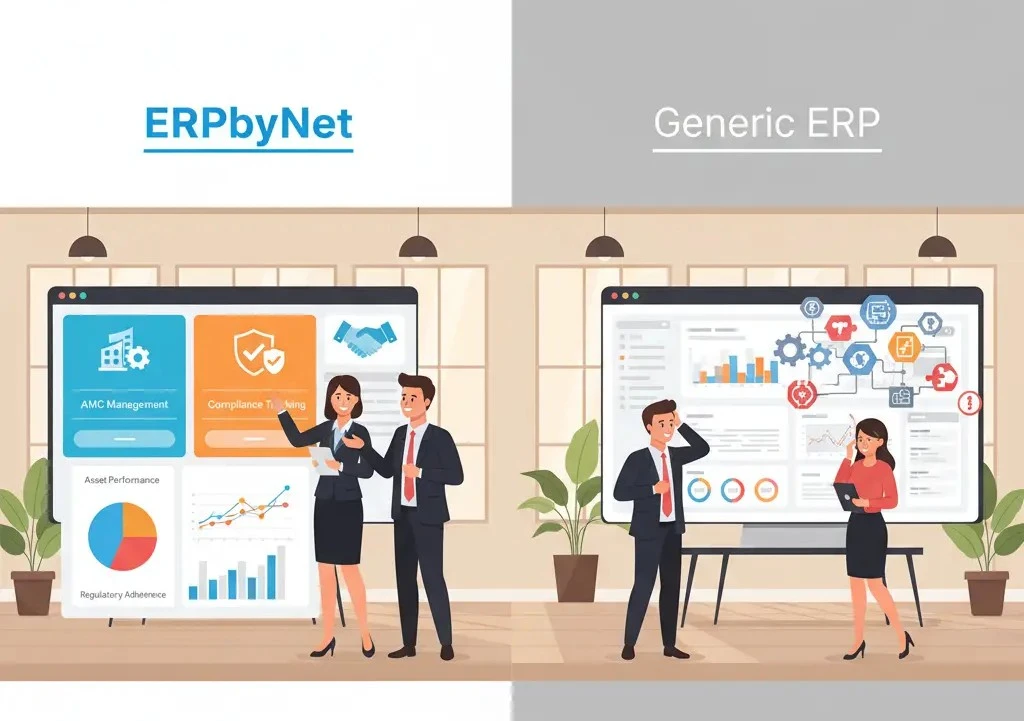
What’s the Difference Between ERPbyNet and Generic ERP Solutions?
In today’s fast-paced business environment, choosing the right software can make or break your operations, which is why understanding ERPbyNet vs Generic ERP Solutions is crucial. Companies relying on fragmented systems, manual processes, or disconnected data often struggle to stay competitive, while organizations using integrated ERP platforms gain efficiency, accuracy, and real-time insights.
ERP solutions unify essential business functions—finance, procurement, HR, inventory, and customer service—into a single platform. This centralization eliminates duplication, reduces errors, and empowers leaders to make smarter decisions. However, not all ERP systems are created equal, and the choice you make can significantly impact productivity, compliance, and long-term growth.
Businesses typically face two options: generic ERP solutions, designed to work across multiple industries, and ERPbyNet, a specialized ERP built for industry-specific workflows. While generic ERPs may seem flexible initially, companies often encounter hidden challenges such as costly customizations, compliance hurdles, and extended implementation timelines.
ERPbyNet, in contrast, is ready-to-use for industries like elevator services, field operations, and compliance-heavy sectors, streamlining processes from day one. This blog explores the key differences to help you make a confident, future-ready ERP decision.
Why Do Businesses Choose Generic ERP Solutions in the First Place?
Generic ERP systems dominate the market for a reason—they promise flexibility and wide applicability. But to understand their limitations, let’s first examine why they attract so many businesses in the beginning.
What You Typically Get in a Generic ERP
Generic ERP solutions are designed as “all-purpose” tools. Their key components usually include:
- Finance and accounting modules to manage invoices, payroll, and ledgers.
- Procurement and supply chain features to track vendor activities.
- HR modules for attendance, leaves, and recruitment.
- CRM (Customer Relationship Management) for managing clients.
The idea is simple: build a platform that can be used across industries—whether it’s retail, healthcare, or manufacturing.
The Initial Appeal: Why Companies Say Yes
At first glance, generic ERP systems appear to be a safe choice because of:
- Lower upfront costs: Many generic ERPs come with basic packages at affordable entry-level pricing.
- Flexibility to grow: Organizations can add modules as they expand.
- Familiar interfaces: With large-scale adoption, employees may already be familiar with these platforms.
- Wide availability of consultants: There’s no shortage of professionals who can implement or support generic ERP systems.
These reasons often convince decision-makers to adopt a generic ERP, believing it to be both cost-effective and scalable.
Where Generic ERP Starts to Show Cracks
However, reality strikes soon after implementation. For industries with specialized workflows, the limitations become clear.
- Customization costs spiral: To align processes with the ERP, companies must hire consultants or developers.
- Integrations get messy: Compliance tracking, AMC renewals, or field-service workflows require add-ons.
- Implementation delays occur: What was supposed to be a 6-month project often stretches to 18 months or more.
- Employee adoption lags: Staff find workarounds when the system doesn’t match their day-to-day tasks.
What looked like a “flexible” system becomes a long-term liability—expensive to maintain, slow to adapt, and frustrating for employees.
Read More : What Problems Vanish When Companies Adopt ERP Vendor Portal?
What Makes ERPbyNet Different from the Rest?

This is where ERPbyNet changes the game. Unlike generic ERP solutions that try to cover every industry, ERPbyNet is built with industries that need specialized attention.
Built with Industry Needs in Mind
ERPbyNet was not designed as a “one-size-fits-all” system. Instead, it focuses on industries like:
- Elevator companies managing AMC contracts and compliance certifications.
- Field service organizations dealing with remote staff, travel, and timesheet approvals.
- Compliance-driven businesses where safety audits and documentation are crucial.
By addressing real industry pain points, ERPbyNet provides a system that feels natural to use, minimizing the need for constant customization.
The Features That Set ERPbyNet Apart
ERPbyNet comes with capabilities that generic ERPs usually lack:
- AMC Renewals and Proposals – Automated reminders and workflows for contract renewals.
- Field Operations Support – Integrated travel, expense management, and field approvals.
- Attendance and Timesheet Tracking – A single platform to monitor employee productivity.
- Safety Audits and Compliance Management – Built-in features for inspections, certifications, and compliance records.
- Vendor Portal – Simplified vendor collaboration, reducing friction in procurement.
- Industry-Specific CRM – Tools designed for contract renewals and client lifecycle management.
Why Businesses Prefer ERPbyNet Over Generic ERP
Organizations that adopt ERPbyNet quickly realize the system is designed to work the way they do, not the other way around. Unlike generic ERP solutions, it comes pre-aligned with industry-specific workflows, which means there’s minimal need for costly customizations. Businesses can focus on operations instead of endlessly tweaking software to fit their needs.
Implementation is also dramatically faster. With ready-to-use modules, companies can go live in weeks rather than months or years, allowing teams to start improving efficiency almost immediately. This rapid deployment directly contributes to a faster return on investment and reduced downtime during transitions.
Cost predictability is another reason ERPbyNet stands out. Without the constant reliance on external consultants or repeated adjustments, organizations maintain control over total ownership costs, avoiding the hidden fees that often come with generic ERP systems.
Moreover, ERPbyNet’s team brings deep industry expertise, providing relevant guidance and support that generic vendors rarely offer. Compliance tracking, safety audits, and quality control are built-in, ensuring businesses can operate confidently without regulatory risks.
Ultimately, ERPbyNet doesn’t just manage your processes—it enhances them, driving efficiency, accuracy, and long-term growth in ways generic ERPs rarely achieve.
Head-to-Head: ERPbyNet vs Generic ERP Solutions
Choosing between ERPbyNet and a generic ERP isn’t just about software—it’s about how your organization operates every single day. Let’s break down the comparison across critical areas.
Cost: Upfront Savings vs Long-Term Value
- Generic ERP often looks affordable when evaluating base pricing. Companies pay for a starter package and add modules over time. However, hidden expenses such as customization, consultant fees, and integration costs pile up quickly.
- ERPbyNet may not appear as the cheapest option on paper, but it provides predictable ownership costs. Because it’s preconfigured for specific industries, there’s no endless cycle of coding and recoding. Over time, the savings are significant.
Customization: Endless Tweaks vs Ready-to-Use
- Generic ERP requires constant customization. A company might need months to configure workflows for AMC renewals or safety audits.
- ERPbyNet, in contrast, delivers these features out of the box. Companies can skip the customization marathon and get straight to using the software productively.
Implementation: Months of Work vs Swift Rollout
- Generic ERP projects often drag on. Implementation involves heavy planning, workshops, custom development, and multiple testing phases. What should be a 6-month journey can easily stretch to 18 months or longer.
- ERPbyNet is designed for faster deployment. With industry workflows pre-built, organizations can roll out in weeks and start reaping benefits sooner.
Vendor Expertise: Broad Knowledge vs Industry Insight
- Generic ERP vendors serve a wide range of industries. While they understand ERP basics, they rarely grasp the nuances of compliance-heavy businesses or AMC-driven industries.
- ERPbyNet vendors bring domain expertise. Their familiarity with elevator companies, field service management, and vendor-driven businesses means they can solve problems more effectively.
Compliance and Quality: Extra Add-Ons vs Built-In Control
- Generic ERP usually treats compliance as an afterthought. Businesses must rely on plugins or third-party integrations to meet audit or safety requirements.
- ERPbyNet integrates compliance directly into the system, making safety certifications, quality checks, and audits part of everyday operations.
Scalability: Growing in General vs Growing with You
- Generic ERP scales well technically, but adapting it to industry-specific growth requires more investment. For example, adding modules for AMC contracts isn’t simple.
- ERPbyNet grows naturally with your business. Its modules are aligned to your industry, so scaling up is both smoother and cheaper.
Maintenance and Upgrades: Disruption vs Smooth Sailing
- Generic ERP often struggles with upgrades because custom code conflicts with new releases. Companies are forced into expensive reworks.
- ERPbyNet simplifies upgrades. Since the platform is already industry-aligned, updates enhance functionality rather than break it.
ROI: Slow Returns vs Quick Wins
- Generic ERP ROI is often delayed because implementation takes longer and customization never stops.
- ERPbyNet ROI arrives faster. Businesses see immediate improvements in compliance, vendor management, and service workflows.
Read More : How ERP Systems Support Supply Chain Management
The Hidden Costs No One Talks About in Generic ERP Solutions

Many companies underestimate the true cost of generic ERP systems. What looks cost-effective on paper can quickly become a financial burden.
Customization Fees That Never End
Each industry-specific workflow—AMC renewals, safety audits, vendor portals—requires heavy customization. These changes don’t just cost money once; they often need rework with every upgrade.
Integration Headaches
Generic ERPs lack built-in tools for compliance-heavy industries. As a result, businesses spend additional resources integrating third-party software for tasks ERPbyNet includes natively.
Upgrade Roadblocks
Every system upgrade introduces risks. Custom code written for earlier versions may no longer work, forcing businesses to pay again for modifications.
Training Gaps
When software doesn’t align with employee workflows, staff need more training sessions. Even then, adoption is slow, and productivity suffers.
Delayed Projects
Implementation delays are costly. A system that takes 18 months instead of 6 months to deploy leaves businesses without the efficiencies they were promised.
These hidden costs can often double or even triple the expected budget, leaving decision-makers frustrated.
How ERPbyNet Delivers Faster ROI for Your Business
Waiting months—or even years—to see results from a generic ERP can be frustrating. ERPbyNet changes the game by delivering measurable value from day one, turning ROI from a distant promise into an immediate reality. Here’s why it works so effectively.
Out-of-the-Box Fit
ERPbyNet comes ready with industry-specific modules designed for real business workflows. From AMC renewals to vendor management and field operations, everything is preconfigured, so you don’t waste time reinventing processes. You can start streamlining operations immediately, saving both time and resources.
Employee-Friendly Adoption
ERPbyNet mirrors how your teams actually work. Employees find it intuitive, adoption happens faster, and resistance is minimized. Less training, fewer workarounds, and more productivity mean your business starts reaping benefits right away.
Lower Dependence on Consultants
Unlike generic ERP systems that constantly require external consultants, ERPbyNet reduces this dependency. With built-in, industry-ready workflows, you save money and avoid delays caused by external interventions.
Seamless Upgrades
Updates are designed to enhance, not disrupt. ERPbyNet evolves with your business, ensuring new features integrate smoothly without downtime or costly rework.
Real-Time Insights for Smarter Decisions
From tracking AMCs to monitoring compliance and vendor performance, ERPbyNet gives leaders the data they need to make informed, timely decisions. This transparency allows your business to optimize resources, improve efficiency, and boost profitability.
With ERPbyNet, ROI isn’t just a promise—it’s fast, measurable, and sustainable, empowering your business to grow confidently and efficiently.
Real-World Scenarios: Where ERPbyNet Wins

To understand the differences clearly, let’s look at real-world use cases.
Elevator Companies Automating AMC Renewals
Elevator companies often manage hundreds of AMCs simultaneously. With a generic ERP, this means endless customization for reminders, billing cycles, and compliance checks. ERPbyNet, however, has AMC workflows pre-built, ensuring smoother renewals, better customer service, and zero compliance lapses.
Field-Service Companies Managing Teams on the Move
Field-service organizations deal with engineers on the road. Generic ERPs may handle basic attendance but fail at travel reimbursements, field approvals, or integrated timesheets. ERPbyNet brings all these elements together, saving time for both field staff and managers.
Vendor Management Without the Friction
Vendor relationships can make or break supply chains. Generic ERP systems usually require add-ons for vendor portals. ERPbyNet includes one by default, making procurement and collaboration seamless.
Read More : Why ERP Is Essential for Managing Annual Equipment Surveys Efficiently
Thinking Long-Term: The Bigger Business Impact
When investing in an ERP solution, organizations aren’t just buying software—they’re setting the foundation for how their business will run for years to come. The long-term consequences of choosing the wrong system can be costly.
What Happens with Generic ERP Over Time
Generic ERP solutions may work adequately at the beginning. They cover basic processes and give organizations a sense of order. But as industries evolve, these systems often become roadblocks instead of enablers.
- Rising maintenance costs: More customizations mean higher long-term spending.
- Compliance risks: Industries with strict regulations face repeated audit failures without the right tools.
- Employee dissatisfaction: Workarounds and inefficiencies frustrate staff, reducing productivity.
- Slower innovation: Organizations stuck in maintenance mode struggle to adopt new technologies.
In the long run, a generic ERP system that looked “affordable” often becomes a financial and operational burden.
Why ERPbyNet Future-Proofs Your Business
ERPbyNet is built with the future in mind. Its focus on compliance, automation, and industry alignment ensures businesses stay ahead.
- Compliance-ready workflows mean businesses avoid fines and penalties.
- Scalable modules allow organizations to expand without costly overhauls.
- Continuous updates ensure the system evolves with industry trends.
- Employee-first design helps staff stay productive and engaged.
The difference is clear: while generic ERP systems can limit growth, ERPbyNet enables it.
Take Control of Your Business with ERPbyNet
Choosing the right ERP isn’t just a software decision—it’s a business strategy. When comparing generic ERP solutions to ERPbyNet, the question is simple: do you want a system that tries to serve everyone, or one built to serve your business perfectly?
Generic ERPs may handle basic tasks, but once complexity, compliance, or field operations come into play, costs rise, timelines extend, and frustration mounts. ERPbyNet is different. Designed for precision and industry-specific needs, it handles AMC renewals, vendor management, timesheets, and compliance out of the box—no endless customization required.
By choosing ERPbyNet, you reduce hidden costs, accelerate ROI, and future-proof your operations. Don’t settle for generic solutions that slow your growth. Transform your workflows today, streamline operations, and unlock measurable business results. Schedule a demo or contact ERPbyNet now to see the difference for yourself.
FAQs
How is ERPbyNet different from generic ERP systems like SAP or Oracle?
Generic ERP systems such as SAP or Oracle are built to serve a wide range of industries, offering a strong foundation but often requiring extensive customization to meet specialized business needs. ERPbyNet, on the other hand, is industry-specific, with features like AMC management, compliance audits, and vendor portals already built in. This design reduces both the cost and complexity of implementation while providing a system that aligns directly with your operational workflows.
Which industries benefit the most from ERPbyNet?
ERPbyNet is particularly effective for industries where compliance, service contracts, and field operations are critical. This includes elevator companies managing AMCs, field-service organizations tracking teams on the move, and compliance-driven sectors that require regular safety audits and certifications. Its industry-focused features allow businesses to streamline operations without relying on costly customizations.
Does ERPbyNet cost more than generic ERP solutions?
While ERPbyNet may appear more expensive upfront compared to generic ERP packages, it significantly reduces long-term costs. Minimal customization, fewer integrations, and built-in industry features lower the total cost of ownership. Over time, businesses save money by avoiding hidden fees, repeated consultant interventions, and ongoing development expenses.
How quickly can ERPbyNet be implemented compared to a generic ERP?
Generic ERP implementations often take 12 to 18 months due to extensive customizations and configuration requirements. ERPbyNet, being ready-to-use for specific industries, enables much faster go-live timelines, often within weeks. This accelerated deployment allows businesses to realize ROI sooner and start benefiting from streamlined operations immediately.
Can ERPbyNet scale as my business grows?
Absolutely. ERPbyNet is designed with scalability in mind, allowing businesses to expand without costly redevelopment. As your operations grow, modules for vendor management, AMC renewals, compliance tracking, and employee workflows grow with you. Unlike generic ERP systems, scaling ERPbyNet is seamless and aligns with the evolving needs of your business.