What Problems Vanish When Companies Adopt ERP Vendor Portal?
No business can operate smoothly without strong vendor relationships, and that’s exactly where an ERP Vendor Portal makes a difference. Vendors provide the essential materials, spare parts, and services that keep daily operations running, but managing them is often chaotic and time-consuming. Companies struggle with scattered emails, endless phone calls, paper-based approvals, and outdated systems, which lead to delays, misunderstandings, and missed deadlines. Even a single missed contract renewal or late payment can disrupt operations and harm long-term partnerships.
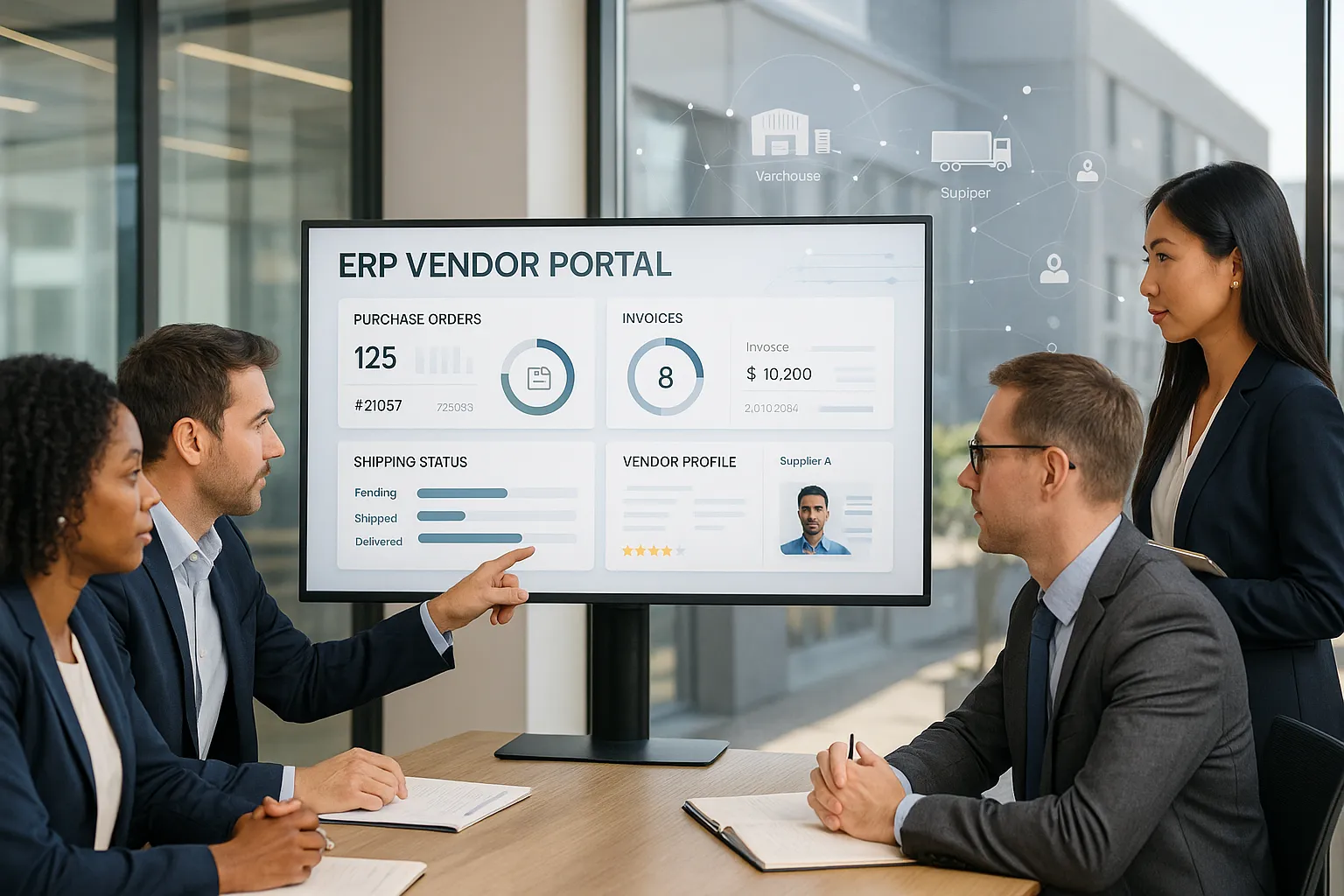
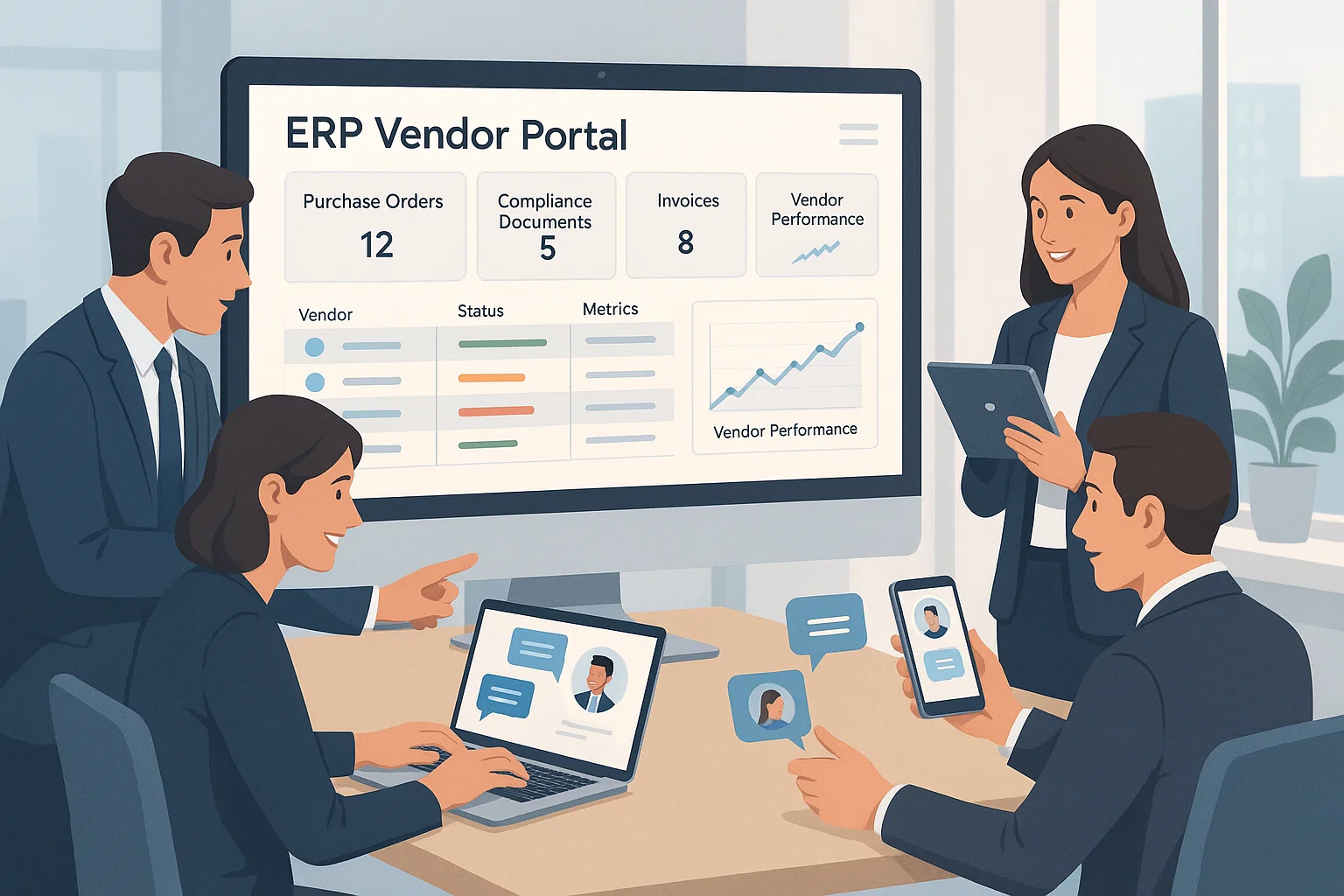
The ERPbeNet’s Vendor Portal centralizes communication, automates workflows, and ensures real-time visibility into every transaction. Purchase orders, compliance documents, invoices, and performance metrics are all available in one place, eliminating the inefficiencies of traditional methods. Vendors see updates instantly, while buyers can track progress without chasing information across multiple channels, creating a seamless collaboration experience.
By adopting the ERP Vendor Portal, businesses can turn vendor management from a recurring headache into a strategic advantage. Operations become smoother, approvals faster, and compliance simpler, while vendor relationships grow stronger. In this blog, we’ll explore common vendor management challenges and show how the ERPbeNet’s Vendor Portal helps companies save time, reduce errors, and achieve scalable growth.
The Legacy Problems of Vendor Management
Before understanding how ERPbyNet’s Vendor Portal transforms vendor collaboration, it’s important to recognize the pain points businesses struggle with today. Vendor management is not just about buying and paying—it involves coordination, compliance, performance tracking, and long-term relationship building. Unfortunately, most organizations still rely on outdated processes that create inefficiency, frustration, and hidden costs.
Scattered Communication Across Multiple Channels
In many companies, communication with vendors happens across a patchwork of emails, phone calls, and instant messages. Purchase orders may be emailed, clarifications handled over a phone call, and delivery updates sent via messaging apps. This fragmented approach makes it nearly impossible to track conversations or maintain accountability. Critical updates are often buried in someone’s inbox, and miscommunication leads to costly errors and delays.
Manual Paperwork and Inefficient Processes
Even in the digital age, a surprising number of businesses still depend on paper-driven workflows or disjointed spreadsheets. Purchase orders are drafted manually, approvals require physical signatures, and invoices are filed in cabinets. These manual processes are slow, error-prone, and create unnecessary administrative overhead. Human errors—such as entering the wrong figures or missing key details—can easily escalate into disputes with vendors.
Delayed Purchase Orders and Missed Renewals
One of the most common challenges businesses face is managing contract renewals, especially Annual Maintenance Contracts (AMCs). Without automated reminders, it’s easy for renewal dates to slip by unnoticed. The result is revenue leakage, service interruptions, and potential breakdowns in critical operations. Similarly, delays in raising purchase orders often create bottlenecks that disrupt supply chains and strain vendor relationships.
Lack of Transparency in Pricing and Delivery Timelines
Vendors play a crucial role in cost optimization, yet many organizations lack visibility into vendor quotes, delivery schedules, and pricing changes. Without a centralized system, comparing vendor quotes is tedious, and buyers often make decisions based on incomplete information. Delivery timelines are just as problematic—buyers are left chasing vendors for updates, while vendors feel buyers are unreasonably pressuring them. The absence of transparency breeds mistrust on both sides.
Compliance Headaches
Regulatory compliance is non-negotiable, but managing it manually is exhausting. Businesses need to maintain valid licenses, safety certifications, and legal agreements from each vendor. When documents are stored in scattered files and expiry dates are tracked on spreadsheets, it’s almost inevitable that something will slip through the cracks. Non-compliance exposes organizations to legal risks, penalties, and reputational damage.
Invoice and Payment Disputes
One of the biggest friction points in vendor management is payment. Vendors expect timely payments, while businesses must ensure invoices align with purchase orders and delivery confirmations. When managed manually, discrepancies are common: a mismatched PO number, a missing delivery note, or a duplicate invoice can stall payment approvals for weeks. These disputes strain vendor relationships and erode trust.
Scaling Problems with Multi-Vendor Management
As companies grow, they often expand their vendor base to handle more diverse needs. What worked for managing five vendors becomes unmanageable with fifty or five hundred. Without a centralized system, procurement teams are overwhelmed by the volume of documents, approvals, and communications. The lack of standardization across vendors creates inefficiency and inconsistency, slowing down operations and increasing costs.
Vendor management is a critical business function, but the legacy methods most organizations still use are holding them back. Scattered communication, paperwork, disputes, and compliance risks are not just frustrating—they directly impact profitability and long-term growth. To move forward, businesses need a modern, centralized, and automated approach that eliminates these inefficiencies once and for all.
This is exactly what ERPbyNet’s Vendor Portal delivers, turning these long-standing problems into challenges of the past.
Read More : How ERP Systems Support Supply Chain Management
How ERP Vendor Portal Makes These Problems Vanish

Modern businesses cannot afford inefficiency, miscommunication, or errors in vendor management. This is where ERPbyNet’s Vendor Portal steps in, transforming every aspect of vendor collaboration. By centralizing communication, automating workflows, and providing real-time visibility, the portal ensures that the problems outlined earlier—manual processes, delayed approvals, compliance risks, and payment disputes—simply disappear. Let’s examine how.
Centralized Communication = No More Endless Email Threads
One of the most time-consuming challenges in vendor management is scattered communication. ERPbyNet’s Vendor Portal consolidates all vendor interactions into a single platform.
- Messaging Hub: Every message, query, or clarification is stored within the portal. Buyers and vendors can see conversation histories at a glance.
- Real-Time Notifications: Both parties receive instant alerts for updates, approvals, or changes. No one misses critical information buried in email chains.
- Collaboration Transparency: Buyers can see whether vendors have viewed or responded to messages. Vendors can track queries and ensure timely replies.
By centralizing communication, ERPbyNet eliminates misunderstandings, reduces response times, and builds trust between organizations and their vendors.
Automated Purchase Orders & Renewals = Never Miss AMC/Contract Cycles
ERPbyNet removes the manual burden of creating purchase orders and tracking contract renewals.
- Auto-Generated Purchase Orders: Based on predefined schedules or inventory triggers, the portal automatically generates POs for approval.
- Renewal Alerts: Annual Maintenance Contracts (AMCs) or recurring service agreements trigger automated reminders, ensuring no contract is missed.
- Integrated Approval Workflow: Approvers receive notifications to confirm or reject orders, reducing bottlenecks.
This automation ensures accuracy, prevents revenue leakage, and guarantees operational continuity. Businesses no longer need to chase approvals or risk missing renewal deadlines.
Real-Time Transparency for Buyers & Vendors
Transparency is key to effective vendor management. ERPbyNet’s Vendor Portal provides both buyers and vendors with visibility into every step of the procurement process.
- Live Order Tracking: Vendors update their delivery status in real time, giving buyers visibility into progress.
- Performance Dashboards: Track vendor delivery times, compliance, and responsiveness.
- Centralized Records: Historical data is stored securely, making it easy to analyze performance trends.
With real-time transparency, both parties have confidence in the process, reducing disputes and increasing accountability.
Integrated Compliance & Documentation
Regulatory compliance is simplified with ERPbyNet.
- Digital Document Vault: Store all critical documents—licenses, safety certifications, legal agreements—within the portal.
- Expiry Alerts: Automatic notifications alert both vendors and buyers of upcoming expirations.
- Audit-Ready Reports: All documents and approvals are logged and timestamped, ensuring audit readiness at any moment.
This centralized approach eliminates compliance risks and reduces the administrative burden of manual tracking.
Error-Free Invoicing & Faster Payments
Invoice disputes are one of the biggest friction points between buyers and vendors. ERPbyNet addresses this by integrating invoicing directly with purchase orders and delivery confirmations.
- PO-Invoice Matching: Invoices automatically cross-check against corresponding POs and delivery receipts, flagging discrepancies immediately.
- Approval Workflow: Multi-level approvals can be configured to ensure accuracy without slowing payments.
- Faster Payment Cycles: Automation reduces delays, boosting vendor satisfaction and trust.
The result is fewer disputes, stronger vendor relationships, and improved financial control.
Multi-Vendor Management Without Complexity
Scaling vendor management becomes effortless with ERPbyNet.
- Single Dashboard for All Vendors: Monitor 10, 50, or 1,000 vendors from a single interface.
- Vendor Scorecards: Evaluate vendor performance based on delivery times, compliance, and responsiveness.
- Standardized Processes: Automate workflows, POs, approvals, and reporting across all vendors.
By simplifying multi-vendor oversight, companies save time and ensure consistent quality standards across their entire vendor network.
Accountability & Performance Tracking
ERPbyNet introduces accountability through transparent tracking and measurable KPIs.
- Digital Audit Trails: Every action—message sent, PO approved, invoice paid—is logged for visibility.
- KPI Tracking: Measure vendor efficiency, compliance, and service levels.
- Actionable Insights: Identify underperforming vendors and take proactive measures before issues escalate.
The portal ensures that everyone—vendors and internal teams alike—is accountable, removing ambiguity and blame.
Read More : ERP Audits Made Simple: Safeguarding Quality and Safety Every Day
The Business Impact: Tangible Benefits
Adopting ERPbyNet’s Vendor Portal does more than eliminate daily headaches—it transforms vendor management into a strategic advantage. By centralizing communication, automating workflows, and providing real-time visibility, companies experience significant improvements across cost, time, relationships, and operational scalability. Let’s explore these tangible benefits in detail.
Cost Savings Through Increased Efficiency
Manual vendor management is expensive. Time spent on tracking emails, chasing approvals, and reconciling invoices translates directly into labor costs and lost productivity. ERPbyNet streamlines these processes:
- Reduced Administrative Burden: Automated workflows eliminate repetitive tasks, freeing procurement teams to focus on strategic initiatives.
- Fewer Errors: Automated PO and invoice matching reduces costly mistakes, preventing overpayments and disputes.
- Optimized Vendor Spending: Transparent pricing and real-time vendor comparisons help companies select the most cost-effective options.
Overall, businesses see lower operational costs and more accurate budgeting thanks to the portal’s automation.
Time Savings Across Procurement Cycles
Time is one of the most valuable assets in any organization. ERPbyNet speeds up procurement cycles at every step:
- Faster Approvals: Digital workflows and notifications ensure no PO or contract gets delayed waiting for sign-off.
- Quicker Renewals: Automated alerts prevent missed AMCs and recurring service deadlines.
- Real-Time Tracking: Buyers and vendors can see order statuses instantly, eliminating the need for follow-ups.
These efficiencies reduce the cycle time for approvals, procurement, and payment processing, enabling companies to operate faster and more predictably.
Stronger Vendor Relationships
Vendor relationships are vital for long-term business success. Miscommunications, late payments, and compliance issues can quickly erode trust. ERPbyNet fosters stronger relationships by:
- Transparency: Vendors have clear visibility into approvals, POs, and payment schedules.
- Reliability: Timely payments and consistent processes build trust and loyalty.
- Performance Feedback: Scorecards and dashboards allow constructive collaboration and continuous improvement.
Stronger relationships lead to better service, more favorable contract terms, and a more responsive vendor network.
Always Audit-Ready
Compliance and audit readiness are non-negotiable in regulated industries. ERPbyNet ensures companies are always prepared:
- Centralized Document Storage: All licenses, certifications, and contracts are stored digitally.
- Automatic Expiry Alerts: No critical compliance documents are ever missed.
- Audit Trails: Every action in the portal is logged, providing proof of approvals and communications.
Being audit-ready reduces risk, increases confidence in internal controls, and avoids penalties or disruptions caused by regulatory issues.
Scalable Vendor Management for Growing Businesses
As businesses grow, managing a larger vendor network can become chaotic without the right tools. ERPbyNet makes scaling seamless:
- Single Interface for All Vendors: Manage hundreds or even thousands of vendors from one dashboard.
- Standardized Processes: Apply consistent workflows, approvals, and reporting across all vendors.
- Data-Driven Decisions: Use real-time analytics to optimize vendor selection and performance.
Companies can expand operations without adding complexity, ensuring that growth doesn’t compromise efficiency or control.
Adopting ERPbyNet’s Vendor Portal turns vendor management from a time-consuming, error-prone task into a streamlined, strategic function. Businesses not only eliminate legacy problems but also gain measurable benefits in cost reduction, operational efficiency, compliance, vendor relationships, and scalability.
Read More : ERP Vendor Portals: Features, Benefits, and Best Practices
Why ERPbyNet’s Vendor Portal Is Different
While many companies offer vendor management tools, ERPbyNet’s Vendor Portal stands out due to its seamless integration, user-friendly design, and industry-specific focus. It is not just a portal—it is a fully integrated solution that aligns vendor management with overall business operations, delivering unmatched efficiency and control.
Seamless Integration with the ERPbyNet Suite
Unlike standalone tools, the Vendor Portal works as part of the broader ERPbyNet ecosystem. It connects with modules for AMC management, service calls, finance, inventory, and procurement, creating a unified workflow across your organization. This integration ensures that vendor interactions, purchase orders, and payments are directly linked to operational and financial data, eliminating errors and duplication.
User-Friendly Design → Vendors Actually Use It
A tool is only effective if people adopt it. ERPbyNet is designed with an intuitive interface, minimizing training requirements and maximizing adoption rates. Vendors can log in easily, update order statuses, upload compliance documents, and check payment schedules—all without technical hurdles. High vendor engagement ensures data accuracy and timely communication.
Cloud-Based, Secure, and Mobile-Accessible
In today’s fast-paced business environment, accessibility is critical. ERPbyNet is cloud-based, providing secure access from anywhere, on any device. Role-based access controls protect sensitive information, while real-time updates keep buyers and vendors informed, even when teams are remote or on the move.
Tailored for Industry-Specific Needs
ERPbyNet is not a generic portal—it is designed for industries with complex vendor ecosystems, such as elevators, manufacturing, and field services. The portal accommodates unique workflows, regulatory requirements, and compliance standards, ensuring that businesses in specialized sectors can manage vendors efficiently and confidently.
By combining integration, usability, security, and industry focus, ERPbyNet’s Vendor Portal goes beyond traditional solutions, transforming vendor management from a cumbersome process into a strategic advantage.
Read More : From Paper Records to Digital Accuracy: Managing Staff with ERPbyNet
Future-Proofing Vendor Management with ERPbyNet

In today’s fast-evolving business landscape, traditional vendor management systems quickly become obsolete. Companies need a solution that not only addresses current challenges but also anticipates future needs. ERPbyNet’s Vendor Portal is designed to future-proof your vendor management, helping organizations stay ahead in a competitive market.
AI-Driven Insights for Proactive Decision-Making
ERPbyNet leverages artificial intelligence and data analytics to provide actionable insights. Predictive alerts notify buyers of upcoming contract renewals, potential vendor performance issues, or supply chain risks. By analyzing historical data, the portal helps companies identify patterns, optimize procurement strategies, and make proactive decisions before problems arise.
Digital Supply Chain Readiness
As supply chains become more complex and global, visibility and responsiveness are crucial. ERPbyNet’s Vendor Portal consolidates all vendor interactions, orders, and compliance data into a single platform. This digital foundation enables companies to respond quickly to disruptions, scale operations seamlessly, and collaborate efficiently across regions and time zones.
Continuous Improvement Through Analytics
The portal’s performance dashboards track vendor efficiency, delivery timelines, compliance adherence, and financial performance. Organizations can use these insights to implement process improvements, negotiate better terms, and strengthen vendor partnerships. This ensures that vendor management evolves from a reactive task to a strategic growth driver.
Future-Ready Technology and Scalability
With cloud-based architecture, mobile accessibility, and role-based security, ERPbyNet adapts to organizational growth. Whether expanding to new regions, adding hundreds of vendors, or implementing industry-specific regulations, the portal scales effortlessly, making it a reliable solution for years to come.
By combining AI insights, digital supply chain readiness, continuous improvement, and scalable technology, ERPbyNet ensures that companies are not only solving today’s problems but are prepared for tomorrow’s challenges.
Say Goodbye to Vendor Management Headaches
Managing vendors doesn’t have to be complicated. The scattered emails, manual purchase orders, compliance risks, invoice disputes, and scaling challenges that once consumed your time and resources can now vanish with ERPbyNet’s Vendor Portal. By centralizing communication, automating workflows, ensuring compliance, and providing real-time visibility, the portal transforms vendor management from a stressful task into a strategic advantage.
Companies that adopt ERPbyNet gain more than just operational efficiency—they enjoy stronger vendor relationships, faster approvals, cost savings, and audit-ready processes. With AI-driven insights, digital supply chain readiness, and a scalable, cloud-based platform, ERPbyNet prepares your organization not just for today’s challenges but for tomorrow’s growth.
Ready to leave vendor management headaches behind? See ERPbyNet’s Vendor Portal in action and experience a smarter, faster, and more reliable way to manage your vendors. Connect with our experts today to schedule a demo, explore features, or get started on transforming your procurement and vendor management processes. Your vendors, your team, and your bottom line will thank you.
FAQs
1. What is ERPbyNet’s Vendor Portal, and how does it work?
ERPbyNet’s Vendor Portal is a centralized platform that streamlines vendor management by automating purchase orders, approvals, compliance tracking, and payments, all integrated with the ERPbyNet suite for seamless operations.
2. How does the portal improve communication with vendors?
It centralizes all communication in one hub, allowing buyers and vendors to track messages, receive real-time alerts, and avoid missed updates, reducing misunderstandings and improving collaboration.
3. Can the portal help with compliance and document management?
Yes. The portal stores all licenses, contracts, and certificates digitally, sends expiry alerts, and maintains audit-ready records, minimizing compliance risks.
4. How does ERPbyNet’s Vendor Portal handle payments and invoices?
Invoices are automatically matched with POs and delivery confirmations. Automated approvals speed up payments, reduce errors, and eliminate disputes.
5. Is the Vendor Portal suitable for companies with many vendors?
Absolutely. It scales effortlessly, managing hundreds or thousands of vendors through a single dashboard while maintaining consistent workflows and transparent performance tracking.