Why ERP Is Essential for Managing Annual Equipment Surveys Efficiently
Every year, businesses brace themselves for a process that is equal parts necessary and dreaded: the annual equipment survey. For small and mid-sized enterprises, this process often means long hours spent sifting through spreadsheets, chasing signatures, and untangling records that never seem to add up. Equipment goes missing, responsibility is unclear, and the stress of proving compliance looms large.
Without the right tools, this routine audit feels more like a crisis than a business process. Staff members scramble, departments blame each other, and leadership worries about what the auditors will uncover. Time and energy that could be spent on strategy and growth get swallowed by inefficiencies and miscommunication.
But what if annual equipment surveys didn’t have to be chaotic? What if the same process that now feels like an obstacle course could instead become a seamless, transparent, and even confidence-building exercise? That’s where Enterprise Resource Planning (ERP) comes in — and why ERPbyNet is designed to give growing businesses clarity where there was once confusion.
Why Annual Equipment Surveys Feel Like Herding Cats Without ERP

Think about the last time your business prepared for an annual equipment survey. Chances are, it looked something like this:
- Multiple departments kept their own equipment logs — often in different formats.
- HR claimed a laptop was with a staff member who left six months ago.
- Finance recorded depreciation for assets that no one could physically locate.
- Operations staff insisted they submitted updates, but IT couldn’t find them.
The result? A frustrating scavenger hunt, with managers running from one department to another, and a stack of mismatched spreadsheets as the “single source of truth.”
Running an annual survey without ERP is like trying to herd cats — every asset seems to slip through your hands just when you think you’ve got it accounted for. And when auditors come knocking, you’re left hoping the inconsistencies won’t lead to penalties, insurance issues, or worse.
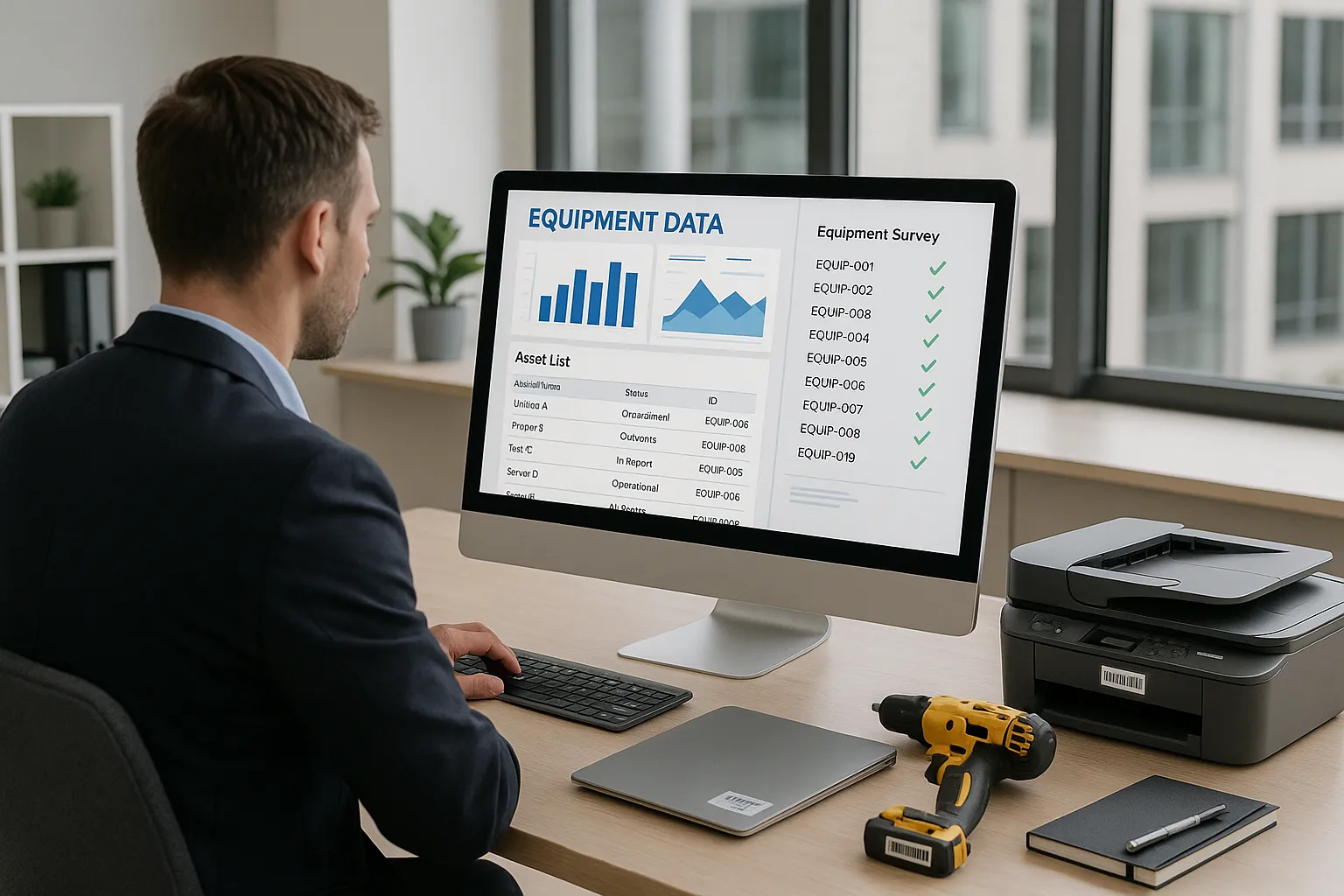
With ERP, however, the same process is transformed. Instead of juggling dozens of files, managers log into a central dashboard. Every piece of equipment is recorded in real time, with ownership, location, and value all clearly visible. When the survey season arrives, data isn’t scattered — it’s already organized, accurate, and accessible.
Read More : Field Sales Automation ROI: What Sales Managers Are Actually Getting Today
The Secret to Accurate Equipment Tracking: Centralized ERP Tools
Centralization is the backbone of modern ERP, and for annual equipment surveys, it changes everything. Instead of scattered logs and conflicting spreadsheets, ERP creates one reliable system of truth that every department can access and update.
Why Centralization Works
- Eliminates ghost assets: No more items listed on paper but missing in reality. Gartner estimates that businesses lose up to 5% of their equipment value annually due to poor tracking.
- Ensures real-time updates: Purchases, relocations, reassignments, or retirements are captured the moment they happen.
- Connects departments seamlessly:
- Finance keeps depreciation and valuations accurate.
- HR tracks accountability for assigned assets.
- Compliance teams generate verified reports instantly.
- Finance keeps depreciation and valuations accurate.
The Real Difference
- Spreadsheets = guessing. Multiple versions, manual errors, constant reconciliations.
- ERP = knowing. A single, centralized record where accuracy isn’t a goal — it’s guaranteed.
With ERPbyNet, equipment tracking becomes effortless, audits become stress-free, and every department gains confidence in the data they rely on.
From Manual Logs to Digital Peace of Mind
Annual equipment surveys are often slowed down by outdated, manual processes. Staff walk through offices, warehouses, or job sites with clipboards, write down serial numbers, and later re-enter everything into spreadsheets. At each step, errors creep in — handwriting mistakes, typos, missed entries. By the time the data is compiled, it’s already stale.
The Problem with Manual Surveys
- Time-consuming double entry of data
- High risk of human error (typos, omissions, duplicates)
- Outdated information by the time reports are ready
- Staff frustration and wasted effort
How ERP Changes the Game
ERP systems replace manual drudgery with automation. ERPbyNet, for example, supports barcode and RFID scanning, allowing staff to:
- Walk through a facility with a mobile device
- Scan tags on equipment instantly
- Update records in real time, directly in the system
No clipboards. No spreadsheets. No second round of data entry.
The Business Impact
- Speed: Hundreds of assets logged in minutes instead of hours
- Accuracy: Real-time updates ensure nothing is missed
- Confidence: Reliable data builds trust during audits and compliance checks
Switching from manual logs to ERP is like upgrading from a paper road map to GPS. Once you experience the clarity and reliability of digital tracking, you’ll never want to go back.
Read More : ERP Audits Made Simple: Safeguarding Quality and Safety Every Day
Why ERPbyNet Beats Legacy Tools and Spreadsheets

Spreadsheets have been the go-to tool for SMEs for decades. They’re cheap, familiar, and “good enough”… until audit season rolls around. That’s when their cracks start to show.
The Spreadsheet Struggle
- Data chaos: Ten versions of the same file, none agreeing with each other.
- Manual headaches: Every entry typed by hand, every formula waiting to break.
- Zero visibility: By the time you pull a report, the data is already outdated.
For annual equipment surveys, relying on spreadsheets is like trying to run a marathon in flip-flops — you might get to the finish line, but not without blisters and frustration.
The Overkill of Enterprise Giants
On the other side of the spectrum are the heavyweights: SAP, Oracle, and similar platforms. They’re powerful, yes, but also:
- Built for corporations with entire ERP departments
- Packed with features SMEs never need
- Expensive enough to make smaller businesses think twice
For an SME, implementing these systems is like buying a luxury jet just to commute to work. Impressive, but wildly unnecessary.
Where ERPbyNet Fits In
ERPbyNet is designed with SMEs in mind — delivering power without the pain.
- Clean, intuitive dashboards: No steep learning curve, just data that makes sense.
- Role-based permissions: Every team member sees only what they need, nothing more.
- Smart integrations: APIs connect smoothly with your existing tools, so nothing feels disjointed.
ERPbyNet is neither a flimsy spreadsheet nor an intimidating enterprise behemoth. It’s the right-sized solution for businesses that want clarity, control, and confidence without drowning in complexity.
It doesn’t just replace old tools — it empowers teams to finally manage equipment surveys with accuracy and ease.
Read More : ERP Vendor Portals: Features, Benefits, and Best Practices
The Finance Angle in Equipment Surveys
Annual equipment surveys are about more than counting hardware. They’re about protecting the balance sheet, satisfying auditors, and ensuring every item listed in the books actually exists. For Finance teams, this is where the pressure peaks.
The Pain Without ERP
- Assets appear on financial records but can’t be located physically.
- Depreciation schedules run on outdated data.
- Insurance reports don’t match reality, exposing businesses to risk.
- Auditors ask tough questions that spreadsheets can’t always answer.
The result? Late nights, frantic reconciliations, and costly surprises.
How ERPbyNet Simplifies the Financial Side
ERPbyNet keeps asset data live and reliable:
- Every purchase, reassignment, or retirement is logged automatically.
- Depreciation calculations stay accurate because records update in real time.
- Verified audit trails are built in, so compliance checks don’t feel like investigations.
Why This Matters for Leadership
When Finance has clarity:
- Audits are smoother and faster.
- Compliance risks shrink dramatically.
- The business saves money by avoiding over-insurance and under-reporting.
Instead of scrambling once a year, Finance leaders gain year-round confidence. Annual equipment surveys stop being a fire drill and become just another step in well-run financial governance.
Future-Proofing Equipment Management with ERP
The way businesses handle annual equipment surveys today will determine how ready they are for tomorrow. Spreadsheets can only tell you what you think you own right now. ERP shows you not only what you own, but also how long it will last, when it might fail, and how it fits into your bigger business picture.
The Shift That’s Already Happening
- AI is predicting failures before they happen.
- IoT sensors are feeding real-time data into systems.
- Predictive analytics are telling managers where to invest and where to cut costs.
The companies adopting these tools aren’t just more efficient — they’re more competitive.
How ERPbyNet Puts SMEs Ahead of the Curve
ERPbyNet is designed to help growing businesses tap into innovations without the complexity of big-enterprise systems:
- Receive early alerts before equipment fails, cutting downtime costs.
- Adapt instantly as compliance rules evolve, without messy workarounds.
- Customize survey workflows with low-code tools — no big IT department required.
Why This Matters for Growth
Instead of chasing problems after they appear, businesses using ERPbyNet anticipate them, plan for them, and turn them into opportunities. Equipment surveys stop being a once-a-year scramble and become a continuous flow of insights that drive smarter decisions.
Future-proofing isn’t about predicting the unknown. It’s about having systems flexible enough to adapt, strong enough to keep you compliant, and smart enough to save you money before issues even surface.
With ERPbyNet, tomorrow’s challenges turn into today’s competitive edge.
Turn Annual Equipment Surveys into a Strategic Advantage
Annual equipment surveys will always be part of business, but how you handle them determines whether they drain resources or deliver real value. Stick with spreadsheets, and you’re stuck with errors, wasted hours, and compliance risks. Move to ERP, and the process becomes faster, clearer, and far more rewarding.
ERPbyNet gives SMEs the power to transform surveys into an asset: centralized records, real-time tracking, accurate financial data, and predictive insights that prevent problems before they happen. What used to be a stressful annual task now becomes a competitive advantage.
You don’t need a massive IT department or the budget of a global corporation to achieve this. ERPbyNet was built for growing businesses that want clarity and control — without complexity or high costs.
The choice is yours: let the next equipment survey slow you down, or use it to run your business smarter.
At ERPbyNet, we make that transformation possible. Ready to take control? Explore our ERP implementation service today.
FAQs
Still have questions about ERP and how it fits into annual equipment surveys? Let’s clear them up.
What is an annual equipment survey?
It’s the process of reviewing and verifying all equipment a business owns, ensuring accurate records for compliance, insurance, and financial reporting.
Why do businesses struggle with surveys without ERP?
Because equipment data is usually scattered across departments, stored in spreadsheets, or recorded manually, making it hard to get a complete and accurate picture.
Can ERPbyNet integrate with barcode or RFID tools?
Yes. ERPbyNet supports modern tracking technologies, allowing field staff to scan equipment and instantly update records during surveys.
Is ERPbyNet affordable for small and mid-sized businesses?
Absolutely. ERPbyNet is designed to deliver enterprise-grade capability at a price point that works for SMEs, without the complexity of larger ERP platforms.
How does ERP help with compliance during equipment audits?
ERP provides real-time, centralized data, ensuring that reports are accurate, up-to-date, and audit-ready, reducing the risk of penalties or failed inspections.
Can ERP scale as my business grows?
Yes. ERPbyNet is built to grow with you, accommodating more equipment, more users, and more complex processes as your business expands.