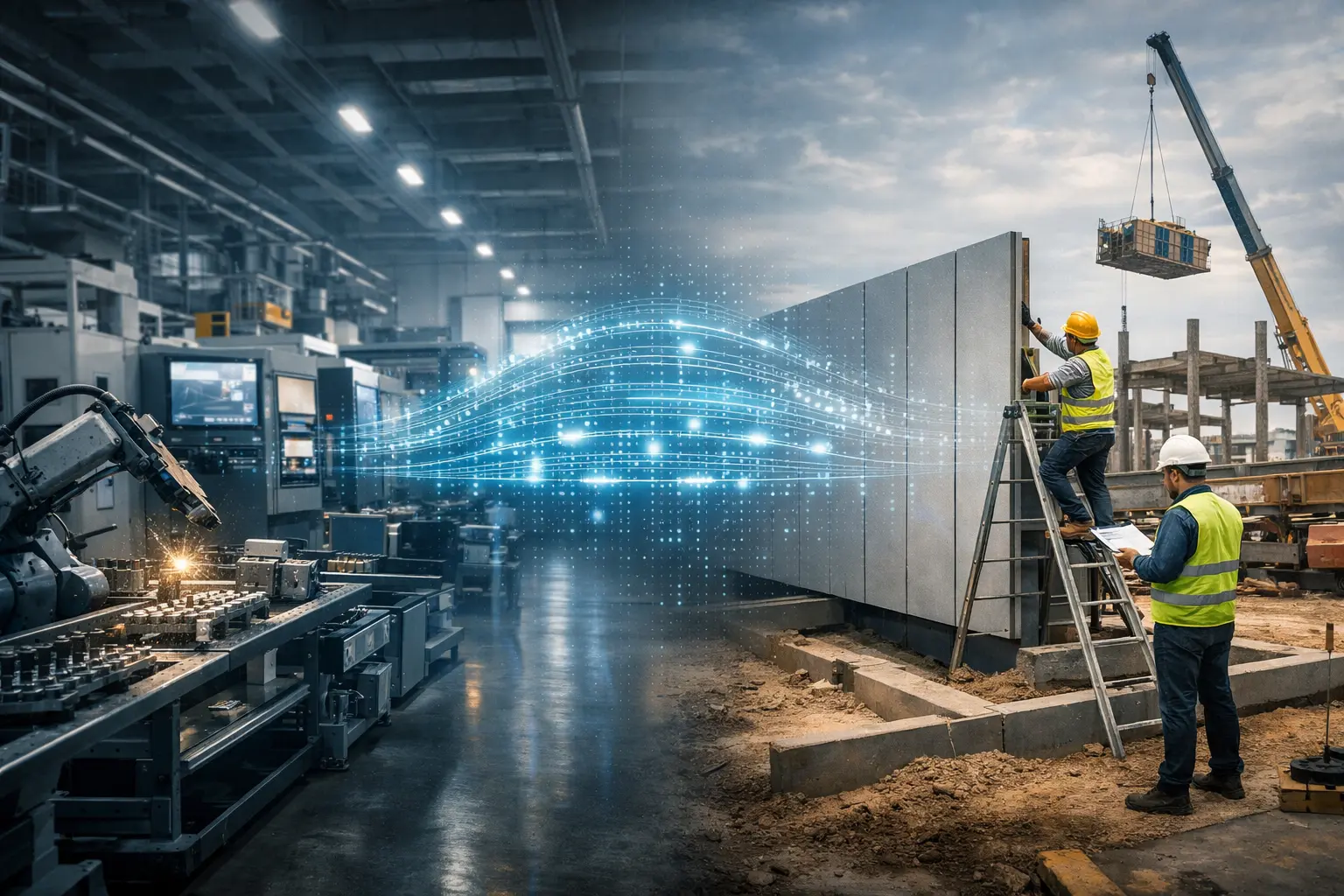
In many project-driven and manufacturing businesses, production and installation operate like two different worlds. Production teams focus on efficiency, material availability, and output. Installation teams focus on site readiness, timelines, customer coordination, and execution accuracy.
The problem is not that these teams work poorly—it is that they often work in isolation, supported by fragmented systems, spreadsheets, and manual handovers. This disconnect leads to delays, rework, cost overruns, and customer dissatisfaction.
A modern ERP system can bridge this gap—but only if it is designed to connect engineering, production, logistics, and installation into one continuous execution flow.
This article explains how ERP bridges the gap between production and installation, why traditional systems fail, and what capabilities are required to create true end-to-end visibility.
The Production–Installation Disconnect: A Common Industry Problem
1. Production Completes, Installation Is Not Ready
In many organizations, production finishes on time, but installation cannot start because:
- The site is not prepared
- Materials arrive incomplete
- Drawings or revisions are missing
- Installation teams were not informed of production changes
Finished goods sit idle, tying up working capital.
2. Installation Starts, Production Is Still Catching Up
In other cases, installation teams reach the site only to discover:
- Parts are missing or incorrect
- Custom configurations were not reflected in production
- Quality issues were identified too late
This results in rework, site delays, and strained customer relationships.
3. No Single Version of Truth
Production data lives in one system, installation updates in another, and project tracking in spreadsheets. No team has a complete, real-time view of:
- What is produced
- What is shipped
- What is installed
- What is pending or blocked
Read More :Why Does ERP Break After Go-Live Instead of Before It?
Why Traditional ERP Systems Fail to Connect Production and Installation
Many ERP systems were designed for either manufacturing or accounting, not execution across physical sites. Common limitations include:
- Production ends at goods issue or dispatch
- Installation is treated as an afterthought or service module
- No linkage between work orders and site activities
- Manual coordination via emails and spreadsheets
- No real-time feedback from field teams
As a result, ERP becomes a planning tool rather than an execution backbone.
What It Really Means to Bridge Production and Installation

Bridging the gap between production and installation is not about generating more dashboards, reports, or status emails. It is about eliminating breaks in execution by creating a continuous digital thread that connects every stage of the order lifecycle—from the moment a customer confirms requirements to the final handover at the site.
In a truly connected ERP environment, each phase is not treated as a separate function but as a dependent step in one unified process:
- Customer order and configuration become the single starting point, capturing technical, commercial, and delivery requirements accurately and consistently.
- Engineering and BOM generation are directly driven by the approved order, ensuring designs, specifications, and material structures reflect what was actually sold—without manual interpretation.
- Production planning and execution consume engineering data in real time, enabling accurate scheduling, material allocation, and progress tracking at every stage of manufacturing.
- Packing, dispatch, and logistics are aligned with production completion and installation priorities, ensuring materials are shipped in the right sequence, to the right site, at the right time.
- Site readiness and installation execution are planned based on real production and dispatch status, not assumptions, allowing installation teams to mobilize with confidence.
- Commissioning, handover, and service close the loop by capturing final acceptance, quality confirmations, and asset data that seamlessly transition into ongoing service and support.
A well-designed ERP ensures that each stage is aware of what comes next and what has already happened. Updates flow automatically across teams, removing the need for manual follow-ups, duplicate data entry, or informal coordination. The result is not just better visibility—but predictable execution, fewer surprises, and complete alignment between factory and field.
Read More : How ERP Brings Consistency to Multi-Site Financial Reporting
How ERP Bridges Production and Installation Step by Step
1. Order-Driven Execution Instead of Department-Driven Execution
A modern ERP starts with a single customer order that drives all downstream activities.
- The same order triggers engineering
- Engineering output feeds production
- Production output feeds installation
- Installation progress feeds project and billing
There is no duplication, reinterpretation, or manual translation between teams.
ERPbyNet is designed around this order-centric execution model, ensuring that production and installation are not separate processes but connected phases of the same lifecycle.
2. Engineering and BOM Accuracy Flowing Into Installation
One of the biggest causes of installation issues is incorrect or incomplete engineering data.
A capable ERP ensures:
- Engineering rules are enforced at the configuration stage
- BOMs are generated automatically from approved designs
- Any revision triggers controlled updates across production and installation
This prevents scenarios where:
- Installation teams receive outdated drawings
- Production builds to an old specification
- Site teams discover mismatches only during execution
3. Production Visibility for Installation Planning
Installation teams cannot plan effectively without knowing the true production status.
ERP bridges this gap by providing:
- Real-time production progress by order or project
- Visibility into partially completed assemblies
- Early alerts for delays or quality holds
This allows installation managers to:
- Align site schedules with realistic production timelines
- Avoid premature mobilization
- Communicate accurate timelines to customers
ERPbyNet enables installation planning based on live production data, not assumptions or outdated reports.
4. Logistics and Dispatch as a Shared Responsibility
Often, production assumes dispatch is complete once goods leave the factory, while installation assumes materials will arrive exactly as needed.
An integrated ERP connects:
- Packing lists to installation phases
- Dispatch status to site readiness
- Partial shipments to installation sequencing
This ensures:
- The right materials arrive at the right time
- Installation is phased according to delivery reality
- Missing or damaged items are identified early
5. Installation Execution Integrated With ERP
Bridging the gap requires installation execution to be part of ERP—not an external system.
A modern ERP supports:
- Site-wise task breakdowns
- Technician assignment and scheduling
- Daily progress updates from the field
- Installation checklists and validations
Field teams update status directly, creating real-time feedback loops to:
- Project management
- Production planning
- Finance and billing
ERPbyNet supports offline-enabled field updates, ensuring installation data is captured even in low-connectivity environments.
6. Real-Time Feedback From Installation to Production
The gap truly closes when installation feedback flows back into production and engineering.
ERP enables:
- Recording of installation issues and root causes
- Identification of recurring design or manufacturing problems
- Continuous improvement based on real execution data
Instead of repeating the same mistakes across projects, organizations build a learning system.
Read More : How Connecting CPQ and ERP Boosts Your Sales Process
Financial and Project Control Benefits of Bridging the Gap
1. Accurate Project Costing
When production and installation are connected:
- Material costs reflect actual usage
- Labor costs reflect real site effort
- Rework costs are visible, not hidden
This enables accurate margin analysis by project.
2. Milestone-Based Billing Linked to Execution
ERP can link billing milestones to:
- Production completion
- Dispatch
- Installation progress
- Commissioning sign-off
This improves cash flow and reduces billing disputes.
3. Audit-Ready Traceability
Integrated ERP ensures:
- Full traceability from order to installation
- Clear accountability for changes and approvals
- Reliable audit trails across departments
Industry Scenarios Where This Matters Most
ERP-driven production-installation integration is critical for:
- Industrial equipment manufacturers
- EPC and project-based businesses
- Modular construction
- HVAC, electrical, and automation projects
- Custom machinery and system integrators
In these industries, execution gaps directly impact profitability and reputation.
Why ERPbyNet Is Built for Production-to-Installation Continuity
Unlike generic ERP systems, ERPbyNet is designed around execution-heavy, project-driven environments.
Key strengths include:
- Engineering-driven BOM and configuration control
- Production tracking linked to project phases
- Installation and site execution built into ERP
- Real-time visibility across factory and field
- Strong audit and validation structure
ERPbyNet does not treat installation as a disconnected service function—it treats it as a natural extension of production.
From Disconnected Execution to Total Control — Take the Next Step
The gap between production and installation is not caused by people or effort—it is caused by disconnected systems. When teams rely on fragmented data, even the strongest plans fail during execution, leading to delays, rework, and rising project risk.
A modern ERP closes this gap by creating a single source of truth, connecting factory and field in real time, aligning engineering, production, logistics, and installation, and turning planning into predictable, on-time execution.
Organizations that fix this execution gap move faster, deliver with confidence, and scale without chaos. ERPbyNet is purpose-built to make this shift—uniting production and installation into one continuous, controlled, and fully visible execution flow.
If your teams are still chasing updates and reacting to site issues, it’s time to take control. Transform execution into a competitive advantage. Reduce delays. Eliminate surprises. Deliver right the first time. Start your execution transformation with ERPbyNet today.
Frequently Asked Questions (FAQs)
1. Why is there a gap between production and installation in many organizations?
The gap usually exists because production and installation teams operate on separate systems and datasets. Production focuses on manufacturing efficiency, while installation depends on site readiness and execution accuracy. Without a connected ERP system, information is transferred manually, leading to delays, errors, and misalignment.
2. How does ERP help connect production and installation processes?
An ERP system connects production, logistics, and installation through a single data platform. It ensures that production status, material availability, dispatch details, and installation schedules are visible in real time, enabling both factory and site teams to work from the same source of truth.
3. What problems occur when production and installation are not integrated?
When these functions are disconnected, organizations face delayed installations, rework at site, idle inventory, inaccurate project timelines, and billing disputes. These issues increase operational costs and negatively impact customer satisfaction.
4. Can ERP provide real-time visibility across factory and site operations?
Yes. A modern ERP provides real-time visibility into production progress, inventory movement, dispatch status, and installation execution. This visibility allows teams to make informed decisions and respond quickly to changes or delays.
5. How does ERP improve installation planning?
ERP improves installation planning by aligning site schedules with actual production and logistics data. Installation teams can plan manpower, tools, and timelines based on confirmed availability rather than assumptions, reducing last-minute changes and site-level disruptions.
6. What role does ERP play in managing project-based manufacturing?
In project-based manufacturing, ERP links customer orders, engineering data, production work orders, and installation tasks into a single execution flow. This ensures better coordination, accurate project costing, and controlled delivery across all phases of the project lifecycle.
7. How does ERP reduce rework during installation?
ERP reduces rework by ensuring that engineering revisions, BOM changes, and configuration updates are reflected automatically in production and installation activities. Installation teams receive accurate and up-to-date information, minimizing on-site errors.
8. Is ERP useful for industries with complex installation requirements?
Yes. ERP is especially valuable for industries such as industrial equipment manufacturing, EPC projects, modular construction, HVAC, and automation systems, where installation accuracy and coordination are critical to project success.
9. How does ERP support billing and financial control during installation?
ERP links production and installation milestones to billing events. This enables milestone-based invoicing, accurate cost tracking, and better cash flow management while reducing billing disputes caused by unclear execution status.
10. What makes ERPbyNet suitable for bridging production and installation?
ERPbyNet is designed for execution-driven environments. It integrates engineering, production, logistics, and installation into a single ERP framework, offering real-time visibility, strong process control, and field execution tracking to ensure seamless coordination between factory and site operations.