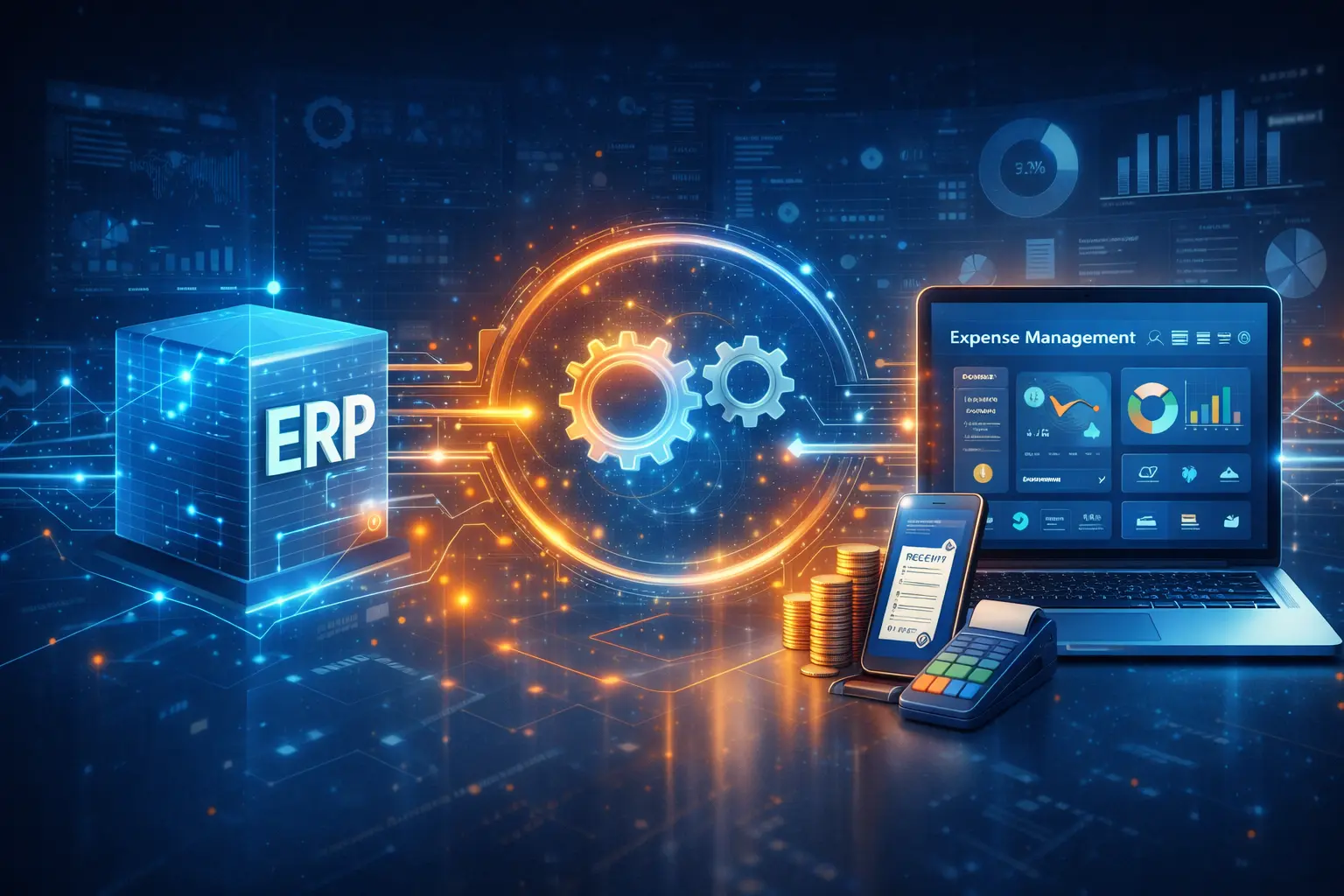
Importance of ERP Integrations with Expense Management Software
In today’s fast-moving business environment, organisations are under constant pressure to control costs, maintain compliance, and make faster, data-driven decisions. While most companies rely on an ERP system as the backbone of their operations, many still manage employee expenses through disconnected tools, spreadsheets, or standalone expense applications.
This disconnect creates more than just inconvenience. It leads to delayed reporting, manual reconciliation, policy violations, limited visibility into real spending, and increased risk during audits. Over time, these inefficiencies quietly erode profitability and slow down growth.
This is where ERP integrations with expense management software become critical.
At ERPbyNet, we believe expense management should not operate in isolation. When tightly integrated with ERP, expense data becomes accurate, real-time, compliant, and actionable—empowering finance teams and leadership with complete financial control.
This blog explores why ERP–expense management integration is essential, the challenges businesses face without it, the tangible benefits of integration, and how ERPbyNet enables organisations to manage expenses intelligently as they scale.
Understanding ERP and Expense Management: Why Integration Matters

What Does an ERP System Do?
An ERP (Enterprise Resource Planning) system centralises core business functions such as:
- Accounting and finance
- Procurement and vendor management
- Inventory and operations
- Payroll and compliance
- Reporting and analytics
ERP systems act as the single source of truth for business data.
What Is Expense Management Software?
Expense management software focuses specifically on:
- Employee expense submission
- Receipt capture and categorisation
- Policy enforcement
- Approval workflows
- Reimbursements and accounting entries
While powerful, expense tools alone do not provide complete financial context without ERP integration.
The Problem with Standalone Expense Tools
When expense management systems are not integrated with ERP:
- Finance teams manually re-enter data
- Reports are delayed or inaccurate
- Budget tracking becomes reactive
- Policy violations go unnoticed
- Audits become painful
Integration bridges this gap, transforming expense data into strategic financial insight.
Read More : Best Practices for Automating Elevator Project Planning & Material Management
Why ERP Integration with Expense Management Is No Longer Optional
1. Real-Time Financial Visibility Across the Organisation
One of the biggest advantages of integrating expense management with ERP is real-time visibility into spending.
Without integration:
- Expense data reaches ERP days or weeks later
- Leadership views outdated financial reports
- Budget overruns are discovered too late
With ERPbyNet integration:
- Approved expenses flow instantly into ERP
- Department-wise and project-wise spending is visible in real time
- Finance teams can proactively manage cash flow
This level of visibility enables smarter decisions, tighter controls, and faster responses to financial risks.
2. Elimination of Manual Data Entry and Errors
Manual data entry is one of the biggest sources of inefficiency in finance operations.
Disconnected systems force finance teams to:
- Re-enter expense data into ERP
- Match receipts manually
- Fix duplicate or incorrect entries
This not only consumes time but also introduces errors that compromise reporting accuracy.
With ERPbyNet’s integrated approach:
- Expense data syncs automatically
- GL codes, tax rules, and cost centers are applied correctly
- Errors caused by duplication or omission are eliminated
The result is clean, reliable financial data that finance teams can trust.
3. Stronger Policy Compliance and Spend Control
Policy enforcement becomes extremely difficult when expense systems operate independently from ERP.
Common challenges include:
- Employees submitting out-of-policy expenses
- Managers approving expenses without visibility into budgets
- Finance discovering violations only during audits
ERPbyNet enables rule-based policy enforcement through integration:
- Expense limits are defined centrally
- Out-of-policy expenses are flagged automatically
- Approval workflows align with company hierarchy and budgets
This ensures compliance is enforced at the point of spend—not after the money is gone.
4. Faster Approvals and Employee Reimbursements
Delayed reimbursements frustrate employees and damage trust in finance processes.
Without integration:
- Approvals move slowly
- Finance waits for data reconciliation
- Reimbursements are delayed
ERP-integrated expense management with ERPbyNet enables:
- Automated approval workflows
- Faster validation of expenses
- Seamless posting into accounting
Employees get reimbursed faster, while finance teams operate more efficiently—creating a better experience for everyone involved.
5. Improved Budgeting and Forecasting Accuracy
Accurate budgeting depends on complete and current data.
Disconnected expense systems cause:
- Gaps in actual vs planned spend
- Inaccurate forecasts
- Reactive financial planning
ERPbyNet’s integrated expense management ensures:
- Expenses update budgets in real time
- Forecasts reflect actual spending patterns
- Finance teams can adjust plans proactively
This improves both short-term cash flow management and long-term strategic planning.
6. Enhanced Audit Readiness and Transparency
Audits are often stressful due to missing receipts, incomplete records, and inconsistent approvals.
ERP integration simplifies audits by:
- Maintaining digital audit trails
- Linking expenses to approvals and receipts
- Ensuring consistent accounting treatment
With ERPbyNet:
- Auditors can trace expenses from submission to posting
- Compliance documentation is always available
- Audit preparation time is drastically reduced
Transparency becomes a built-in feature—not an afterthought.
7. Reduced Risk of Fraud and Financial Leakage
Fraud and duplicate claims are common risks in manual or disconnected expense processes.
ERP-integrated systems help:
- Detect duplicate or suspicious claims
- Flag unusually high expenses
- Prevent unauthorised reimbursements
ERPbyNet strengthens internal controls by embedding expense governance directly into the ERP ecosystem, reducing financial leakage and protecting the organisation.
Challenges Businesses Face Without ERP–Expense Integration
Organisations that delay integration often experience:
- Fragmented financial data
- Slow month-end closures
- Limited spend visibility
- Increased compliance risk
- Overworked finance teams
These issues compound as the business grows, making integration not just beneficial—but unavoidable.
Read More : Why an ERP Upgrade May Cost More Than an ERP Replacement
ERPbyNet’s Approach to Expense Management Integration

At ERPbyNet, we don’t believe in forcing businesses to adapt to rigid systems. Our approach is built around flexibility, scalability, and real-world usability.
1. Seamless Data Synchronisation
ERPbyNet ensures:
- Real-time syncing of expense data
- Accurate mapping to GL accounts and cost centers
- Consistent tax and compliance handling
2. Configurable Approval Workflows
Businesses can:
- Define approval hierarchies
- Set department-specific rules
- Automate routing based on spend limits
3. Centralised Financial Control
All expense data flows into ERPbyNet’s central financial engine, giving leadership:
- Unified reporting
- Real-time dashboards
- Actionable insights
4. SME-Friendly, Scalable Design
ERPbyNet is designed for growing businesses:
- Simple to implement
- Easy to use
- Scales with organisational complexity
Read More : 5 Signs Your Business Needs Manufacturing ERP Software
Who Benefits Most from ERP-Integrated Expense Management
| Business Type | Challenges Without ERP-Expense Integration | Benefits of ERP-Integrated Expense Management |
| Growing SMEs | Growing SMEs often face limited finance team capacity, rely on manual expense tracking, and lack early visibility into spending patterns. | With ERP-integrated expense management, these businesses can efficiently control costs without increasing finance staff, automate expense approvals and accounting postings, and gain real-time visibility that prevents inefficiencies from scaling. |
| Mid-Sized Enterprises | Mid-sized enterprises struggle with managing expenses across multiple departments and locations, inconsistent expense policies, and complex audit requirements. | ERP integration centralises expense data across teams and locations, enforces consistent approval workflows and company policies, and enhances audit readiness and overall governance. |
| Enterprises | Large enterprises face the challenge of complex multi-region operations, varying regional expense policies, and a higher risk of financial leakage. | ERP-integrated expense management standardises expense policies globally, strengthens internal controls and compliance, and consolidates reporting to deliver actionable real-time insights for strategic decision-making. |
Key Insight
ERP-integrated expense management scales with your business. SMEs gain control and early financial visibility, mid-sized enterprises achieve governance and efficiency, and large enterprises benefit from global standardisation, compliance, and actionable insights.
Best Practices for Successful ERP–Expense Integration
To maximise value, businesses should:
- Clearly define expense policies
- Align approval workflows with organisational structure
- Ensure accurate master data mapping
- Train employees and finance teams
- Continuously monitor and optimise processes
ERPbyNet supports these best practices through configurable modules and ongoing support.
The Strategic Impact of ERP-Integrated Expense Management
When expense management is fully integrated with ERP:
- Finance shifts from data entry to analysis
- Leadership gains real-time financial insight
- Employees experience faster, smoother processes
- Businesses operate with confidence and control
This transformation directly impacts profitability, scalability, and decision-making quality.
Turning Expense Management into a Strategic Advantage
Expense management is no longer just an administrative task. In modern businesses, it plays a critical role in financial governance, compliance, and growth strategy.
By integrating expense management software with ERP, organisations eliminate inefficiencies, reduce risk, and gain real-time visibility into spending.
ERPbyNet enables this integration seamlessly—helping businesses move from reactive expense tracking to proactive financial control.
If your organisation is still managing expenses outside your ERP, now is the time to rethink your approach. The right integration doesn’t just save time—it unlocks smarter, more resilient growth.
Ready to simplify expense management and gain complete financial visibility? Discover how ERPbyNet can help your business integrate, automate, and scale with confidence.
Frequently Asked Questions (FAQs)
1. What does ERP integration with expense management software mean?
ERP integration with expense management software means connecting your expense tracking system directly with your ERP platform so that expense data flows automatically into core financial modules like accounting, budgeting, and reporting. With ERPbyNet, this integration ensures expense entries are accurate, policy-compliant, and instantly reflected in real-time financial reports—without manual intervention.
2. Why is ERP integration important for managing business expenses?
ERP integration is important because it eliminates manual data entry, reduces errors, improves compliance, and provides real-time visibility into company spending. Without integration, expense data often remains fragmented, delaying insights and increasing financial risk. ERPbyNet enables businesses to maintain complete financial control by centralising expense data within the ERP system.
3. How does ERPbyNet help improve expense policy compliance?
ERPbyNet enforces expense policies through configurable rules and approval workflows. Expenses that exceed limits or violate company policies are automatically flagged before approval. This proactive control helps organisations prevent overspending, reduce policy violations, and maintain consistent governance across departments and locations.
4. Can ERP-integrated expense management scale with growing businesses?
Yes. ERP-integrated expense management is especially valuable for growing businesses. As transaction volumes and teams expand, manual processes become inefficient and risky. ERPbyNet is designed to scale smoothly—supporting multi-department, multi-location, and increasing expense volumes without adding complexity to finance operations.
5. How does ERP integration simplify audits and financial reporting?
When expense management is integrated with ERP, all expense records, approvals, and receipts are stored centrally with a clear audit trail. ERPbyNet makes audits faster and more transparent by allowing auditors and finance teams to trace every expense from submission to accounting entry, reducing compliance effort and audit risk.