CategoriesERP (Enterprise Resource Planning)

What Problems Vanish When Companies Adopt ERP Vendor Portal?

No business can operate smoothly without strong vendor relationships, and that’s exactly where an ERP Vendor Portal makes a difference. Vendors provide the essential materials, spare parts, and services that keep daily operations running, but managing them is often chaotic and time-consuming. Companies struggle with scattered emails, endless phone calls, paper-based approvals, and outdated systems, which lead to delays, misunderstandings, and missed deadlines. Even a single missed contract renewal or late payment can disrupt operations and harm long-term partnerships.

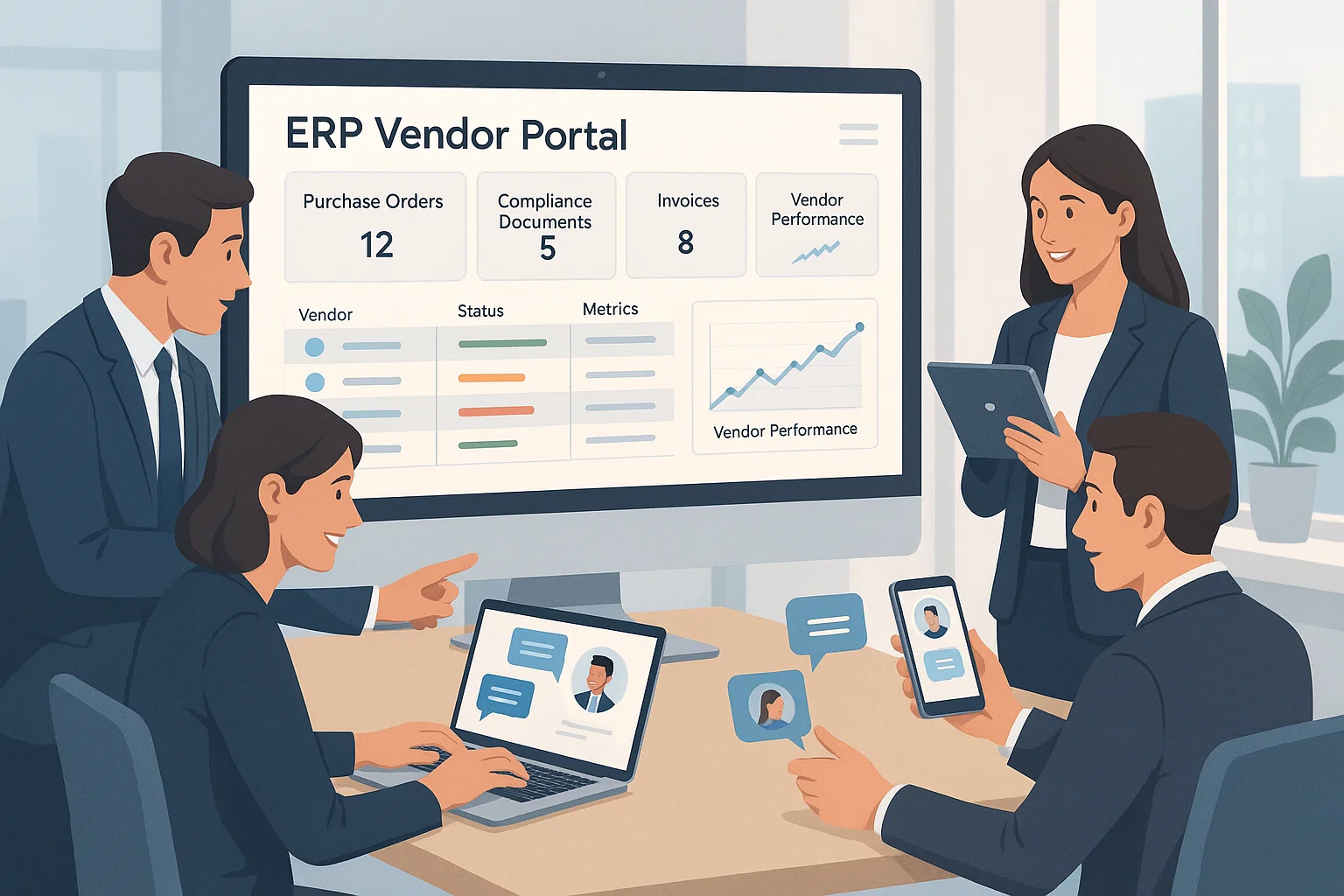
The ERPbeNet’s Vendor Portal centralizes communication, automates workflows, and ensures real-time visibility into every transaction. Purchase orders, compliance documents, invoices, and performance metrics are all available in one place, eliminating the inefficiencies of traditional methods. Vendors see updates instantly, while buyers can track progress without chasing information across multiple channels, creating a seamless collaboration experience.

By adopting the ERP Vendor Portal, businesses can turn vendor management from a recurring headache into a strategic advantage. Operations become smoother, approvals faster, and compliance simpler, while vendor relationships grow stronger. In this blog, we’ll explore common vendor management challenges and show how the ERPbeNet’s Vendor Portal helps companies save time, reduce errors, and achieve scalable growth.

The Legacy Problems of Vendor Management

Before understanding how ERPbyNet’s Vendor Portal transforms vendor collaboration, it’s important to recognize the pain points businesses struggle with today. Vendor management is not just about buying and paying—it involves coordination, compliance, performance tracking, and long-term relationship building. Unfortunately, most organizations still rely on outdated processes that create inefficiency, frustration, and hidden costs.

Scattered Communication Across Multiple Channels

In many companies, communication with vendors happens across a patchwork of emails, phone calls, and instant messages. Purchase orders may be emailed, clarifications handled over a phone call, and delivery updates sent via messaging apps. This fragmented approach makes it nearly impossible to track conversations or maintain accountability. Critical updates are often buried in someone’s inbox, and miscommunication leads to costly errors and delays.

Manual Paperwork and Inefficient Processes

Even in the digital age, a surprising number of businesses still depend on paper-driven workflows or disjointed spreadsheets. Purchase orders are drafted manually, approvals require physical signatures, and invoices are filed in cabinets. These manual processes are slow, error-prone, and create unnecessary administrative overhead. Human errors—such as entering the wrong figures or missing key details—can easily escalate into disputes with vendors.

Delayed Purchase Orders and Missed Renewals

One of the most common challenges businesses face is managing contract renewals, especially Annual Maintenance Contracts (AMCs). Without automated reminders, it’s easy for renewal dates to slip by unnoticed. The result is revenue leakage, service interruptions, and potential breakdowns in critical operations. Similarly, delays in raising purchase orders often create bottlenecks that disrupt supply chains and strain vendor relationships.

Lack of Transparency in Pricing and Delivery Timelines

Vendors play a crucial role in cost optimization, yet many organizations lack visibility into vendor quotes, delivery schedules, and pricing changes. Without a centralized system, comparing vendor quotes is tedious, and buyers often make decisions based on incomplete information. Delivery timelines are just as problematic—buyers are left chasing vendors for updates, while vendors feel buyers are unreasonably pressuring them. The absence of transparency breeds mistrust on both sides.

Compliance Headaches

Regulatory compliance is non-negotiable, but managing it manually is exhausting. Businesses need to maintain valid licenses, safety certifications, and legal agreements from each vendor. When documents are stored in scattered files and expiry dates are tracked on spreadsheets, it’s almost inevitable that something will slip through the cracks. Non-compliance exposes organizations to legal risks, penalties, and reputational damage.

Invoice and Payment Disputes

One of the biggest friction points in vendor management is payment. Vendors expect timely payments, while businesses must ensure invoices align with purchase orders and delivery confirmations. When managed manually, discrepancies are common: a mismatched PO number, a missing delivery note, or a duplicate invoice can stall payment approvals for weeks. These disputes strain vendor relationships and erode trust.

Scaling Problems with Multi-Vendor Management

As companies grow, they often expand their vendor base to handle more diverse needs. What worked for managing five vendors becomes unmanageable with fifty or five hundred. Without a centralized system, procurement teams are overwhelmed by the volume of documents, approvals, and communications. The lack of standardization across vendors creates inefficiency and inconsistency, slowing down operations and increasing costs.

Vendor management is a critical business function, but the legacy methods most organizations still use are holding them back. Scattered communication, paperwork, disputes, and compliance risks are not just frustrating—they directly impact profitability and long-term growth. To move forward, businesses need a modern, centralized, and automated approach that eliminates these inefficiencies once and for all.

This is exactly what ERPbyNet’s Vendor Portal delivers, turning these long-standing problems into challenges of the past.

Read More : How ERP Systems Support Supply Chain Management

How ERP Vendor Portal Makes These Problems Vanish

Workflow automation in ERPbyNet Vendor Portal

Modern businesses cannot afford inefficiency, miscommunication, or errors in vendor management. This is where ERPbyNet’s Vendor Portal steps in, transforming every aspect of vendor collaboration. By centralizing communication, automating workflows, and providing real-time visibility, the portal ensures that the problems outlined earlier—manual processes, delayed approvals, compliance risks, and payment disputes—simply disappear. Let’s examine how.

Centralized Communication = No More Endless Email Threads

One of the most time-consuming challenges in vendor management is scattered communication. ERPbyNet’s Vendor Portal consolidates all vendor interactions into a single platform.

  • Messaging Hub: Every message, query, or clarification is stored within the portal. Buyers and vendors can see conversation histories at a glance.

  • Real-Time Notifications: Both parties receive instant alerts for updates, approvals, or changes. No one misses critical information buried in email chains.

  • Collaboration Transparency: Buyers can see whether vendors have viewed or responded to messages. Vendors can track queries and ensure timely replies.

By centralizing communication, ERPbyNet eliminates misunderstandings, reduces response times, and builds trust between organizations and their vendors.

Automated Purchase Orders & Renewals = Never Miss AMC/Contract Cycles

ERPbyNet removes the manual burden of creating purchase orders and tracking contract renewals.

  • Auto-Generated Purchase Orders: Based on predefined schedules or inventory triggers, the portal automatically generates POs for approval.

  • Renewal Alerts: Annual Maintenance Contracts (AMCs) or recurring service agreements trigger automated reminders, ensuring no contract is missed.

  • Integrated Approval Workflow: Approvers receive notifications to confirm or reject orders, reducing bottlenecks.

This automation ensures accuracy, prevents revenue leakage, and guarantees operational continuity. Businesses no longer need to chase approvals or risk missing renewal deadlines.

Real-Time Transparency for Buyers & Vendors

Transparency is key to effective vendor management. ERPbyNet’s Vendor Portal provides both buyers and vendors with visibility into every step of the procurement process.

  • Live Order Tracking: Vendors update their delivery status in real time, giving buyers visibility into progress.

  • Performance Dashboards: Track vendor delivery times, compliance, and responsiveness.

  • Centralized Records: Historical data is stored securely, making it easy to analyze performance trends.

With real-time transparency, both parties have confidence in the process, reducing disputes and increasing accountability.

Integrated Compliance & Documentation

Regulatory compliance is simplified with ERPbyNet.

  • Digital Document Vault: Store all critical documents—licenses, safety certifications, legal agreements—within the portal.

  • Expiry Alerts: Automatic notifications alert both vendors and buyers of upcoming expirations.

  • Audit-Ready Reports: All documents and approvals are logged and timestamped, ensuring audit readiness at any moment.

This centralized approach eliminates compliance risks and reduces the administrative burden of manual tracking.

Error-Free Invoicing & Faster Payments

Invoice disputes are one of the biggest friction points between buyers and vendors. ERPbyNet addresses this by integrating invoicing directly with purchase orders and delivery confirmations.

  • PO-Invoice Matching: Invoices automatically cross-check against corresponding POs and delivery receipts, flagging discrepancies immediately.

  • Approval Workflow: Multi-level approvals can be configured to ensure accuracy without slowing payments.

  • Faster Payment Cycles: Automation reduces delays, boosting vendor satisfaction and trust.

The result is fewer disputes, stronger vendor relationships, and improved financial control.

Multi-Vendor Management Without Complexity

Scaling vendor management becomes effortless with ERPbyNet.

  • Single Dashboard for All Vendors: Monitor 10, 50, or 1,000 vendors from a single interface.

  • Vendor Scorecards: Evaluate vendor performance based on delivery times, compliance, and responsiveness.

  • Standardized Processes: Automate workflows, POs, approvals, and reporting across all vendors.

By simplifying multi-vendor oversight, companies save time and ensure consistent quality standards across their entire vendor network.

Accountability & Performance Tracking

ERPbyNet introduces accountability through transparent tracking and measurable KPIs.

  • Digital Audit Trails: Every action—message sent, PO approved, invoice paid—is logged for visibility.

  • KPI Tracking: Measure vendor efficiency, compliance, and service levels.

  • Actionable Insights: Identify underperforming vendors and take proactive measures before issues escalate.

The portal ensures that everyone—vendors and internal teams alike—is accountable, removing ambiguity and blame.

Read More : ERP Audits Made Simple: Safeguarding Quality and Safety Every Day

The Business Impact: Tangible Benefits

Adopting ERPbyNet’s Vendor Portal does more than eliminate daily headaches—it transforms vendor management into a strategic advantage. By centralizing communication, automating workflows, and providing real-time visibility, companies experience significant improvements across cost, time, relationships, and operational scalability. Let’s explore these tangible benefits in detail.

Cost Savings Through Increased Efficiency

Manual vendor management is expensive. Time spent on tracking emails, chasing approvals, and reconciling invoices translates directly into labor costs and lost productivity. ERPbyNet streamlines these processes:

  • Reduced Administrative Burden: Automated workflows eliminate repetitive tasks, freeing procurement teams to focus on strategic initiatives.

  • Fewer Errors: Automated PO and invoice matching reduces costly mistakes, preventing overpayments and disputes.

  • Optimized Vendor Spending: Transparent pricing and real-time vendor comparisons help companies select the most cost-effective options.

Overall, businesses see lower operational costs and more accurate budgeting thanks to the portal’s automation.

Time Savings Across Procurement Cycles

Time is one of the most valuable assets in any organization. ERPbyNet speeds up procurement cycles at every step:

  • Faster Approvals: Digital workflows and notifications ensure no PO or contract gets delayed waiting for sign-off.

  • Quicker Renewals: Automated alerts prevent missed AMCs and recurring service deadlines.

  • Real-Time Tracking: Buyers and vendors can see order statuses instantly, eliminating the need for follow-ups.

These efficiencies reduce the cycle time for approvals, procurement, and payment processing, enabling companies to operate faster and more predictably.

Stronger Vendor Relationships

Vendor relationships are vital for long-term business success. Miscommunications, late payments, and compliance issues can quickly erode trust. ERPbyNet fosters stronger relationships by:

  • Transparency: Vendors have clear visibility into approvals, POs, and payment schedules.

  • Reliability: Timely payments and consistent processes build trust and loyalty.

  • Performance Feedback: Scorecards and dashboards allow constructive collaboration and continuous improvement.

Stronger relationships lead to better service, more favorable contract terms, and a more responsive vendor network.

Always Audit-Ready

Compliance and audit readiness are non-negotiable in regulated industries. ERPbyNet ensures companies are always prepared:

  • Centralized Document Storage: All licenses, certifications, and contracts are stored digitally.

  • Automatic Expiry Alerts: No critical compliance documents are ever missed.

  • Audit Trails: Every action in the portal is logged, providing proof of approvals and communications.

Being audit-ready reduces risk, increases confidence in internal controls, and avoids penalties or disruptions caused by regulatory issues.

Scalable Vendor Management for Growing Businesses

As businesses grow, managing a larger vendor network can become chaotic without the right tools. ERPbyNet makes scaling seamless:

  • Single Interface for All Vendors: Manage hundreds or even thousands of vendors from one dashboard.

  • Standardized Processes: Apply consistent workflows, approvals, and reporting across all vendors.

  • Data-Driven Decisions: Use real-time analytics to optimize vendor selection and performance.

Companies can expand operations without adding complexity, ensuring that growth doesn’t compromise efficiency or control.

Adopting ERPbyNet’s Vendor Portal turns vendor management from a time-consuming, error-prone task into a streamlined, strategic function. Businesses not only eliminate legacy problems but also gain measurable benefits in cost reduction, operational efficiency, compliance, vendor relationships, and scalability.

Read More : ERP Vendor Portals: Features, Benefits, and Best Practices

Why ERPbyNet’s Vendor Portal Is Different

While many companies offer vendor management tools, ERPbyNet’s Vendor Portal stands out due to its seamless integration, user-friendly design, and industry-specific focus. It is not just a portal—it is a fully integrated solution that aligns vendor management with overall business operations, delivering unmatched efficiency and control.

Seamless Integration with the ERPbyNet Suite

Unlike standalone tools, the Vendor Portal works as part of the broader ERPbyNet ecosystem. It connects with modules for AMC management, service calls, finance, inventory, and procurement, creating a unified workflow across your organization. This integration ensures that vendor interactions, purchase orders, and payments are directly linked to operational and financial data, eliminating errors and duplication.

User-Friendly Design → Vendors Actually Use It

A tool is only effective if people adopt it. ERPbyNet is designed with an intuitive interface, minimizing training requirements and maximizing adoption rates. Vendors can log in easily, update order statuses, upload compliance documents, and check payment schedules—all without technical hurdles. High vendor engagement ensures data accuracy and timely communication.

Cloud-Based, Secure, and Mobile-Accessible

In today’s fast-paced business environment, accessibility is critical. ERPbyNet is cloud-based, providing secure access from anywhere, on any device. Role-based access controls protect sensitive information, while real-time updates keep buyers and vendors informed, even when teams are remote or on the move.

Tailored for Industry-Specific Needs

ERPbyNet is not a generic portal—it is designed for industries with complex vendor ecosystems, such as elevators, manufacturing, and field services. The portal accommodates unique workflows, regulatory requirements, and compliance standards, ensuring that businesses in specialized sectors can manage vendors efficiently and confidently.

By combining integration, usability, security, and industry focus, ERPbyNet’s Vendor Portal goes beyond traditional solutions, transforming vendor management from a cumbersome process into a strategic advantage.

Read More : From Paper Records to Digital Accuracy: Managing Staff with ERPbyNet

Future-Proofing Vendor Management with ERPbyNet

AI-driven insights and predictive analytics in ERP Vendor Portal

In today’s fast-evolving business landscape, traditional vendor management systems quickly become obsolete. Companies need a solution that not only addresses current challenges but also anticipates future needs. ERPbyNet’s Vendor Portal is designed to future-proof your vendor management, helping organizations stay ahead in a competitive market.

AI-Driven Insights for Proactive Decision-Making

ERPbyNet leverages artificial intelligence and data analytics to provide actionable insights. Predictive alerts notify buyers of upcoming contract renewals, potential vendor performance issues, or supply chain risks. By analyzing historical data, the portal helps companies identify patterns, optimize procurement strategies, and make proactive decisions before problems arise.

Digital Supply Chain Readiness

As supply chains become more complex and global, visibility and responsiveness are crucial. ERPbyNet’s Vendor Portal consolidates all vendor interactions, orders, and compliance data into a single platform. This digital foundation enables companies to respond quickly to disruptions, scale operations seamlessly, and collaborate efficiently across regions and time zones.

Continuous Improvement Through Analytics

The portal’s performance dashboards track vendor efficiency, delivery timelines, compliance adherence, and financial performance. Organizations can use these insights to implement process improvements, negotiate better terms, and strengthen vendor partnerships. This ensures that vendor management evolves from a reactive task to a strategic growth driver.

Future-Ready Technology and Scalability

With cloud-based architecture, mobile accessibility, and role-based security, ERPbyNet adapts to organizational growth. Whether expanding to new regions, adding hundreds of vendors, or implementing industry-specific regulations, the portal scales effortlessly, making it a reliable solution for years to come.

By combining AI insights, digital supply chain readiness, continuous improvement, and scalable technology, ERPbyNet ensures that companies are not only solving today’s problems but are prepared for tomorrow’s challenges.

Say Goodbye to Vendor Management Headaches

Managing vendors doesn’t have to be complicated. The scattered emails, manual purchase orders, compliance risks, invoice disputes, and scaling challenges that once consumed your time and resources can now vanish with ERPbyNet’s Vendor Portal. By centralizing communication, automating workflows, ensuring compliance, and providing real-time visibility, the portal transforms vendor management from a stressful task into a strategic advantage.

Companies that adopt ERPbyNet gain more than just operational efficiency—they enjoy stronger vendor relationships, faster approvals, cost savings, and audit-ready processes. With AI-driven insights, digital supply chain readiness, and a scalable, cloud-based platform, ERPbyNet prepares your organization not just for today’s challenges but for tomorrow’s growth.

Ready to leave vendor management headaches behind? See ERPbyNet’s Vendor Portal in action and experience a smarter, faster, and more reliable way to manage your vendors. Connect with our experts today to schedule a demo, explore features, or get started on transforming your procurement and vendor management processes. Your vendors, your team, and your bottom line will thank you.

FAQs

1. What is ERPbyNet’s Vendor Portal, and how does it work?

ERPbyNet’s Vendor Portal is a centralized platform that streamlines vendor management by automating purchase orders, approvals, compliance tracking, and payments, all integrated with the ERPbyNet suite for seamless operations.

2. How does the portal improve communication with vendors?

It centralizes all communication in one hub, allowing buyers and vendors to track messages, receive real-time alerts, and avoid missed updates, reducing misunderstandings and improving collaboration.

3. Can the portal help with compliance and document management?

Yes. The portal stores all licenses, contracts, and certificates digitally, sends expiry alerts, and maintains audit-ready records, minimizing compliance risks.

4. How does ERPbyNet’s Vendor Portal handle payments and invoices?

Invoices are automatically matched with POs and delivery confirmations. Automated approvals speed up payments, reduce errors, and eliminate disputes.

5. Is the Vendor Portal suitable for companies with many vendors?

Absolutely. It scales effortlessly, managing hundreds or thousands of vendors through a single dashboard while maintaining consistent workflows and transparent performance tracking.

 

CategoriesERP (Enterprise Resource Planning)

How Does the Absence of ERP Complicate Travel Cost Tracking?

Business travel is often the engine that powers growth. Sales representatives close deals face-to-face, operations managers ensure smooth coordination across branches, and founders pitch to investors in new markets. These trips matter, but the way their costs are managed can either fuel business growth or quietly drain it.

Now imagine this: your finance team is buried under piles of receipts, your managers discover budget overspending only at the end of the month, and your employees wait weeks—sometimes months—for reimbursement. This isn’t just inefficient. It’s chaos disguised as “business as usual.”

In today’s competitive environment, visibility and control over expenses are no longer optional. They determine whether an SME thrives or struggles to survive. And yet, many growing businesses still rely on outdated spreadsheets or disconnected tools that make travel cost tracking slow, error-prone, and frustrating.

That’s exactly where ERPbyNet changes the story. By bridging the gap between scattered data and streamlined financial control, ERPbyNet empowers SMEs to manage travel expenses in real time, cut hidden costs, and keep employees happy. Let’s explore what really happens when ERP is missing—and how ERPbyNet solves it.

Why Traditional Travel Expense Tracking Fails

1. The “Shoebox of Receipts” Trap

In many SMEs, expense reporting looks like a detective story. Employees return from business trips with wallets stuffed with receipts, or worse, a shoebox filled with random bills. Taxi slips fade, hotel invoices go missing, and finance teams are left piecing together the puzzle.

This is more than just inconvenient—it’s a financial liability. When receipts go missing, businesses can’t reclaim taxes, employees get frustrated, and accounting errors creep into the books. Over time, these small leaks add up to thousands in hidden losses.

2. Time Drain on Finance Teams

Think about the hours finance teams spend cross-checking receipts, validating claims, and manually entering numbers into spreadsheets. Every hour wasted here is an hour not spent analyzing cash flow, forecasting budgets, or planning growth. Manual expense tracking doesn’t just consume time—it robs your business of strategic focus.

3. Hidden Errors That Add Up

Manual processes are prone to errors. An extra zero added to a taxi fare, a duplicate claim slipping through, or a receipt filed under the wrong project—all of these seem small until they snowball into significant inaccuracies. Without ERP, businesses fly blind, never really knowing whether travel budgets reflect reality.

The Risks SMEs Face Without ERP

Lack of Real-Time Visibility

Without ERP, expense data becomes visible only after the fact. Managers discover budget overspending weeks later, when it’s too late to intervene. This lack of real-time visibility means financial leaks continue unchecked.

Compliance and Audit Nightmares

Tax authorities demand documentation, and auditors want clear approval trails. Manual systems make this almost impossible. A single missing receipt or an unclear reimbursement can expose SMEs to penalties.

Employee Dissatisfaction

For employees, delayed reimbursements feel like broken promises. Imagine a sales executive who personally paid for client dinners, flights, and accommodation, only to wait 30 days for repayment. Morale takes a hit, and loyalty weakens.

Fraud and Expense Leakage

Without ERP, fraud slips in unnoticed. Duplicate claims, inflated invoices, or even personal expenses disguised as business costs are surprisingly common. With no automated checks, companies silently lose money.

Why ERPbyNet is the Solution SMEs Need

Why ERPbyNet is the Solution SMEs Need

ERPbyNet Centralizes Expense Tracking

Instead of juggling paper receipts, spreadsheets, and emails, ERPbyNet consolidates everything into one central dashboard. Every expense—flights, meals, taxis—is tracked in real time. This visibility gives managers control before costs spiral out of hand.

ERPbyNet Automates Workflows

Manual approvals lead to endless email chains. ERPbyNet replaces this with automated, role-based workflows. Employees submit claims digitally, managers approve them instantly, and finance teams gain immediate oversight. Policies are embedded into the system, ensuring compliance by design.

ERPbyNet Ensures Seamless Integrations

Unlike standalone tools, ERPbyNet integrates travel expenses with accounting, payroll, and HR modules. That means reimbursements reflect instantly in payroll, budgets update automatically, and compliance is always up to date.

ERPbyNet Boosts Compliance & Security

Every transaction in ERPbyNet creates a digital log. Duplicate claims are flagged, unusual patterns trigger alerts, and audit trails remain clear and accessible. SMEs gain peace of mind knowing their finances are protected.

The ROI of ERPbyNet for Efficient Travel Cost Tracking and Expense Management

Investing in an ERP system isn’t just about technology—it’s about transforming how businesses manage travel expenses efficiently, accurately, and transparently.

1. Save Money and Time

Manual expense tracking is time-consuming and error-prone. Finance teams spend hours reconciling receipts, and approvals drag on for weeks. According to Gartner, automating expense management can reduce processing costs by up to 40%. ERPbyNet centralizes data, automates workflows, and eliminates errors, turning hours of work into minutes and freeing teams to focus on growth.

2. Enhance Employee Experience

Employees often pay expenses upfront and expect timely reimbursement. Delays can hurt morale and productivity. ERPbyNet shortens reimbursement cycles from weeks to days, giving employees confidence that their efforts are valued while building trust and loyalty across the organization.

3. Scale Seamlessly

As businesses expand, managing travel costs becomes complex—multi-branch operations, different currencies, and growing teams strain manual systems. ERPbyNet scales effortlessly, supporting multiple locations, currencies, and approval workflows without disruption, future-proofing operations for sustainable growth.

In short: ERPbyNet delivers ROI beyond cost savings—boosting efficiency, employee satisfaction, and scalability while giving SMEs complete control over travel expenses.

Read More : ERP Audits Made Simple: Safeguarding Quality and Safety Every Day

Real-World Impact: How ERPbyNet Transforms SMEs

Case Study: Multi-Branch SME

A retail SME with three offices used to spend 3 weeks reconciling travel expenses each month. After adopting ERPbyNet, reconciliation dropped to just 3 days. Overspending decreased by 25%, freeing up cash for expansion.

Case Study: Fast-Growing Startup

A technology startup scaling rapidly faced delays of up to 14 days in reimbursing employees. ERPbyNet automated the process, reducing the delay to just 48 hours. Employee satisfaction scores rose significantly, while the CFO saved time for strategic planning.

Why ERPbyNet Beats Manual & Generic Systems

Designed for SMEs

Global ERP giants like SAP, Oracle, or NetSuite often overwhelm SMEs with complexity and high costs. ERPbyNet is built specifically for SMEs—lightweight, affordable, and focused on what matters most.

Customizable Without Heavy IT Investment

ERPbyNet supports low-code customization, meaning SMEs can tailor workflows without hiring expensive developers or building IT departments.

Mobile-First & Future-Ready

With ERPbyNet, employees snap photos of receipts and upload them instantly via mobile app. AI and OCR automatically categorize them, reducing errors and speeding approvals.

Read More : Role of ERP in Warehouse Inventory Management: Best Practices & Example

Emerging Trends Reshaping Travel Expense Management

Emerging Trends Reshaping Travel Expense Management

1. Expense Reporting in the Palm of Your Hand

Mobile-first ERP solutions now allow employees to capture receipts instantly using their smartphones. Instead of waiting until the trip is over, expenses are logged in real time—reducing delays, errors, and the dreaded pile of forgotten receipts.

2. Smarter Expense Tracking With AI

Artificial Intelligence is becoming the silent auditor for finance teams. By automatically categorizing expenses, flagging duplicates, and spotting unusual patterns, AI minimizes human error while freeing finance teams to focus on strategic insights instead of manual checks.

3. Flexible Systems That Grow With You

Every SME’s journey is different—and so are their expense policies. Low-code ERP platforms give businesses the power to customize workflows, approval chains, and reporting without heavy IT investment. The result? Systems that adapt as the business evolves, instead of slowing it down.

4. Staying Audit-Ready at All Times

Global expansion and stricter tax regulations mean compliance is no longer optional—it’s critical. Modern ERP tools are designed with built-in audit trails, automated policy enforcement, and digital logs that make staying compliant a natural part of operations, not an afterthought.

Read More : Why ERP Sales Makes Closing Deals Easier, Serving Customers Smoother, and Revenue Bigger

Why SMEs Prefer Modern ERP Solutions Over Traditional Methods

1. Tailored for Growing Businesses

Unlike legacy systems that overwhelm users with unnecessary features, modern ERP tools focus on what SMEs truly need—visibility, automation, and ease of use—without burdening them with excessive complexity.

2. Faster Implementation

Traditional ERP systems often take months or even years to deploy. Cloud-based and modular ERP platforms, however, can be implemented within weeks, allowing SMEs to realize benefits faster and with minimal disruption.

3. Accessible Support & Usability

Modern ERP providers emphasize ease of use, guided onboarding, and ongoing support. This ensures SMEs don’t just adopt the software but actually use it effectively to improve their operations.

Take Charge of Your Travel Cost Tracking

Managing travel expenses manually is time-consuming, error-prone, and stressful. Lost receipts, delayed reimbursements, and scattered data can quietly drain your resources and slow growth. With ERPbyNet, SMEs gain real-time visibility, automated compliance, and full control over travel cost tracking—turning chaos into clarity.

Don’t let inefficiency hold your business back. Simplify expense management, boost employee satisfaction, and make smarter financial decisions with ERPbyNet’s custom ERP solutions. Ready to transform your workflow? Explore our ERP implementation service today and take the first step toward smarter, stress-free travel cost management.

FAQs: Still Have Questions About ERP? Let’s Clear Them Up.

1. Why is manual travel expense tracking inefficient?

Because it relies on paper receipts and spreadsheets, making it error-prone, time-consuming, and unreliable.

2. How does ERPbyNet prevent fraud?

By using digital logs, AI-based anomaly detection, and automated checks, ERPbyNet ensures no duplicate or fraudulent claims slip through.

3. Can ERPbyNet integrate with credit card and booking tools?

Yes. ERPbyNet supports APIs that connect seamlessly with corporate cards, booking platforms, and accounting tools.

4. Is ERPbyNet suitable for small businesses with limited budgets?

Absolutely. It’s affordable, scalable, and specifically designed for SMEs.

5. How quickly can ERPbyNet be implemented?

Most SMEs go live within weeks, thanks to ERPbyNet’s simplified deployment.

6. What makes ERPbyNet future-ready?

Its mobile-first design, AI-powered categorization, and low-code customization keep SMEs ahead of industry trends.

CategoriesERP (Enterprise Resource Planning)

How ERP Systems Support Supply Chain Management

Global supply chains are becoming increasingly complex and unpredictable. Disruptions—from geopolitical tensions and raw material shortages to shipping delays and sudden spikes in demand—can halt operations and create costly inefficiencies. Many businesses struggle because traditional management systems lack real-time visibility, seamless collaboration, and automation capabilities. In today’s fast-paced environment, implementing a robust ERP System is no longer optional; it is essential for unifying data, streamlining processes, and building a resilient, agile supply chain that can adapt to any challenge.

This is where an ERP System becomes essential. By centralizing data, automating workflows, and providing real-time insights, an ERP System transforms a fragmented supply chain into a connected, agile, and proactive ecosystem. It enables businesses to anticipate disruptions, make informed decisions, and maintain efficiency under pressure.

In this comprehensive guide, we explore how an ERP System supports supply chain management, the tangible benefits it delivers, and actionable steps to implement it successfully. With ERPbyNet, companies gain a tailored solution that strengthens every link of their supply chain.

Understanding the Role of ERP in Supply Chain Management

What ERP Brings to the Supply Chain

An ERP system is not just a software tool—it is an enterprise‑wide platform that connects every department, from procurement and manufacturing to finance and customer service. In the context of supply chain management, ERP provides:

  • Centralized Data Access: A single source of truth for inventory, production, procurement, logistics, and financials.
  • End‑to‑End Visibility: Real‑time updates across the supply chain help decision‑makers respond quickly to disruptions.
  • Process Automation: Routine tasks like order approvals, invoice matching, and inventory adjustments are automated, reducing delays and errors.
  • Collaboration Across Stakeholders: Suppliers, manufacturers, logistics partners, and customers interact through connected workflows.

ERP vs. Standalone SCM Systems

While standalone SCM software specializes in supply chain tasks, ERP integrates SCM within the broader enterprise. This means supply chain data doesn’t exist in isolation but connects directly with finance, sales, HR, and service management. For example:

  • An SCM tool might track raw material availability, but an ERP platform connects that data with financial planning to forecast cash flow impact.
  • ERP ensures that changes in demand planning immediately reflect in procurement, production schedules, and customer order commitments.

Read More : Role of ERP in Warehouse Inventory Management: Best Practices & Example

Core Functions of ERP in Supply Chain Management

Core Functions of ERP in Supply Chain Management

ERP strengthens supply chain performance in multiple dimensions. Let’s break down the key roles.

1. Supply Chain Planning

Accurate planning is the backbone of SCM. ERP systems enable businesses to:

  • Forecast demand using historical and real‑time data.
  • Balance supply with projected sales to minimize stockouts and overstocking.
  • Align procurement, production, and logistics with customer needs.

2. Procurement Management

ERP automates procurement cycles and supplier management:

  • Streamlines vendor evaluation and contract management.
  • Tracks supplier performance, costs, and delivery times.
  • Ensures compliance with policies while reducing purchasing delays.

3. Manufacturing and Production

ERP enhances shop floor efficiency:

  • Automates production scheduling and material requirements planning (MRP).
  • Tracks work orders and monitors capacity utilization.
  • Reduces downtime with preventive maintenance scheduling.

4. Product Development

By connecting R&D with supply chain data:

  • ERP shortens time‑to‑market for new products.
  • Ensures designs account for material availability and cost structures.
  • Supports regulatory compliance and quality management.

5. Logistics and Distribution

Logistics is often the most visible supply chain touchpoint for customers. ERP helps by:

  • Optimizing warehouse management (inventory, picking, packing, and shipping).
  • Improving route planning and freight cost tracking.
  • Integrating real‑time shipment tracking for customers.

6. Financial Management

ERP ensures that supply chain operations align with financial health:

  • Automates invoicing, payment, and reconciliation processes.
  • Tracks costs across procurement, production, and logistics.
  • Provides profit margin analysis for supply chain activities.

7. Customer Service Management

Customer satisfaction depends on supply chain efficiency:

  • ERP systems give sales teams real‑time visibility into order status.
  • Customer service can resolve queries faster with accurate delivery data.
  • Improved accuracy in promises builds stronger customer trust.

8. Sustainability Management

Modern supply chains are judged not only on speed and cost but also on sustainability:

  • ERP tracks emissions, waste, and resource usage.
  • Provides sustainability reporting aligned with regulations.
  • Supports ethical sourcing and green logistics initiatives.

Read More : ERP Audits Made Simple: Safeguarding Quality and Safety Every Day

Key Benefits of ERP in Supply Chain Management

A modern supply chain is a complex, dynamic network where speed, accuracy, and visibility determine success. When implemented effectively, ERPbyNet transforms this complexity into a streamlined, intelligent system that drives measurable business results. Here’s how:

1. Unified Collaboration

  • Break down silos and connect all stakeholders—internal teams, suppliers, and logistics partners.
  • Real-time data access ensures everyone is working with the same information, enabling faster, synchronized decision-making across procurement, manufacturing, and distribution.

2. End-to-End Visibility

  • Gain complete transparency into inventory levels, order status, and demand forecasts.
  • Spot bottlenecks, inefficiencies, or delays before they escalate into costly disruptions.
  • ERPbyNet equips leaders with the insights to optimize every step of the supply chain.

3. Improved Efficiency

  • Automate routine tasks such as approvals, invoicing, and shipment documentation.
  • Reduce manual errors and accelerate workflows across departments.
  • Every efficiency gain translates into tangible cost savings and improved service delivery.

4. Data-Driven Insights

  • Advanced analytics and reporting allow proactive decision-making.
  • Predict trends, identify risks, and adjust strategies in real-time.
  • Move from reactive problem-solving to predictive, strategic management.

5. Enhanced Resilience

  • Scenario planning and risk analysis help prepare for disruptions—from supplier delays to transportation issues.
  • ERPbyNet enables businesses to adapt quickly, minimizing downtime and maintaining continuity.

6. Cost Reduction

  • Optimize inventory levels to reduce excess stock and storage costs.
  • Minimize waste and streamline operations across procurement, production, and logistics.
  • Lower operational costs while maintaining or improving service quality.

7. Scalability for Growth

  • As your business expands into new markets, launches new products, or increases transaction volumes, ERPbyNet scales with you.
  • Maintain operational efficiency and visibility without needing costly system overhauls.

 In essence, ERPbyNet doesn’t just manage your supply chain—it transforms it into a connected, efficient, and resilient engine for growth, giving your business the agility to stay ahead in a competitive market.

Emerging Trends: How ERP is Evolving for Supply Chain Excellence

Emerging Trends: How ERP is Evolving for Supply Chain Excellence


Technology innovations are reshaping how ERP supports supply chains:

AI‑Enabled Forecasting

Artificial intelligence embedded in ERP platforms refines demand forecasting, inventory planning, and anomaly detection.

Real‑Time Data Integration

IoT sensors, telematics, and blockchain provide real‑time data that ERP consolidates into actionable insights.

Cloud ERP Advantages

Cloud‑based ERP platforms ensure accessibility, scalability, and lower infrastructure costs, enabling global supply chains to collaborate seamlessly.

Mobile ERP Applications

Mobile apps bring supply chain management to the field, empowering warehouse staff, delivery drivers, and managers with instant access to ERP data.

Blockchain for Transparency

ERP systems integrated with blockchain enhance trust in transactions, ensuring authenticity and traceability across the supply chain.

Read More : From Paper Records to Digital Accuracy: Managing Staff with ERPbyNet

Choosing the Right ERP for Supply Chain Management

Selecting an ERP is one of the most critical decisions a business can make for its supply chain. The right system can transform operations, improve visibility, and unlock growth. The wrong choice, however, often leads to costly inefficiencies, frustrated teams, and limited scalability. That’s why businesses need more than just software—they need a solution designed for their industry, their processes, and their future.

At ERPbyNet, we understand that no two supply chains are the same. Our ERP platform is built to adapt, integrate, and scale with your business, ensuring that you get long-term value, not short-term fixes.

Key considerations when choosing your ERP:

  • Ease of Use : A system is only as effective as its adoption rate. Look for intuitive interfaces and role-based dashboards that make it easy for teams to learn, use, and embrace daily. ERPbyNet is designed with usability at its core, reducing resistance to change and driving faster adoption across departments.
  • Scalability for Growth : Your ERP should grow with you—whether you’re entering new markets, expanding product lines, or handling higher transaction volumes. Our modular structure ensures you can add capabilities as your business evolves without disruptive overhauls.
  • Integration Capabilities : Supply chains rely on interconnected systems: CRM, IoT devices, analytics tools, third-party logistics platforms, and more. We offer robust integration capabilities that ensure seamless data flow across the ecosystem, eliminating silos and enabling smarter, faster decision-making.
  • Cloud Deployment : Modern supply chains require flexibility and global access. With ERPbyNet’s cloud deployment, businesses enjoy reduced IT overheads, faster implementations, and anywhere-anytime access, empowering global teams to collaborate effortlessly.
  • Common Data Model : Disconnected systems often create conflicting reports and operational blind spots. We provide a unified data model, ensuring a single source of truth for inventory, orders, suppliers, and customers. This clarity improves trust in data and speeds up decision cycles.
  • Cost and ROI : The value of ERP isn’t just about licensing fees—it’s about the long-term impact on efficiency, accuracy, and customer satisfaction. We deliver measurable ROI by helping companies reduce waste, streamline workflows, and optimize resource utilization.
  • Security and Compliance : Protecting sensitive financial and supply chain data is non-negotiable. We embed enterprise-grade security, encryption, and compliance tools to help businesses meet global standards like GDPR, ISO, and industry-specific regulations.

Steps to Successfully Integrate ERP with Supply Chains

Implementing ERP in supply chain management requires careful planning. Key steps include:

  1. Develop a Clear Integration Plan: Define objectives, timelines, and responsibilities.
  2. Prepare and Clean Data: Ensure data accuracy before migration to avoid disruptions.
  3. Configure and Customize: Tailor ERP features to industry‑specific requirements.
  4. Pilot Test: Run controlled pilots to identify issues early.
  5. Train Employees: Provide ongoing training to ensure adoption across functions.
  6. Monitor and Improve: Continuously track KPIs and fine‑tune processes for better outcomes.

Case for Cloud ERP: Why Modern Supply Chains Prefer It

In today’s hyper-connected markets, speed, agility, and adaptability define success. Traditional on-premises ERP systems, while once the backbone of enterprise operations, now struggle to keep up with the demands of global supply chains. They often come with long deployment timelines, heavy IT overheads, and limited flexibility.

This is where Cloud ERP from ERPbyNet reshapes the game. It’s not just a shift in technology—it’s a shift in how supply chains operate and compete.

Why businesses are moving to the cloud:

  • Faster Deployments
    Cloud ERP cuts down months of implementation into weeks. Businesses can configure, launch, and scale quickly without waiting for complex infrastructure setups.
  • Lower Total Cost of Ownership
    Forget expensive hardware, server maintenance, and IT staffing overheads. With Cloud ERP, companies pay for what they use, while reaping long-term savings from streamlined operations.
  • Real-Time Collaboration
    Whether it’s suppliers in Asia, warehouses in Europe, or customers in North America, everyone works off the same live data. This ensures transparency, faster decision-making, and fewer miscommunications.
  • Continuous Innovation
    Cloud ERP ensures that you’re always on the latest version, with new features like AI-driven demand forecasting, IoT integration, and advanced analytics rolled out regularly—without disruptive upgrades.

 In short, Cloud ERP gives modern supply chains the speed, cost efficiency, and intelligence they need to thrive in uncertain markets. With ERPbyNet, businesses aren’t just managing supply chains—they’re building resilient, future-ready ecosystems.

How ERP Strengthens Risk Management in Supply Chains

Risk is an inevitable part of supply chain management. ERP systems turn risk into an opportunity for resilience by enabling proactive responses and smarter planning.

  • Predictive Analytics: Anticipate bottlenecks, demand spikes, or shortages before they happen.
  • Alternate Supplier and Logistics Planning: Maintain visibility across multiple suppliers and transport options for quick pivots.
  • Real-Time Monitoring: Get instant alerts for disruptions such as shipment delays or inventory shortages.
  • Compliance Management: Simplify global compliance with automated reporting, audit trails, and regulatory adherence.

By carefully selecting the right ERP, integrating it strategically, leveraging cloud capabilities, and building strong risk management processes, businesses can create supply chains that are agile, reliable, and future-ready. With ERPbyNet, companies gain more than software—they gain a trusted partner in driving supply chain excellence.

Take Your Supply Chain to the Next Level

In today’s fast-paced business world, a robust ERP System is essential for creating an agile, efficient, and resilient supply chain. By unifying data, automating workflows, and providing real-time visibility, an ERP System helps businesses anticipate disruptions, optimize operations, and deliver superior customer experiences. With ERPbyNet, you gain a solution designed to scale with your growth, ensuring every aspect of your supply chain runs smoothly and efficiently.

Don’t let inefficiencies hold your business back. Take control of your operations and unlock the full potential of your supply chain with Us . Contact us directly today to explore how our ERP System can transform your supply chain into a connected, future-ready ecosystem.

Frequently Asked Questions (FAQs)

What is an ERP System and how does it support supply chain management?

An ERP System centralizes data, automates workflows, and provides real-time visibility across procurement, production, inventory, and logistics, enabling a connected and efficient supply chain.

How can an ERP System improve supply chain efficiency?

By reducing manual tasks, automating approvals, optimizing inventory, and providing data-driven insights, an ERP System streamlines processes, reduces errors, and accelerates decision-making.

 Is a cloud-based ERP System better for modern supply chains?

 Yes. Cloud ERP offers real-time collaboration, faster deployment, lower infrastructure costs, and scalability, making it ideal for dynamic, global supply chains.

How long does it take to implement an ERP System in a supply chain?

Implementation timelines vary based on business size and complexity. With ERPbyNet, deployment can be achieved in weeks with careful planning, pilot testing, and training.

How does ERPbyNet ensure data security and compliance?

ERPbyNet uses enterprise-grade security, encryption, and compliance frameworks to protect sensitive supply chain and financial data, meeting global standards like GDPR and ISO.

CategoriesERP (Enterprise Resource Planning)

Role of ERP in Warehouse Inventory Management: Best Practices & Example

In today’s fast-paced supply chain environment, efficient warehouse inventory management is no longer optional—it’s a necessity. Businesses that fail to optimize inventory control risk stockouts, overstocking, increased operational costs, and ultimately, dissatisfied customers. This is where Enterprise Resource Planning (ERP) systems step in as a game-changer.

For growing companies, manual methods like spreadsheets or standalone software are not enough to handle the complexity of multiple sales channels, supplier networks, and customer demands. By integrating warehouse inventory management into an ERP system, businesses can gain real-time visibility, improve accuracy, and streamline operations.

At ERPbyNet, we specialize in helping businesses achieve this transformation by leveraging ERP-driven inventory management best practices.

What is ERP in Warehouse Inventory Management?

Enterprise Resource Planning (ERP) is an integrated software solution that connects different business functions—such as finance, procurement, sales, and supply chain—into one centralized system. When applied to warehouse inventory management, ERP enables businesses to:

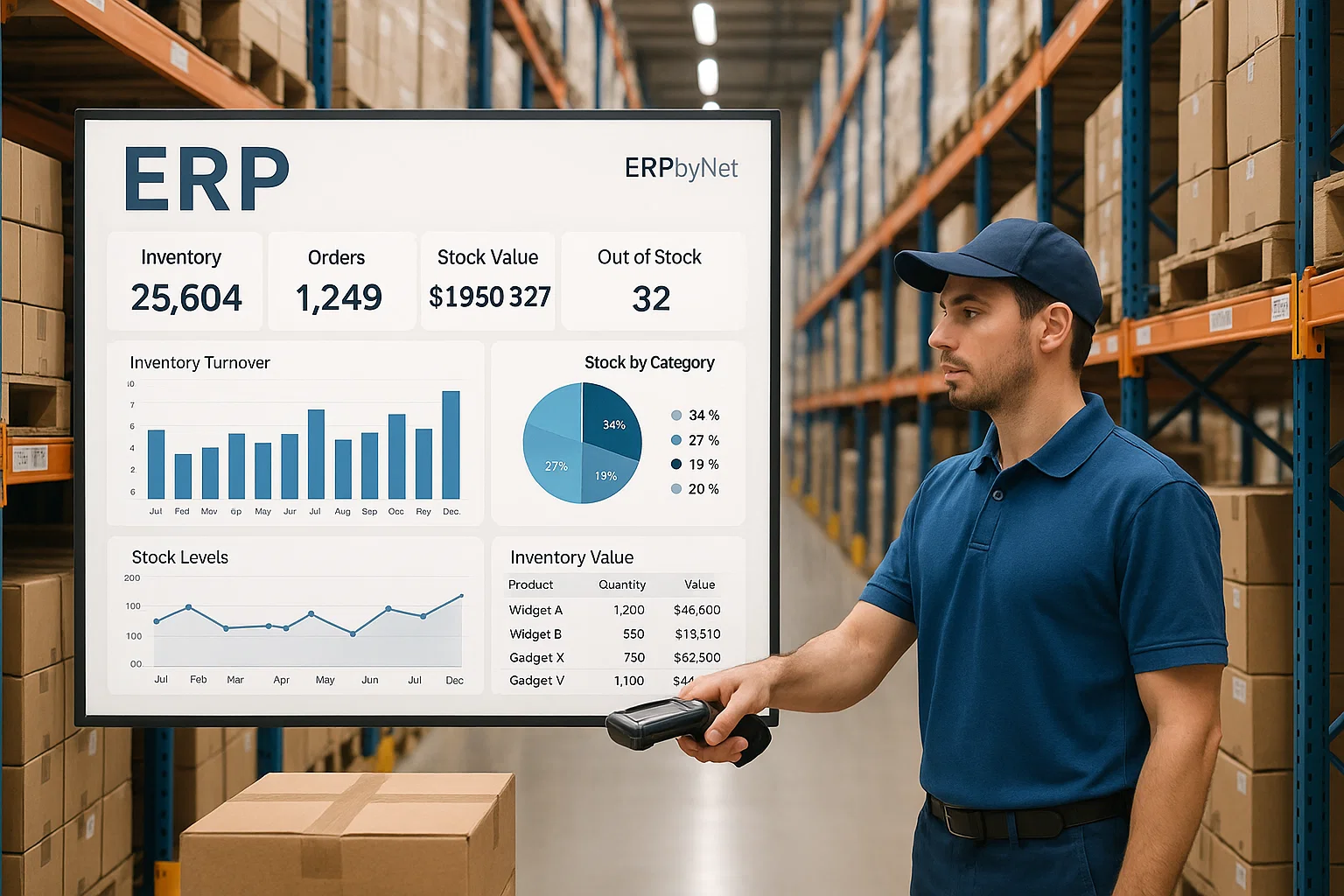
  • Track inventory in real time across multiple warehouses and locations.
  • Automate key processes such as receiving, putaway, picking, packing, and shipping.
  • Reduce human errors by using barcode scanners, RFID, and automated reconciliation.
  • Forecast demand and optimize stock levels to avoid overstocking or understocking.
  • Integrate with ecommerce, accounting, and logistics systems for end-to-end visibility.

Unlike standalone warehouse management software (WMS), an ERP system provides a 360-degree view of both inventory and business performance, ensuring that supply chain decisions are aligned with financial goals.

Importance of ERP in Warehouse Inventory Management

Importance of ERP in Warehouse Inventory Management

Strong warehouse inventory management backed by ERP is not just about keeping track of stock—it’s about creating efficiency and scalability. Some key benefits include:

  1. Enhanced Accuracy – ERP eliminates discrepancies between physical and system counts through real-time updates and automated data capture.
  2. Cost Optimization – By minimizing excess stock and improving space utilization, ERP helps reduce carrying costs and wasted capital.
  3. Faster Order Fulfillment – Integrated ERP ensures that picking and packing processes are optimized, reducing delivery times and boosting customer satisfaction.
  4. Better Decision-Making – With centralized data, managers can access inventory reports, demand forecasts, and financial insights in one place.
  5. Scalability for Growth – As businesses expand into new markets or add warehouses, ERP adapts seamlessly without disrupting existing processes.

In short, ERP transforms warehouse inventory management from a reactive process into a strategic advantage.

Best Practices for ERP-Driven Warehouse Inventory Management

Implementing ERP in warehouse inventory management is not just about adopting new technology—it’s about adapting best practices that align your operations with efficiency, accuracy, and scalability. Below, we’ll explore the most effective practices that businesses should follow to get the best out of ERP systems like those provided by ERPbyNet.

1. Centralize Inventory Data Across All Channels

One of the biggest challenges warehouses face today is data silos—different departments or sales channels maintaining separate records. This often leads to duplicate entries, mismatched inventory counts, or delayed updates.

An ERP system solves this by centralizing data:

  • Single Source of Truth: All departments—from procurement to sales—access real-time inventory updates.
  • Omnichannel Integration: Ecommerce platforms (Amazon, Shopify, eBay), physical stores, and wholesale channels all feed into one ERP system.
  • Improved Collaboration: Finance, operations, and supply chain teams no longer rely on outdated reports—they work with live data.

Best Practice: Always ensure that every system handling inventory—POS, ecommerce, CRM, or logistics—feeds data into your ERP for a unified view.

2. Automate Core Warehouse Processes

Manual processes like data entry, physical counting, or manual pick sheets are time-consuming and prone to errors. ERP-driven automation enhances efficiency by:

  • Automating Purchase Orders (POs): ERP can generate reorders when stock levels fall below a threshold.
  • Barcode/RFID Integration: Items can be scanned on arrival, automatically updating the system.
  • Automated Picking & Packing: ERP suggests optimal pick routes and creates packing slips automatically.
  • Returns Processing: Items returned by customers are instantly recorded back into inventory, avoiding discrepancies.

Best Practice: Invest in ERP modules that support barcode scanning, RFID, and IoT sensors, ensuring real-time accuracy without manual intervention.

3. Implement Demand Forecasting & Replenishment Rules

Demand forecasting is critical to prevent both stockouts and excess stock. ERP systems with AI and analytics help businesses:

  • Analyze historical sales data.
  • Consider seasonal demand patterns.
  • Factor in lead times and supplier reliability.
  • Predict future demand with higher accuracy.

For example:

  • A clothing retailer can forecast demand for winter jackets in October based on past sales trends.
  • A food distributor can predict higher demand for beverages before summer. 

Best Practice: Configure your ERP to set dynamic reorder points rather than fixed ones. This ensures replenishment adapts to demand fluctuations.

4. Use ABC & XYZ Analysis for Smarter Stock Management

ERP systems allow businesses to classify inventory based on value and demand patterns:

  • ABC Analysis: 
    • A items: High-value, fast-selling (20% of stock, 80% of sales).
    • B items: Moderate value, moderate demand.
    • C items: Low-value, slow movers. 
  • XYZ Analysis: 
    • X items: Predictable demand.
    • Y items: Seasonal/variable demand.
    • Z items: Irregular, unpredictable demand.

When combined (ABC-XYZ matrix), ERP can suggest storage, pricing, and replenishment strategies.

Best Practice: Use ERP analytics to decide:

  • Which products should be placed closer to packing areas (A+X).
  • Which items need safety stock (B+Y).
  • Which items can be liquidated or discounted (C+Z).

5. Optimize Warehouse Layout with ERP Insights

A warehouse’s physical design impacts efficiency just as much as technology. ERP can guide slotting strategies (deciding where items should be stored).

  • Fast-Moving Goods: Keep “A” category products near packing stations.
  • Seasonal Goods: Store them in accessible locations during peak season.
  • Vertical Space: Use ERP to track slow-moving goods placed in higher racks.
  • Zoning for Picking Methods: ERP supports wave, batch, and zone picking by suggesting layouts based on order trends.

Best Practice: Run ERP-generated heatmaps of picking frequency to reorganize warehouse layout annually.

6. Enable Real-Time Tracking with IoT and Mobility

ERP systems can integrate with IoT devices, GPS trackers, and mobile apps to provide real-time updates. This is particularly important for businesses managing multiple warehouses or in-transit stock.

Benefits include:

  • In-Transit Tracking: ERP records goods in movement between warehouses.
  • Mobile Access: Staff can update inventory counts directly through mobile devices.
  • Employee Efficiency: Workers don’t need to walk back to terminals; handheld devices keep them connected.

Best Practice: Deploy ERP mobile apps for warehouse staff to scan, pick, and pack orders on the go.

7. Improve Accuracy with Cycle Counting

Traditional warehouses conduct annual or semi-annual stocktakes, which often halt operations. ERP allows for cycle counting, where smaller inventory sections are checked regularly without disrupting operations.

For example:

  • Count “A” items weekly.
  • Count “B” items monthly.
  • Count “C” items quarterly.

Best Practice: Configure ERP alerts to automatically schedule cycle counts based on product importance or historical error rates.

8. Integrate ERP with Logistics & Supply Chain Partners

Warehouse inventory management doesn’t stop at storage—it extends to inbound and outbound logistics. An ERP integrated with suppliers, shippers, and 3PLs ensures:

  • Real-time updates on incoming shipments.
  • Accurate landed cost calculations.
  • Faster customs clearance and compliance tracking.
  • Optimized carrier selection for deliveries.

Best Practice: Use ERPbyNet’s integration capabilities to connect with shipping providers, customs systems, and 3PLs for seamless operations.

9. Emphasize Quality Control with ERP

Inventory accuracy is not just about quantity, but also quality. ERP supports quality management by:

  • Logging inspection results at receiving.
  • Flagging defective or expired products.
  • Blocking non-compliant items from being sold.
  • Automating returns and warranty processes.

Best Practice: Build quality checkpoints within ERP workflows to avoid shipping defective items.

10. Leverage ERP Analytics & Reporting

ERP systems provide dashboards and customizable reports for data-driven decisions:

  • Inventory turnover ratio.
  • Days of inventory on hand (DOH).
  • Stockout and overstock frequency.
  • Supplier performance metrics.
  • Profitability by SKU.

Best Practice: Set up ERP dashboards for different teams—operations, finance, procurement—so everyone works with actionable insights.

11. Train Employees for ERP Adoption

Even the most advanced ERP system fails without employee adoption. Warehouse staff must be trained on:

  • Using handheld ERP devices.
  • Following ERP-driven picking routes.
  • Scanning items correctly.
  • Reporting errors and discrepancies.

Best Practice: Use role-based training so employees only learn the ERP functions relevant to their tasks.

12. Ensure Scalability for Growth

As your business grows, your warehouse needs evolve. ERP should support:

  • Multi-Warehouse Management for expansion.
  • Modular ERP Upgrades without disrupting operations.
  • Ecommerce & Omnichannel Support for new sales channels.

Best Practice: Choose ERP solutions like ERPbyNet that offer modularity and scalability for future needs.

13. Maintain Safety & Security Standards

ERP isn’t just about efficiency—it also supports safety and security by:

  • Restricting access to sensitive inventory.
  • Maintaining audit trails of transactions.
  • Monitoring compliance with health and safety regulations.

Best Practice: Configure ERP user permissions so that only authorized staff can access high-value or sensitive inventory.

14. Continuously Improve with ERP Feedback Loops

ERP systems generate a wealth of data that can drive continuous improvement. Businesses should:

  • Analyze order errors to refine picking strategies.
  • Track slow-moving items and adjust procurement.
  • Review supplier performance and renegotiate terms.
  • Monitor labor productivity and optimize workflows.

Best Practice: Schedule quarterly ERP performance reviews to refine warehouse strategies.

Final Thoughts on ERP Best Practices

Implementing ERP for warehouse inventory management should not be seen as a one-time setup but as a continuous path toward efficiency and improvement. The real value of ERP lies in how businesses apply best practices—whether it’s automation, demand forecasting, quality assurance, or advanced analytics. When used effectively, ERP evolves from being just a tracking tool into a powerful driver of growth and strategy.

At ERPbyNet, we specialize in helping businesses harness ERP’s full potential by customizing solutions to fit their specific warehouse operations. With the right approach, companies can unlock measurable benefits including greater accuracy in inventory, quicker and more reliable order fulfillment, lower operational costs, and a higher level of customer satisfaction.

Real-World Examples of ERP in Warehouse Inventory Management

To understand how ERP truly transforms warehouse operations, let’s look at some practical examples across industries.

1. Retail Industry – Omnichannel Success

A mid-sized retail chain selling apparel online and in physical stores faced major challenges:

  • Overstock in some warehouses while others had frequent stockouts.
  • Inaccurate real-time inventory updates across ecommerce and offline sales.
  • High customer dissatisfaction due to canceled or delayed orders.

How ERP Helped:

  • Integrated sales, warehouse, and supply chain data into one centralized ERP.
  • Enabled real-time inventory synchronization across all sales channels.
  • Reduced stockouts by 40% and improved customer order fulfillment rates to 95%.

2. Manufacturing – Better Material Planning

A manufacturing company producing automotive spare parts struggled with raw material shortages, leading to production delays. Their procurement team lacked visibility into real-time material levels and supplier lead times.

How ERP Helped:

  • Implemented ERP with Material Requirements Planning (MRP).
  • Automated purchase orders for raw materials when levels dropped below thresholds.
  • Integrated supplier data and tracked inbound shipments. 

Results:

  • Production delays dropped by 60%.
  • Procurement costs reduced due to better vendor negotiations.

3. Food & Beverage – Quality & Compliance

A food distributor needed to track perishable goods with strict shelf-life management and ensure compliance with food safety regulations. Manual methods led to frequent wastage and compliance risks.

How ERP Helped:

  • ERP integrated with barcode scanners and RFID to track lot numbers and expiration dates.
  • Automatic alerts for products nearing expiration.
  • Quality checks built into receiving and shipping workflows.

Results:

  • Reduced product wastage by 30%.
  • Improved compliance and reduced fines for non-compliance issues.

4. Ecommerce – Fast Order Fulfillment

An ecommerce business scaling rapidly struggled with delayed shipments, mispicks, and return issues. Their small standalone system couldn’t handle high order volumes.

How ERP Helped:

  • Introduced ERP-driven order management.
  • Implemented wave and batch picking strategies.
  • Integrated ERP with courier and logistics partners for real-time shipment tracking.

Results:

  • Picking efficiency improved by 70%.
  • Customer returns due to mispicks dropped by 85%.
  • Customer satisfaction scores rose significantly.

Why ERPbyNet is the Right Partner for Warehouse Inventory Management

Why ERPbyNet is the Right Partner for Warehouse Inventory Management

At ERPbyNet, we don’t just provide software—we deliver tailored ERP solutions designed to streamline warehouse operations for growing businesses. Here’s why businesses trust us:

  • Scalability: Whether you manage one warehouse or multiple across regions, our ERP adapts to your growth.
  • Customization: We design solutions around your workflows, ensuring maximum efficiency.
  • Integration: Our ERP seamlessly connects with ecommerce platforms, accounting software, and logistics providers.
  • Real-Time Visibility: From stock levels to financial impact, you’ll always have up-to-the-minute insights.
  • Proven Results: Businesses using ERPbyNet report significant improvements in accuracy, order fulfillment speed, and cost savings.

Take Control of Your Inventory: ERPbyNet Is Here to Help

Warehouse inventory management is the backbone of supply chain efficiency. Without strong control over stock, businesses risk lost sales, high costs, and dissatisfied customers. By leveraging ERP systems, companies can:

  • Automate routine tasks.
  • Gain real-time inventory insights.
  • Forecast demand with accuracy.
  • Improve order fulfillment and customer satisfaction.
  • Scale operations seamlessly. 

The role of ERP in warehouse inventory management is no longer optional—it is essential for long-term competitiveness and profitability.

Are you ready to transform your warehouse operations and eliminate inefficiencies? Partner with ERPbyNet today and discover how our ERP solutions can give you complete control, visibility, and efficiency in warehouse inventory management.

Contact us now to schedule a free consultation and see how ERPbyNet can streamline your business operations.

FAQs

1. What is the role of ERP in warehouse inventory management?

ERP plays a critical role in warehouse inventory management by integrating all warehouse activities with other business functions such as finance, sales, and procurement. It provides real-time visibility into stock levels, automates manual processes like picking and replenishment, and reduces errors by centralizing data. This ensures smoother operations, faster decision-making, and better customer satisfaction.

2. How does ERP differ from a Warehouse Management System (WMS)?

A Warehouse Management System (WMS) is primarily designed to control warehouse activities like storage, picking, and packing, while an ERP system connects warehouse functions with the broader business ecosystem. With ERP, companies not only manage inventory but also gain financial insights, procurement visibility, and cross-departmental data integration. In short, WMS is specialized, whereas ERP offers a complete 360-degree business view.

3. Can ERP help reduce inventory costs?

Yes, ERP systems are highly effective in reducing inventory costs. By improving demand forecasting, avoiding overstocking or stockouts, and automating replenishment, businesses save on carrying costs and wasted capital. ERP also helps optimize warehouse layouts, improve labor productivity, and cut down on inefficiencies, resulting in significant cost savings over time.

4. Is ERP suitable for small and medium-sized businesses (SMBs)?

ERP is no longer limited to large enterprises. Modern ERP solutions, including ERPbyNet, are modular and scalable, making them highly suitable for small and medium-sized businesses. SMBs can begin with essential modules like inventory and finance, and as they grow, expand into more advanced features without needing to replace their system. This flexibility allows them to stay competitive without heavy upfront investment.

5. What industries benefit most from ERP-driven warehouse management?

ERP-driven warehouse management benefits a wide range of industries, but it is especially impactful in retail, ecommerce, manufacturing, food and beverage, pharmaceuticals, and wholesale distribution. These industries deal with complex inventory challenges such as omnichannel sales, perishability, compliance, and multi-warehouse management, all of which ERP helps manage efficiently with real-time insights and automation.


CategoriesERP (Enterprise Resource Planning)

Why ERP Is Essential for Managing Annual Equipment Surveys Efficiently

Every year, businesses brace themselves for a process that is equal parts necessary and dreaded: the annual equipment survey. For small and mid-sized enterprises, this process often means long hours spent sifting through spreadsheets, chasing signatures, and untangling records that never seem to add up. Equipment goes missing, responsibility is unclear, and the stress of proving compliance looms large.

Without the right tools, this routine audit feels more like a crisis than a business process. Staff members scramble, departments blame each other, and leadership worries about what the auditors will uncover. Time and energy that could be spent on strategy and growth get swallowed by inefficiencies and miscommunication.

But what if annual equipment surveys didn’t have to be chaotic? What if the same process that now feels like an obstacle course could instead become a seamless, transparent, and even confidence-building exercise? That’s where Enterprise Resource Planning (ERP) comes in — and why ERPbyNet is designed to give growing businesses clarity where there was once confusion.

Why Annual Equipment Surveys Feel Like Herding Cats Without ERP

Why Annual Equipment Surveys Feel Like Herding Cats Without ERP

Think about the last time your business prepared for an annual equipment survey. Chances are, it looked something like this:

  • Multiple departments kept their own equipment logs — often in different formats.
  • HR claimed a laptop was with a staff member who left six months ago.
  • Finance recorded depreciation for assets that no one could physically locate.
  • Operations staff insisted they submitted updates, but IT couldn’t find them.

The result? A frustrating scavenger hunt, with managers running from one department to another, and a stack of mismatched spreadsheets as the “single source of truth.”

Running an annual survey without ERP is like trying to herd cats — every asset seems to slip through your hands just when you think you’ve got it accounted for. And when auditors come knocking, you’re left hoping the inconsistencies won’t lead to penalties, insurance issues, or worse.

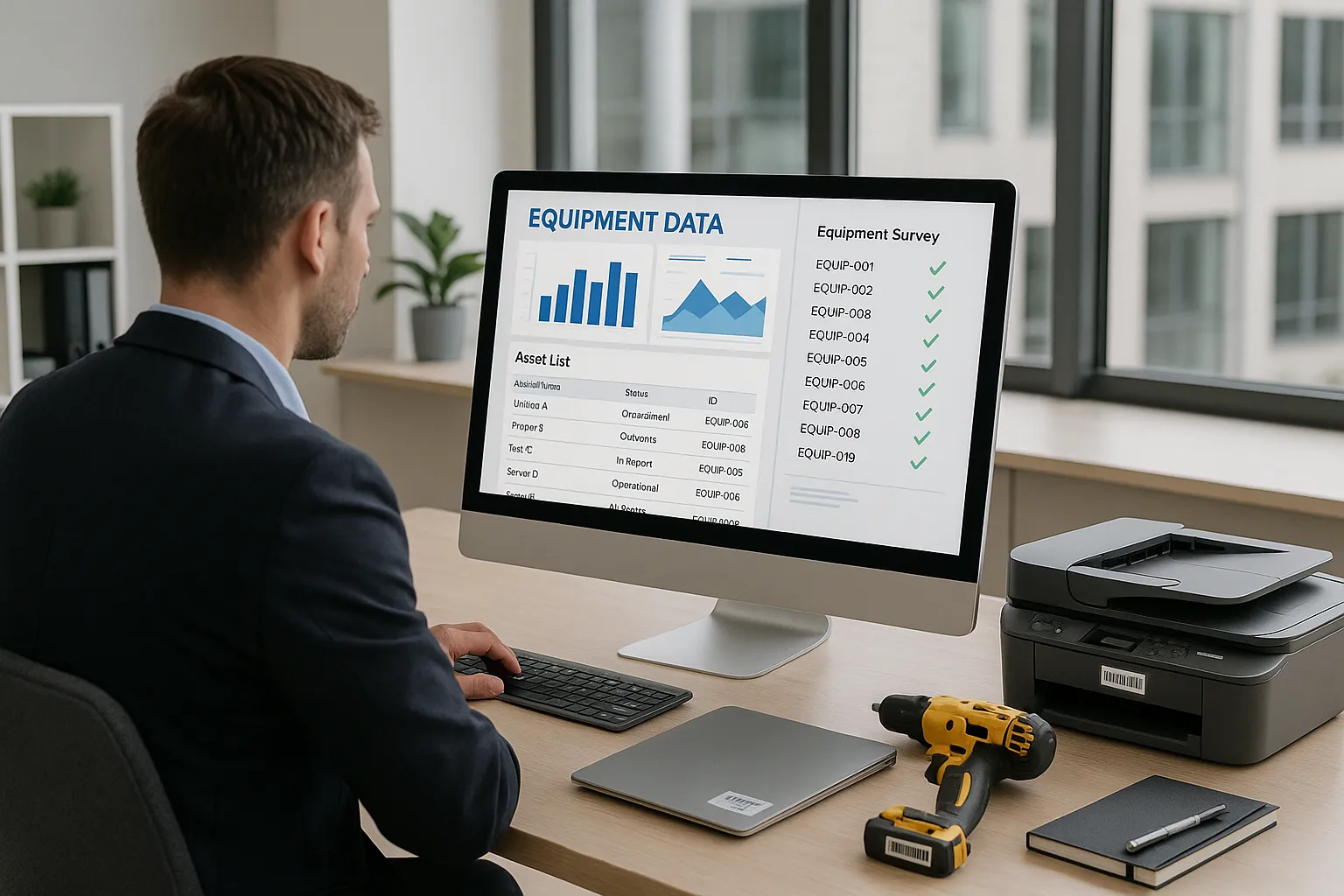
With ERP, however, the same process is transformed. Instead of juggling dozens of files, managers log into a central dashboard. Every piece of equipment is recorded in real time, with ownership, location, and value all clearly visible. When the survey season arrives, data isn’t scattered — it’s already organized, accurate, and accessible.

Read More : Field Sales Automation ROI: What Sales Managers Are Actually Getting Today

The Secret to Accurate Equipment Tracking: Centralized ERP Tools

Centralization is the backbone of modern ERP, and for annual equipment surveys, it changes everything. Instead of scattered logs and conflicting spreadsheets, ERP creates one reliable system of truth that every department can access and update.

Why Centralization Works

  • Eliminates ghost assets: No more items listed on paper but missing in reality. Gartner estimates that businesses lose up to 5% of their equipment value annually due to poor tracking. 
  • Ensures real-time updates: Purchases, relocations, reassignments, or retirements are captured the moment they happen. 
  • Connects departments seamlessly: 
    • Finance keeps depreciation and valuations accurate.
    • HR tracks accountability for assigned assets.
    • Compliance teams generate verified reports instantly.

The Real Difference

  • Spreadsheets = guessing. Multiple versions, manual errors, constant reconciliations.
  • ERP = knowing. A single, centralized record where accuracy isn’t a goal — it’s guaranteed.

With ERPbyNet, equipment tracking becomes effortless, audits become stress-free, and every department gains confidence in the data they rely on.

From Manual Logs to Digital Peace of Mind

Annual equipment surveys are often slowed down by outdated, manual processes. Staff walk through offices, warehouses, or job sites with clipboards, write down serial numbers, and later re-enter everything into spreadsheets. At each step, errors creep in — handwriting mistakes, typos, missed entries. By the time the data is compiled, it’s already stale.

The Problem with Manual Surveys

  • Time-consuming double entry of data
  • High risk of human error (typos, omissions, duplicates)
  • Outdated information by the time reports are ready
  • Staff frustration and wasted effort

How ERP Changes the Game

ERP systems replace manual drudgery with automation. ERPbyNet, for example, supports barcode and RFID scanning, allowing staff to:

  • Walk through a facility with a mobile device
  • Scan tags on equipment instantly
  • Update records in real time, directly in the system

No clipboards. No spreadsheets. No second round of data entry.

The Business Impact

  • Speed: Hundreds of assets logged in minutes instead of hours
  • Accuracy: Real-time updates ensure nothing is missed
  • Confidence: Reliable data builds trust during audits and compliance checks

Switching from manual logs to ERP is like upgrading from a paper road map to GPS. Once you experience the clarity and reliability of digital tracking, you’ll never want to go back.

Read More : ERP Audits Made Simple: Safeguarding Quality and Safety Every Day

Why ERPbyNet Beats Legacy Tools and Spreadsheets

Why ERPbyNet Beats Legacy Tools and Spreadsheets

Spreadsheets have been the go-to tool for SMEs for decades. They’re cheap, familiar, and “good enough”… until audit season rolls around. That’s when their cracks start to show.

The Spreadsheet Struggle

  • Data chaos: Ten versions of the same file, none agreeing with each other.
  • Manual headaches: Every entry typed by hand, every formula waiting to break.
  • Zero visibility: By the time you pull a report, the data is already outdated.

For annual equipment surveys, relying on spreadsheets is like trying to run a marathon in flip-flops — you might get to the finish line, but not without blisters and frustration.

The Overkill of Enterprise Giants

On the other side of the spectrum are the heavyweights: SAP, Oracle, and similar platforms. They’re powerful, yes, but also:

  • Built for corporations with entire ERP departments
  • Packed with features SMEs never need
  • Expensive enough to make smaller businesses think twice

For an SME, implementing these systems is like buying a luxury jet just to commute to work. Impressive, but wildly unnecessary.

Where ERPbyNet Fits In

ERPbyNet is designed with SMEs in mind — delivering power without the pain.

  • Clean, intuitive dashboards: No steep learning curve, just data that makes sense.
  • Role-based permissions: Every team member sees only what they need, nothing more.
  • Smart integrations: APIs connect smoothly with your existing tools, so nothing feels disjointed.

ERPbyNet is neither a flimsy spreadsheet nor an intimidating enterprise behemoth. It’s the right-sized solution for businesses that want clarity, control, and confidence without drowning in complexity.

It doesn’t just replace old tools — it empowers teams to finally manage equipment surveys with accuracy and ease.

Read More : ERP Vendor Portals: Features, Benefits, and Best Practices

The Finance Angle in Equipment Surveys

Annual equipment surveys are about more than counting hardware. They’re about protecting the balance sheet, satisfying auditors, and ensuring every item listed in the books actually exists. For Finance teams, this is where the pressure peaks.

The Pain Without ERP

  • Assets appear on financial records but can’t be located physically.
  • Depreciation schedules run on outdated data.
  • Insurance reports don’t match reality, exposing businesses to risk.
  • Auditors ask tough questions that spreadsheets can’t always answer.

The result? Late nights, frantic reconciliations, and costly surprises.

How ERPbyNet Simplifies the Financial Side

ERPbyNet keeps asset data live and reliable:

  • Every purchase, reassignment, or retirement is logged automatically.
  • Depreciation calculations stay accurate because records update in real time.
  • Verified audit trails are built in, so compliance checks don’t feel like investigations.

Why This Matters for Leadership

When Finance has clarity:

  • Audits are smoother and faster.
  • Compliance risks shrink dramatically.
  • The business saves money by avoiding over-insurance and under-reporting.

Instead of scrambling once a year, Finance leaders gain year-round confidence. Annual equipment surveys stop being a fire drill and become just another step in well-run financial governance.

Future-Proofing Equipment Management with ERP

The way businesses handle annual equipment surveys today will determine how ready they are for tomorrow. Spreadsheets can only tell you what you think you own right now. ERP shows you not only what you own, but also how long it will last, when it might fail, and how it fits into your bigger business picture.

The Shift That’s Already Happening

  • AI is predicting failures before they happen.
  • IoT sensors are feeding real-time data into systems.
  • Predictive analytics are telling managers where to invest and where to cut costs.

The companies adopting these tools aren’t just more efficient — they’re more competitive.

How ERPbyNet Puts SMEs Ahead of the Curve

ERPbyNet is designed to help growing businesses tap into innovations without the complexity of big-enterprise systems:

  • Receive early alerts before equipment fails, cutting downtime costs.
  • Adapt instantly as compliance rules evolve, without messy workarounds.
  • Customize survey workflows with low-code tools — no big IT department required.

Why This Matters for Growth

Instead of chasing problems after they appear, businesses using ERPbyNet anticipate them, plan for them, and turn them into opportunities. Equipment surveys stop being a once-a-year scramble and become a continuous flow of insights that drive smarter decisions.

Future-proofing isn’t about predicting the unknown. It’s about having systems flexible enough to adapt, strong enough to keep you compliant, and smart enough to save you money before issues even surface.

With ERPbyNet, tomorrow’s challenges turn into today’s competitive edge.

Turn Annual Equipment Surveys into a Strategic Advantage

Annual equipment surveys will always be part of business, but how you handle them determines whether they drain resources or deliver real value. Stick with spreadsheets, and you’re stuck with errors, wasted hours, and compliance risks. Move to ERP, and the process becomes faster, clearer, and far more rewarding.

ERPbyNet gives SMEs the power to transform surveys into an asset: centralized records, real-time tracking, accurate financial data, and predictive insights that prevent problems before they happen. What used to be a stressful annual task now becomes a competitive advantage.

You don’t need a massive IT department or the budget of a global corporation to achieve this. ERPbyNet was built for growing businesses that want clarity and control — without complexity or high costs.

The choice is yours: let the next equipment survey slow you down, or use it to run your business smarter.

At ERPbyNet, we make that transformation possible. Ready to take control? Explore our ERP implementation service today.

FAQs

Still have questions about ERP and how it fits into annual equipment surveys? Let’s clear them up.

What is an annual equipment survey?
It’s the process of reviewing and verifying all equipment a business owns, ensuring accurate records for compliance, insurance, and financial reporting.

Why do businesses struggle with surveys without ERP?
Because equipment data is usually scattered across departments, stored in spreadsheets, or recorded manually, making it hard to get a complete and accurate picture.

Can ERPbyNet integrate with barcode or RFID tools?
Yes. ERPbyNet supports modern tracking technologies, allowing field staff to scan equipment and instantly update records during surveys.

Is ERPbyNet affordable for small and mid-sized businesses?
Absolutely. ERPbyNet is designed to deliver enterprise-grade capability at a price point that works for SMEs, without the complexity of larger ERP platforms.

How does ERP help with compliance during equipment audits?
ERP provides real-time, centralized data, ensuring that reports are accurate, up-to-date, and audit-ready, reducing the risk of penalties or failed inspections.

 Can ERP scale as my business grows?
Yes. ERPbyNet is built to grow with you, accommodating more equipment, more users, and more complex processes as your business expands.

CategoriesSales Automation

Why ERP Sales Makes Closing Deals Easier, Serving Customers Smoother, and Revenue Bigger

Sales sits at the center of every business. It drives revenue, builds relationships, and creates the foundation for growth. Yet in many organizations, the sales process is weighed down by inefficiencies. Quotes take too long to prepare, approvals get stuck in bottlenecks, and customer expectations are missed because departments work from different sets of information.

These challenges aren’t just frustrating—they’re costly. Deals fall through, customers lose confidence, and businesses miss opportunities they could have captured. In a competitive market where buyers expect speed, accuracy, and transparency, relying on outdated systems is no longer an option.

This is where ERP Sales steps in. More than just a software module, it transforms how sales teams operate by integrating them with finance, operations, and inventory. With ERPbyNet’s approach, businesses gain the ability to close deals faster, serve customers more effectively, and grow revenue on a consistent, scalable foundation.

The Burden of Outdated Sales Processes

Think about the last time a deal slowed down in your organization. Perhaps it was waiting days for an approval, or realizing too late that the stock wasn’t available. Maybe the quote sent to the customer contained an error that required multiple corrections. Or perhaps the sales team made promises that operations couldn’t keep, leading to dissatisfied customers and cancelled orders.

These inefficiencies cost more than time—they cost trust, opportunities, and revenue. Sales representatives grow frustrated with systems that make their jobs harder. Customers feel the strain when they don’t get answers quickly or receive conflicting information from different departments. Management struggles to forecast accurately when data is scattered across multiple platforms.

At first glance, it may seem like these are simply the growing pains of running a business. But in reality, they’re the symptoms of a deeper issue: a lack of integration. Without a unified system tying sales to the rest of the organization, inefficiency and inconsistency are inevitable.

Read More : ERP Audits Made Simple: Safeguarding Quality and Safety Every Day

How an Integrated ERP Sales System Changes Everything

How an Integrated ERP Sales System Changes Everything

Enterprise Resource Planning (ERP) systems exist to break down silos. They integrate finance, operations, inventory, HR, and other functions into a single, unified platform. When sales becomes part of this ecosystem, the results are transformative.

Picture a sales environment where:

  • Quotes are generated instantly, with accurate pricing, taxes, and discounts.
  • Inventory availability is visible in real time, so promises to customers are reliable.
  • Approvals that once took days are completed in hours with automated workflows.
  • Customer histories and preferences are accessible at the click of a button.
  • Orders flow seamlessly from sales to fulfillment without manual re-entry.
  • Leaders forecast demand with confidence using live analytics.

Instead of being a bottleneck, sales becomes a catalyst—speeding up deal closures, enhancing customer satisfaction, and providing leadership with the insights needed for smarter decisions.

The Direct Impact on Customers

At the heart of every successful sales strategy lies the customer experience. Inconsistent communication and slow responses are no longer acceptable in a world where customers can switch to competitors with ease. ERP Sales helps businesses deliver the kind of service today’s buyers expect.

Customers get accurate answers, faster responses, and transparency at every stage of the buying journey. They can track orders in real time and trust that commitments will be met. Meanwhile, sales teams can personalize interactions using purchase histories and customer data, creating opportunities for loyalty and long-term relationships.

This consistency builds confidence. Customers are more likely to come back, more willing to spend more, and more inclined to recommend your business to others.

Sales as a Growth Engine, Not Just a Process

Sales is not just about closing the next deal—it’s about fueling sustainable growth. ERP Sales goes beyond efficiency by directly contributing to revenue expansion.

With visibility into buying trends, businesses can forecast accurately and prepare inventory and staffing to capture demand. By analyzing purchase histories, sales teams can identify opportunities for upselling and cross-selling, increasing revenue per customer.

At the same time, automation reduces operational costs. Fewer errors mean fewer lost opportunities. Fewer manual tasks free up staff to focus on high-value activities. As order volumes grow, ERP Sales scales effortlessly, ensuring your system supports expansion instead of hindering it.

The result is a sales function that doesn’t just manage transactions—it drives profitability.

Read More : Elevator Compliance ERP to Manage Surveys & Testing Certificates

Why Businesses Choose ERPbyNet

Why Businesses Choose ERPbyNet

Of course, technology alone isn’t enough. The success of ERP Sales depends on the knowledge and experience of the people implementing it. That’s where ERPbyNet stands out.

Having worked across industries including manufacturing, retail, distribution, and services, ERPbyNet has developed a deep understanding of how sales processes differ from one business to another. Instead of delivering a one-size-fits-all system, the approach is tailored—aligning ERP Sales with each company’s workflows, challenges, and goals.

But expertise goes beyond technology. Implementation is supported with training, onboarding, and continuous assistance, ensuring teams are confident and capable of using the system effectively. This people-first approach makes adoption smoother and outcomes stronger.

The results speak for themselves:

  • Companies cutting order processing times by half.
  • Retailers reducing cancellations by over 20 percent.
  • Distributors increasing revenue by more than 40 percent within a year.

Behind every statistic is a business that now sells smarter, serves customers better, and grows faster—all with ERPbyNet as a partner.

Why Acting Now Matters More Than Ever

Business environments are shifting faster than ever. Customer expectations continue to rise, competitors are adopting digital tools at pace, and external factors like supply chain disruptions demand agility.

Delaying the move to ERP Sales comes with real risks. Every month spent relying on outdated systems is a month where competitors are improving speed, accuracy, and customer service. It’s a month where potential customers may be lost to businesses that can respond faster and serve better.

The cost of waiting is not just measured in inefficiency—it’s measured in missed opportunities.

ERPbyNet makes the decision to act easier with value-driven onboarding and tailored support. From complimentary audits that uncover inefficiencies in your current process, to adoption packages designed to minimize disruption, the path to transformation is straightforward. With the right support, businesses can see results quickly and begin reaping the benefits of ERP Sales almost immediately.

Read More : Why ERP Projects Go Over Budget [And How To Prevent It]

A Step-by-Step Transformation

To understand what this shift looks like in practice, consider the journey from a traditional sales process to an ERP Sales-enabled one.

Before ERP Sales:

  • Leads are tracked in spreadsheets that get lost or forgotten.
  • Quotes take hours, sometimes days, to prepare and send.
  • Sales reps promise delivery without knowing if stock is available.
  • Approvals are stalled in endless email chains.
  • Customers complain about inconsistent updates.
  • Managers lack accurate visibility into sales performance.

After ERP Sales:

  • Leads move through a clearly tracked pipeline with no missed opportunities.
  • Quotes are created instantly, accurate to the last decimal.
  • Inventory checks happen in real time, ensuring reliable promises.
  • Approvals are automated, speeding up deal closure.
  • Customers receive consistent communication and real-time updates.
  • Leaders manage with confidence, guided by live analytics.

The difference is not incremental—it is transformative.

Real Stories of Success

Organizations that have adopted ERPbyNet’s ERP Sales solutions consistently report measurable improvements.

  • A regional retailer achieved a 25 percent reduction in order cancellations, thanks to accurate inventory visibility.
  • A manufacturing company reduced approval times from three days to just four hours, enabling sales teams to close deals faster.
  • A B2B distributor grew revenue by 40 percent in twelve months by leveraging upselling opportunities identified through purchase history analysis.

These examples highlight what happens when businesses stop treating sales as a disconnected process and start treating it as part of an integrated growth strategy.

Taking the First Step

Transitioning to ERP Sales doesn’t have to be daunting. The journey can begin with identifying your current bottlenecks: where do deals slow down? Where are customers becoming frustrated? Where is revenue being lost?

From there, it’s about evaluating which features will have the biggest impact—whether it’s CRM integration, live inventory tracking, automated invoicing, or forecasting tools. Equally important is usability. A system should make work easier, not harder. ERPbyNet focuses on intuitive dashboards and workflows that teams can adopt quickly.

Finally, success depends on people. With comprehensive training and ongoing support, ERPbyNet ensures adoption is smooth and employees are confident in their ability to use the system effectively.

Looking Ahead: The Future of Sales

The sales landscape is evolving. Customers are more informed, competitors are more aggressive, and markets are less predictable. In this environment, businesses cannot afford inefficiency. They need systems that help them adapt, respond, and grow.

ERP Sales provides the foundation for that future. It integrates operations, empowers sales teams, and enhances customer experiences—all while driving measurable revenue growth. ERPbyNet provides the knowledge, experience, and support to make it work for your business.

The question isn’t whether ERP Sales is the right choice. It’s whether your business can afford to wait while others seize the advantage. The companies that act now will not only keep pace—they will lead.

Your Next Move Starts Here

Sales excellence today is no longer defined by simply closing deals. The businesses that thrive are those that earn trust, deliver consistency across every department, and harness technology to make faster, smarter decisions. ERP Sales empowers you to do exactly that—and ERPbyNet ensures it becomes a reality for your business.

When sales connects seamlessly with operations, finance, and inventory, inefficiencies turn into opportunities. Deals move forward without delay, customers feel valued through accurate and transparent service, and growth becomes not just possible, but sustainable and scalable.

The future of selling belongs to companies that act decisively. The tools are here. The expertise is available. The only question is whether you’ll take advantage of them before your competitors do.

The path to smarter, faster, more profitable sales is clear. The time to start is today.

Take the first stepschedule your free sales process audit with ERPbyNet and see how quickly you can transform your sales performance.

Frequently Asked Questions (FAQ)

1. What is ERP Sales, and how is it different from CRM?

ERP Sales from ERPbyNet connects sales with finance, inventory, and operations—going beyond CRM to ensure faster deals, fewer errors, and smoother customer experiences.

2. How does ERPbyNet help close deals faster?

With automated quoting, real-time inventory checks, and instant approvals, ERPbyNet’s ERP Sales module cuts delays and helps your team close deals in less time.

3. Which businesses benefit most from ERPbyNet’s ERP Sales?

ERPbyNet is ideal for manufacturing, retail, distribution, and service businesses that need to reduce bottlenecks, improve accuracy, and serve customers better.

4. Is ERPbyNet’s ERP Sales difficult to implement?

No. ERPbyNet provides guided onboarding, training, and support so your team can adopt the system quickly and start seeing results within weeks

5. Why should I choose ERPbyNet now?

Delaying means lost opportunities. ERPbyNet offers complimentary audits and tailored onboarding packages, making now the perfect time to transform your sales.


CategoriesERP (Enterprise Resource Planning)

ERP Audits Made Simple: Safeguarding Quality and Safety Every Day

Every business runs on moving parts—data, people, processes, and promises. When these parts fall out of sync, the result isn’t just a minor hiccup—it’s a domino effect. Lost efficiency, compliance headaches, and avoidable risks creep into daily operations. And too often, it’s not because the team isn’t working hard, but because the right systems aren’t in place to keep everything aligned.

In today’s competitive landscape, streamlined operations are the difference between thriving and merely surviving. From inventory control to payroll management, businesses that centralize and simplify processes unlock faster growth, better decisions, and long-term trust with customers and regulators alike.

That’s where ERP audits step in—not as a once-a-year fire drill, but as a built-in safeguard for quality and safety every single day. At ERPbyNet, we believe ERP audits should be simple, transparent, and accessible for SMEs and growing businesses. Let’s unpack why they matter, how they work, and why your future growth depends on them.

What Are ERP Audits, Really?

Think of ERP audits as the annual health check-up for your business software, except they don’t just happen once a year. An ERP audit continuously reviews your system to ensure data accuracy, compliance, and operational efficiency.

ERP, or Enterprise Resource Planning, started decades ago as basic accounting software, evolving through platforms like SAP, Oracle, and NetSuite into today’s cloud-first, integration-rich solutions. ERP isn’t just about numbers anymore—it’s about centralizing your HR, finance, inventory, and compliance into one intelligent system.

An ERP audit ensures that every dashboard, API connection, role, and permission works exactly as it should—safeguarding your business from both inefficiencies and risks.

Read More : ERP Vendor Portals: Features, Benefits, and Best Practices

Why ERP Audits Matter for SMEs and Growing Businesses

Why ERP Audits Matter for SMEs and Growing Businesses

Small and medium enterprises often believe audits are “big company problems.” But here’s the truth: SMEs face even greater risks without proper audit controls.

  • Data silos: When sales, HR, and finance run on different spreadsheets, errors multiply and visibility disappears.
  • Payroll delays: A single compliance slip in payroll can cost thousands in penalties and sour employee trust.
  • Multi-branch operations: Expanding into new regions without a centralized audit system risks compliance breaches and misaligned reporting.

ERP audits eliminate these blind spots. With real-time checks baked into your ERP platform, compliance isn’t something you scramble for at year-end—it’s a natural part of everyday business.

Read More : Why ERP Projects Go Over Budget [And How To Prevent It]

The Anatomy of an ERP Audit

An effective ERP audit goes far beyond ticking boxes. Here’s what makes it powerful:

Dashboards & Reports

Imagine a cockpit view of your business—everything from inventory turnover to cash flow at your fingertips. ERP dashboards don’t just display numbers, they provide actionable insights to make smarter decisions.

Permissions & Roles

Audits also ensure the right people have the right access. Think of roles and permissions as the digital locks on your system. Without them, fraud risk increases. With ERP audits, every permission is checked, logged, and verified.

APIs & Integrations

Modern ERPs integrate with CRMs, e-commerce platforms, and HR tools. Audits verify that these APIs are secure and functioning, so data flows seamlessly across your business.

Audit Trails

Every action leaves a digital footprint. ERP audit trails record who did what, when, and why—protecting you from disputes, errors, and compliance risks.

How ERP Audits Safeguard Quality & Safety Every Day

How ERP Audits Safeguard Quality & Safety Every Day

An ERP audit isn’t just about numbers—it’s about trust, quality, and safety.

  • Inventory Management – Automated audits ensure no expired products reach shelves, and stock levels match actual demand.
  • Manufacturing Compliance – Whether ISO or OSHA, ERP audits verify your processes stay aligned with safety standards.
  • Financial Accuracy – Accounting modules ensure every transaction is logged, reconciled, and audit-ready.
  • HR Automation – Payroll, attendance, and compliance reporting happen automatically, reducing costly slip-ups.

With ERPbyNet’s inventory management automation and built-in compliance tools, your business isn’t just efficient—it’s audit-proof.

Read More : From Paper Records to Digital Accuracy: Managing Staff with ERPbyNet

ROI of ERP Audits

Investing in ERP audits delivers measurable returns:

  • Reduced fines and penalties – Compliance mistakes are caught early.
  • Time saved – Teams spend less time on manual reconciliations and more time driving growth.
  • Higher trust – Accurate reports build credibility with investors, partners, and regulators.

According to Statista, the ERP software market is expected to reach over $123 billion by 2030, with compliance and automation as leading drivers. Meanwhile, Gartner notes that ERP adoption is no longer optional—it’s a compliance backbone for businesses of all sizes.

For SMEs, that means ROI isn’t just financial—it’s reputational. An ERP audit system ensures you’re not just running a business, but running a business built on trust.

ERP Audits vs. Traditional Audits

Aspect Traditional Audits (Manual) ERP Audits (Automated)
Frequency Once a year Continuous, real-time
Visibility Limited to samples Full-system monitoring
Accuracy Prone to human error Data-driven precision
Stress Factor High—last-minute scramble Low—always audit-ready

ERP audits replace the panic of spreadsheets with peace of mind, making compliance part of your daily workflow.

Trends Shaping the Future of ERP Audits

ERP audits aren’t standing still—they’re getting smarter.

  • AI-Powered Auditing – Detect anomalies in transactions instantly.
  • Low-Code Compliance Automation – Tailor workflows without heavy IT dependency.
  • Blockchain for Transparency – Immutable records for ultimate trust.
  • Always-On Compliance – No more waiting for year-end—audits run continuously.

These trends mean businesses will move from reactive compliance to proactive safety and quality assurance.

Conclusion

ERP audits aren’t just about compliance—they’re about creating a culture of trust, efficiency, and safety across your entire organization. With ERPbyNet, audits aren’t complicated—they’re built-in, simplified, and designed to safeguard your business every day.

At ERPbyNet, we empower businesses to run smarter with custom-fit ERP solutions that grow with you. Ready to simplify your operations? Explore our ERP implementation service and let’s transform your workflow.

FAQs

Still have questions about ERP and how it fits your business? Let’s clear them up.

What is an ERP audit?

An ERP audit is a review of your ERP system to ensure accuracy, compliance, and reliability of data and processes.

How do ERP audits improve business safety?

They track processes, validate permissions, and create audit trails that reduce risks of errors, fraud, and compliance breaches.

Do small businesses really need ERP audits?

Absolutely. ERP audits prevent costly mistakes, even for SMEs with lean teams and tighter budgets.

What industries benefit most from ERP audits?

Manufacturing, healthcare, retail, finance, and any industry where compliance and safety are mission-critical.

How often should ERP audits be done?

With ERPbyNet, auditing is continuous, making your business always audit-ready.

How is ERPbyNet different from SAP or Oracle?

While giants like SAP or Oracle serve complex enterprises, ERPbyNet focuses on simplicity, flexibility, and affordability for SMEs.

CategoriesERP (Enterprise Resource Planning)

Elevator Compliance ERP to Manage Surveys & Testing Certificates

Running a business is hard enough without worrying about paperwork piling up and deadlines slipping through the cracks. For companies managing elevators, the stakes are even higher. Miss a required inspection or forget to renew a testing certificate, and suddenly you’re facing fines, frustrated tenants, or even an unexpected shutdown. In industries where safety and compliance are everything, a single overlooked survey can mean chaos.

The truth is, efficient businesses run on more than grit and determination — they rely on systems that help them streamline operations, centralize critical information, and empower smarter decision-making. For the elevator industry, this means finding a way to keep compliance in check without drowning in spreadsheets or sticky-note reminders.

This is where ERP (Enterprise Resource Planning) technology steps in as a game-changer. And at ERPbyNet, we’ve designed a solution tailored specifically for the elevator industry. Our Elevator Compliance ERP bridges the gap between complexity and clarity, helping businesses keep their annual equipment surveys and testing certificates on track with confidence.

The Compliance Challenge in the Elevator Industry

The Compliance Challenge in the Elevator Industry

If you’ve ever tried to manage compliance manually, you know the pain. The elevator industry is heavily regulated for good reason: public safety. But for small and medium-sized businesses, ensuring compliance often feels like running on a treadmill that never stops.

  • Scattered documentation: Certificates live in one folder, inspection notes in another, emails scattered across inboxes.
  • Human error: A single overlooked reminder can lead to costly penalties or legal risks.
  • Time pressure: Managing multiple elevators across different buildings means juggling countless deadlines at once.
  • Audit stress: When inspectors come knocking, scrambling for records is the last thing you need.

A missed deadline isn’t just a technical slip-up — it can damage your reputation and disrupt operations. Imagine a property manager fielding angry calls because elevators are out of service due to lapsed certifications. Not only does it cost money, but it also erodes trust.

Read More : ERP Vendor Portals: Features, Benefits, and Best Practices

What Is Elevator Compliance ERP?

Think of Elevator Compliance ERP as your digital command center. Instead of juggling paper files and spreadsheets, everything lives in one centralized system designed for the elevator industry.

Key Features of Elevator Compliance ERP:

  • Inspection Scheduling: Automate reminders for annual surveys, semi-annual inspections, or ad-hoc testing.
  • Testing & Certification Tracking: Keep digital records of every certificate and renewal deadline.
  • Document Management: Securely store inspection reports, compliance certificates, and safety checklists.
  • Audit Readiness Dashboards: Generate instant reports when authorities require proof of compliance.
  • Role-Based Permissions: Ensure the right people — technicians, compliance officers, managers — see what they need.
  • APIs & Integrations: Connect seamlessly with government portals and existing business software.

Unlike generic ERP platforms, Elevator Compliance ERP is built with your industry’s unique challenges in mind. It doesn’t just track numbers — it keeps your elevators safe, compliant, and trusted.

Read More : ERP for Elevator Service Companies: Managing Contracts, Technicians & SLAs

Why SMEs and Elevator Service Providers Need It

Benefits for SMEs in the Elevator Industry:

Let’s paint a picture. Imagine you’re running a mid-sized elevator service company with 50+ elevators spread across multiple buildings. Each elevator requires its own inspection and certification schedule. One missed renewal could shut down an entire building, trigger hefty penalties, or even void insurance coverage.

That’s where Elevator Compliance ERP steps in like a safety net.

Benefits for SMEs in the Elevator Industry:

  • Peace of Mind: No more sleepless nights worrying about missing deadlines.
  • Streamlined Workflows: Replace multiple spreadsheets with one central platform.
  • Proactive Alerts: Receive automatic reminders well before certificates expire.
  • Reduced Risk: Avoid costly compliance penalties and protect your reputation.
  • Improved Efficiency: Free up staff to focus on growth and service, not paperwork.

For SMEs especially, the return on investment (ROI) is clear. What costs more — investing in ERP or losing contracts because of a compliance failure?

ERPbyNet’s Elevator Compliance ERP Advantage

When it comes to ERP, there are big names like SAP, Oracle, and NetSuite. While powerful, these systems are often bloated, expensive, and not designed for the specific needs of elevator companies. That’s where ERPbyNet shines.

Why ERPbyNet?

  • Industry Focused: We design ERP solutions with the elevator industry in mind.
  • Affordable: Tailored for SMEs, not just enterprise giants.
  • Scalable: Start small and expand as your business grows.
  • Easy to Use: Clean dashboards, intuitive workflows, minimal training required.
  • Customizable: From compliance tracking to inventory management automation, ERPbyNet adapts to your operations.

Instead of paying for dozens of modules you’ll never use, ERPbyNet ensures you get exactly what matters: compliance control, safety assurance, and peace of mind.

Read More : Why ERP Projects Go Over Budget [And How To Prevent It]

ROI and Industry Adoption Trends

Compliance isn’t just a legal checkbox; it’s a financial strategy. According to a Gartner report, businesses adopting industry-specific ERP see an average 20–30% improvement in operational efficiency. Similarly, Statista highlights that over 50% of SMEs investing in ERP cite compliance and risk reduction as a key motivator [source: Statista].

Here’s how the ROI plays out for elevator companies:

  • Penalty Avoidance: Prevent fines that can reach thousands of dollars per missed inspection.
  • Downtime Reduction: Keep elevators running, avoiding lost rental income and angry tenants.
  • Time Savings: Staff spend less time chasing paperwork and more time on service.
  • Audit Readiness: Cut audit prep from days to minutes.

In short, Elevator Compliance ERP doesn’t just pay for itself — it actively saves and makes money.

Future of ERP in the Elevator Industry

The future is bright — and automated. As ERP technology evolves, we’re seeing trends that will reshape compliance management in the elevator industry:

  • AI-driven Alerts: Predictive analytics to forecast potential compliance risks.
  • Low-code Automation: Allowing SMEs to customize workflows without IT-heavy investments.
  • Compliance Readiness Tools: Built-in checklists to align with changing regulations.
  • Mobile-first Dashboards: On-site technicians updating compliance data in real time.
    ERPbyNet is already building these innovations into our Elevator Compliance ERP, ensuring our clients always stay one step ahead.

Conclusion

Compliance is more than paperwork — it’s the foundation of safety, trust, and uninterrupted operations in the elevator industry. Missing a certificate renewal may seem small, but the ripple effects can be enormous.

At ERPbyNet, we’ve built an Elevator Compliance ERP that makes compliance effortless. From annual surveys to testing certificates, our platform ensures your elevators stay safe, certified, and trusted — year after year.

👉 At ERPbyNet, we empower businesses to run smarter with custom-fit ERP solutions that grow with you. Ready to simplify your operations? Explore our ERP implementation service and let’s transform your workflow.

FAQs

Still have questions about ERP and how it fits your business? Let’s clear them up.

What is Elevator Compliance ERP?

It’s a specialized ERP solution designed to track inspections, testing, and compliance certifications for elevator companies.

Why not just use spreadsheets for compliance tracking?

Spreadsheets can’t send automated reminders, generate audit reports, or provide secure document storage. ERP solves these problems.

Can ERPbyNet integrate with my existing systems?

Yes — ERPbyNet offers API integrations to connect seamlessly with your current tools and portals.

How does ERP reduce compliance risks?

By centralizing data, automating alerts, and generating reports, it ensures nothing slips through the cracks.

Is Elevator Compliance ERP only for large companies?

No — ERPbyNet’s solution is designed for SMEs as well, with scalable features that grow with your business.

What ROI can I expect from Elevator Compliance ERP?

You’ll save money by avoiding fines, reducing downtime, and freeing staff from manual paperwork — delivering measurable cost savings.


Name
Verified by MonsterInsights