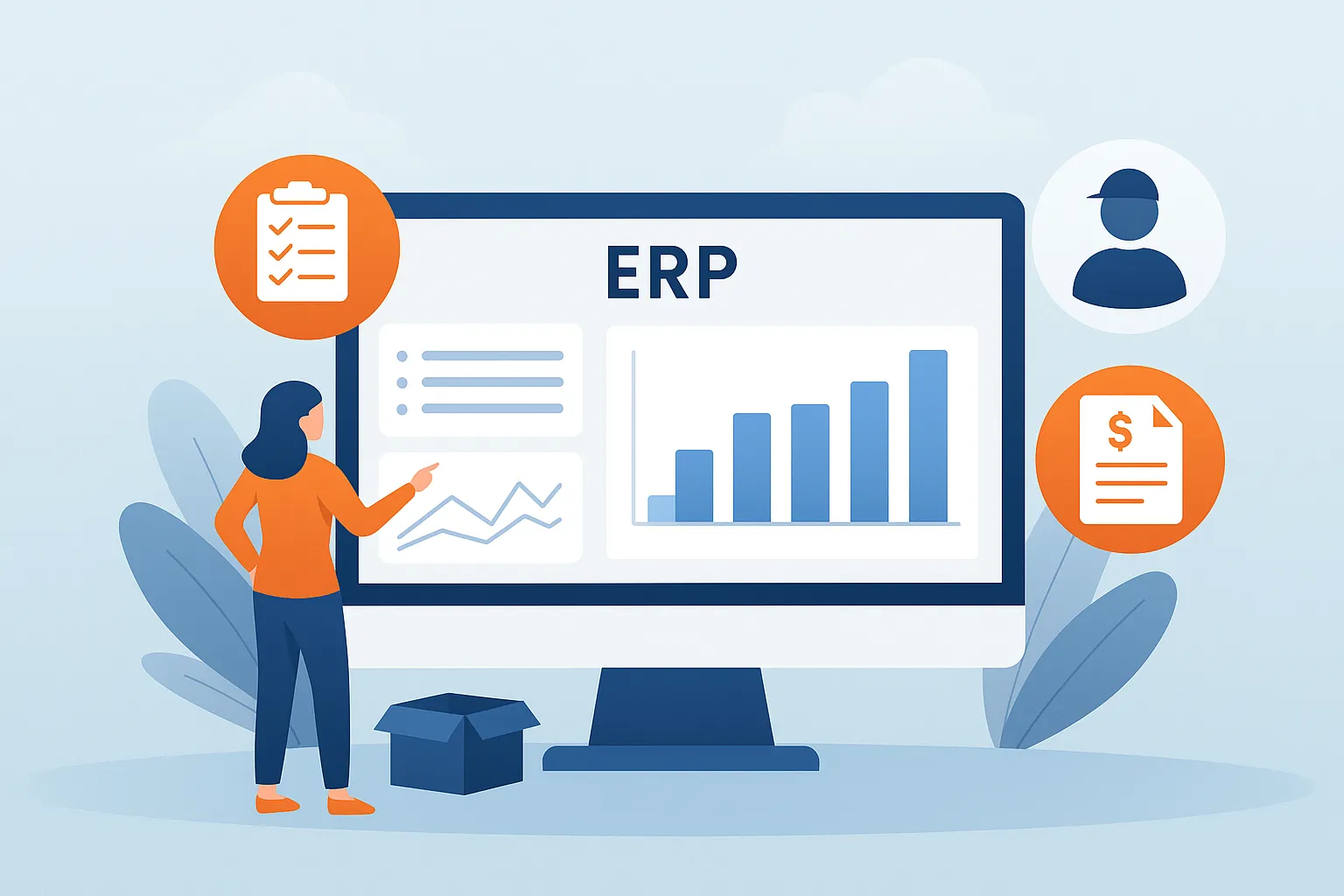
How to Manage Inventory, Technicians & Invoices in One ERP Dashboard
If you’ve ever been in the thick of running a growing business, you know how quickly simple operations can turn into full-blown Friday fire drills. One moment, you’re juggling customer calls; the next, you’re knee-deep in “Excel hell,” trying to match stock counts with yesterday’s sales, only to realize your technician schedule is two steps out of sync with your invoicing. By Monday, your team is already in silo confusion mode — and you’re wondering how this became normal.
It’s not that you don’t have tools. You have plenty — a scheduling app for your service team, accounting software for invoices, spreadsheets for inventory. But when these systems don’t talk to each other, you’re constantly switching tabs, double-entering data, and playing detective when things go wrong. Operations turn reactive, not proactive.
This is where a unified ERP dashboard changes the game. ERPbyNet brings your inventory, technician management, and invoicing under one roof — giving you a single source of truth to keep operations running like a well-rehearsed orchestra. Let’s break down the real-world problems you face, how an ERP platform addresses them, and why the end benefits go beyond just “efficiency.”
CAPE Framework: From Pain Points to Lasting Business Gains

C – Customer Problems / Pain Areas
1. The Inventory Guessing Game
Without centralized tracking, stock levels become a mystery. Your team finds out about shortages only when an order is delayed or a job can’t be completed on-site. Manual updates in spreadsheets create lag time, and with multi-location storage, the chances of miscounts skyrocket.
2. Technician Scheduling Chaos
Coordinating technicians often means juggling text messages, phone calls, and last-minute reschedules. If a technician finishes early, you have no quick way to reassign them. If a job runs over, it’s a ripple effect across the day. This reactive approach often leads to customer frustration and wasted labor hours.
3. Invoicing Delays & Errors
When invoicing happens after the job — and relies on manual inputs from different departments — mistakes are inevitable. Lost paperwork, mismatched client details, or forgotten add-on charges chip away at your margins. Worse, delayed invoices slow down cash flow, which hits small businesses the hardest.
4. The “Multiple Systems” Tax
Using separate tools for each function creates data silos. Your technician app doesn’t pull live inventory data, your invoicing tool doesn’t track service time, and your accounting software doesn’t know when a job was completed. The cost? Lost time, duplicated work, and a lack of real-time insight for decision-making.
A – Advantages You Offer
Unified Dashboard for Everything
An ERP dashboard consolidates your inventory, technician schedules, and invoicing into one view. You don’t need to log in to three systems or chase down status updates. Every department works from the same live data set.
Real-Time Inventory Tracking
Instead of waiting for end-of-day counts, your ERP updates stock levels instantly as items are used in the field or sold. Technicians know if the required parts are in stock before they leave, preventing wasted trips.
Smart Technician Management
With ERPbyNet’s scheduling module, you can assign jobs, track progress, and make live changes. If a technician finishes early, the system flags availability so you can maximize productivity without guesswork.
Instant, Accurate Invoicing
As soon as a job is marked complete, the ERP auto-generates an invoice with all the relevant details — service time, parts used, discounts applied. This not only reduces errors but also improves cash flow by shortening the billing cycle.
P – Proof or Performance
Case Example – Service Company Efficiency Jump
A mid-sized appliance repair business switched from separate tools to ERPbyNet’s integrated dashboard. Within the first quarter:
- Inventory-related delays dropped by 45% due to live stock updates.
- Technician idle time decreased by 30%, thanks to real-time reassignment.
- Invoicing speed improved from an average of 3 days post-service to same-day billing.
Adoption Trend Evidence
Industry research shows that businesses using integrated ERP systems see operational cost reductions of 10–25% within the first year. These savings come not just from efficiency but from fewer errors, less wasted labor, and better resource utilization.
Industry Comparisons
| Function | Old Way | ERP-Driven Way |
| Inventory Updates | Manual, end-of-day | Automatic, real-time |
| Technician Scheduling | Phone calls/texts | Live dashboard assignment |
| Invoicing | Delayed, error-prone | Instant, accurate |
| Data Sharing | Siloed, duplicated | Centralized, synchronized |
E – End Benefits / Emotional Trigger
When your inventory, technicians, and invoicing are all managed from one ERP dashboard, the benefits go beyond numbers. It’s about regaining control. You stop firefighting and start leading.
Your team works in sync — no more “Did you update the spreadsheet?” moments. Customers notice the difference too: faster service, fewer delays, accurate billing. That trust builds loyalty, and loyalty fuels growth.
For you, it’s the peace of mind that every moving part of your business is connected. You can make decisions with confidence because your data is live, accurate, and accessible — all from one screen. ERPbyNet delivers not just tools, but the clarity and control to run your business without the chaos.
Read More : Mobile ERP for Field Sales Teams: Work Anywhere, Close Everywhere
Beyond CAPE – Taking ERP Efficiency Further
1. The Central Nervous System of Your Business
Think of your ERP dashboard as the central nervous system — every signal, from stock changes to technician status updates, travels through it instantly. This means fewer “misfires” and more coordinated action.
2. From Reactive to Predictive
ERP doesn’t just help you respond to problems faster — it helps you avoid them altogether. Low stock alerts, technician workload forecasts, and invoice aging reports let you act before issues snowball.
3. Scalability Without the Growing Pains
When you add new services, expand your team, or open a new location, your ERP dashboard scales with you. There’s no scramble to patch together more tools or retrain your staff on different systems.
Read More : Field Sales Automation ROI: What Sales Managers Are Actually Getting Today
How It Works – The Flow in Real Life

Step 1: Inventory Integration
Your warehouse stock is synced with your sales and service data. When a technician is assigned a job, the system checks and reserves required parts automatically.
Step 2: Technician Assignment & Tracking
Schedulers can drag-and-drop assignments, view each technician’s live location, and receive status updates in real time.
Step 3: Instant Invoicing
Once a job is marked complete, the ERP generates an invoice, applies any discounts, and pushes it directly to the customer’s preferred payment method.
Result: The entire job cycle — from part allocation to payment — happens in one continuous digital workflow, with no manual data transfers.
Industry Use Cases
Field Service Companies
Plumbing, electrical, HVAC — where technician time and parts availability directly affect customer satisfaction.
Retail & E-commerce
Synchronizing stock across physical stores and online platforms while ensuring accurate, fast billing.
Manufacturing
Coordinating raw materials, production schedules, and shipment invoicing in one view.
Features That Matter Most
| Feature | Why It Matters |
| Real-Time Inventory | Prevents shortages & excess stock |
| Mobile Technician App | Field teams stay updated without phone calls |
| Automated Invoicing | Speeds up cash flow |
| Role-Based Access | Ensures data security for different departments |
| API Integration | Connects with your existing CRM or accounting software |
Performance Metrics You Can Track
A well-implemented ERP dashboard lets you measure:
- Job completion time (per technician, per location)
- Inventory turnover rate
- Invoice processing time
- Customer satisfaction scores
- First-time fix rate (critical for service-based businesses)
When you track these metrics in one place, decision-making becomes a data-driven process rather than guesswork.
Read More : How ERP Helps Small Elevator Businesses Operate Like Big Players?
Conclusion
Managing inventory, technician schedules, and invoicing separately is like trying to play a symphony with each musician reading a different sheet of music. A unified ERP dashboard puts everyone on the same page, in the same rhythm.
With ERPbyNet, you get a platform designed to centralize, simplify, and supercharge your operations — so you can focus on growth instead of putting out daily fires. Ready to see how it works? Let’s transform your workflow.
FAQs
Still have questions about ERP and how it fits your business? Let’s clear them up.
1. Can ERP really replace all my current tools?
Yes. A well-designed ERP can centralize functions like inventory tracking, scheduling, and invoicing, so you no longer need separate software for each.
2. Will it be hard for my team to learn?
Most modern ERP platforms are built with intuitive interfaces. With proper onboarding, your team can be up and running in weeks, not months.
3. Is ERP only for large enterprises?
No. Small and mid-sized businesses benefit significantly from ERP, often seeing faster ROI because they can implement changes quickly.
4. How does ERP improve cash flow?
By generating accurate invoices instantly and reducing billing delays, ERP speeds up payment cycles and strengthens cash flow.
5. What if my business has multiple locations?
An ERP can manage inventory and scheduling across multiple sites, giving you visibility into all operations from one dashboard.
6. How soon will I see results after implementation?
Many businesses notice efficiency gains within the first quarter, especially in reduced delays, improved scheduling, and faster invoicing.