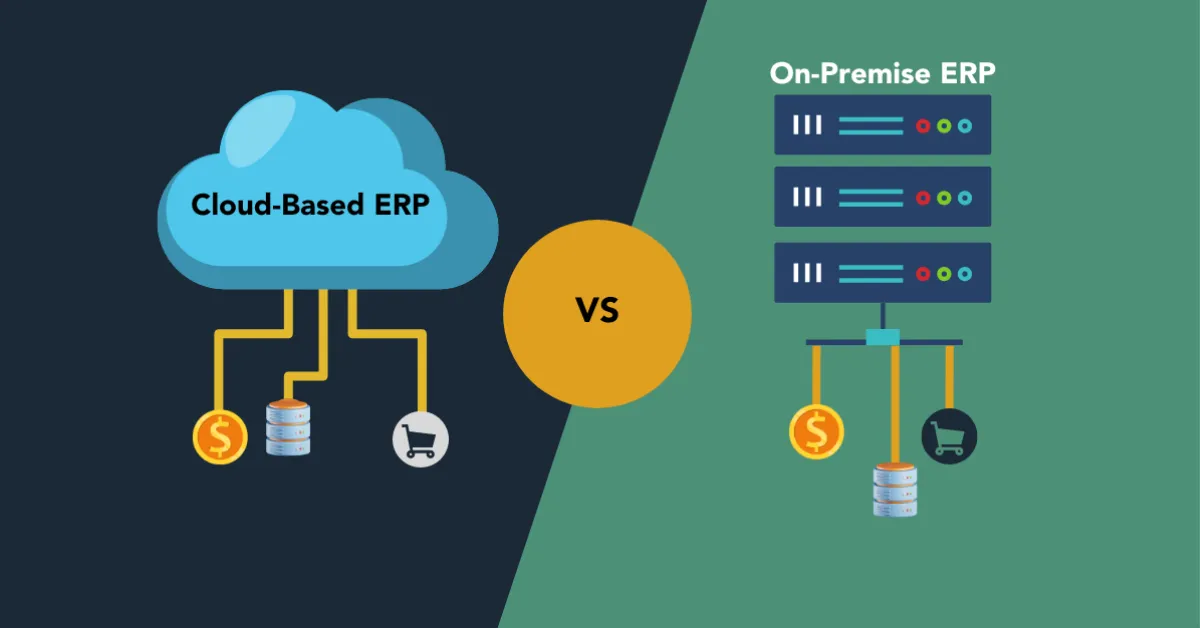
Cloud-Based ERP vs. On-Premise ERP: What’s Right for Your Business
Your business is growing—but your systems aren’t keeping up. One moment you’re chasing customer orders, the next you’re buried in mismatched spreadsheets, double entries, and late-night file hunts. Sound familiar? It’s the classic case of operational sprawl, where disconnected tools slow down momentum and every department speaks a different tech language.
Most startups and scaling businesses hit this wall. HR runs on one platform, finance on another, and inventory is tracked in someone’s aging Excel sheet. Friday fire drills become routine, and your growth engine starts to sputter.
Enter ERP — the solution that promises unity, real-time insights, and control. But not all ERP systems are the same. Should you go with a flexible, cost-effective cloud ERP or invest in the control-heavy reliability of an on-premise ERP system?
In this blog, we cut through the noise and give you a clear, side-by-side comparison of both. From accessibility to cost, scalability to security, we explore what works best for your business in 2025. At ERPByNet, we don’t just sell software — we help you build smarter systems that grow with you. Let’s find the ERP fit that transforms your chaos into clarity.
What is ERP — and Why Does It Matter in 2025?

ERP stands for Enterprise Resource Planning, a business software system that brings your processes, data, and teams under one digital roof. It connects your departments — from inventory to payroll to sales — through shared databases, automation, and real-time reporting.
Historically, ERP was a bulky, expensive setup reserved for enterprise giants. Systems like SAP and Oracle defined the early era. But with today’s cloud platforms like NetSuite, Zoho, and ERPByNet’s AceMRP, ERP is now accessible, modular, and scalable for startups and growing businesses.
In a fast-moving digital economy, relying on disconnected software can leave you in the dark. ERP brings operational visibility, ensures process consistency, and helps you stay compliant — all while reducing manual errors and missed opportunities.
What is On-Premise ERP?
On-Premise ERP refers to enterprise resource planning software that is physically installed on your company’s servers and managed by your internal IT team. Instead of relying on a vendor’s infrastructure or internet-based access, your data, software, and customizations reside on your own premises.
This model was the industry standard before the rise of cloud computing. Large enterprises often chose on-premise ERP systems for their high degree of customization, direct control over security, and ability to meet complex regulatory requirements.
For example, a manufacturing company with sensitive trade data might prefer on-premise ERP to maintain full control over its systems, particularly if they already have the infrastructure and IT staff to support it.
What is Cloud-Based ERP?
Cloud-based ERP, on the other hand, is hosted on the vendor’s servers and accessed via the internet. There is no need to purchase physical hardware or worry about manual software updates. You simply log in from a browser or app, and the ERP system is ready to go — whether you’re in the office or on the move.
This model is particularly attractive for small to midsize businesses that need fast deployment, minimal maintenance, and scalable costs. Your software is updated regularly by the vendor, your data is backed up automatically, and you get access from any device, anywhere in the world.
Cloud ERP helps eliminate silos, simplify compliance, and allow remote teams to work with confidence — all while reducing the overhead of traditional IT management.
Side-by-Side Comparison: Cloud ERP vs. On-Premise ERP

| Feature | Cloud-Based ERP | On-Premise ERP |
| Deployment | Hosted by vendor | Installed on company servers |
| Access | Anywhere via internet | Local network or VPN |
| Cost | Subscription-based | Upfront license + maintenance costs |
| Scalability | High — add features as you grow | Limited without additional investment |
| Maintenance | Vendor-managed | Handled by in-house IT |
| Customization | Moderate, via APIs | Deep, often tailored to specific workflows |
| Security | Vendor-managed with certifications | Internal responsibility |
| Implementation Time | Typically faster | Can take longer depending on infrastructure |
When Cloud-Based ERP Makes the Most Sense
You’re Scaling and Need Agility
Cloud ERP platforms allow businesses to expand without infrastructure roadblocks. Whether you open new locations or add new product lines, cloud ERP adapts quickly — no need for new servers or staff.
You Have a Lean IT Team
If your current IT support is limited or outsourced, managing your own ERP installation can be a burden. Cloud ERP eliminates the need for in-house upgrades, data backups, or patching.
You Want Predictable Monthly Costs
With cloud ERP, there’s no large upfront capital outlay. Most pricing models are based on a monthly or annual subscription, helping businesses forecast expenses and preserve cash flow.
You Need Remote and Real-Time Access
From field reps to warehouse staff to remote finance teams, cloud ERP ensures everyone accesses the same data, live. Whether you’re checking dashboards during a business trip or approving purchase orders from home, the system is always on and always current.
When On-Premise ERP Might Be Better
You’re in a Highly Regulated Industry
Some sectors — like defense, finance, and healthcare — require complete control over data storage and access. On-premise ERP systems allow companies to meet strict compliance regulations by managing everything internally.
You Already Have the IT Infrastructure
If you have a robust in-house tech team, servers, and cybersecurity measures in place, maintaining an on-premise ERP can be more economical over the long term.
You Need Heavy Customization
Businesses with highly specialized processes — such as unique manufacturing methods or legacy systems — often prefer on-premise ERP due to its deep customization options.
ERP Adoption Trends in 2025
According to industry research by Software Advice and Gartner, over 60% of growing businesses are choosing cloud ERP due to its ease of use, speed of deployment, and lower upfront costs.
This shift is also driven by broader business needs: remote teams, real-time analytics, mobile accessibility, and the rise of low-code automation. Cloud ERP systems now offer APIs, integration with CRM and HR tools, and AI-powered dashboards for better decision-making.
How ERPByNet Fits In

At ERPByNet, we build ERP solutions tailored to your business size, industry, and workflow. Whether you need the flexibility of the cloud or the control of on-premise systems, our consultants help design and implement a system that grows with you.
Our AceMRP product includes powerful modules like inventory tracking, accounting, HR automation, and role-based permissions — all accessible through a user-friendly interface that keeps your team productive and in sync.
Conclusion: Choosing the Right ERP is a Strategic Move
Choosing between cloud-based ERP and on-premise ERP isn’t just about technology — it’s about aligning your system with your business vision, budget, and operational needs. In 2025, most startups and SMEs are leaning into cloud ERP for its scalability, lower costs, and real-time capabilities.
At ERPByNet, we believe in ERP that’s designed around your goals — not the other way around. Whether you’re replacing disconnected tools or upgrading an outdated legacy system, we’re here to simplify your operations and support your growth.
Ready to choose clarity over complexity? Let ERPByNet build the ERP solution that fits your future.
Still have questions about ERP and how it fits your business? Let’s clear them up.
What is the main difference between cloud and on-premise ERP?
Cloud ERP is hosted online and managed by the vendor, while on-premise ERP is installed on your company’s servers and managed internally.
Is cloud ERP secure enough for sensitive data?
Yes. Most cloud ERP vendors implement enterprise-grade security protocols, encryption, and regular compliance audits. It’s often more secure than locally managed systems.
Can I switch from on-premise to cloud ERP later?
Yes. Many businesses start on-premise and migrate to the cloud as they grow or restructure. ERPByNet supports both paths and can guide you through migration when you’re ready.
Is on-premise ERP more expensive?
On-premise ERP involves high initial investment in licenses, hardware, and IT personnel. Over time, it may cost less than long-term cloud subscriptions — but only if you already have the infrastructure.
Which industries still prefer on-premise ERP?
Sectors like defense, finance, and healthcare often require strict data control and compliance, which makes on-premise ERP a better fit in some cases.
How fast can ERPByNet deploy a cloud ERP solution?
With our streamlined implementation process, cloud ERP can be deployed in weeks — customized to your workflows and team structure.