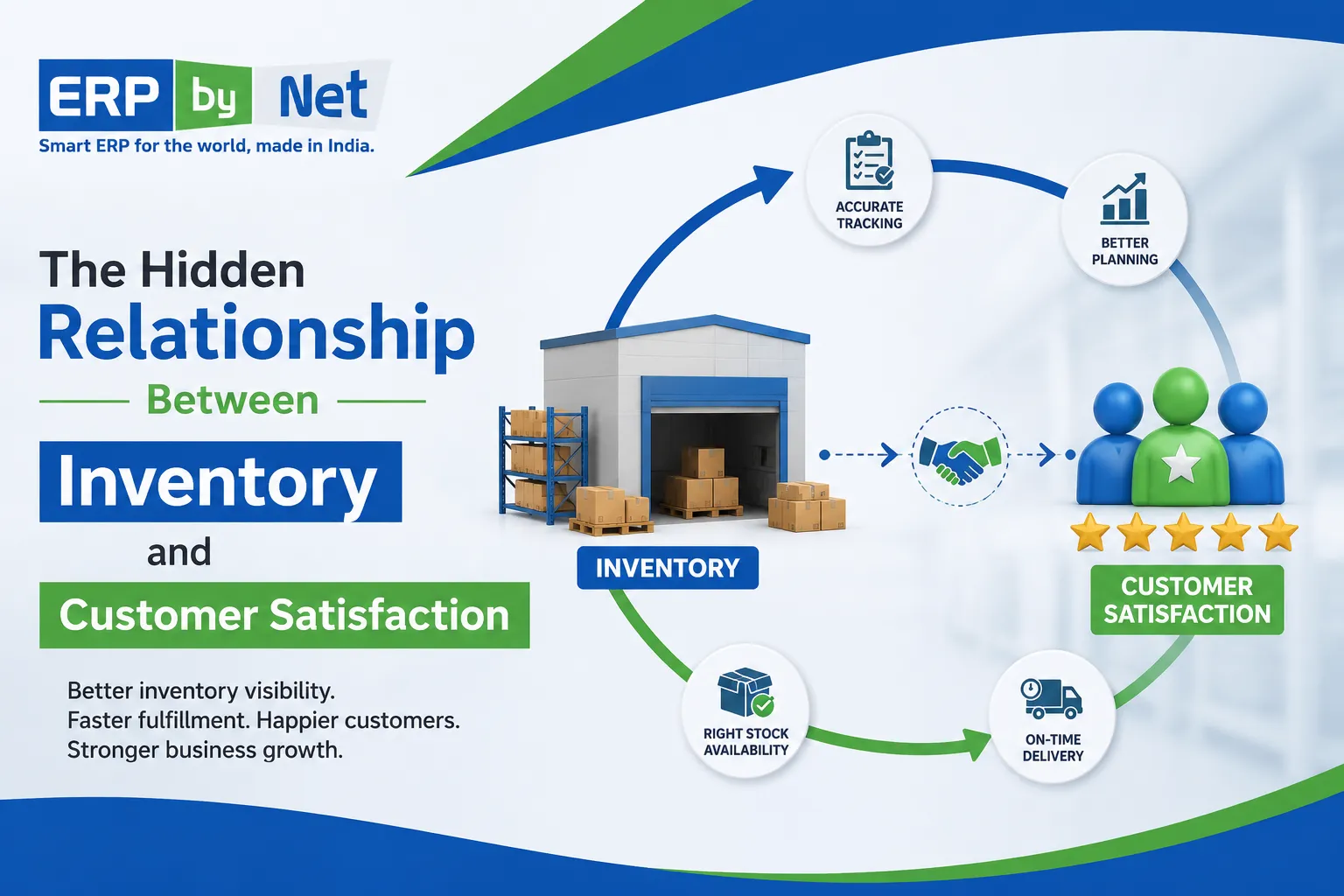
The Hidden Relationship Between Inventory and Customer Satisfaction
Key Takeaways
- Inventory management directly impacts customer satisfaction, even when customers never see warehouse operations.
- Stockouts, delayed deliveries, and inaccurate inventory records can quickly damage customer trust and loyalty.
- Real-time inventory visibility helps businesses fulfill orders faster and provide more accurate delivery commitments.
- Efficient inventory planning reduces operational disruptions and improves the overall customer experience.
- Businesses that connect inventory with customer service processes are better positioned to retain customers and grow sustainably.
What You’ll Learn
- Why inventory accuracy plays a critical role in customer satisfaction and retention.
- How inventory shortages and excess stock can affect business performance and customer experience.
- The connection between order fulfillment speed, inventory visibility, and customer expectations.
- How ERP systems provide real-time inventory tracking and operational transparency.
- How ERPbyNet helps businesses improve inventory control while delivering a better customer experience.
Real Insights
- Customers rarely complain about inventory directly; they complain about late deliveries, unavailable products, and broken promises.
- Many businesses focus on sales growth while overlooking inventory accuracy, creating hidden service challenges.
- Real-time inventory visibility enables proactive decision-making before stock issues impact customers.
- Disconnected inventory systems often lead to fulfillment delays, customer frustration, and lost revenue opportunities.
- The strongest customer relationships are built on reliability, and reliable inventory management is a major part of delivering that experience consistently.
Customer satisfaction is often associated with factors such as product quality, competitive pricing, responsive support teams, and fast service. While these elements certainly influence customer perception, many businesses overlook a critical operational factor that directly affects the customer experience: inventory management.
Inventory may seem like a back-office function that primarily concerns warehouses and stockrooms. However, the effectiveness of inventory management has a significant impact on whether customers receive products on time, whether service requests are resolved quickly, and whether businesses can consistently meet customer expectations.
When inventory levels are inaccurate, products are unavailable, or spare parts cannot be located when needed, customers experience delays, frustration, and inconvenience. Over time, these issues can damage trust, reduce customer loyalty, and negatively impact business growth.
This is why inventory management and customer satisfaction are more closely connected than many organizations realize. Businesses that invest in better inventory visibility and control are often better positioned to deliver reliable service, improve customer experiences, and build long-term customer relationships.
In this article, we will explore how inventory management influences customer satisfaction, the common inventory challenges that impact customer experiences, and how ERP solutions like ERPbyNet help businesses create a more customer-focused operation.
Understanding the Connection Between Inventory and Customer Satisfaction
Many businesses treat inventory management and customer satisfaction as separate business functions. Inventory management is typically associated with warehouses, stock levels, procurement, and logistics, while customer satisfaction is often viewed as the responsibility of sales and customer service teams.
In reality, these two areas are closely connected.
Every promise made to a customer depends on a business’s ability to deliver products or services on time. Whether a customer places an online order, requests equipment maintenance, or schedules a service visit, inventory availability plays a critical role in determining the quality of the experience.
When inventory is available and accurately tracked, businesses can fulfill orders quickly, complete services efficiently, and meet customer expectations consistently. However, when inventory records are inaccurate or stock is unavailable, customers experience delays, incomplete orders, and service disruptions.
Although customers may never see inventory operations directly, they experience the results of inventory management every time they interact with a business.
How Inventory Influences the Customer Experience
Inventory affects several customer-facing processes, including:
- Product availability
- Order fulfillment speed
- Delivery reliability
- Service response times
- First-time issue resolution
A breakdown in any of these areas can negatively impact customer satisfaction and reduce confidence in the business.
The Hidden Link Between Operations and Customer Expectations
Customers judge businesses based on outcomes rather than internal processes. They expect products to be available, deliveries to arrive on time, and service requests to be resolved quickly.
When inventory management supports these expectations, customers enjoy a seamless experience. When inventory processes fail, customer satisfaction often suffers, regardless of how strong the product or service may be.
Why Customers Care About Inventory More Than Businesses Realize

Most customers never ask about warehouse operations, inventory counts, or procurement procedures. What they care about is whether a business can consistently deliver what was promised.
Customers expect:
- Products to be available when needed
- Orders to be delivered on time
- Accurate shipments
- Fast service support
- Quick issue resolution
Each of these expectations depends heavily on inventory performance.
Inventory Is Invisible Until Something Goes Wrong
When inventory management works effectively, customers rarely notice it. Products arrive on time, services are completed efficiently, and expectations are met.
However, when inventory issues occur, they immediately become visible to customers.
Consider the following examples:
Positive Customer Experience
A customer places an order online. The inventory system accurately reflects available stock, the order is processed immediately, and the product arrives within the promised delivery window.
The result is a smooth customer experience and increased trust in the business.
Negative Customer Experience
A customer orders the same product, but inventory records incorrectly show stock availability. The business later discovers the item is unavailable, causing a delay in fulfillment and delivery.
The result is customer frustration, reduced confidence, and a greater likelihood of seeking alternative suppliers.
Why Inventory Performance Directly Impacts Satisfaction
The difference between these two customer experiences is not product quality or customer service—it is inventory accuracy.
This demonstrates why inventory management has a direct impact on customer satisfaction, retention, and long-term loyalty.
Common Inventory Problems That Lead to Customer Dissatisfaction
Many customer complaints originate from inventory-related issues, even when customers do not realize inventory is the root cause.
Problems such as delayed deliveries, unavailable products, and unresolved service requests often stem from poor inventory visibility or ineffective inventory control processes.
Frequent Stockouts
A stockout occurs when a product or spare part is unavailable when needed.
For customers, stockouts are particularly frustrating because they often happen after a purchasing decision has already been made. Discovering that an item is unavailable after placing an order can quickly damage trust and create a negative perception of the business.
Common Causes of Stockouts
- Inaccurate demand forecasting
- Delayed purchasing decisions
- Inventory inaccuracies
- Lack of real-time inventory visibility
- Seasonal demand fluctuations
Repeated stock shortages can encourage customers to explore competitors that offer more reliable product availability.
Delayed Deliveries
Modern customers expect fast, predictable delivery experiences.
When inventory data is inaccurate or inventory cannot be located quickly, businesses often struggle to fulfill orders on schedule.
Factors That Contribute to Delivery Delays
- Incorrect inventory location records
- Inaccurate stock counts
- Poor warehouse organization
- Untracked inventory transfers
Delivery reliability plays a major role in customer satisfaction. Even when products eventually arrive, delays can reduce confidence in future purchases.
Incorrect Order Fulfillment
Inventory inaccuracies often lead to fulfillment mistakes that directly affect customers.
Common fulfillment errors include:
- Incorrect products shipped
- Wrong order quantities
- Incomplete deliveries
- Unapproved substitute products
These mistakes create additional inconvenience for customers while increasing operational costs for the business.
Maintaining accurate inventory records helps improve fulfillment accuracy and reduces customer complaints.
Longer Service Response Times
Inventory management is equally important for service-based organizations.
When technicians arrive without the required parts or equipment, service requests cannot be completed during the first visit.
Business Impact of Missing Inventory During Service
- Additional technician visits
- Increased equipment downtime
- Longer issue resolution times
- Reduced customer confidence
Industries such as elevator maintenance, facility management, HVAC services, and industrial equipment support rely heavily on inventory availability to deliver high-quality service experiences.
The faster a business can resolve customer issues, the higher the likelihood of customer satisfaction.
Read More: Top Mistakes to Avoid When Choosing Inventory Management Software
How Poor Inventory Management Impacts Customer Loyalty
Customer satisfaction is not limited to a single purchase or service interaction. Every experience a customer has with a business contributes to the overall perception of reliability, professionalism, and trustworthiness.
When inventory-related issues occur repeatedly, customers begin to lose confidence in a company’s ability to meet their expectations. Over time, this can significantly impact customer loyalty and long-term business growth.
Reduced Customer Retention
Customer retention depends heavily on consistency.
When customers regularly experience stock shortages, delayed deliveries, or unresolved service issues, they often begin exploring alternative suppliers. Even loyal customers can become frustrated when inventory problems repeatedly disrupt their experience.
Businesses that consistently maintain inventory availability are more likely to retain customers and strengthen long-term relationships.
Negative Online Reviews and Brand Perception
Today’s customers have numerous platforms to share their experiences, including Google reviews, social media, and industry-specific review sites.
Inventory-related problems such as unavailable products, delayed shipments, or incomplete service visits often result in negative reviews. These reviews not only affect existing customer relationships but can also influence future purchasing decisions.
A single negative experience can impact the perception of many potential customers.
Lower Customer Lifetime Value
Customer Lifetime Value (CLV) measures the total revenue generated from a customer throughout the business relationship.
When inventory issues cause customers to switch providers, businesses lose more than an individual sale. They lose future purchases, referrals, and opportunities for long-term growth.
This hidden cost is often far greater than the immediate financial impact of a stockout or delayed order.
The Business Cost of Inventory-Driven Customer Dissatisfaction
Many organizations focus primarily on the operational costs associated with inventory management, such as warehousing expenses, procurement costs, and carrying costs.
However, poor inventory management can create significant customer-related costs that directly affect profitability and competitiveness.
Lost Sales Opportunities
When products are unavailable, customers often purchase from competitors instead of waiting for inventory to become available.
Every stockout represents a missed revenue opportunity and potentially a lost customer relationship.
Businesses that struggle with inventory availability may unknowingly lose significant sales throughout the year.
Increased Customer Support Workload
Inventory-related problems frequently generate additional customer inquiries.
Support teams spend valuable time handling:
- Order status requests
- Delivery complaints
- Product availability questions
- Return and replacement requests
This increases operational costs while reducing overall efficiency.
Higher Emergency Procurement and Logistics Costs
Businesses often respond to inventory shortages through emergency purchasing and expedited shipping.
While these actions may temporarily resolve customer issues, they increase operating expenses and reduce profit margins.
Proactive inventory management is significantly more cost-effective than reactive problem-solving.
Damage to Business Reputation
Reputation is one of the most valuable assets a business possesses.
Consistent inventory issues can create a perception that the company is unreliable, disorganized, or unable to fulfill customer commitments.
Over time, reputation damage can become more costly than the inventory problem itself.
How ERP Systems Help Improve Customer Satisfaction Through Better Inventory Management
Modern ERP solutions provide organizations with the visibility, control, and automation needed to manage inventory effectively.
Rather than relying on spreadsheets, disconnected software, or manual processes, ERP systems create a centralized environment where inventory information is updated and shared across the entire organization.
Real-Time Inventory Visibility
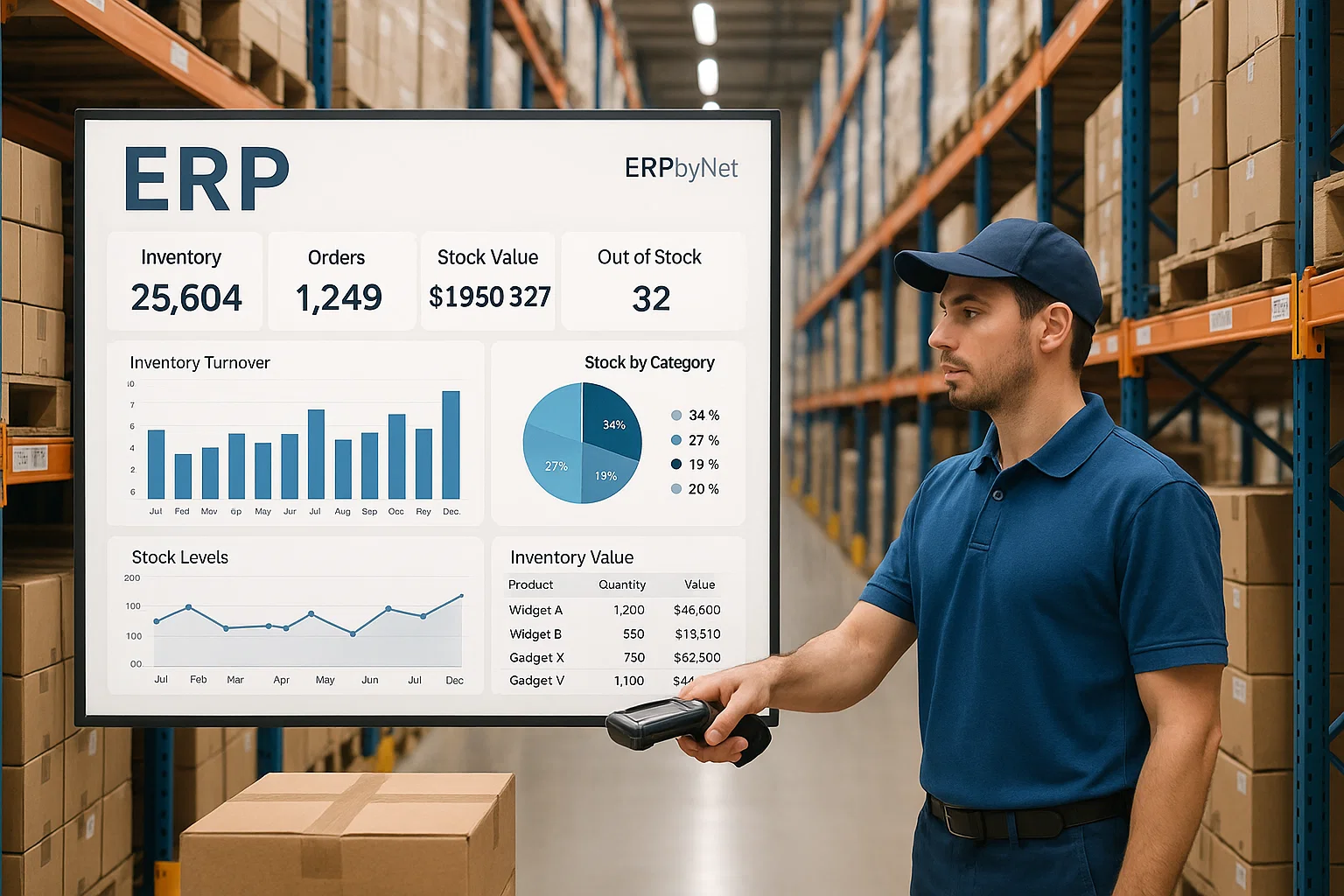
One of the most valuable features of an ERP system is real-time inventory tracking.
Businesses gain immediate visibility into inventory levels across:
- Warehouses
- Branch offices
- Distribution centers
- Service vehicles
- Technician inventories
This transparency helps prevent stockouts and enables faster decision-making.
Automated Inventory Replenishment
ERP systems can automatically monitor stock levels and trigger purchasing actions when inventory reaches predefined thresholds.
This helps organizations:
- Prevent inventory shortages
- Maintain optimal stock levels
- Improve purchasing efficiency
- Reduce manual intervention
Automated replenishment ensures critical inventory remains available when customers need it.
Accurate Inventory Tracking and Control
ERP solutions track inventory movements throughout the entire supply chain.
This includes:
- Goods received
- Inventory transfers
- Customer shipments
- Service part consumption
- Inventory adjustments
Accurate tracking reduces errors, improves reporting accuracy, and supports better operational planning.
Better Demand Forecasting
Historical sales trends and operational data provide valuable insights into future inventory requirements.
ERP systems help businesses forecast demand more accurately, enabling them to:
- Prepare for seasonal fluctuations
- Avoid stock shortages
- Reduce excess inventory
- Improve service levels
Better forecasting leads to better inventory decisions and improved customer satisfaction.
Read More: How to Choose the Right ERP for Project-Based Businesses
Why Inventory Management Is Critical for Elevator Service Companies

For elevator service and maintenance companies, inventory management is not simply about tracking spare parts. It directly affects service quality, response times, customer satisfaction, and business reputation.
When an elevator experiences a breakdown, customers expect a quick resolution. Building owners, facility managers, and tenants depend on elevators for daily operations. Any delay in repairs can cause inconvenience, safety concerns, and operational disruptions.
This makes inventory availability a critical component of successful elevator service operations.
Spare Parts Availability Directly Impacts Service Quality
Even the most experienced technician cannot complete a repair without the required spare parts.
When critical components are unavailable, repair jobs are delayed, resulting in customer frustration and extended equipment downtime.
Common challenges include:
- Missing spare parts
- Unavailable replacement components
- Delayed procurement processes
- Inaccurate stock records
Having immediate access to the right parts allows service teams to resolve issues faster and improve customer experiences.
Reducing Elevator Downtime Through Better Inventory Visibility
Elevator downtime is one of the biggest concerns for property owners and facility managers.
Without visibility into inventory levels, service teams often spend valuable time searching for parts across multiple warehouses or locations.
Real-time inventory visibility helps businesses:
- Locate required parts quickly
- Reduce repair delays
- Improve technician productivity
- Minimize elevator downtime
The faster repairs are completed, the higher the level of customer satisfaction.
Improving First-Time Fix Rates With ERP
The first-time fix rate measures how often technicians successfully resolve issues during the first service visit.
A high first-time fix rate typically leads to:
- Faster problem resolution
- Lower service costs
- Reduced customer disruption
- Higher customer satisfaction
Inventory visibility plays a major role in improving this metric. When technicians know where parts are located and have access to accurate inventory information, they can arrive prepared to complete repairs during the initial visit.
Managing Inventory Across Warehouses and Technician Vehicles
Many elevator service businesses operate multiple warehouses, branch locations, and mobile service teams.
Without a centralized inventory system, tracking parts across these locations becomes difficult.
ERP solutions help organizations:
- Monitor inventory across all locations
- Track technician vehicle stock
- Manage spare part transfers
- Ensure critical components remain available
This creates a more efficient service operation while improving customer response times.
How ERPbyNet Helps Businesses Strengthen Customer Satisfaction
Customer satisfaction depends on a business’s ability to consistently meet customer expectations. ERPbyNet helps organizations achieve this by providing complete visibility into inventory, operations, procurement, and service management through a single integrated platform.
By connecting business processes and eliminating information silos, ERPbyNet enables organizations to operate more efficiently while delivering better customer experiences.
Centralized Inventory Visibility Across Operations
ERPbyNet provides a single source of truth for inventory management.
Businesses can access real-time inventory information across:
- Warehouses
- Branch locations
- Distribution centers
- Service teams
- Field technician vehicles
This visibility reduces uncertainty and helps teams make faster, more informed decisions.
Faster Order Fulfillment and Service Response
Accurate inventory information allows businesses to fulfill customer requests more efficiently.
ERPbyNet helps organizations:
- Locate inventory instantly
- Process orders faster
- Reduce fulfillment delays
- Improve service response times
As a result, customers receive products and services more quickly and reliably.
Improved Inventory Accuracy and Control
Inventory inaccuracies are one of the leading causes of customer dissatisfaction.
ERPbyNet tracks inventory movements in real time, helping businesses maintain accurate stock records and reduce operational errors.
This improves:
- Order accuracy
- Inventory reliability
- Purchasing decisions
- Customer confidence
Better Decision-Making With Real-Time Data
Business leaders need accurate information to make effective decisions.
ERPbyNet provides real-time reporting and analytics that help organizations:
- Monitor inventory performance
- Forecast future demand
- Identify inventory risks
- Optimize stock levels
This enables proactive decision-making instead of reactive problem-solving.
Supporting Long-Term Customer Loyalty
Customer loyalty is built through consistent positive experiences.
By improving inventory visibility, service responsiveness, and operational efficiency, ERPbyNet helps businesses deliver the reliability customers expect.
The result is stronger customer relationships, improved retention, and sustainable business growth.
Conclusion
Customer satisfaction is not built solely through great products or responsive support teams. It starts much earlier—with the ability to deliver the right product, service, or spare part at the right time.
When inventory visibility is poor, businesses face stockouts, delayed deliveries, inaccurate orders, and slower service response times. These operational challenges don’t just affect internal efficiency; they directly impact customer trust, loyalty, and long-term revenue growth.
As customer expectations continue to rise, businesses can no longer afford to manage inventory through disconnected systems, spreadsheets, or manual processes. Real-time inventory visibility has become a competitive advantage that helps organizations improve service quality, fulfill customer commitments, and create more consistent customer experiences.
This is where ERPbyNet makes the difference.
With integrated inventory management, real-time stock tracking, automated replenishment, and complete visibility across warehouses, branches, and service teams, ERPbyNet helps businesses eliminate inventory blind spots and operate with greater confidence.
Whether you’re managing product inventory, spare parts, or field service operations, ERPbyNet empowers your team to respond faster, reduce disruptions, and keep customers satisfied.
Ready to turn inventory management into a customer satisfaction advantage?
Book a free ERPbyNet demo today and discover how smarter inventory management can help your business improve service performance, strengthen customer loyalty, and accelerate growth.
Frequently Asked Questions (FAQs)
1. How does inventory management affect customer satisfaction?
Inventory management directly impacts customer satisfaction by ensuring products and spare parts are available when customers need them. Accurate inventory levels help businesses avoid stockouts, reduce delivery delays, improve order accuracy, and provide faster service, leading to a better customer experience.
2. What happens when a business has poor inventory visibility?
Poor inventory visibility can result in inaccurate stock records, delayed deliveries, stock shortages, and fulfillment errors. These issues often frustrate customers, increase complaints, and reduce trust in the business, ultimately affecting customer retention and revenue.
3. Why do stockouts negatively impact customer loyalty?
When customers cannot purchase the products they need because items are out of stock, they may turn to competitors. Frequent stockouts create a perception of unreliability, making customers less likely to return for future purchases.
4. How can an ERP system improve inventory accuracy?
An ERP system tracks inventory movements in real time, including purchases, sales, transfers, and stock adjustments. This helps businesses maintain accurate inventory records, reduce manual errors, and gain complete visibility into stock levels across all locations.
5. Can inventory management improve delivery performance?
Yes. Effective inventory management ensures products are available and ready for fulfillment when orders are received. This helps businesses reduce delays, improve on-time delivery rates, and meet customer expectations more consistently.
6. What is the relationship between inventory management and service quality?
For service-based businesses, inventory management ensures technicians have access to the right parts and materials when performing repairs or maintenance. Better inventory control helps improve first-time fix rates, reduce equipment downtime, and enhance overall service quality.
7. How does ERPbyNet help businesses improve customer satisfaction?
ERPbyNet provides real-time inventory visibility, automated stock tracking, multi-location inventory management, and integrated service operations. These capabilities help businesses reduce stockouts, improve fulfillment accuracy, respond faster to customer needs, and deliver a more reliable customer experience.
8. Why is inventory management important for elevator service companies?
Elevator service companies rely on spare parts availability to complete repairs quickly. Without proper inventory control, technicians may need multiple site visits, increasing downtime and customer frustration. ERPbyNet helps elevator businesses track spare parts across warehouses and field teams to improve service efficiency and customer satisfaction.
9. What inventory metrics should businesses monitor to improve customer satisfaction?
Businesses should regularly track key inventory performance indicators such as:
- Inventory Accuracy Rate
- Stockout Frequency
- Order Fulfillment Rate
- On-Time Delivery Rate
- First-Time Fix Rate
- Inventory Turnover
- Customer Satisfaction Score (CSAT)
Monitoring these metrics helps identify inventory-related issues before they impact the customer experience.
10. Can better inventory management increase customer retention?
Absolutely. Customers are more likely to remain loyal to businesses that consistently provide product availability, accurate orders, and timely service. Effective inventory management helps businesses meet these expectations, leading to higher customer retention and long-term growth.