CategoriesERP (Enterprise Resource Planning)

How Reliable Is ERP Data During Audits?

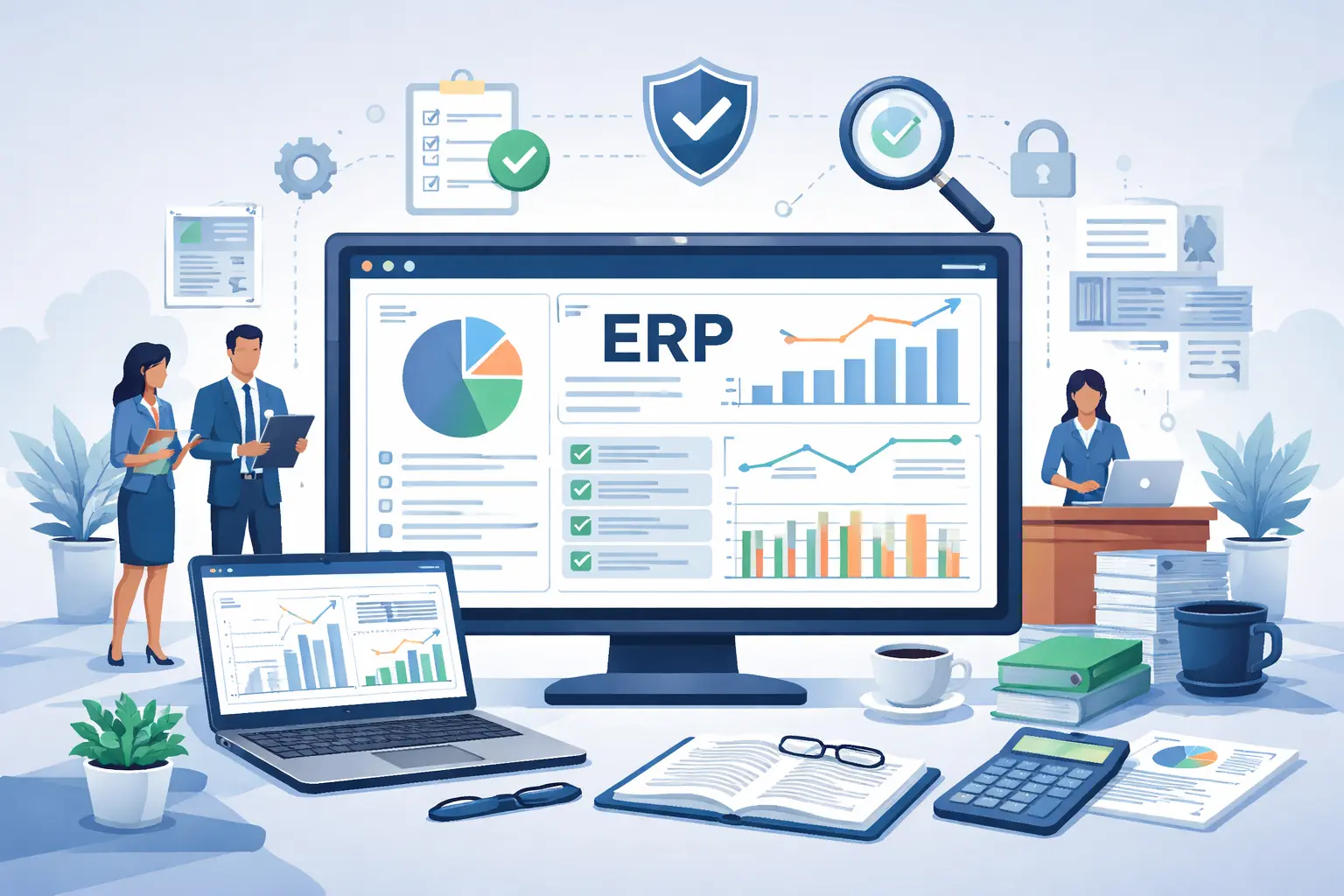
When organizations prepare for an audit, the focus often centers on financial statements, reconciliations, and supporting documents. Yet seasoned auditors look beyond the final figures. Their primary concern is not just what the numbers are, but how those numbers came to exist. Financial results are only as trustworthy as the systems and processes that produce them, which is why auditors examine the environment behind the data before relying on the data itself.

At the heart of this examination lies the ERP system. ERP platforms govern how transactions are recorded, who has the authority to create, approve, or modify entries, how errors are detected and corrected, and whether controls operate consistently without manual intervention. These system-level behaviors determine whether financial data can be trusted as a reliable audit source or whether it requires extensive validation and explanation.

This reality leads auditors to a fundamental question: How reliable is the data inside your ERP system during an audit? Reliability is never assumed. It is demonstrated over time through embedded controls, clear governance, and consistent system behavior. This article explores ERP data reliability from an auditor’s perspective, focusing on how systems either build audit confidence or create audit risk.

What “ERP Data Reliability” Really Means (Beyond Buzzwords)

Many organizations assume ERP data is reliable because:

  • The system is widely used
  • Reports look accurate
  • Numbers reconcile “most of the time”

Auditors do not accept these assumptions.

In audit terms, ERP data is reliable only when it satisfies five enforceable conditions.

1. Accuracy: Are Transactions Recorded Exactly as They Occurred?

What Accuracy Means in an ERP Audit

Accuracy is not just about correct totals. Auditors evaluate whether:

  • Transactions reflect real business events
  • Correct accounts are used
  • Values are calculated correctly
  • Posting logic is consistent

How Auditors Test Accuracy

Auditors:

  • Select transaction samples
  • Trace them to source documents
  • Recalculate values independently
  • Verify posting logic

Where Accuracy Breaks Down in ERPs

Common causes include:

  • Manual journal entries without validation
  • Incorrect account mapping
  • Custom logic that overrides standard calculations

ERPbyNet reduces accuracy risk by enforcing:

  • Structured posting rules
  • Automated validations
  • Standardized accounting logic

Errors are prevented before they enter the system.

2. Completeness: Is All Business Activity Captured Inside the ERP?

Why Completeness Is Critical

Incomplete data is one of the most serious audit risks because:

  • Missing transactions distort financial statements
  • Off-system data cannot be reliably controlled
  • Auditors lose confidence in ERP outputs

How Auditors Test Completeness

Auditors look for:

  • Gaps in transaction sequences
  • Unrecorded adjustments
  • Parallel records outside the ERP

Typical Completeness Failures

  • Excel-based accruals
  • Offline inventory tracking
  • Manual revenue recognition

ERPbyNet enforces process discipline, ensuring all transactions flow through the ERP — not around it.

3. Consistency: Does Data Align Across Modules, Departments, and Sites?

Why Consistency Matters in Audits

Auditors expect:

  • Subledgers to match the general ledger
  • Departmental reports to align
  • Multi-site data to follow identical rules

Inconsistency signals weak governance.

Where Consistency Breaks in ERP Systems

  • Different sites use different processes
  • Master data is not standardized
  • Local workarounds override system logic

ERPbyNet solves this by:

  • Centralizing master data governance
  • Enforcing standardized structures
  • Allowing local flexibility without breaking global rules

4. Traceability: Can Every Number Be Explained — Without Guesswork?

What Traceability Means to Auditors

Traceability means an auditor can:

  • Start with a financial statement number
  • Drill down to the transaction
  • Identify the user, time, and reason
  • Review supporting documents

Why Traceability Builds Trust

When traceability is strong:

  • Audits move faster
  • Fewer questions are raised
  • Less manual explanation is required

ERPbyNet provides:

  • End-to-end audit trails
  • Time-stamped changes
  • Before-and-after value history

Nothing disappears silently.

5. Control Integrity: Who Can Do What — and Why?

Why Controls Matter More Than Data Itself

Even accurate data becomes unreliable if:

  • Too many users have access
  • One person controls multiple steps
  • Changes are not approved

Auditors evaluate control design and enforcement, not just existence.

Key ERP Controls Auditors Test

  • Role-based access
  • Segregation of duties
  • Approval workflows
  • Change management

ERPbyNet embeds these controls directly into system behavior, not as optional practices.

Read More : How Connecting CPQ and ERP Boosts Your Sales Process

How Auditors Evaluate ERP Data Reliability Step by Step

Diagram showing how auditors evaluate ERP data reliability step by step, including ERP environment review, control design assessment, control effectiveness testing, and substantive data testing using ERPbyNet.

Audits follow a structured logic.

Step 1: Understanding the ERP Environment

Auditors examine:

  • ERP architecture
  • Module integration
  • Customization level

Highly fragmented or heavily customized systems increase audit risk.

ERPbyNet uses a controlled configuration approach, preserving transparency.

Step 2: Evaluating Control Design

Auditors assess whether:

  • Controls exist
  • Controls are appropriate
  • Controls are automated

Manual controls are considered weaker.

Step 3: Testing Control Effectiveness

Auditors test:

  • Whether controls actually work
  • Whether exceptions exist
  • Whether violations are logged

ERPbyNet provides clear control evidence.

Step 4: Substantive Data Testing

Auditors:

  • Extract ERP data

  • Perform analytics
  • Compare trends
  • Investigate anomalies

Clean ERP data reduces audit scope.

Read More : Importance of ERP Integrations with Expense Management Software

Why ERP Data Often Fails Audits (Even in “Good” Systems)

Manual Overrides and Shortcuts

Manual processes introduce:

  • Human error
  • Untracked changes
  • Inconsistent logic

ERPbyNet minimizes manual intervention through automation.

Poor Master Data Management

Without ownership and controls:

  • Duplicate records appear
  • Reports conflict
  • Audits expand

ERPbyNet enforces master data governance.

Over-Customization Without Documentation

Customization without governance leads to:

  • Black-box logic
  • Control bypass
  • Audit skepticism

ERPbyNet prioritizes clarity over complexity.

Weak Access Management

Excessive access is one of the most common audit findings.

ERPbyNet uses least-privilege access models by default.

Why Automation Builds Audit Confidence

Automated controls ensure that:

  • Controls are applied consistently
    Once a rule is configured in the ERP, it applies uniformly to every transaction, user, and period. There is no dependency on individual judgment, memory, or interpretation.

  • There is no selective enforcement
    Manual controls can be skipped under pressure or overridden for convenience. Automated controls cannot be selectively ignored without leaving evidence, which significantly reduces risk.

  • Clear and objective audit evidence is generated
    Automated processes create system logs, timestamps, and rule-based outcomes that auditors can independently verify. This removes reliance on verbal explanations or screenshots.

Because of this, auditors typically place higher reliance on automated controls, which often reduces the extent of manual testing required.

How ERPbyNet Uses Automation to Strengthen Audit Reliability

ERPbyNet embeds automation into critical control areas, including:

  • Validations
    The system enforces mandatory fields, value ranges, account mappings, and business rules at the point of data entry. Errors are prevented before they enter the ledger.

  • Approvals
    Transactions follow predefined approval workflows based on role, value, or risk level. Each approval is logged, time-stamped, and attributable to a specific user.

  • Reconciliations
    Automated reconciliations between subledgers, general ledger, and inter-entity accounts help identify discrepancies early, rather than during audit preparation.

By automating these controls, compliance becomes routine system behavior, not a periodic, manual effort driven by audit pressure.

Read More : Why an ERP Upgrade May Cost More Than an ERP Replacement

Audit Trails: Turning Audits from Investigations into Confirmations

Illustration showing ERP audit trails with who changed data, when it changed, what was modified, and why, demonstrating how ERPbyNet turns audits from investigations into confirmations.

One of the first things auditors look for when assessing ERP data reliability is the quality of audit trails.

What Auditors Expect from Audit Trails

A robust audit trail answers four fundamental questions for every transaction or change:

  • Who did it?
    The specific user responsible for creating, approving, or modifying data.

  • When did it happen?
    Exact date and time stamps, not just the accounting period.

  • What changed?
    Clear visibility into original values and updated values.

  • Why did it change?
    Context through references, workflow steps, or linked documents.

If any of these elements are missing, auditors must rely on explanations instead of evidence — which increases skepticism and audit effort.

How ERPbyNet Eliminates Ambiguity

ERPbyNet’s audit trail design ensures that:

  • Every transaction and modification is automatically logged
  • Historical values are preserved, not overwritten
  • Changes are traceable across modules and periods
  • Supporting documents are linked directly to records

This level of traceability allows auditors to reconstruct events independently, transforming audits from time-consuming investigations into straightforward confirmations.

Period Control and Historical Accuracy: Protecting Financial Integrity Over Time

Auditors are particularly sensitive to changes that affect previously reported results. Historical integrity is a cornerstone of audit trust.

Why Period Control Is a Major Audit Focus

Auditors closely scrutinize:

  • Backdated entries that alter prior results
  • Silent changes made after financial close
  • Uncontrolled restatements without documentation

Such issues suggest weak governance and raise concerns about financial reliability.

How ERPbyNet Enforces Period Discipline

ERPbyNet strengthens period control by:

  • Locking closed periods, preventing unauthorized postings
  • Allowing controlled reopenings only through defined authorization
  • Tracking all adjustments transparently, including reason codes and approval history

This ensures that historical data remains intact and defensible, while still allowing legitimate corrections under controlled conditions.

Multi-Site and Multi-Entity Audit Complexity: Why Scale Increases Risk

As organizations expand across locations and legal entities, audits become exponentially more complex.

Why Multi-Entity Environments Challenge Audits

With more entities come:

  • Higher reconciliation risk due to inter-company transactions
  • Greater inconsistency in processes and data standards
  • Increased audit effort to validate each entity separately

Without standardization, auditors must perform extensive additional testing to gain assurance.

How ERPbyNet Reduces Multi-Entity Audit Friction

ERPbyNet addresses this complexity by:

  • Standardizing inter-entity transaction logic
  • Enforcing uniform charts of accounts and reporting structures
  • Automating eliminations and reconciliations

This consistency allows auditors to rely on one control framework across entities, significantly reducing audit scope and effort.

Governance: The Human Layer of ERP Data Reliability

Even the most advanced ERP system cannot guarantee reliable data without strong governance. People, roles, and accountability play a decisive role.

What Sustains ERP Data Reliability Over Time

Reliable ERP environments are characterized by:

  • Clear ownership of data, processes, and controls
  • Enforced accountability, where responsibilities are well defined
  • Consistent system usage, without informal shortcuts

When governance is weak, users bypass controls, rely on external tools, and erode data trust.

How ERPbyNet Supports Governance Through System Design

ERPbyNet reinforces governance by:

  • Defining roles with specific permissions
  • Enforcing segregation of duties through access controls
  • Making accountability visible through logs and approvals

Governance becomes embedded in daily operations, not dependent on reminders or policies alone.

Continuous Audit Readiness vs. Last-Minute Audit Panic

Many organizations treat audits as annual emergencies rather than ongoing validations.

Symptoms of Unreliable ERP Environments

Organizations with weak ERP foundations often experience:

  • Audit firefighting close to deadlines
  • Defensive explanations for data inconsistencies
  • Rising audit fees and extended timelines

This reactive approach signals deeper systemic issues.

How ERPbyNet Enables Continuous Audit Readiness

ERPbyNet supports an always-ready state by ensuring:

  • Data is validated continuously
  • Controls operate consistently
  • Reports remain aligned throughout the year

Audits become routine confirmations instead of stressful investigations.

The Real Cost of Unreliable ERP Data

The consequences of unreliable ERP data extend far beyond the audit room.

Business Impact of Poor Data Reliability

Unreliable data leads to:

  • Extended audits and higher professional fees
  • Regulatory exposure and compliance risk
  • Loss of stakeholder confidence
  • Poor strategic decision-making based on questionable information

These costs compound over time.

ERPbyNet Reduces Risk at the Source

By addressing reliability at the system level — not through after-the-fact fixes — ERPbyNet helps organizations avoid these downstream consequences entirely.

The Future of Audits and ERP Data Reliability

Auditing is rapidly evolving.

Where Audits Are Headed

Modern audits are shifting toward:

  • Continuous monitoring rather than periodic reviews
  • Data-driven assurance using analytics
  • Real-time validation of controls and transactions

ERP systems must be designed for this reality.

ERPbyNet’s Forward-Looking Architecture

ERPbyNet is built to support:

  • Real-time data availability
  • Automated, evidence-based controls
  • Scalable governance frameworks

This positions organizations for future audit models, not just current requirements.

Build Audit Confidence with ERPbyNet

ERP data is reliable during audits only when accuracy, completeness, consistency, traceability, and internal controls are continuously enforced—not assumed. Auditors do not rely on explanations or best intentions; they rely on systems that produce verifiable evidence at every step. True reliability comes from ERP environments where controls operate automatically, data remains consistent across periods and entities, and every transaction can be traced clearly and confidently.

If your audits still depend on manual reconciliations, last-minute justifications, or data outside the system, it’s time to strengthen the foundation. ERPbyNet is designed to make audit reliability systemic, measurable, and sustainable by embedding governance, automation, and transparency directly into daily operations. Make audit-ready data your standard, not your scramble—build lasting audit trust with ERPbyNet.
 

CategoriesERP (Enterprise Resource Planning)

How ERP Brings Consistency to Multi-Site Financial Reporting

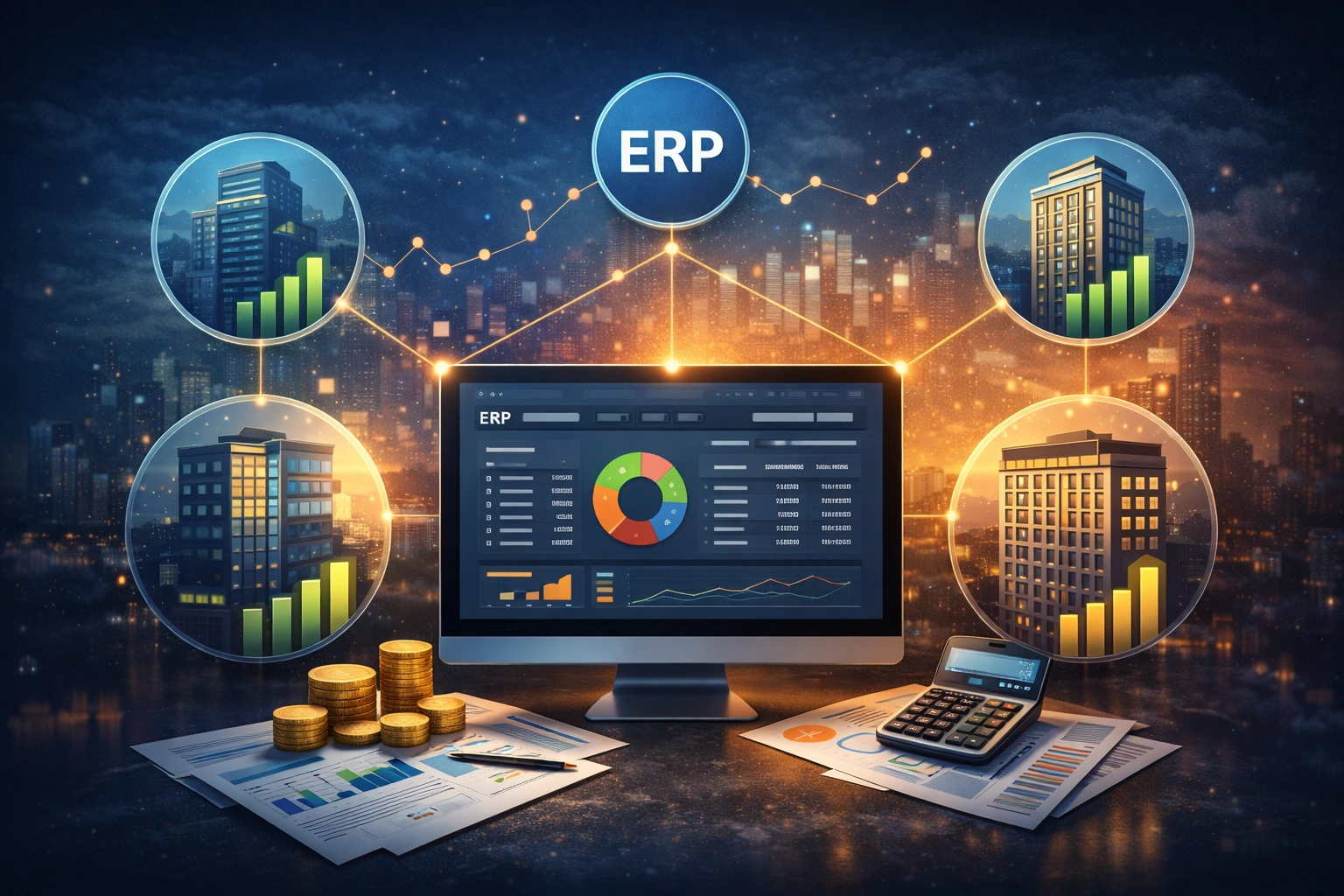
When organizations operate from a single location, financial reporting is relatively simple. One accounting team works within a unified chart of accounts, follows a single set of financial policies, and produces reports using a consistent structure. In such environments, financial data flows smoothly, reports are easy to interpret, and management decisions are made with confidence.

As businesses expand into multiple sites, branches, plants, or legal entities, financial reporting becomes significantly more complex. Each new location introduces variations in operational practices, local regulations, accounting interpretations, and sometimes even different systems. Over time, these differences create inconsistencies in how financial data is recorded and reported, reducing the reliability of consolidated information.

Despite this growing complexity, leadership expectations remain high. Executives still require comparable financial statements across all locations, accurate consolidated reports, faster close cycles, and clear visibility into performance. Without a structured system, finance teams often struggle to meet these expectations consistently, relying heavily on manual processes and spreadsheets that increase the risk of errors and delays.

This is where an ERP system becomes essential. A well-designed ERP does more than centralize data. It enforces standardized accounting rules, embeds controls into financial workflows, and aligns reporting structures across the organization. By creating a single, governed source of financial truth, ERP enables organizations to achieve consistent, reliable multi-site financial reporting. Solutions like ERPbyNet are purpose-built to support this consistency as organizations scale.

Understanding Multi-Site Financial Reporting in Practice

What Does “Multi-Site” Really Mean?

Multi-site does not simply mean multiple locations. It can include:

  • Multiple manufacturing plants 
  • Regional sales offices
  • Warehouses and distribution centers
  • Subsidiaries or legal entities
  • Joint ventures or acquired companies

Each site may differ in:

  • Business processes
  • Operational scale
  • Compliance requirements
  • Reporting needs

Yet, financial leadership requires all of this information to roll up into one coherent financial picture.

Why Financial Reporting Becomes Inconsistent Across Sites

Inconsistent financial reporting caused by fragmented systems and localized accounting across multiple sites

1. Localized Accounting Decisions

In the absence of a centralized system, sites often make local accounting decisions, such as:

  • Creating new expense categories
  • Using different depreciation methods
  • Recording similar transactions differently

While these decisions may make sense locally, they break consistency at the group level.

2. Fragmented Systems and Data Silos

Many growing organizations operate with:

  • Different accounting software at different sites
  • Legacy systems inherited through acquisitions
  • Standalone spreadsheets for consolidation

Each system becomes its own source of truth, forcing finance teams to reconcile data manually.

3. Inconsistent Chart of Accounts Structures

When each site uses a different chart of accounts:

  • Similar costs appear under different headings
  • Consolidation requires complex mapping
  • Management reports become harder to interpret

Over time, financial clarity deteriorates.

4. Manual Consolidation Processes

Without ERP, consolidation typically involves:

  • Exporting data from multiple systems
  • Manually adjusting figures
  • Tracking eliminations in spreadsheets

This process is time-consuming, error-prone, and difficult to audit.

5. Delayed Reporting and Reduced Confidence

As inconsistencies grow:

  • Month-end close cycles extend
  • Reports are revised repeatedly
  • Decision-makers lose confidence in the numbers

The problem is not effort—it is the absence of a consistent system.

What Consistency in Financial Reporting Truly Means

Consistency is often misunderstood as uniform formatting. In reality, it includes:

  • Consistent accounting rules across all sites
  • Standardized data definitions
  • Unified reporting hierarchies
  • Controlled financial workflows
  • Repeatable, auditable processes

An ERP system is designed to embed these principles into daily operations.

Read More : The Impact of Disconnected Finance Systems on Business Decisions

How ERP Creates Consistency Across Multi-Site Financial Reporting

1. Centralized Financial Data Architecture

At the heart of ERP is a single, centralized financial database.

Instead of each site maintaining separate financial records:

  • All transactions are captured in one system
  • Data follows the same structure and validation rules
  • Reporting draws from a unified source 

ERPbyNet is built on this centralized architecture, ensuring that every site contributes to a consistent financial dataset without duplication or fragmentation.

2. Standardized Chart of Accounts with Controlled Flexibility

ERP systems enable organizations to define a global chart of accounts that applies across all sites.

This ensures:

  • Revenue and expenses are classified uniformly
  • Financial reports remain comparable
  • Consolidation becomes straightforward

ERPbyNet allows controlled flexibility by:

  • Supporting site-specific segments where required
  • Maintaining centralized governance over account creation
  • Preventing uncontrolled deviations that undermine consistency

3. Embedded Financial Policies and Rules

One of ERP’s most powerful features is its ability to enforce financial policies automatically.

Examples include:

  • Approval thresholds
  • Posting restrictions
  • Period close controls
  • Validation rules

With ERPbyNet, financial discipline is built into workflows, ensuring that all sites follow the same rules—regardless of team size or location.

4. Consistent Inter-Site and Intercompany Accounting

Intercompany transactions are a major source of inconsistency in multi-site environments.

ERP systems automate:

  • Intercompany invoicing
  • Reciprocal journal entries
  • Elimination logic

ERPbyNet ensures that inter-site transactions are recorded symmetrically and eliminated accurately during consolidation, reducing reconciliation effort and improving transparency.

5. Real-Time, System-Driven Consolidation

Traditional consolidation is periodic and manual. ERP enables continuous consolidation.

Benefits include:

  • Immediate visibility into group performance
  • Faster close cycles
  • Reduced dependency on spreadsheets

With ERPbyNet, finance teams can drill down from consolidated figures to individual site transactions, ensuring traceability and confidence in reported numbers.

6. Uniform Multi-Currency Handling

In multi-site operations spanning regions:

  • Currency inconsistencies distort results
  • Manual conversions introduce errors

ERP systems centralize currency management by:

  • Defining standard exchange rate sources
  • Automating translation rules
  • Maintaining audit trails for currency adjustments

ERPbyNet ensures consistent currency treatment across all sites, making consolidated reporting reliable and compliant.

7. Role-Based Access and Financial Governance

Consistency also depends on governance.

ERP systems enforce:

  • Role-based access controls
  • Segregation of duties
  • Centralized oversight with local execution

ERPbyNet enables organizations to maintain financial control while allowing sites to operate independently within defined boundaries.

Read More : The Real Future of ERP: What Experts Say Actually Works

Why ERP-Driven Consistency Matters for the Business

When ERP brings consistency, organizations achieve:

  • Faster and more predictable month-end closes
  • Improved audit readiness and compliance
  • Reliable performance comparisons across sites
  • Better strategic decision-making
  • Reduced operational risk

Consistency transforms finance from a reactive function into a strategic enabler.

ERPbyNet’s Philosophy on Multi-Site Financial Reporting

ERPbyNet enabling consistent multi-site financial reporting through centralized systems and standardized controls

ERPbyNet is purpose-built for organizations managing financial complexity across multiple sites, locations, and legal entities. Its philosophy is grounded in a simple principle: consistent financial reporting is achieved through structured systems, not manual effort.

Rather than treating multi-site reporting as a consolidation exercise alone, ERPbyNet addresses the underlying drivers of inconsistency by aligning financial processes, controls, and reporting logic across the enterprise.

Modular, Site-Wise Deployment

ERPbyNet supports modular deployment across sites, allowing organizations to implement ERP in phases without disrupting ongoing operations. Each new site is onboarded using predefined financial standards, ensuring consistency from day one.

This approach enables:

  • Faster expansion and site onboarding
  • Controlled adoption of financial standards
  • Reduced implementation risk during growth

As the organization scales, financial consistency improves rather than deteriorates.

Centralized Financial Intelligence

All financial data in ERPbyNet flows into a centralized system, creating a single source of truth across locations. Transactions, policies, and reporting rules are applied uniformly, eliminating discrepancies caused by fragmented systems or local workarounds.

This centralization delivers:

  • Real-time visibility into site-level and consolidated performance
  • Accurate, auditable financial reporting
  • Reduced reliance on manual reconciliations

Scalable and Flexible Reporting Structures

ERPbyNet is designed to scale with the business. Its reporting structures support multiple organizational hierarchies, enabling roll-ups by site, region, business unit, or management view without rebuilding reports.

This ensures:

  • Consistent reporting as the organization grows
  • Adaptability to changing business and compliance requirements
  • Meaningful performance comparisons across sites

Governance-Driven Financial Control

ERPbyNet emphasizes long-term financial governance rather than short-term fixes. Embedded controls, approval workflows, and role-based access ensure that financial discipline is maintained consistently across all locations.

By systemizing governance, ERPbyNet reduces dependence on individual practices and enforces standardized financial behavior enterprise-wide.

Aligning Financial Behavior Across the Enterprise

ERPbyNet goes beyond consolidating numbers. It aligns how financial transactions are recorded, reviewed, and reported across all sites, ensuring that data reflects the same financial logic everywhere.

This alignment results in:

  • Reliable and comparable financial insights
  • Stronger decision-making confidence
  • A scalable foundation for multi-site growth

Read More : Best Practices for Automating Elevator Project Planning & Material Management

Best Practices for Achieving Consistent Financial Reporting with ERP

Achieving consistent financial reporting across multiple sites is not an automatic outcome of ERP implementation. It requires deliberate planning, governance, and disciplined execution. Organizations that extract maximum value from their ERP systems follow a set of proven best practices that align people, processes, and technology.

Below are the key practices that ensure ERP delivers long-term consistency in multi-site financial reporting.

1. Define Global Financial Standards Early

Consistency begins with clear, organization-wide financial standards. Before rolling out ERP across sites, leadership must establish common rules that govern how financial data is recorded, classified, and reported.

These standards should clearly define:

  • Revenue recognition principles
  • Cost classification rules
  • Capitalization and depreciation policies
  • Intercompany transaction handling
  • Period close and adjustment guidelines

Defining these standards early prevents sites from developing localized interpretations that later require correction. When ERP is configured around agreed-upon financial rules from the start, consistency becomes embedded in daily operations rather than enforced retrospectively.

ERPbyNet supports this approach by allowing financial policies to be built directly into system workflows, ensuring that standards are applied consistently across all locations.

2. Standardize the Chart of Accounts Before Expansion

One of the most common causes of inconsistent reporting is a fragmented chart of accounts. If sites are allowed to create accounts independently, consolidation becomes complex and unreliable.

Best practice is to:

  • Design a global chart of accounts that supports current and future reporting needs
  • Define clear account structures, segments, and naming conventions
  • Establish governance for account creation and modification

Standardizing the chart of accounts before expanding to new sites avoids costly rework later. It ensures that similar transactions are always recorded under the same accounts, enabling accurate rollups and meaningful comparisons.

ERPbyNet enables centralized control of the chart of accounts while allowing structured flexibility for site-specific requirements, ensuring consistency without sacrificing operational relevance.

3. Align Reporting Hierarchies with Business Strategy

Financial reporting should reflect how the business is managed, not just how it is legally structured. Inconsistent reporting often arises when ERP hierarchies are misaligned with organizational strategy.

Effective ERP reporting structures:

  • Mirror management reporting needs
  • Support multiple roll-up views (by site, region, product line, or business unit)
  • Remain flexible as the organization evolve

When reporting hierarchies are aligned with business strategy, leaders gain clear visibility into performance drivers across sites.

ERPbyNet supports configurable organizational hierarchies that allow finance teams to adapt reporting structures without rebuilding reports, maintaining consistency even as business models change.

4. Train Teams on Shared Financial Principles

Even the best ERP system cannot ensure consistency without user understanding and discipline. Finance and operational teams across all sites must be trained on shared financial principles and ERP usage standards.

Training should focus on:

  • Why standardized reporting matters
  • How transactions should be recorded in ERP
  • The impact of local deviations on group reporting
  • Proper use of ERP workflows and controls

Consistent training ensures that teams across locations interpret financial rules in the same way, reducing errors and rework.

ERPbyNet supports role-based training and access controls, ensuring that users interact with the system in ways that reinforce consistency rather than undermine it.

5. Eliminate Parallel Spreadsheet Reporting

One of the biggest threats to ERP-driven consistency is the continued use of parallel spreadsheets. When teams maintain external reports alongside ERP, discrepancies inevitably arise.

Best practice is to:

  • Use ERP reports as the primary source of financial truth
  • Limit spreadsheets to analysis, not core reporting
  • Gradually retire manual consolidation files

Eliminating parallel reporting ensures that all stakeholders rely on the same data, definitions, and calculations.

ERPbyNet provides comprehensive reporting and drill-down capabilities that reduce dependency on spreadsheets while preserving analytical flexibility.

6. Use Phased ERP Rollouts to Strengthen Consistency

For multi-site organizations, a phased ERP rollout is often more effective than a single large implementation. Phased deployment allows:

  • Standards to be tested and refined
  • Lessons learned to be applied to subsequent sites
  • Minimal disruption to ongoing operations

ERPbyNet is designed to support phased rollouts, enabling organizations to onboard new sites gradually while maintaining a consistent financial framework. Each new site adopts established standards, ensuring that consistency improves over time rather than deteriorates.

Long-Term Impact of Consistent Multi-Site Reporting

Over time, ERP-driven consistency enables organizations to:

  • Scale confidently into new markets
  • Integrate acquisitions faster
  • Identify performance gaps accurately
  • Build trust in financial data at all levels

Consistency becomes a competitive advantage.

Conclusion: ERP as the Foundation of Financial Consistency

In multi-site organizations, inconsistent financial reporting is not a temporary inconvenience but a structural risk that affects financial accuracy, compliance, and strategic decision-making. As operations expand across locations, systems, and teams, fragmented processes and manual consolidation become unsustainable. ERP systems address this challenge by embedding consistency directly into the organization’s financial framework through standardized data structures, unified processes, built-in controls, and system-driven reporting logic, ensuring that financial information remains reliable and comparable across every site.

With ERPbyNet, organizations gain a scalable financial foundation that grows with the business, supports confident and informed decisions, and delivers clear, consolidated visibility without complexity. Consistency is not achieved through added effort or tighter supervision alone—it is achieved through the right ERP system.

If your organization is struggling to maintain financial consistency across multiple sites, contact ERPbyNet today to learn how our platform can provide the structure, control, and clarity needed to move forward with confidence. Our team can guide you through a tailored approach that aligns with your unique operational and financial needs.

Frequently Asked Questions (FAQs)

1. Why does financial reporting become inconsistent in multi-site organizations?

Financial reporting becomes inconsistent when different sites use localized accounting practices, separate systems, or manual spreadsheets. Variations in charts of accounts, depreciation methods, and consolidation processes lead to discrepancies that make group-level reporting difficult and unreliable.

2. How does an ERP system improve consistency in multi-site financial reporting?

An ERP system centralizes financial data, standardizes accounting rules, and enforces consistent processes across all sites. It ensures that transactions are recorded using the same financial logic, making reports comparable, auditable, and reliable across the organization.

3. Can ERP support site-level flexibility while maintaining reporting consistency?

Yes. Modern ERP systems like ERPbyNet allow controlled flexibility at the site level while enforcing global financial standards. This ensures local operational needs are met without compromising enterprise-wide consistency in financial reporting.

4. What role does a standardized chart of accounts play in multi-site reporting?

A standardized chart of accounts ensures that similar transactions are classified consistently across sites. This simplifies consolidation, improves report clarity, and allows management to accurately compare financial performance between locations.

5. How does ERP reduce manual consolidation efforts?

ERP automates data collection, inter-site transactions, and consolidation processes. Instead of relying on spreadsheets, finance teams can generate consolidated reports directly from the system, reducing errors, reconciliation time, and audit risk.

6. Is ERP necessary if each site already has its own accounting system?

Yes. While individual systems may work locally, they create data silos at the group level. An ERP system provides a unified financial framework that connects all sites, enabling consistent reporting and enterprise-wide visibility.

7. How does ERP help with multi-currency financial reporting?

ERP systems manage exchange rates centrally and apply consistent currency translation rules. This ensures accurate consolidation and prevents discrepancies caused by manual currency conversions or inconsistent rate usage across sites.

8. What impact does ERP-driven consistency have on decision-making?

Consistent financial reporting improves confidence in data, allowing leadership to make faster and better-informed decisions. When numbers are reliable and comparable across sites, finance becomes a strategic partner rather than a reconciliation function.

9. How does ERPbyNet support multi-site financial consistency?

ERPbyNet is designed for organizations operating across multiple sites and entities. It aligns financial processes, controls, and reporting structures within a centralized system, enabling scalable, consistent, and governance-driven financial reporting.

10. Can ERP support future growth without increasing reporting complexity?

Yes. ERP systems like ERPbyNet are built to scale. As new sites are added, predefined financial standards and reporting structures ensure consistency improves with growth rather than becoming harder to manage.


CategoriesERP (Enterprise Resource Planning)

Modular ERP System: Advantages and Disadvantages

Enterprise Resource Planning (ERP) systems have long been the backbone of operational efficiency for organizations across manufacturing, engineering, services, and distribution industries. Traditionally, ERP implementations followed a monolithic approach—large, all-in-one systems deployed in a single, complex rollout. While effective for standardization, these systems often struggled to keep pace with evolving business needs, rapid growth, and industry-specific processes.

As businesses face increasing pressure to remain agile, scalable, and cost-efficient, modular ERP systems have emerged as a compelling alternative. Instead of deploying a single, tightly coupled system, modular ERP allows organizations to implement functional components—modules—based on immediate requirements, expanding the system incrementally over time.

This blog provides a comprehensive analysis of modular ERP systems, covering their structure, advantages, disadvantages, implementation considerations, and real-world applicability. It also highlights how platforms like ERPbyNet align with modular ERP principles to support growing and complex businesses without forcing unnecessary customization or risk.

What Is a Modular ERP System?

A modular ERP system is an enterprise software architecture where individual functional areas—such as finance, manufacturing, procurement, sales, inventory, service management, or project tracking—are delivered as independent but integrated modules.

Each module:

  • Handles a specific business function
  • Can be implemented, configured, and upgraded independently
  • Shares a common data foundation or integration framework

Unlike monolithic ERP systems, modular ERP does not require organizations to deploy every function at once. Businesses can start with core modules and progressively add others as their operational complexity increases.

Core Characteristics of Modular ERP

Core characteristics of a modular ERP system including incremental deployment, functional independence, shared data architecture, configurability, and scalability

To understand the benefits and limitations, it is important to recognize the defining characteristics of modular ERP systems.

1. Incremental Deployment

Organizations can deploy modules in phases, reducing risk and minimizing operational disruption.

2. Functional Independence

Each module focuses on a specific business area, allowing teams to optimize workflows without impacting unrelated processes.

3. Shared Data Architecture

While modules operate independently, they are designed to work with shared master data to maintain consistency across the organization.

4. Configurability over Customization

Modular ERP systems typically rely on configuration rather than deep code-level customization, making them easier to maintain and upgrade.

5. Scalability

As business requirements evolve, new modules can be introduced without re-implementing the entire ERP system.

Common ERP Modules in a Modular Architecture

A modular ERP architecture is designed to give organizations flexibility by breaking ERP functionality into clearly defined, interconnected modules. Each module supports a specific operational area while sharing data across the same platform, allowing businesses to scale ERP capabilities as their needs evolve.

Core Business Control Modules

These modules establish operational and financial stability across the organization.

  • Finance and Accounting
    Manages financial transactions, reporting, compliance, budgeting, and cash flow visibility. It serves as the foundation for financial governance and performance tracking.

  • Sales and Order Management
    Controls the complete order lifecycle—from quotation to invoicing—ensuring alignment between sales commitments, production planning, and billing accuracy.

Supply Chain and Procurement Modules

Focused on managing materials, suppliers, and inventory flow efficiently.

  • Purchasing and Vendor Management
    Supports procurement planning, vendor evaluation, purchase approvals, and supplier coordination to control costs and ensure material availability.

  • Inventory and Warehouse Management
    Provides real-time stock visibility, location tracking, and inventory optimization to reduce excess stock and prevent shortages.

Production and Engineering Modules

Designed for manufacturing and engineering-driven businesses.

  • Manufacturing and Production Planning
    Enables demand-driven production planning, capacity management, work order control, and shop-floor execution.

  • Engineering and BOM Management
    Manages product structures, BOM versions, and engineering changes to ensure accuracy from design through manufacturing.

Quality and Service Modules

Ensure reliability, compliance, and customer satisfaction.

  • Quality Management
    Handles inspections, non-conformances, corrective actions, and quality compliance across procurement and production.

  • Service and Maintenance Management
    Tracks asset maintenance, service history, warranties, and service costs for equipment and after-sales operations.

Project and Performance Management Modules

Provide visibility into execution and outcomes.

  • Project and Job Costing
    Monitors project budgets, timelines, resources, and profitability, helping organizations control costs and evaluate performance.

  • Reporting and Analytics
    Consolidates ERP data into dashboards and KPIs, enabling data-driven decisions across departments.

Modular Enablement with ERPbyNet

Platforms like ERPbyNet bring these modules together within a unified architecture, allowing organizations to activate ERP functionality progressively. Businesses can start with essential modules and expand confidently, without fragmented systems or heavy customization, ensuring ERP growth remains aligned with operational maturity.

Read More: ERP vs ERM: Key Differences and Benefits

Advantages of Modular ERP Systems

1. Lower Initial Investment

One of the most significant advantages of modular ERP is cost control. Instead of paying for a full ERP suite upfront, organizations invest only in the modules they need immediately.

Business impact:

  • Reduced capital expenditure at project start
  • Easier budget approvals
  • Better alignment between ERP spending and business value

This is especially beneficial for mid-sized businesses or organizations transitioning from legacy systems.

2. Faster Implementation and Reduced Risk

Traditional ERP implementations are often lengthy and complex, increasing the risk of delays and operational disruption. Modular ERP allows for phased rollouts, significantly reducing these risks.

Key benefits:

  • Shorter implementation timelines per module
  • Easier testing and validation
  • Lower resistance from end users due to gradual change

ERPbyNet supports phased implementations that allow businesses to stabilize each function before expanding further.

3. Improved Business Agility

Markets, customer demands, and regulations change rapidly. Modular ERP systems allow organizations to respond quickly by adding or enhancing specific capabilities without restructuring the entire system.

For example:

  • Adding a service management module when after-sales operations grow
  • Introducing advanced BOM management as product complexity increases
  • Expanding reporting modules for regulatory or compliance needs

This agility is a major competitive advantage in fast-changing industries.

4. Better Alignment with Business Processes

Modular ERP systems make it easier to align software capabilities with actual business workflows rather than forcing organizations to adapt to rigid system structures.

Why this matters:

  • Reduced need for heavy customization
  • Better process ownership
  • Higher user adoption

ERPbyNet focuses on industry-aligned modules that adapt to real operational requirements rather than generic workflows.

5. Scalability Without System Replacement

As organizations grow, their ERP system must scale accordingly. Modular ERP eliminates the need for costly system replacements by allowing new capabilities to be added progressively.

Examples of scalable growth:

  • Multi-site operations
  • Increased product variants
  • Expanded supplier and customer networks

This approach protects the original ERP investment while supporting long-term expansion.

6. Easier Maintenance and Upgrades

Since modules can be updated independently, modular ERP systems simplify maintenance and reduce the risk associated with system-wide upgrades.

Advantages include:

  • Lower downtime during upgrades
  • Reduced regression risks
  • Faster adoption of new features

This is particularly important for businesses that cannot afford long system outages.

7. Improved User Experience

Users interact primarily with the modules relevant to their roles, reducing complexity and cognitive overload.

Results:

  • Faster training
  • Higher productivity
  • Fewer user errors

ERPbyNet emphasizes role-based access and module-specific interfaces to enhance usability.

Disadvantages of Modular ERP Systems

While modular ERP offers many benefits, it is not without challenges. A realistic evaluation requires understanding its limitations.

1. Integration Complexity

Although modules are designed to work together, integration can become complex—especially if modules are implemented at different times or sourced from different vendors.

Common issues:

  • Data synchronization delays
  • Inconsistent master data governance
  • Increased dependency on integration logic

Without proper planning, integration challenges can erode the benefits of modularity.

2. Governance and Data Consistency Challenges

As modules grow in number, maintaining consistent data definitions, workflows, and controls becomes more difficult.

Risks include:

  • Duplicate masters
  • Conflicting process rules
  • Reporting inconsistencies

A strong data governance framework is essential to avoid fragmentation.

3. Long-Term Cost Accumulation

Although initial costs are lower, cumulative expenses can increase over time as more modules are added.

Cost drivers include:

  • Licensing for additional modules
  • Implementation and training efforts
  • Ongoing support and maintenance

Organizations must evaluate total cost of ownership rather than focusing only on initial investment.

4. Increased Dependency on ERP Architecture Quality

The success of modular ERP depends heavily on the quality of the underlying architecture.

Poorly designed systems may:

  • Struggle with performance as modules increase
  • Require custom integrations
  • Limit future scalability

ERPbyNet addresses this risk by using a unified platform architecture rather than loosely connected applications.

5. Vendor Dependency Risks

When all modules come from a single vendor, organizations may face vendor lock-in. When modules come from multiple vendors, integration and support challenges increase.

Balanced vendor strategy is critical:

  • Evaluate roadmap stability
  • Assess integration capabilities
  • Ensure long-term support viability

6. Change Management Complexity

While phased implementation reduces disruption, repeated module rollouts can create ongoing change management challenges.

Potential issues:

  • Continuous training requirements
  • Change fatigue among users
  • Inconsistent adoption levels

Strong communication and structured rollout planning are essential.

Read More : Importance of ERP Integrations with Expense Management Software

Modular ERP vs Traditional Monolithic ERP

Aspect Modular ERP Monolithic ERP
Implementation Phased Big-bang
Initial Cost Lower High
Scalability High Limited
Flexibility Strong Rigid
Customization Configuration-driven Code-heavy
Risk Distributed Concentrated

For many modern organizations, modular ERP provides a more balanced approach to growth and operational stability.

When Modular ERP Makes the Most Sense

Modular ERP is particularly suitable for:

  • Growing mid-sized enterprises
  • Engineering-driven businesses with evolving BOMs
  • Multi-site operations
  • Organizations transitioning from legacy systems
  • Companies seeking to avoid excessive customization

ERPbyNet is often chosen in these scenarios because it combines modular flexibility with industry-specific depth.

Best Practices for Implementing Modular ERP

To maximize benefits and minimize risks, organizations should follow these best practices:

1. Start with Core Processes

Begin with finance, order management, and inventory to establish a strong foundation.

2. Define a Long-Term ERP Roadmap

Plan future module additions in advance to avoid reactive decision-making.

3. Prioritize Data Governance

Establish clear ownership for master data and reporting standards.

4. Avoid Over-Customization

Leverage configuration before considering customization.

5. Choose a Platform-Based ERP

Systems like ERPbyNet provide modularity within a unified architecture, reducing integration risks.

ERPbyNet and the Modular ERP Approach

ERPbyNet modular ERP platform architecture supporting scalable growth and unified business operations

ERPbyNet is designed with modular ERP principles at its core. It allows organizations to implement only the capabilities they need while maintaining a single, integrated platform.

Key strengths include:

  • Industry-focused modules for engineering and manufacturing
  • Strong BOM and order lifecycle control
  • Scalable multi-site architecture
  • Configuration-driven adaptability
  • Unified data model to reduce fragmentation

Rather than forcing businesses into rigid templates or heavy customization, ERPbyNet supports structured growth through modular expansion.

Ready to Build an ERP That Grows With You?

Modular ERP systems mark a decisive shift in how modern organizations approach enterprise software. Instead of forcing businesses into rigid, one-size-fits-all platforms, modular ERP enables flexibility, controlled scalability, and smarter cost management—areas where traditional monolithic systems often fall short. However, modularity is most effective when backed by the right planning for integration, governance, and long-term system evolution.

The decision to adopt a modular ERP should be guided by your business maturity, growth roadmap, process complexity, internal governance capabilities, and the quality of the ERP platform’s architecture. These factors determine whether modular ERP becomes a growth enabler or an operational challenge.

When implemented thoughtfully, modular ERP becomes a foundation for sustainable, future-ready operations. Platforms like ERPbyNet demonstrate how a unified modular design, aligned with real-world business processes, helps organizations scale confidently without excessive customization or risk. If you are evaluating how modular ERP can support your next phase of growth, now is the right time to take action. Connect with the ERPbyNet team to explore a modular ERP strategy tailored to your business needs and start building an ERP system that grows with you.

Frequently Asked Questions (FAQs)

1. What is a modular ERP system?

A modular ERP system is an enterprise software solution built from independent functional modules such as finance, inventory, manufacturing, sales, and service management. Businesses can implement only the modules they need and expand the system over time, rather than deploying a full ERP suite at once.

2. How is modular ERP different from traditional ERP?

Traditional ERP systems are typically monolithic, requiring all modules to be implemented together in a single rollout. Modular ERP allows phased implementation, greater flexibility, and easier scalability, making it more suitable for growing and evolving businesses.

3. What are the main advantages of modular ERP systems?

The key advantages include lower initial investment, faster implementation, scalability, improved business agility, easier upgrades, and better alignment with specific business processes. Modular ERP also reduces implementation risk by allowing incremental deployment.

4. What are the disadvantages of modular ERP systems?

Challenges include integration complexity, data governance issues, potential long-term cost accumulation, and increased dependency on the ERP platform’s architecture. Without proper planning, modular systems can become fragmented and harder to manage.

5. Is modular ERP suitable for small and mid-sized businesses?

Yes, modular ERP is especially well-suited for small and mid-sized businesses because it allows them to start with essential modules and expand as their operations grow, without the cost and risk of a full ERP replacement.

6. Can modular ERP systems support complex manufacturing and engineering processes?

Yes. Modern modular ERP platforms like ERPbyNet are designed to handle complex manufacturing, engineering BOMs, order-driven production, and multi-site operations while maintaining data consistency across modules.

7. Does modular ERP reduce the need for customization?

In most cases, yes. Modular ERP systems rely on configuration rather than heavy customization, allowing businesses to adapt workflows without modifying core code. This makes the system easier to maintain and upgrade.

8. How does modular ERP impact system scalability?

Modular ERP enables scalability by allowing new functional modules to be added as business requirements evolve. This approach supports growth without disrupting existing operations or requiring a complete system overhaul.

9. What should businesses consider before choosing a modular ERP?

Organizations should evaluate their business maturity, long-term growth plans, process complexity, data governance readiness, and the ERP platform’s architectural strength. Selecting a unified modular platform is critical to avoiding integration issues.

10. How does ERPbyNet support a modular ERP approach?

ERPbyNet provides a unified, modular ERP platform designed for scalable growth. Its architecture supports phased implementation, strong BOM and order lifecycle control, and industry-aligned modules, enabling businesses to expand their ERP capabilities without unnecessary risk or over-customization.

CategoriesERP (Enterprise Resource Planning)

ERP vs ERM: Key Differences and Benefits

As enterprises grow in size and complexity, the way they manage resources, operations, and risk becomes a defining factor in long-term success. Over the years, businesses have adopted various frameworks and systems to improve efficiency, control costs, and support strategic decision-making. Among the most commonly discussed concepts are Enterprise Resource Planning (ERP) and Enterprise Resource Management (ERM).

Despite their similar names, ERP and ERM serve distinct purposes within an organization. They address different challenges, operate at different levels, and deliver value in different ways. However, confusion between these terms is widespread, leading to incorrect expectations, misaligned implementations, and underutilized systems.

This article provides a clear, comprehensive comparison of ERP and ERM, explains their key differences and benefits, and shows how modern platforms like ERPbyNet help organizations align operational execution with effective resource and risk management.

Understanding Enterprise Resource Planning (ERP)

What Is ERP?

Enterprise Resource Planning (ERP) refers to an integrated software system designed to manage and automate an organization’s core operational processes. ERP systems bring together data and workflows from multiple departments into a single, centralized platform.

At its core, ERP is about standardization, integration, and efficiency. Instead of each department operating in isolation with separate systems, ERP creates a unified view of business operations.

Core Functions of ERP

Most ERP systems include modules for:

  • Finance and accounting
  • Procurement and vendor management
  • Inventory and supply chain management
  • Manufacturing and production planning
  • Sales and order management
  • Human resources and payroll
  • Project management and costing

By integrating these functions, ERP ensures that all departments work with consistent data and aligned processes.

Benefits of ERP

ERP delivers value by enabling organizations to:

  • Eliminate data silos across departments
  • Automate repetitive transactional tasks
  • Improve accuracy and compliance
  • Gain real-time visibility into operations
  • Standardize processes across locations and business units
  • Support scalability as the business grows

In essence, ERP helps organizations run the business efficiently on a day-to-day basis.

ERP as an Operational Backbone

ERP systems are primarily transactional and operational. They capture what has happened and what is happening now—sales orders, production updates, inventory movements, invoices, and payroll transactions. This makes ERP the system of record for enterprise operations.

Platforms like ERPbyNet are designed to strengthen this operational backbone, particularly for project-based and contract-driven industries, where coordination between engineering, procurement, execution, and finance is critical.

Read More: The Impact of Disconnected Finance Systems on Business Decisions

Understanding ERM: Enterprise Resource Management and Risk Management

The term ERM is often used in two related but distinct contexts, which contributes to confusion.

  1. Enterprise Resource Management
  2. Enterprise Risk Management

Both interpretations focus on management rather than transactions, and both rely heavily on accurate data—often provided by ERP systems.

ERM as Enterprise Resource Management

What Is Enterprise Resource Management?

Enterprise Resource Management refers to a management approach focused on planning, allocating, optimizing, and monitoring organizational resources. Unlike ERP, ERM is not primarily a software system but a strategic discipline supported by tools and data.

Resources managed under ERM include:

  • Human resources and skills
  • Financial capital
  • Time and capacity
  • Assets and equipment
  • Project workloads

Key Objectives of Enterprise Resource Management

ERM aims to answer questions such as:

  • Are the right people working on the right projects?
  • Are resources underutilized or overburdened?
  • Are budgets aligned with strategic priorities?
  • Are projects staffed and scheduled effectively?

ERM focuses on optimization and decision-making, not just execution.

Benefits of Enterprise Resource Management

When implemented effectively, ERM helps organizations:

  • Improve resource utilization
  • Reduce project delays and cost overruns
  • Align operational execution with strategic goals
  • Improve forecasting and planning accuracy
  • Increase organizational agility

ERM provides the management layer that turns operational data into actionable insights.

ERM as Enterprise Risk Management

What Is Enterprise Risk Management?

Enterprise Risk Management is a structured approach to identifying, assessing, and mitigating risks that could impact an organization’s objectives. These risks may be internal or external and often extend beyond operational processes.

Examples include:

  • Financial and market risks
  • Supply chain disruptions
  • Cybersecurity threats
  • Regulatory and compliance risks
  • Project delivery risks

How ERM (Risk) Differs from ERP

While ERP focuses on efficiency and control, ERM focuses on resilience and preparedness. ERP ensures processes run smoothly; ERM ensures the organization can withstand uncertainty and change.

Benefits of Enterprise Risk Management

ERM enables organizations to:

  • Anticipate potential disruptions
  • Quantify the impact of risks
  • Prioritize mitigation efforts
  • Improve governance and compliance
  • Support long-term strategic stability

Read More: Importance of ERP Integrations with Expense Management Software

Key Differences Between ERP and ERM

Although ERP and ERM are interconnected, their roles are clearly distinct.

ERP vs ERM: A Conceptual Comparison

Aspect ERP ERM
Primary Focus Operational execution Strategic management and optimization
Nature Software system Management framework or discipline
Time Orientation Present and historical Present and future
Core Goal Efficiency and accuracy Optimization, resilience, and alignment
Users Operational teams, finance, HR Managers, executives, planners
Data Role Generates and stores data Interprets and uses data

Key Insight

ERP answers the question:
“What is happening in the business?”

ERM answers the question:
“What should we do with this information?”

How ERP and ERM Work Together

How ERP and ERM Work Together to Align Operations and Enterprise Decisions

ERP and ERM are not competing concepts. They are complementary layers of enterprise maturity.

ERP as the Foundation

ERP provides:

  • Clean, consistent data
  • Standardized processes
  • Real-time operational visibility

Without a reliable ERP system, ERM initiatives lack accurate inputs.

ERM as the Decision Layer

ERM builds on ERP data to:

  • Allocate resources more effectively
  • Improve planning and forecasting
  • Identify risks and constraints
  • Support strategic trade-offs

Together, ERP and ERM create a closed loop where execution informs strategy, and strategy guides execution.

The Role of ERPbyNet in Bridging ERP and ERM

Modern enterprises require more than generic ERP solutions. They need platforms that understand industry-specific complexity and support both operational execution and effective management.

ERPbyNet’s Approach

ERPbyNet is designed to support organizations where projects, contracts, and engineering complexity drive operations. It combines strong ERP capabilities with features that directly support enterprise resource management.

Key strengths include:

  • Integrated project and contract management
  • Real-time visibility into costs, resources, and timelines
  • Rule-based process automation to reduce dependency on manual controls
  • Centralized data supporting planning and management decisions

By embedding management logic into operational workflows, ERPbyNet helps organizations move beyond transactional ERP toward true enterprise management.

Benefits of Aligning ERP and ERM Using ERPbyNet

Organizations that align ERP and ERM through a unified platform experience:

  • Better control over project margins and resource utilization
  • Reduced operational and delivery risks
  • Improved forecasting accuracy
  • Faster decision-making supported by real-time data
  • Stronger governance with less manual oversight

ERPbyNet enables this alignment by ensuring that rules, processes, and data are consistently applied across the enterprise.

Common Challenges Without ERP-ERM Alignment

When ERP and ERM are disconnected, organizations often face:

  • Resource overallocation or underutilization
  • Late detection of risks and issues
  • Inaccurate forecasts and budgets
  • Overreliance on spreadsheets and manual tracking
  • Limited visibility across departments and projects

These challenges are not caused by lack of data, but by lack of integration between execution and management.

Read More : How ERP Helps You Stay Ahead of Competitors With Faster Decisions

How ERP and ERM Work Together

Enterprise Resource Planning (ERP) and Enterprise Resource Management (ERM) are often viewed as overlapping or competing concepts. In practice, they represent two complementary layers of enterprise maturity. ERP establishes operational stability and data integrity, while ERM converts that operational foundation into informed, enterprise-level decision-making. Their combined use enables organizations to align daily execution with long-term objectives.

ERP as the Foundation

ERP functions as the operational backbone of the enterprise. It is responsible for executing standardized processes and capturing accurate transactional data across the organization.

Clean, Consistent Data

ERP consolidates data from multiple departments into a single system of record. This eliminates discrepancies that arise when teams rely on disconnected tools or spreadsheets.

ERP ensures:

  • A centralized and reliable data source across finance, operations, procurement, HR, and projects
  • Consistent data definitions and validation rules
  • Reduced duplication and reconciliation effort
  • Accurate historical and real-time records

Clean and consistent data is essential for ERM, as management decisions depend on trustworthy information. Without it, planning and optimization efforts are based on assumptions rather than facts.

Standardized Processes

ERP enforces standardized workflows and business rules across the enterprise, ensuring that activities are executed in a controlled and repeatable manner.

ERP-driven standardization enables:

  • Uniform procurement, approval, and financial posting processes
  • Consistent project costing and revenue recognition
  • Predictable execution across locations and business units
  • Improved auditability and compliance

For ERM, standardized processes create a stable operating environment where performance and resource usage can be measured accurately and compared meaningfully.

Real-Time Operational Visibility

Modern ERP systems provide continuous visibility into operational activities as they occur, rather than relying on delayed or manually compiled reports.

ERP delivers real-time insight into:

  • Project progress and cost consumption
  • Resource assignments and availability
  • Inventory levels and procurement status
  • Financial exposure and cash flow

This real-time visibility allows ERM initiatives to respond early to changes and emerging issues, rather than reacting after problems have already impacted outcomes.

ERP as a Prerequisite for Effective ERM

Without a reliable ERP foundation:

  • Data remains fragmented across systems
  • Resource utilization is difficult to measure accurately
  • Forecasts lack credibility
  • Risks are identified too late to influence outcomes

ERM initiatives depend on ERP to provide operational truth and consistency.

ERM as the Decision Layer

ERM builds on the operational data generated by ERP to support enterprise-level planning, optimization, and control. While ERP focuses on execution, ERM focuses on interpretation and direction.

Resource Allocation and Optimization

ERM evaluates how resources are currently used and how they should be distributed to align with strategic priorities.

ERM enables organizations to:

  • Identify overutilized and underutilized resources
  • Balance workloads across projects and teams
  • Allocate budgets based on value and priority
  • Improve capacity planning and utilization

ERP supplies the data; ERM determines how resources should be reassigned or optimized.

Planning and Forecasting

ERM uses ERP data to move beyond historical reporting toward forward-looking analysis.

ERM supports:

  • Short-term and long-term planning
  • Budgeting aligned with operational realities
  • Forecasting based on actual performance trends
  • Scenario analysis to evaluate potential changes

This planning capability ensures that forecasts are grounded in real operational data rather than theoretical assumptions.

Risk and Constraint Identification

ERM continuously analyzes ERP data to identify risks and constraints that could affect business objectives.

ERM helps uncover:

  • Cost overruns and margin erosion
  • Resource shortages or scheduling conflicts
  • Delivery risks and operational bottlenecks
  • Financial and compliance exposure

By detecting these issues early, ERM enables corrective actions while there is still time to mitigate impact.

Supporting Strategic Trade-Offs

At the enterprise level, leadership decisions often involve trade-offs between competing priorities.

ERM supports strategic decision-making by:

  • Evaluating the impact of prioritizing one initiative over another
  • Assessing resource and budget constraints
  • Comparing alternative scenarios using ERP-backed data
  • Enabling fact-based executive discussions

ERP provides the operational facts, while ERM provides the analytical framework to interpret those facts.

The Closed Loop Between ERP and ERM

When ERP and ERM operate together, they form a continuous management loop:

  • ERP executes standardized processes and records real-time data
  • ERM analyzes that data to guide planning and decision-making
  • Strategic decisions are translated into operational plans
  • ERP executes those plans and generates updated data

This loop ensures that operational execution and strategic management remain aligned, allowing organizations to continuously adjust and improve performance as conditions change.

The Evolution Toward Integrated Enterprise Management

The distinction between ERP and ERM highlights an important trend: enterprises are moving from systems of record to systems of insight and control.

Modern platforms like ERPbyNet reflect this evolution by:

  • Embedding management rules into operational processes
  • Reducing reliance on post-fact analysis
  • Enabling proactive control instead of reactive correction

This shift is essential for organizations operating in complex, project-driven, and contract-based environments.

Turn Operations Into Intelligent Enterprise Control

ERP and ERM play distinct yet inseparable roles in building a resilient, high-performing enterprise. ERP delivers the operational backbone—ensuring process discipline, data accuracy, and execution consistency across the organization. ERM builds on that foundation to provide the management layer—optimizing resources, identifying risks early, and translating strategy into measurable action.

The real enterprise advantage is not achieved by implementing ERP or ERM in isolation. It is unlocked when execution and management are aligned, when operational data continuously informs decisions, and when strategic intent actively guides daily operations.

ERPbyNet is designed to enable this alignment by combining robust ERP foundations with management-oriented control mechanisms purpose-built for complex, project-driven businesses. By embedding rules, real-time visibility, and structured governance directly into operational workflows, ERPbyNet helps organizations move beyond simply running processes.

The next step is clear:
If your enterprise is executing efficiently but struggling to control resources, predict outcomes, or scale with confidence, it is time to unify ERP and ERM into a single, coherent operating model.

With ERPbyNet, enterprises don’t just run the business — they manage it intelligently, decisively, and sustainably.

 FAQs

What is the main difference between ERP and ERM?

ERP is a system designed to manage and automate daily business operations such as finance, projects, procurement, and production, ensuring consistency and accuracy. ERM is a management approach that uses enterprise data to optimize resources, manage risks, and support strategic decision-making. ERP focuses on execution, while ERM focuses on control and direction.

Is ERP a part of ERM or are they completely separate?

ERP and ERM are not separate or competing initiatives. ERP provides the operational foundation by generating standardized and reliable data, while ERM builds on this data to support enterprise planning, forecasting, and decision-making. Together, they form connected layers of enterprise management.

Can a business implement ERM without ERP?

ERM can exist conceptually without ERP, but its effectiveness is limited without accurate and centralized operational data. In the absence of ERP, ERM relies on manual reporting and fragmented systems, increasing risk and reducing decision quality. A platform like ERPbyNet provides the structured data required for effective ERM.

How does ERPbyNet support both ERP and ERM objectives?

ERPbyNet combines strong ERP execution capabilities with management-oriented controls designed for project-based organizations. It enables standardized operations, real-time visibility, and embedded rules that support planning, governance, and informed decision-making across the enterprise.

Which industries benefit most from ERP and ERM integration?

Industries with complex workflows, long project lifecycles, and high resource dependency benefit most from ERP and ERM alignment. Engineering, EPC, manufacturing, infrastructure, water treatment, and contract-driven businesses gain improved control, predictability, and profitability with ERPbyNet.

What are the risks of relying only on ERP without ERM?

Organizations that rely only on ERP may operate efficiently but often lack foresight and strategic control. Without ERM, forecasting becomes unreliable, resource utilization weakens, and risks are identified too late to prevent impact.

How does ERP and ERM integration improve business performance?

When ERP and ERM work together, enterprises gain better visibility, stronger governance, improved planning accuracy, and faster decision-making. This integration ensures alignment between operational execution and strategic objectives, enabling sustainable growth.

Is ERPbyNet suitable for small and mid-sized enterprises?

ERPbyNet is designed to scale with organizational growth and is well-suited for mid-sized and growing enterprises. Its modular and rule-based design allows businesses to adopt capabilities progressively as complexity increases.

How long does ERPbyNet implementation typically take?

Implementation timelines depend on organizational scope and complexity, but ERPbyNet’s industry-aligned architecture minimizes customization. This results in faster deployment, reduced risk, and quicker realization of business value.

How can organizations get started with ERPbyNet?

Organizations can begin by assessing gaps in operational visibility, control, and resource management. ERPbyNet can then be configured to align execution with management goals, enabling a structured transition toward integrated ERP and ERM capabilities.

CategoriesERP (Enterprise Resource Planning)

How Connecting CPQ and ERP Boosts Your Sales Process

In today’s competitive and fast-moving business environment, selling complex products or services is no longer just about persuasive salespeople or attractive pricing. It is about speed, accuracy, and coordination across departments. Many organizations still struggle with disconnected systems—sales teams use CPQ or spreadsheets, while operations, finance, and service rely on ERP. This gap creates delays, errors, and missed opportunities.

Connecting Configure, Price, Quote (CPQ) with Enterprise Resource Planning (ERP) transforms the sales process from a fragmented workflow into a seamless, automated engine. When CPQ and ERP work together, sales moves faster, errors reduce dramatically, and customers receive consistent, professional experiences from first quote to final delivery.

For engineering-driven and project-based businesses, platforms like ERPbyNet demonstrate how deep CPQ–ERP integration can become a true growth enabler rather than just a technical improvement.

Understanding CPQ and ERP: A Quick Foundation

What Is CPQ?

CPQ (Configure, Price, Quote) software helps sales teams:

  • Configure complex products based on rules
  • Apply accurate pricing and discounts
  • Generate professional, error-free quotes

CPQ is especially critical in industries where products are custom-built, engineer-to-order, or made-to-order, such as elevators, industrial machinery, water treatment plants, and automated systems.

What Is ERP?

ERP (Enterprise Resource Planning) manages the backbone of business operations, including:

  • Manufacturing and MRP
  • Inventory and procurement
  • Project execution and site management
  • Finance, billing, and compliance
  • Service and maintenance

ERP ensures that once a sale is confirmed, the organization can actually deliver what was promised—on time and within budget.

The Problem with Disconnected CPQ and ERP Systems

When CPQ and ERP operate in isolation, sales teams and operations teams are forced to rely on manual handoffs. This leads to several common issues:

  • Duplicate data entry between systems
  • Quotation errors due to outdated pricing or incorrect configurations
  • Delays in order processing
  • Mismatch between sales promises and delivery capabilities
  • Limited visibility for management

In industries with complex engineering rules, even a small mistake in configuration or pricing can result in significant financial loss or customer dissatisfaction.

Read More: The Real Future of ERP: What Experts Say Actually Works

How Connecting CPQ and ERP Transforms the Sales Process

How connecting CPQ and ERP transforms the sales process by enabling faster quoting, accurate product configuration, and seamless sales-to-delivery execution

1. Faster Quote-to-Order Cycle

When CPQ is integrated with ERP, approved quotes automatically convert into sales orders. There is no need for manual re-entry or verification.

Benefits include:

  • Reduced sales cycle time
  • Faster customer approvals
  • Immediate production or project planning

With ERPbyNet, once a quote is finalized through SalesPundit (CPQ), it flows seamlessly into manufacturing, project management, and finance modules.

2. Accurate Product Configuration from Day One

Disconnected systems often lead to sales teams selling configurations that are difficult or impossible to deliver. Integrated CPQ–ERP systems eliminate this risk.

Key advantages:

  • Configuration rules align with engineering and production constraints
  • Real-time validation of feasibility
  • Automatic generation of Bills of Materials (BOMs)

In ERPbyNet, CPQ is tightly connected with Product Definition Studio (PDS), ensuring that every quote is technically valid before it reaches the customer.

3. Consistent and Profitable Pricing

Pricing errors are one of the most common reasons for margin leakage. Integrated systems ensure:

  • Centralized pricing logic
  • Approved discount structures
  • Real-time cost visibility

Because ERP holds actual material, labor, and overhead costs, CPQ can price products based on real profitability, not assumptions.

This ensures sales teams stay competitive without sacrificing margins.

4. Seamless Transition from Sales to Operations

One of the biggest pain points in sales-driven organizations is the handover from sales to execution. Integration removes ambiguity.

Once CPQ is connected to ERP:

  • Sales orders trigger MRP and procurement
  • Project timelines are created automatically
  • Site and installation teams receive clear specifications

ERPbyNet enables this handoff across departments without emails, spreadsheets, or manual follow-ups.

5. Improved Customer Experience

Customers expect accuracy, transparency, and reliability. Integrated CPQ–ERP systems help deliver:

  • Faster response times
  • Fewer post-quote changes
  • Accurate delivery commitments
  • Professional documentation

When sales, engineering, and service teams operate on the same data, customers experience consistency at every touchpoint.

CPQ–ERP Integration in Project-Based Industries

Engineering and Made-to-Order Manufacturing

In engineer-to-order (ETO) and made-to-order (MTO) businesses, every order is unique. CPQ captures customer requirements, while ERP ensures feasibility and execution.

Integrated systems help:

  • Convert customer needs into engineering data
  • Generate drawings and specifications automatically
  • Control costs throughout the project lifecycle

ERPbyNet’s integration of CPQ with DrawGenie even enables AutoCAD drawing generation directly from sales configurations.

Elevator and Escalator Industry

The elevator and escalator industry is one of the best examples of why CPQ–ERP integration matters. Each project involves:

  • Site-specific dimensions
  • Compliance and safety requirements
  • Long-term maintenance contracts

Integrated CPQ–ERP enables:

  • Accurate technical calculations at quotation stage
  • Automatic AMC setup post-installation
  • Complete lifecycle management from sales to service

Data Visibility and Better Decision-Making

When CPQ and ERP share data, management gains real-time visibility into:

  • Pipeline value
  • Conversion rates
  • Order profitability
  • Resource utilization

Dashboards and MIS reports help leaders identify bottlenecks and optimize the sales process continuously.

ERPbyNet provides centralized dashboards that connect sales performance directly with operational outcomes.

Reducing Risk and Compliance Issues

For compliance-heavy industries, selling the wrong configuration can lead to legal and safety risks. Integrated systems reduce this exposure by:

  • Enforcing validation rules
  • Maintaining audit trails
  • Ensuring regulatory compliance from quote to execution

This is particularly important for industries governed by safety audits, certifications, and statutory inspections.

Scalability for Growing Businesses

As businesses grow, manual sales processes quickly become bottlenecks. Integrated CPQ–ERP systems support scaling by:

  • Handling higher quote volumes without additional manpower
  • Supporting multi-location operations
  • Standardizing workflows across teams

ERPbyNet’s modular architecture allows organizations to start with CPQ and expand into full ERP capabilities as they grow.

Read More : Why Automation in project Software Is Changing the Game for Businesses Everywhere

Why Generic CPQ–ERP Integrations Often Fail

Many businesses try to connect a standalone CPQ solution with a generic ERP using custom integrations. While this may seem like a flexible approach initially, it often creates long-term operational and technical problems.

Common Reasons These Integrations Break Down

High Cost of Maintenance

  • Custom integrations require ongoing developer support
  • Even small changes in pricing, workflows, or product rules increase costs
  • What starts as a “one-time setup” becomes a permanent expense

 Constant Changes in Business Rules

  • Engineering rules, configurations, and pricing models evolve frequently
  • Generic integrations struggle to keep up with these changes
  • Outdated logic leads to incorrect quotes and rework

System Updates Disrupt Data Flow

  • ERP and CPQ platforms release regular updates
  • Custom connectors often break after upgrades
  • Sales and operations teams face downtime and delays

 Incomplete Process Alignment

  • Standalone CPQ focuses on quoting, while generic ERP focuses on transactions
  • Critical processes like BOM creation, costing, and project execution remain partially disconnected
  • Sales promises don’t always match delivery capability

 Complex Troubleshooting and Ownership Gaps

  • When something fails, it’s unclear which system is responsible
  • IT teams spend more time diagnosing issues than fixing them
  • Business users lose confidence in the system

Why a Native CPQ–ERP Platform Is a Better Choice

Single Architecture, One Source of Truth

  • CPQ and ERP share the same data model
  • No duplication, no sync delays

Built-in Rules and Validation

  • Configuration, pricing, and compliance rules are unified
  • Errors are prevented before quotes reach customers

 Update-Proof and Scalable

  • Platform upgrades don’t break integrations
  • System scales smoothly as business grows

 Stronger Long-Term ROI

  • Lower maintenance cost
  • Faster sales cycles
  • Higher accuracy and margin protection

A native CPQ–ERP platform, where both systems are designed to work together from the ground up, delivers far greater stability and long-term value than loosely connected tools.

Best Practices for Successful CPQ–ERP Integration

  1. Define clear configuration and pricing rules
  2. Involve sales, engineering, and operations early
  3. Ensure data consistency across departments
  4. Choose an industry-specific ERP
  5. Focus on long-term scalability, not short-term fixes

Platforms like ERPbyNet already embed these best practices into their architecture.

Future of Sales: CPQ and ERP as a Single Engine

The future of complex sales is no longer about isolated tools—it is about connected, intelligent systems working as one. Customers today expect instant quotations, accurate pricing, and reliable delivery commitments. Any delay or inconsistency immediately impacts trust and buying decisions.

Businesses that continue to operate with disconnected CPQ, ERP, and manual processes will face increasing challenges, including slower response times, higher error rates, and declining competitiveness.

Why Unified CPQ–ERP Will Define Future Sales

  • Faster and Smarter Quoting
    Sales teams can generate accurate, rule-based quotes in minutes instead of days. 
  • Commitments You Can Deliver
    Pricing, lead times, and configurations are validated against real operational data. 
  • Seamless Execution Across Teams
    Sales, engineering, manufacturing, and service operate on the same data without handoffs or rework. 
  • Predictable and Scalable Growth
    Sales processes become standardized, measurable, and easy to scale as demand increases.

By unifying CPQ and ERP into a single engine, organizations move from reactive selling to predictable, profitable, and customer-centric sales operations—setting the foundation for long-term growth in complex and engineering-driven markets.

Ready to Turn Sales Into a Growth Engine?

Connecting CPQ and ERP is no longer just an IT upgrade—it’s a business-critical move for companies selling complex, engineered, or project-based solutions. When sales, engineering, and operations operate on a single, connected system, organizations unlock faster revenue cycles, stronger margins, and consistently better customer experiences.

By eliminating silos, reducing manual errors, and accelerating execution, an integrated CPQ–ERP platform enables sales teams to quote with confidence and delivery teams to execute with precision.

Solutions like ERPbyNet show how deeply connected CPQ and ERP can become a true competitive advantage—helping businesses scale faster while staying in complete operational control.

If speed, accuracy, and predictable growth matter to your business, now is the time to rethink how your sales process works.
Connect CPQ and ERP—and turn every quote into a confident commitment.

Frequently Asked Questions (FAQs)

What is CPQ and why is it important for complex sales?

CPQ helps businesses configure complex products, apply accurate pricing, and generate error-free quotes quickly, making it essential for engineering-driven and customized sales processes.

How does CPQ integration with ERP improve the sales process?

Integrating CPQ with ERP ensures that approved quotes flow directly into operations, reducing manual work, improving accuracy, and accelerating the quote-to-delivery cycle.

What problems occur when CPQ and ERP are not integrated?

Disconnected systems cause data duplication, pricing errors, configuration mismatches, and delays between sales and execution, negatively impacting revenue and customer trust.

Is CPQ–ERP integration only useful for large enterprises?

No, small and mid-sized businesses benefit significantly as integration helps them scale efficiently, replace spreadsheets, and standardize sales and operational workflows.

Which industries benefit most from CPQ and ERP integration?

Industries selling complex, customized, or project-based solutions—such as engineering, manufacturing, elevator, EPC, and service-driven businesses—gain the most value.

How does CPQ–ERP integration improve pricing accuracy?

ERP provides real-time cost data that CPQ uses to generate pricing based on actual costs, helping businesses protect margins while staying competitive.

Can CPQ–ERP integration reduce sales cycle time?

Yes, automation across configuration, approvals, and order creation significantly shortens sales cycles and enables faster deal closures.

What is the difference between custom integrations and native CPQ–ERP platforms?

Custom integrations connect separate systems and require ongoing maintenance, while native platforms operate on a single architecture, offering better stability and long-term ROI.

How does CPQ–ERP integration support project-based delivery?

Integrated systems automatically convert sales configurations into project plans, procurement schedules, and execution workflows, ensuring smooth handover from sales to operations.

How does ERPbyNet support CPQ–ERP integration?

ERPbyNet provides a native CPQ–ERP platform where sales, engineering, manufacturing, finance, and service processes operate seamlessly on a unified system.


CategoriesERP (Enterprise Resource Planning)

The Impact of Disconnected Finance Systems on Business Decisions

In every organisation, finance is expected to be the most reliable source of truth. Revenue figures, cash flow reports, cost analysis, forecasts, and compliance data are the foundation on which strategic business decisions are made. Yet for many businesses, this foundation is fragmented.

Instead of a single, accurate financial picture, decision-makers are often forced to rely on disconnected systems—accounting software, spreadsheets, billing tools, payroll platforms, inventory systems, and reporting dashboards that do not communicate with one another.

The result is not just operational inefficiency. It is something far more damaging: decisions based on incomplete, delayed, or conflicting financial information.

Disconnected finance systems quietly erode confidence, distort insights, and slow growth. Over time, they create blind spots that affect everything from daily cash management to long-term strategy. This article explores how disconnected finance systems impact business decisions, why the problem is more serious than it appears, and how modern ERP platforms like ERPbyNet help organisations regain clarity, control, and confidence.

What Are Disconnected Finance Systems?

Disconnected finance systems refer to a financial ecosystem where core processes operate in isolation rather than as part of a unified platform. This often happens gradually as businesses grow.

A typical setup might include:

  • Accounting software managing general ledger and tax
  • Separate invoicing or billing tools
  • Payroll systems running independently
  • Inventory or procurement software not linked to finance
  • CRM or sales systems operating without financial integration
  • Heavy reliance on spreadsheets to bridge data gaps

Each system may function well on its own, but without real-time integration, they fail to provide a single, reliable view of financial performance.

Data must be manually exported, reconciled, and re-entered. Reports are created after the fact rather than in real time. Finance teams spend more time validating numbers than analysing them.

Over time, this fragmented approach becomes embedded in daily operations—until the cost becomes impossible to ignore.

Why Disconnected Finance Systems Persist

If disconnected systems are so damaging, why do so many businesses still rely on them?

The answer lies in how organisations evolve.

Many businesses start small with basic accounting tools. As they grow, new systems are added to solve immediate needs—payroll, inventory, subscriptions, project costing, compliance reporting. Each addition solves a short-term problem but increases long-term complexity.

Other common reasons include:

  • Legacy systems that are difficult to replace
  • Budget constraints delaying ERP adoption
  • Fear of disruption during system changes
  • Department-level decision-making without enterprise alignment
  • Underestimating the strategic impact of finance integration

What begins as a practical workaround eventually becomes a structural weakness—one that directly affects decision-making at every level.

Read More : Importance of ERP Integrations with Expense Management Software

The Hidden Cost of Fragmented Financial Data

Fragmented financial data caused by disconnected finance systems leading to outdated reports and poor business decisions

Disconnected finance systems rarely fail dramatically. Instead, they fail quietly, consistently, and expensively.

1. Decisions Based on Outdated Information

In disconnected environments, financial data is often days or weeks behind reality. By the time reports are compiled, reconciled, and approved, the business has already moved on.

Leadership teams end up making decisions based on:

  • Last month’s cash position
  • Historical cost data
  • Lagging revenue reports
  • Forecasts built on static assumptions

This delay limits agility. Opportunities are missed, risks are identified too late, and responses are reactive instead of strategic.

2. Conflicting Numbers Across Departments

When finance, sales, operations, and procurement all work from different systems, they often report different numbers for the same metrics.

Revenue figures don’t match billing data. Inventory values differ from accounting records. Forecasts vary depending on who prepares them.

This creates confusion and erodes trust in financial reporting. Leadership discussions shift from strategy to reconciliation, slowing decision-making and increasing frustration.

3. Increased Risk of Errors and Compliance Issues

Manual data handling is a breeding ground for errors. Copy-paste mistakes, version control issues, and inconsistent calculations can distort financial insights.

Beyond internal decisions, this also increases compliance risk. Inaccurate records affect audits, tax filings, and regulatory reporting. The cost of correcting these issues often far exceeds the cost of prevention.

How Disconnected Finance Systems Distort Key Business Decisions

The impact of disconnected finance systems extends far beyond the finance department. It affects every strategic and operational decision an organisation makes.

Cash Flow Management Decisions

Cash flow is one of the most critical indicators of business health. Yet it is also one of the most difficult to manage in fragmented environments.

When receivables, payables, payroll, inventory, and expenses are tracked in separate systems, cash flow visibility becomes fragmented. Finance teams struggle to answer basic questions such as:

  • How much cash is available right now?
  • Which customers are overdue?
  • What upcoming liabilities are not yet recorded?
  • How much cash is tied up in inventory?

Without real-time answers, businesses either become overly cautious—slowing growth—or overly optimistic—risking liquidity crises.

Budgeting and Forecasting Decisions

Accurate forecasting depends on accurate, real-time data. Disconnected systems force finance teams to rely on historical snapshots rather than live performance indicators.

As a result:

  • Budgets are based on assumptions rather than actual trends
  • Forecasts fail to account for operational changes
  • Scenario planning becomes unreliable
  • Strategic planning loses credibility

When forecasts are repeatedly inaccurate, leadership confidence in financial guidance diminishes.

Investment and Expansion Decisions

Expansion decisions—whether launching a new product, entering a new market, or hiring additional staff—depend on clear visibility into profitability and cost structures.

Disconnected systems obscure true margins by hiding costs across departments and platforms. What appears profitable on paper may be draining cash in reality.

This lack of clarity can lead to:

  • Overinvestment in underperforming initiatives
  • Underinvestment in high-potential opportunities
  • Delayed decision-making due to uncertainty

Pricing and Profitability Decisions

Pricing decisions require a deep understanding of costs, margins, and customer behaviour. When cost data, sales data, and operational expenses live in separate systems, profitability analysis becomes incomplete.

Businesses may:

  • Underprice products due to hidden costs
  • Overprice services and lose competitiveness
  • Fail to identify unprofitable customers or channels

Disconnected finance systems make it difficult to move beyond surface-level revenue analysis toward true profitability insights.

Read More: Best Practices for Automating Elevator Project Planning & Material Management

The Human Impact: Finance Teams Under Pressure

While leadership feels the strategic impact, finance teams experience the operational burden firsthand.

Instead of acting as strategic advisors, finance professionals become data validators and system translators. Their time is consumed by:

  • Manual reconciliations
  • Spreadsheet management
  • Chasing missing data
  • Explaining discrepancies to stakeholders

This not only reduces productivity but also contributes to burnout and talent attrition. High-performing finance professionals expect to work with modern tools that enable analysis, not manual data correction.

Why Integration Alone Is Not Enough

Some organisations attempt to solve the problem by integrating existing systems through middleware or point-to-point connections. While integration helps, it often introduces new complexity.

Multiple integrations still require:

  • Ongoing maintenance
  • Data governance oversight
  • Error monitoring
  • Version compatibility management

Over time, the system landscape becomes fragile, with each update risking disruption.

What businesses truly need is not just connected systems—but a unified financial core.

The Role of Modern ERP in Financial Decision-Making

Modern ERP platforms are designed to eliminate the fragmentation that undermines decision-making. Instead of stitching systems together, ERP consolidates finance, operations, and reporting into a single platform.

Key advantages include:

  • One source of truth for all financial data
  • Real-time visibility across departments
  • Automated workflows reducing manual effort
  • Built-in controls for accuracy and compliance
  • Scalable architecture supporting growth

With ERP, finance moves from being reactive to predictive, enabling faster and more confident decisions.

How ERPbyNet Addresses Disconnected Finance Systems

ERPbyNet unified finance platform providing real-time financial visibility and automated business reporting

ERPbyNet is built specifically to help businesses overcome the limitations of fragmented finance systems and regain control over decision-making.

Unified Financial Visibility

ERPbyNet centralises accounting, billing, inventory, procurement, payroll, and reporting into a single platform. This eliminates data silos and provides real-time insights across the organisation.

Decision-makers no longer rely on delayed reports or manual reconciliations. Financial data is available when it is needed—not after the fact.

Real-Time Reporting and Analytics

With ERPbyNet, reports are generated from live data. Dashboards reflect current performance, not historical snapshots.

This enables leadership teams to:

  • Monitor cash flow in real time
  • Identify risks early
  • Track profitability accurately
  • Adjust strategies proactively

Automated Financial Processes

ERPbyNet reduces manual intervention by automating key financial workflows such as invoicing, reconciliations, approvals, and reporting.

Automation improves accuracy, reduces processing time, and frees finance teams to focus on analysis and strategy.

Scalable and Future-Ready Architecture

As businesses grow, financial complexity increases. ERPbyNet is designed to scale with organisational needs, supporting new entities, currencies, compliance requirements, and operational models without fragmentation.

The Strategic Advantage of Connected Finance

When finance systems are unified, decision-making changes fundamentally.

Leadership gains confidence in data. Finance teams become strategic partners. Operations align with financial reality. Growth decisions are based on clarity rather than assumptions.

Connected finance enables:

  • Faster response to market changes
  • More accurate forecasting
  • Improved risk management
  • Stronger governance and compliance
  • Sustainable, data-driven growth

Conclusion: Clarity Is a Competitive Advantage

Disconnected finance systems are more than an operational inconvenience. They are a strategic liability that quietly undermines decision-making, increases risk, and limits growth.

In an environment where speed, accuracy, and agility define success, businesses cannot afford to rely on fragmented financial data. Decisions must be based on real-time insights, not reconciled spreadsheets.

Modern ERP platforms provide the foundation for this transformation. By unifying finance and operations, they turn financial data into a strategic asset rather than a reporting burden.

ERPbyNet empowers organisations to move beyond disconnected systems and build a finance function that supports confident, informed, and forward-looking decisions.

If your business is still navigating critical decisions with fragmented financial data, it may be time to rethink your approach. The right ERP does not just connect systems—it connects strategy to execution.

Discover how ERPbyNet can help your organisation make smarter decisions with connected finance.

Frequently Asked Questions (FAQs)

1. What are disconnected finance systems?

Disconnected finance systems are separate financial tools—such as accounting software, billing platforms, payroll systems, inventory tools, and spreadsheets—that do not share data in real time. Because these systems operate independently, businesses struggle to get a complete and accurate view of their financial performance.

2. Why are disconnected finance systems a problem for businesses?

Disconnected systems create data silos, manual work, and reporting delays. This leads to inaccurate financial insights, poor cash flow visibility, increased errors, and slower decision-making. Over time, these issues can negatively impact profitability, compliance, and business growth.

3. How do disconnected finance systems affect business decisions?

When financial data is fragmented or outdated, leaders make decisions based on assumptions rather than facts. This can result in incorrect budgeting, unreliable forecasts, delayed investments, pricing mistakes, and missed growth opportunities.

4. Can disconnected finance systems impact cash flow management?

Yes. Without real-time visibility into receivables, payables, expenses, and inventory, businesses cannot accurately track cash flow. This often leads to unexpected shortfalls, delayed payments, and difficulty planning for future expenses or investments.

5. Why do many growing businesses still rely on disconnected systems?

Many businesses start with basic tools and gradually add new systems as they grow. Without a long-term financial technology strategy, this leads to fragmented systems. Cost concerns, fear of disruption, and reliance on legacy software also contribute to delayed ERP adoption.

6. Are spreadsheets a major cause of disconnected financial data?

Spreadsheets often become a temporary fix to connect disconnected systems. However, heavy reliance on spreadsheets increases the risk of errors, version control issues, and inconsistent reporting, making financial decision-making less reliable.

7. How do disconnected systems affect financial forecasting and budgeting?

Forecasts created from fragmented data are often inaccurate and outdated. Without real-time inputs from sales, operations, and finance, budgets fail to reflect actual performance, reducing their usefulness for strategic planning.

8. What risks do disconnected finance systems pose to compliance and audits?

Manual processes and inconsistent records increase the risk of reporting errors, audit delays, and compliance failures. This can result in penalties, reputational damage, and additional costs during audits and regulatory reviews.

9. How does an ERP system solve the problem of disconnected finance systems?

An ERP system centralises all financial and operational data into one platform. This creates a single source of truth, enables real-time reporting, automates processes, and improves data accuracy—allowing leaders to make faster, more informed decisions.

10. How is ERPbyNet different from traditional financial software?

ERPbyNet goes beyond basic accounting by fully integrating finance with operations, inventory, procurement, and reporting. It provides real-time visibility, automation, and scalable architecture, helping businesses move from reactive financial management to proactive decision-making.


CategoriesERP (Enterprise Resource Planning)

The Real Future of ERP: What Experts Say Actually Works

For years, ERP has been presented as the system that will fix everything: delays, miscommunication, inventory mismatch, production friction, sales reporting gaps, and financial blind spots. It has been sold as a cure, a replacement, a transformation button. But every industry expert agrees on one thing: traditional ERP is not enough anymore.

The future of ERP is not about complexity. It is about clarity. It is about systems that do not just record processes but improve them. It is about empowering leadership to act, not react. And most importantly, the future of ERP will be defined by what actually works, not what marketing teams promise.

What follows is an expert-level breakdown of the ERP landscape ahead — shaped around the philosophy behind ERPbyNet.

ERP Is Becoming a Business Operating System, Not Just Software

ERP as a business operating system instead of software, showing ERPbyNet as the central operational core for decision-making, process control, and organizational visibility.

The future of ERP is no longer defined by how many modules a system contains, but by how completely it supports the business it runs. The organizations that will succeed are those that stop treating ERP as software they use occasionally and start treating it as the operational core that every function relies on. The shift is fundamental: ERP is no longer a tool. It is infrastructure.

This evolution transforms how ERP is understood inside the company:

  • It is not an IT system to manage; it becomes a framework leadership depends on.
  • It is not a reporting repository; it becomes the source of directional decisions.
  • It is not an administrative backend; it becomes operational visibility in real time.
  • It is not automation for tasks; it becomes orchestration for outcomes.

This shift is driven by the speed and complexity of modern operations. As businesses expand products, suppliers, channels, geographies, compliance requirements, and customer expectations, disconnected systems create performance friction. Manual intervention cannot scale past a certain point. Spreadsheets cannot protect margins. Department-driven tools cannot protect cross-functional efficiency.

A business operating system solves that gap.
In this model, ERP becomes the environment the business runs inside:

  • Processes are standardized instead of improvised
  • Data is validated instead of interpreted
  • Workflows are aligned instead of isolated
  • Responsibilities are defined instead of assumed
  • Performance is visible instead of discovered too late

It turns the organization from a collection of departments into a coordinated system.

This is the intention behind ERPbyNet. The goal is not to give companies another platform with menus and modules. The goal is to establish a central operating layer where planning, execution, accountability, and correction are connected. ERPbyNet is positioned not as software that businesses access, but as the structural core they operate on.

When ERP becomes the business operating system, growth stops depending on individual effort and starts depending on scalable structure. That is the shift the future demands

The Real Drivers of Future of ERP Success Are Operational, Not Technical

When experts are asked why ERP projects fail or underperform, the reasons rarely point to features. They point to fundamentals. Future ERP success will depend on aligning operational realities before enabling system automation. The organizations that win will be the ones who:

  • Standardize before digitizing
  • Clarify accountability before dashboards
  • Validate process owners before integrating systems
  • Document workflows before configuring modules
  • Clean data before enabling analytics
  • Align departmental goals before approving budget

ERPbyNet’s methodology is built on readiness first, deployment second. When experts say that the system should not outrun the people operating it, this is what they mean.

Read More : Importance of ERP Integrations with Expense Management Software

ERP Is Transitioning from Data Storage to Decision Enablement

Legacy ERP systems capture what happened. Future ERP systems explain why it happened and what to do next. The shift is from historical reporting to forward-direction intelligence.

A decision-ready ERP focuses on:

  • Predictive warning, not reactive reporting
  • Operational friction alerts before production halts
  • Margin risk indication before financial statements
  • Inventory risk signals before shortages occur
  • Customer churn indicators before accounts close
  • Skill-capacity conflict flags before scheduling errors

ERPbyNet’s architecture is increasingly aligned with this direction — advisory reporting, insight layering, and contextual alerts built to change the outcome, not document it.

Generic ERP Will Lose Ground to Industry-Structured Frameworks

The future is not about one-size ERP. It is about right-size ERP.

Generic platforms force organizations to compromise:

  • Too many unused modules
  • Too much dependency on customization
  • Too much friction between system and workflow

Industry-structured ERP reverses that approach:

  • Deploys only what is relevant
  • Aligns with industry workflow logic
  • Scales based on operational maturity
  • Reduces cost by eliminating unnecessary scope

Examples of sector alignment include:

Sector Core Operational Priority ERPbyNet Alignment
Manufacturing Material planning, capacity alignment, BOM accuracy Production logic + planning intelligence
Construction BOQ flow, subcontract control, on-site visibility Contract + project-led execution
Trading & Distribution Inventory turns, reordering logic, freight Stock velocity + cost-to-serve control
Retail Multi-location sync, pricing control, shrinkage POS + channel visibility + SKU health
Service & Support SLA deadlines, ticket cost benchmarking Workforce allocation + churn prevention

ERPbyNet’s future direction is based on vertical evolution, not universal assumption.

Read More :Why Accurate Data Entry Matters—and How ERP Ensures It Automatically

Integration Will Become the Most Valuable Feature of ERP

The next era of ERP does not reward isolation. It rewards systems that can sit at the center and orchestrate the business ecosystem. ERP will need to integrate with:

  • CRM, support desks, ticketing systems
  • Accounting and compliance engines
  • IoT devices, shop-floor machines, asset sensors
  • eCommerce, marketplaces, billing gateways
  • Workforce planning and scheduling systems

ERPbyNet’s integration philosophy is not bolt-on connectivity. It is architecture-first compatibility — APIs designed for continuity, not patches.

When ERP becomes the point of connection, it becomes the point of control.

AI Will Not Replace Workers — It Will Replace Guesswork

There is a misconception that AI arriving in ERP means automation will replace labor. Experts disagree. AI will not replace employees. It will multiply the capability of those who know how to use it. AI’s true impact in ERP will be:

  • Demand prediction for supply chain planning
  • Production simulation before loading capacity
  • Probability scores for sales win-loss outcomes
  • Margin alerts connected to pricing sensitivity
  • Preventive quality failure notifications
  • Asset failure probability for maintenance timing

ERPbyNet’s approach to AI is practical: insights must be attached to financial relevance. There is no value in predictions that do not save cost.

Reporting Will Shift from Snapshots to Live Operational Narratives

The CFO of tomorrow will not wait for month-end reports. The COO will not wait for shift summaries. The planner will not wait for manual entries. The sales leader will not wait for CRM sync delays.

The future state of reporting is not monthly or weekly — it is continuous. The business will always know:

  • What is performing above expectation
  • What is dropping below threshold
  • What is about to break and why
  • Where cost leakage is building
  • Where capacity failures will occur
  • Where customer dissatisfaction is forming

ERPbyNet is engineered to become the narrative, not a late summary of it.

Cost Strategy, Not Cost Surprise, Will Decide ERP Adoption

ERP pricing has historically been a source of frustration. The future belongs to transparency. Organizations no longer accept:

  • Undefined customization scope
  • Undefined implementation duration
  • Undefined support boundaries
  • Undefined reporting expansion
  • Undefined integration charges

The new standard is clarity:

  • What is essential today
  • What becomes relevant post-adoption
  • What can be deferred without penalty
  • What ROI baseline leadership can expect

ERPbyNet structures its commercial framework around investment-return logic, not acquisition logic. The system is not purchased; it is justified.

Read more : How ERP Helps You Stay Ahead of Competitors With Faster Decisions

User Adoption Will Matter More Than System Capability

The future of ERP will not be won by the system with the most features. It will be won by the system people are willing to use every day. In every unsuccessful ERP project, the issue is rarely the software — it is the gap between what the system expects and what users are prepared to deliver.

A system becomes a liability when:

  • Users do not understand how it connects to their responsibilities
  • Processes feel harder inside the system than outside it
  • Navigation competes with productivity instead of supporting it

A system becomes an asset when:

  • Tasks become faster, not heavier
  • Output becomes more credible, not more questioned
  • Data becomes trusted, not manually corrected

In other words: adoption is the performance factor, not the afterthought.

Why Users Commit to an ERP

Users adopt a system when it directly improves the way they work. Adoption is created when the ERP:

  • Removes duplicated entries instead of multiplying steps
  • Clarifies responsibilities instead of creating dependency on IT
  • Highlights next actions instead of forcing users to search for them
  • Provides one truth instead of conflicting versions of data
  • Helps them perform with confidence instead of hesitation

At this stage, the ERP stops being a platform and becomes part of the operational identity of the company.

How ERPbyNet Engineers Adoption (Not Assumes It)

ERPbyNet does not introduce users to the system when configuration ends. It prepares them while configuration is still in progress. Adoption is built into the deployment architecture through:

Awareness First
Before a feature is taught, the reason for it is explained. People cannot adopt what they cannot contextualize.

Process Before Page
Users learn their workflow inside the system, not just where buttons are placed. Workflow replaces menu memorization.

Scenarios Over Screenshots
Training is built around real daily tasks — customer queries, production delays, purchase requests, stock adjustments — not abstract examples.

Responsibility by Capability
Ownership is handed over only after proficiency is demonstrated, not assumed.

The Result

When adoption is engineered, resistance decreases. Hesitation reduces. Output improves. Software dependency shifts into operational confidence. The ERP is no longer a system that users are forced to operate — it becomes the system they rely on to operate the business.

This is the difference between “ERP installed” and “ERP working.”

Read More :How ERP Helps You Stay Ahead of Competitors With Faster Decisions

Why ERPbyNet Fits the Direction Industry Experts Predict

The future ERP landscape has defined expectations. ERPbyNet aligns with those expectations as a platform built with intention:

Future ERP Expectation ERPbyNet Response
Business operating system Vertical-ready architecture
Decision-led design Advisory insights and predictive context
Integration-first API routing and ecosystem interoperability
Data clarity Validation checkpoints, structured inputs
Controlled cost Milestone investment, no blind commitments
Workforce adoption Scenario-based learning and readiness mapping

The goal is not to replace the business system. The goal is to evolve the business into a system.

Take Control of Your Transformation, Not Chances

The next generation of ERP success will belong to organizations that transform thoughtfully, not those who rush toward technology without preparation. The goal is no longer simply digital adoption; the real value lies in operational clarity, informed decision-making, and sustainable growth. ERP is evolving from being a software solution into becoming the core of business intelligence and performance.

ERPbyNet is built to match that future. It adapts to how your organization truly functions rather than forcing change through complexity. It equips leadership with real-time visibility and confidence, guiding teams toward predictable outcomes. Every feature is anchored to measurable impact, not assumptions.

When ERP empowers people and processes to work smarter together, transformation becomes continuous and scalable. ERPbyNet delivers exactly that direction — clarity first, technology second, and business success always at the center.

Take the lead. Discuss your ERP readiness with ERPbyNet today.

FAQs

1. What actually determines ERP success today?

Success depends on clean data, clear process ownership, and leadership alignment before implementation. When the foundation is prepared, the system delivers value. ERPbyNet focuses on readiness first to ensure this.

2. Why are companies moving toward industry-specific ERP?

Because generic ERP creates rework. Industry-specific ERP aligns with real workflows, reduces customization, and speeds up results. ERPbyNet is built with sector-specific logic to avoid complexity and waste.

3. Is AI in ERP practical or just hype?

AI matters when it supports decision-making, not when it is used as a trend. ERPbyNet applies AI for prediction, prevention, and insight that ties directly to operational outcomes.

4. How does ERP actually reduce operational cost?

By eliminating duplication, preventing delays, and improving accuracy. ERPbyNet reduces cost through phased deployment, integration-first planning, and ROI-based expansion instead of overselling modules upfront.

5. What is the biggest risk during ERP implementation?

Misalignment between expectations and actual processes. ERPbyNet avoids this through readiness evaluation, workflow mapping, and adoption planning before configuration begins.

CategoriesERP (Enterprise Resource Planning)

Importance of ERP Integrations with Expense Management Software

In today’s fast-moving business environment, organisations are under constant pressure to control costs, maintain compliance, and make faster, data-driven decisions. While most companies rely on an ERP system as the backbone of their operations, many still manage employee expenses through disconnected tools, spreadsheets, or standalone expense applications.

This disconnect creates more than just inconvenience. It leads to delayed reporting, manual reconciliation, policy violations, limited visibility into real spending, and increased risk during audits. Over time, these inefficiencies quietly erode profitability and slow down growth.

This is where ERP integrations with expense management software become critical.

At ERPbyNet, we believe expense management should not operate in isolation. When tightly integrated with ERP, expense data becomes accurate, real-time, compliant, and actionable—empowering finance teams and leadership with complete financial control.

This blog explores why ERP–expense management integration is essential, the challenges businesses face without it, the tangible benefits of integration, and how ERPbyNet enables organisations to manage expenses intelligently as they scale.

Understanding ERP and Expense Management: Why Integration Matters

ERP and expense management software integration showing centralized business data and streamlined expense workflows

What Does an ERP System Do?

An ERP (Enterprise Resource Planning) system centralises core business functions such as:

  • Accounting and finance
  • Procurement and vendor management
  • Inventory and operations
  • Payroll and compliance
  • Reporting and analytics

ERP systems act as the single source of truth for business data.

What Is Expense Management Software?

Expense management software focuses specifically on:

  • Employee expense submission
  • Receipt capture and categorisation
  • Policy enforcement
  • Approval workflows
  • Reimbursements and accounting entries

While powerful, expense tools alone do not provide complete financial context without ERP integration.

The Problem with Standalone Expense Tools

When expense management systems are not integrated with ERP:

  • Finance teams manually re-enter data
  • Reports are delayed or inaccurate
  • Budget tracking becomes reactive
  • Policy violations go unnoticed
  • Audits become painful

Integration bridges this gap, transforming expense data into strategic financial insight.

Read More : Best Practices for Automating Elevator Project Planning & Material Management

Why ERP Integration with Expense Management Is No Longer Optional

1. Real-Time Financial Visibility Across the Organisation

One of the biggest advantages of integrating expense management with ERP is real-time visibility into spending.

Without integration:

  • Expense data reaches ERP days or weeks later
  • Leadership views outdated financial reports
  • Budget overruns are discovered too late

With ERPbyNet integration:

  • Approved expenses flow instantly into ERP
  • Department-wise and project-wise spending is visible in real time
  • Finance teams can proactively manage cash flow

This level of visibility enables smarter decisions, tighter controls, and faster responses to financial risks.

2. Elimination of Manual Data Entry and Errors

Manual data entry is one of the biggest sources of inefficiency in finance operations.

Disconnected systems force finance teams to:

  • Re-enter expense data into ERP
  • Match receipts manually
  • Fix duplicate or incorrect entries

This not only consumes time but also introduces errors that compromise reporting accuracy.

With ERPbyNet’s integrated approach:

  • Expense data syncs automatically
  • GL codes, tax rules, and cost centers are applied correctly
  • Errors caused by duplication or omission are eliminated

The result is clean, reliable financial data that finance teams can trust.

3. Stronger Policy Compliance and Spend Control

Policy enforcement becomes extremely difficult when expense systems operate independently from ERP.

Common challenges include:

  • Employees submitting out-of-policy expenses
  • Managers approving expenses without visibility into budgets
  • Finance discovering violations only during audits

ERPbyNet enables rule-based policy enforcement through integration:

  • Expense limits are defined centrally
  • Out-of-policy expenses are flagged automatically
  • Approval workflows align with company hierarchy and budgets

This ensures compliance is enforced at the point of spend—not after the money is gone.

4. Faster Approvals and Employee Reimbursements

Delayed reimbursements frustrate employees and damage trust in finance processes.

Without integration:

  • Approvals move slowly
  • Finance waits for data reconciliation
  • Reimbursements are delayed

ERP-integrated expense management with ERPbyNet enables:

  • Automated approval workflows
  • Faster validation of expenses
  • Seamless posting into accounting

Employees get reimbursed faster, while finance teams operate more efficiently—creating a better experience for everyone involved.

5. Improved Budgeting and Forecasting Accuracy

Accurate budgeting depends on complete and current data.

Disconnected expense systems cause:

  • Gaps in actual vs planned spend
  • Inaccurate forecasts
  • Reactive financial planning

ERPbyNet’s integrated expense management ensures:

  • Expenses update budgets in real time
  • Forecasts reflect actual spending patterns
  • Finance teams can adjust plans proactively

This improves both short-term cash flow management and long-term strategic planning.

6. Enhanced Audit Readiness and Transparency

Audits are often stressful due to missing receipts, incomplete records, and inconsistent approvals.

ERP integration simplifies audits by:

  • Maintaining digital audit trails
  • Linking expenses to approvals and receipts
  • Ensuring consistent accounting treatment

With ERPbyNet:

  • Auditors can trace expenses from submission to posting
  • Compliance documentation is always available
  • Audit preparation time is drastically reduced

Transparency becomes a built-in feature—not an afterthought.

7. Reduced Risk of Fraud and Financial Leakage

Fraud and duplicate claims are common risks in manual or disconnected expense processes.

ERP-integrated systems help:

  • Detect duplicate or suspicious claims
  • Flag unusually high expenses
  • Prevent unauthorised reimbursements

ERPbyNet strengthens internal controls by embedding expense governance directly into the ERP ecosystem, reducing financial leakage and protecting the organisation.

Challenges Businesses Face Without ERP–Expense Integration

Organisations that delay integration often experience:

  • Fragmented financial data
  • Slow month-end closures
  • Limited spend visibility
  • Increased compliance risk
  • Overworked finance teams

These issues compound as the business grows, making integration not just beneficial—but unavoidable.

Read More : Why an ERP Upgrade May Cost More Than an ERP Replacement

ERPbyNet’s Approach to Expense Management Integration

ERPbyNet expense management integration with real-time data sync, configurable approvals, and centralized financial control

At ERPbyNet, we don’t believe in forcing businesses to adapt to rigid systems. Our approach is built around flexibility, scalability, and real-world usability.

1. Seamless Data Synchronisation

ERPbyNet ensures:

  • Real-time syncing of expense data
  • Accurate mapping to GL accounts and cost centers
  • Consistent tax and compliance handling

2. Configurable Approval Workflows

Businesses can:

  • Define approval hierarchies
  • Set department-specific rules
  • Automate routing based on spend limits

3. Centralised Financial Control

All expense data flows into ERPbyNet’s central financial engine, giving leadership:

  • Unified reporting
  • Real-time dashboards
  • Actionable insights

4. SME-Friendly, Scalable Design

ERPbyNet is designed for growing businesses:

  • Simple to implement
  • Easy to use
  • Scales with organisational complexity

Read More : 5 Signs Your Business Needs Manufacturing ERP Software

Who Benefits Most from ERP-Integrated Expense Management

Business Type Challenges Without ERP-Expense Integration Benefits of ERP-Integrated Expense Management
Growing SMEs Growing SMEs often face limited finance team capacity, rely on manual expense tracking, and lack early visibility into spending patterns. With ERP-integrated expense management, these businesses can efficiently control costs without increasing finance staff, automate expense approvals and accounting postings, and gain real-time visibility that prevents inefficiencies from scaling.
Mid-Sized Enterprises Mid-sized enterprises struggle with managing expenses across multiple departments and locations, inconsistent expense policies, and complex audit requirements. ERP integration centralises expense data across teams and locations, enforces consistent approval workflows and company policies, and enhances audit readiness and overall governance.
Enterprises Large enterprises face the challenge of complex multi-region operations, varying regional expense policies, and a higher risk of financial leakage. ERP-integrated expense management standardises expense policies globally, strengthens internal controls and compliance, and consolidates reporting to deliver actionable real-time insights for strategic decision-making.

Key Insight

ERP-integrated expense management scales with your business. SMEs gain control and early financial visibility, mid-sized enterprises achieve governance and efficiency, and large enterprises benefit from global standardisation, compliance, and actionable insights.

Best Practices for Successful ERP–Expense Integration

To maximise value, businesses should:

  1. Clearly define expense policies
  2. Align approval workflows with organisational structure
  3. Ensure accurate master data mapping
  4. Train employees and finance teams
  5. Continuously monitor and optimise processes

ERPbyNet supports these best practices through configurable modules and ongoing support.

The Strategic Impact of ERP-Integrated Expense Management

When expense management is fully integrated with ERP:

  • Finance shifts from data entry to analysis
  • Leadership gains real-time financial insight
  • Employees experience faster, smoother processes
  • Businesses operate with confidence and control

This transformation directly impacts profitability, scalability, and decision-making quality.

Turning Expense Management into a Strategic Advantage

Expense management is no longer just an administrative task. In modern businesses, it plays a critical role in financial governance, compliance, and growth strategy.

By integrating expense management software with ERP, organisations eliminate inefficiencies, reduce risk, and gain real-time visibility into spending.

ERPbyNet enables this integration seamlessly—helping businesses move from reactive expense tracking to proactive financial control.

If your organisation is still managing expenses outside your ERP, now is the time to rethink your approach. The right integration doesn’t just save time—it unlocks smarter, more resilient growth.

Ready to simplify expense management and gain complete financial visibility? Discover how ERPbyNet can help your business integrate, automate, and scale with confidence.

Frequently Asked Questions (FAQs)

1. What does ERP integration with expense management software mean?

ERP integration with expense management software means connecting your expense tracking system directly with your ERP platform so that expense data flows automatically into core financial modules like accounting, budgeting, and reporting. With ERPbyNet, this integration ensures expense entries are accurate, policy-compliant, and instantly reflected in real-time financial reports—without manual intervention.

2. Why is ERP integration important for managing business expenses?

ERP integration is important because it eliminates manual data entry, reduces errors, improves compliance, and provides real-time visibility into company spending. Without integration, expense data often remains fragmented, delaying insights and increasing financial risk. ERPbyNet enables businesses to maintain complete financial control by centralising expense data within the ERP system.

3. How does ERPbyNet help improve expense policy compliance?

ERPbyNet enforces expense policies through configurable rules and approval workflows. Expenses that exceed limits or violate company policies are automatically flagged before approval. This proactive control helps organisations prevent overspending, reduce policy violations, and maintain consistent governance across departments and locations.

4. Can ERP-integrated expense management scale with growing businesses?

Yes. ERP-integrated expense management is especially valuable for growing businesses. As transaction volumes and teams expand, manual processes become inefficient and risky. ERPbyNet is designed to scale smoothly—supporting multi-department, multi-location, and increasing expense volumes without adding complexity to finance operations.

5. How does ERP integration simplify audits and financial reporting?

When expense management is integrated with ERP, all expense records, approvals, and receipts are stored centrally with a clear audit trail. ERPbyNet makes audits faster and more transparent by allowing auditors and finance teams to trace every expense from submission to accounting entry, reducing compliance effort and audit risk.


Name
Verified by MonsterInsights