Key Takeaways
- Technology is transforming elevator service management through automation, real-time tracking, and cloud-based ERP systems.
- Manual coordination creates delays and revenue leakage as elevator operations become more complex.
- Real-time technician tracking and smart scheduling improve response times and operational visibility.
- Preventive maintenance automation helps reduce unexpected breakdowns and improve customer satisfaction.
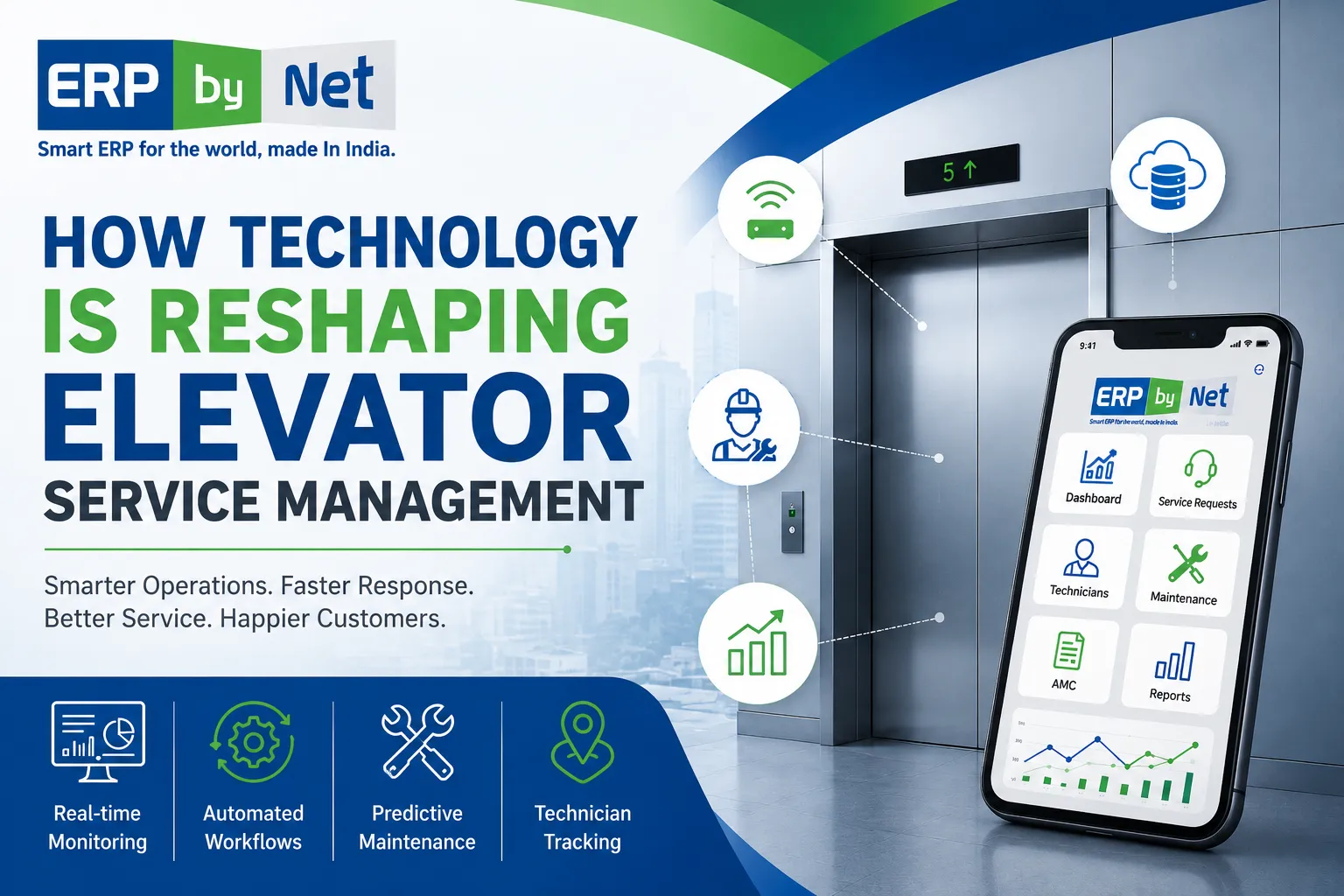
- ERP platforms like ERPbyNet centralize AMC management, service workflows, inventory, billing, and reporting into one system.
What You’ll Learn
- How digital transformation is changing elevator maintenance operations.
- Why traditional spreadsheets and manual scheduling no longer support growing elevator businesses.
- How cloud ERP systems improve technician coordination, complaint handling, and maintenance tracking.
- The role of IoT, predictive maintenance, and automation in reducing downtime.
- How ERPbyNet helps elevator companies streamline operations, improve service quality, and scale efficiently.
Real Industry Insights
- Elevator companies are moving away from reactive maintenance toward predictive and automated service models.
- Disconnected systems create operational silos that reduce efficiency and increase service delays.
- Digital workflows improve transparency for technicians, managers, and customers.
- Cloud-based ERP platforms provide centralized visibility across technicians, inventory, complaints, and AMC contracts.
- The future of elevator service management depends on automation, real-time data, predictive insights, and scalable ERP infrastructure.
The elevator industry is undergoing a major transformation. As buildings become smarter and customer expectations continue to rise, elevator service companies are facing increasing pressure to deliver faster response times, reduce downtime, improve technician coordination, and manage operations more efficiently than ever before.
Traditional service management methods that once worked for elevator businesses are now creating operational bottlenecks. Manual scheduling, paper-based service reports, delayed technician communication, and disconnected workflows often lead to slower service, missed follow-ups, and customer dissatisfaction.
At the same time, advancements in technology are changing how elevator service businesses operate. Automation, real-time tracking, cloud-based systems, predictive maintenance, and digital workflows are helping companies streamline operations and improve service performance.
Modern Elevator Service Management is no longer just about fixing elevators when problems occur. It is now about creating connected, data-driven, and proactive service operations that improve efficiency across every stage of the workflow.
In this article, we explore how technology is reshaping elevator service management and why digital transformation is becoming essential for modern elevator companies.
The Challenges of Traditional Elevator Service Management

For many elevator service companies, daily operations still depend heavily on manual processes. While these traditional systems may have worked in the past, they often create inefficiencies that slow down business growth and impact service quality.
Common operational challenges include:
- manual technician scheduling
- paper-based job cards
- delayed complaint handling
- poor communication between teams
- scattered customer records
- lack of service visibility
- missed AMC renewals
- reactive maintenance approaches
- delayed response times
When operations are managed manually, even small delays can create larger business problems. A technician may receive incomplete service information, customer complaints may not be tracked properly, or service requests may get delayed due to communication gaps.
These inefficiencies directly affect:
- customer satisfaction
- technician productivity
- operational control
- revenue opportunities
- long-term client retention
As elevator systems become more advanced and service expectations increase, relying on outdated management methods becomes increasingly difficult.
Modern elevator businesses need systems that provide real-time visibility, centralized operations, and faster coordination across field teams.
Read More : How Much Revenue Are Elevator Companies Losing Due to Poor Scheduling?
The Shift Toward Digital Elevator Service Operations
Technology is changing the way elevator service businesses manage their daily operations. Instead of relying on disconnected manual processes, companies are moving toward centralized digital systems that help improve efficiency and operational control.
Digital transformation in elevator service management includes:
- cloud-based ERP systems
- automated scheduling
- mobile workforce management
- real-time technician tracking
- centralized dashboards
- digital complaint management
- automated reporting systems
These technologies help elevator companies operate more proactively instead of reactively.
Rather than waiting for operational issues to create delays, digital systems help businesses:
- identify problems faster
- streamline communication
- automate repetitive tasks
- improve technician coordination
- reduce service delays
This shift is helping elevator businesses create more structured, scalable, and efficient service operations.
Real-Time Technician Tracking Is Improving Service Response
One of the biggest operational challenges in elevator servicing is coordinating field technicians efficiently. Delays in technician allocation often increase elevator downtime and negatively impact customer satisfaction.
Modern technology is solving this problem through real-time technician tracking systems.
With GPS-enabled tracking and mobile field service applications, elevator companies can now:
- monitor technician locations in real time
- assign jobs faster
- optimize technician routes
- track service status updates
- improve communication between teams
This level of visibility helps businesses respond more quickly to breakdowns and emergency service requests.
Real-time tracking also improves workforce productivity by ensuring:
- better technician utilization
- fewer scheduling conflicts
- faster task completion
- reduced travel inefficiencies
For customers, this creates a better service experience because they receive quicker responses and improved service transparency.
As customer expectations continue to grow, faster response times are becoming a key competitive advantage for elevator service companies.
Predictive Maintenance Is Replacing Reactive Servicing
Traditional elevator maintenance models are largely reactive. Businesses wait until a breakdown occurs before responding to the issue.
However, modern technology is shifting the industry toward predictive maintenance.
Using IoT-enabled monitoring systems, sensors, and connected devices, elevator companies can now collect real-time performance data from elevator systems. This data helps identify potential issues before they become major failures.
Predictive maintenance allows businesses to:
- detect abnormal system behavior early
- schedule preventive servicing
- reduce unexpected breakdowns
- minimize downtime
- lower emergency repair costs
Instead of reacting to failures after they occur, companies can proactively address maintenance needs and improve elevator reliability.
This approach not only improves operational efficiency but also enhances customer trust because elevators remain operational more consistently.
Predictive maintenance is becoming one of the most important technological advancements in modern elevator servicing because it helps businesses move from reactive operations to intelligent maintenance planning.
Automation Is Streamlining Elevator Service Workflows
Manual administrative tasks often consume a large amount of time in elevator service businesses. Scheduling follow-ups, updating records, tracking complaints, managing service history, and handling AMC renewals manually can create operational delays and increase the risk of errors.
Automation is helping companies simplify these workflows.
Modern elevator service management systems can automate:
- complaint ticket generation
- service scheduling
- maintenance reminders
- technician job allocation
- AMC renewal notifications
- customer follow-ups
- service report generation
This significantly reduces manual workload while improving operational consistency.
For example:
| Traditional Operations | Automated ERP-Based Operations |
|---|---|
| Manual complaint logging | Automated ticket management |
| Paper service reports | Digital mobile reports |
| Phone-based technician assignment | Real-time dispatch systems |
| Excel-based AMC tracking | Automated renewal alerts |
| Manual follow-ups | Automated notifications |
Automation allows service teams to focus more on actual service delivery instead of repetitive administrative work.
As elevator businesses scale, automation becomes essential for maintaining operational efficiency without increasing management complexity.
Data and Analytics Are Improving Business Decisions
Modern elevator service management is becoming increasingly data-driven.
Digital systems now allow businesses to collect and analyze operational data in real time. This gives managers greater visibility into service performance and helps improve decision-making.
Analytics can provide insights into:
- technician productivity
- service response times
- elevator downtime trends
- complaint frequency
- maintenance history
- customer service performance
This information helps businesses identify operational inefficiencies and improve resource planning.
For example, service managers can analyze:
- which technicians handle the most service requests efficiently
- which elevators experience repeated issues
- which customers require frequent maintenance support
- where operational delays commonly occur
This level of business intelligence helps elevator companies optimize workflows, improve accountability, and deliver more consistent service experiences.
Technology is no longer only supporting operations — it is now helping businesses make smarter strategic decisions.
Read More : Why Multi-Purpose ERP Software Is Becoming Essential for Modern Businesses
Customer Expectations Are Changing Elevator Service Standards
Today’s customers expect faster, more transparent, and more reliable service experiences.
Building managers, property owners, hospitals, hotels, and commercial facilities increasingly demand:
- quick complaint resolution
- faster technician response
- service transparency
- preventive maintenance
- real-time communication
- minimal elevator downtime
Companies that fail to meet these expectations may struggle to retain long-term clients.
Technology is helping elevator service businesses improve customer satisfaction by creating:
- faster communication channels
- real-time service updates
- better complaint tracking
- improved maintenance planning
- centralized customer management systems
Digital platforms also help businesses maintain accurate service history records, making customer support more organized and efficient.
As competition in the elevator industry increases, customer experience is becoming one of the most important differentiators.
Why Elevator Companies Are Moving Toward ERP-Based Management Systems
As operational complexity increases, many elevator businesses are adopting ERP-based systems to centralize and streamline their service management processes.
ERP systems bring multiple operational functions into a single platform, including:
- technician management
- complaint handling
- maintenance scheduling
- customer management
- AMC tracking
- reporting and analytics
- service history management
This creates better operational visibility and allows businesses to manage workflows more efficiently.
ERP systems also help eliminate data silos by ensuring that service teams, managers, and administrators work from the same centralized information system.
The benefits include:
- improved operational coordination
- faster response times
- reduced paperwork
- better reporting accuracy
- increased workforce productivity
- stronger service consistency
As the elevator industry continues evolving, ERP-based operations are becoming a critical part of modern service management strategies.
How ERPbyNet Helps Modernize Elevator Service Management
ERPbyNet is designed to help elevator service companies streamline operations through centralized digital management.
The platform helps businesses manage:
- service requests
- technician scheduling
- complaint tracking
- AMC management
- field workforce coordination
- service reporting
- operational analytics
With real-time visibility and automated workflows, elevator companies can improve service efficiency while reducing operational delays.
ERPbyNet supports modern elevator operations through:
- real-time technician tracking
- centralized dashboards
- automated service workflows
- digital field service management
- customer complaint management
- maintenance scheduling systems
- reporting and analytics tools
By digitizing service operations, elevator companies can improve:
- technician productivity
- response speed
- customer satisfaction
- operational control
- long-term business scalability
As the industry becomes more technology-driven, centralized ERP systems are playing a major role in helping elevator companies remain competitive.
The Future of Elevator Service Management
Technology will continue reshaping the elevator service industry in the coming years.
Emerging innovations such as:
- AI-powered maintenance systems
- IoT-enabled elevator monitoring
- predictive analytics
- cloud-based operations
- smart dispatch systems
- connected service ecosystems
will further improve operational efficiency and service quality.
The future of elevator servicing will depend heavily on:
- automation
- real-time visibility
- intelligent maintenance planning
- data-driven decision-making
- digital workforce management
Companies that embrace these technologies early will be better positioned to improve service performance, reduce downtime, and meet growing customer expectations.
Businesses that continue relying on outdated operational methods may struggle to remain competitive in an increasingly digital industry.
Conclusion
Technology is transforming every aspect of elevator service management.
From real-time technician tracking and predictive maintenance to workflow automation and data-driven decision-making, digital systems are helping elevator companies improve efficiency, reduce downtime, and deliver better customer experiences.
The elevator industry is moving toward smarter, faster, and more connected operations. As service demands continue to increase, businesses need modern systems that provide operational visibility, automation, and centralized management.
Companies that invest in digital transformation today will be better prepared for the future of elevator servicing.
ERPbyNet helps elevator service businesses modernize operations through intelligent service management, automated workflows, real-time tracking, and centralized operational control — helping companies build more efficient and future-ready elevator service operations.
FAQs
1. How is technology improving elevator service management?
Technology is helping elevator companies improve operations through real-time technician tracking, automated scheduling, predictive maintenance, digital reporting, and centralized management systems. These tools help reduce downtime, improve response times, and streamline daily workflows.
2. What is predictive maintenance in elevator servicing?
Predictive maintenance uses connected sensors and real-time data to identify potential elevator issues before breakdowns occur. This helps elevator companies reduce unexpected failures, lower repair costs, and improve elevator reliability.
3. Why is automation important for elevator service businesses?
Automation reduces manual tasks such as complaint tracking, service scheduling, AMC reminders, and technician coordination. This improves operational efficiency, minimizes errors, and allows service teams to respond faster to customer requests.
4. How does real-time technician tracking help elevator companies?
Real-time technician tracking helps businesses monitor field teams, assign jobs faster, optimize technician routes, and improve communication. This leads to quicker response times, better workforce productivity, and improved customer satisfaction.
5. How does ERPbyNet help modernize elevator service operations?
ERPbyNet helps elevator companies streamline operations through real-time technician tracking, complaint management, automated workflows, AMC tracking, digital reporting, and centralized service management — helping businesses improve efficiency, reduce downtime, and manage elevator operations more effectively.